The Uprising of Kaveh the Blacksmith
Catalog details
- Artist
- Master Jalil Ziapour
- Date
- 1945 (1324 SH)
- Medium
- Oil
- Dimensions
- 100 × 70 cm
- Style
- Expressionism
- Also known as
- Kaveh the Blacksmith, The Revolution of Kaveh the Blacksmith
Photographed from a printed reproduction. No better image of this work is available; if you have a better photograph of it, please let us know.
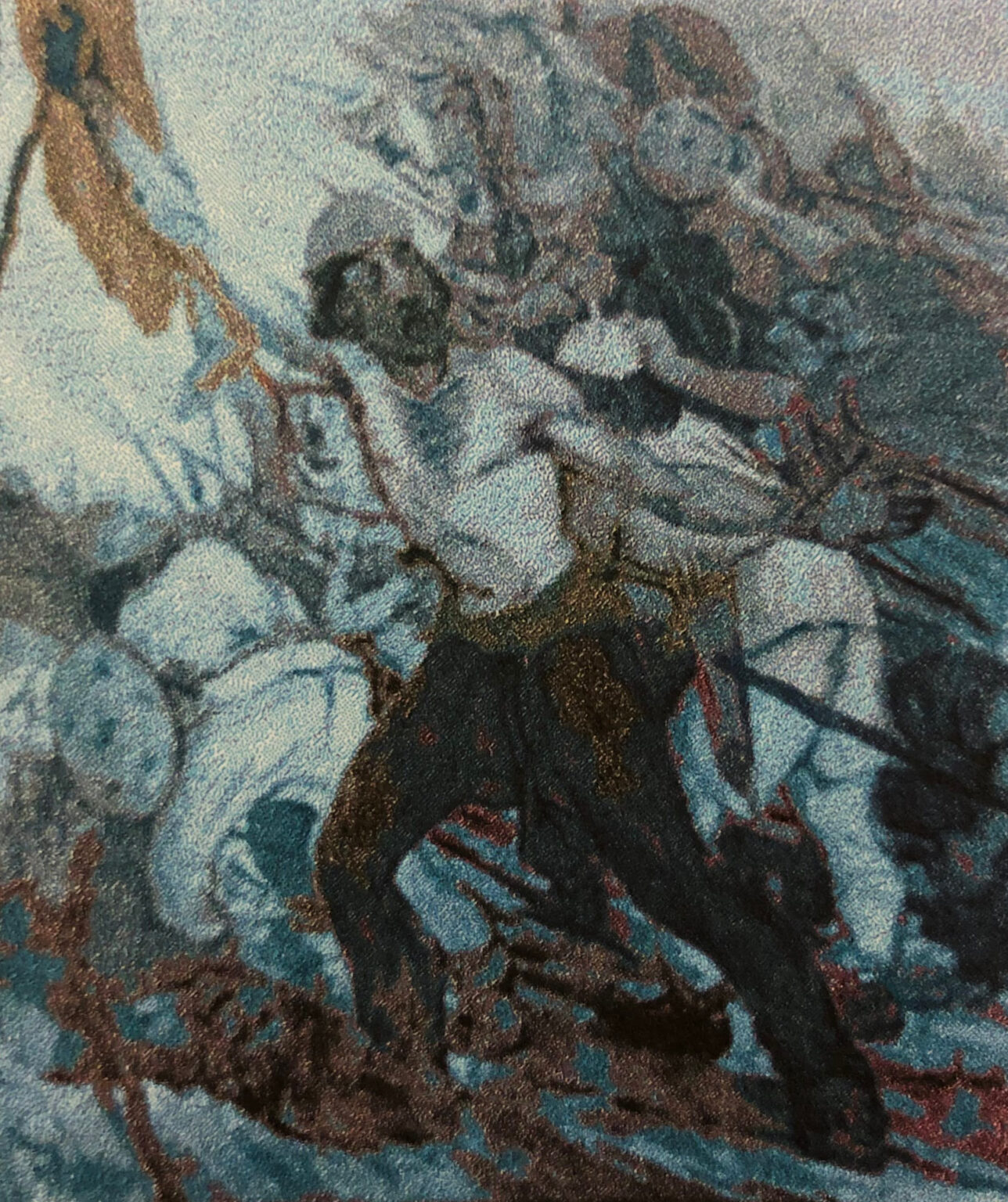
The Uprising of Kaveh the Blacksmith, oil, 1945, in the style of Expressionism.
In the artist’s words
“I made the painting The Revolution of Kaveh the Blacksmith after completing my studies and before my departure for France, in that same academic manner, and this was the image of my desire to put an end to the artistic declines of the environment in which I lived, which had to begin with protest: protest against the environment’s negligence toward necessities, protest against repetitive molds that had killed creativity and caused artistic degeneration.”
About this work
Master Jalil Ziapour painted this picture after graduating from the faculty and before his trip to Paris. The work was shown at the Exhibition of Iranian Fine Arts (Bahman 1324 to Farvardin 1325, February to April 1946), which was held on the initiative of the Iran-Soviet Cultural Relations Society, and this event is regarded as his first appearance in a public exhibition before that trip.
In the painting “The Uprising of Kaveh the Blacksmith,” Kaveh is painted as an ordinary, simple person, like the working class to which he belonged. Kaveh is seen beside a crowd of oppressed people who are painted as humble as he is: standing on their own feet, with their spears in the air, their gaze directed forward, shouting, advancing and passing through the defeated troops of the king. As the leader, he is depicted ahead of the crowd: half-naked, with his apron waving in the air as a banner, with a body of medium build but with muscular, mighty hands, with his head turned back towards the crowd, holding the banner of the kingdom in one hand and encouraging the crowd to advance with the other.