This article was machine-translated from the original Persian and may contain inaccuracies.
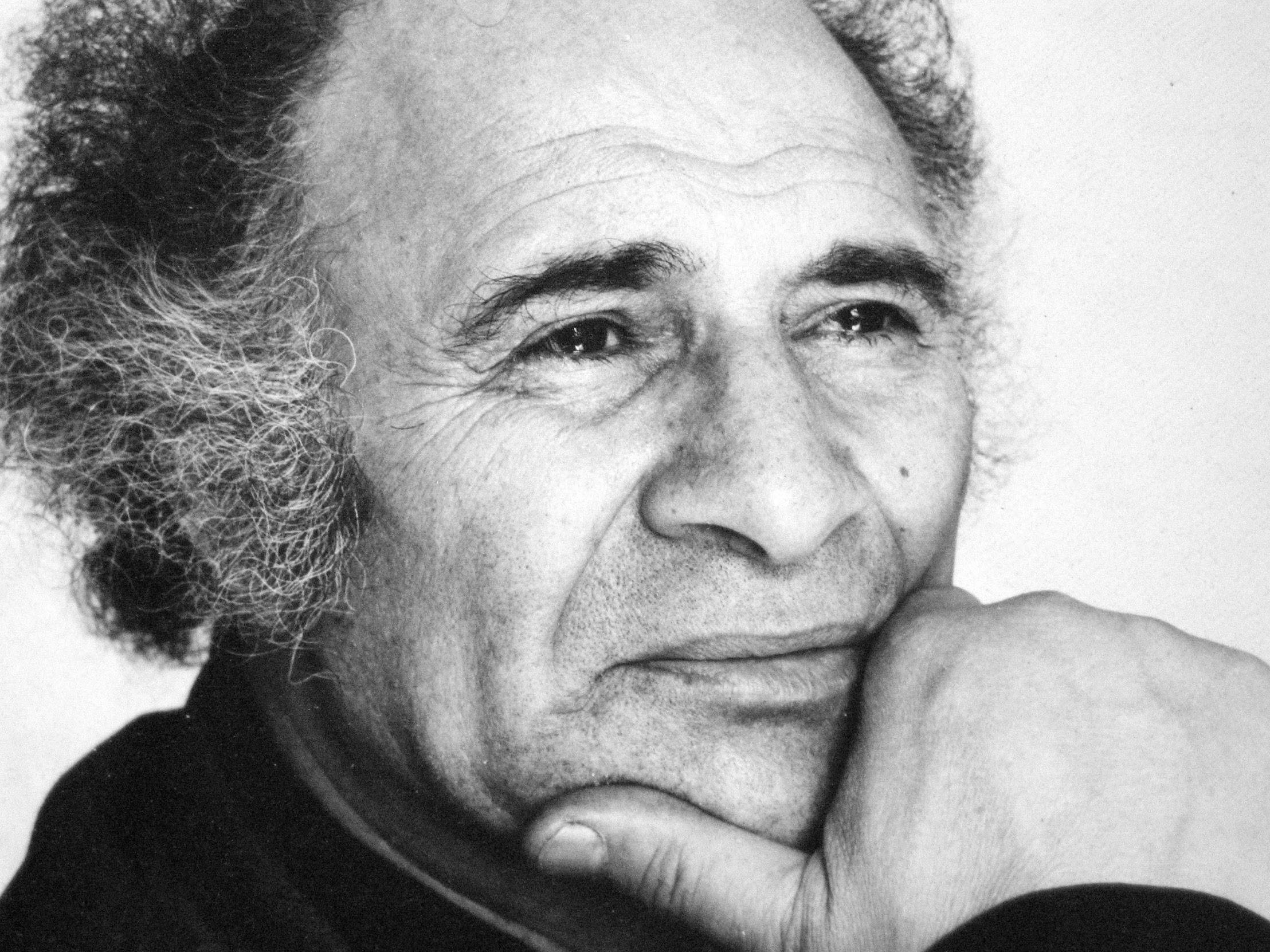
Master Jalil Ziapour, the Father of Modern Iranian Painting
Master Jalil Ziapour was born on 25 April 1920 in Bandar Anzali. After completing his primary education in his birthplace, in the year 1938 he set out for Tehran to pursue and learn his fields of interest, and concurrent with his arrival, he took part in the exams for the field of music and achieved the required rank. Therefore, in his first steps of acquiring knowledge, he began learning the art of music.
Regarding this matter, the Master has stated: “During a not-so-long period from the start of my work at the Conservatory of Music and learning composition, according to the decisions of the government of the time, the Belgian professors left the management of the conservatory and departed for their own country; thus the responsibility was delegated to ‘Colonel Vaziri,’ and since the field of composition no longer existed in the conservatory, despite my inner desire, I left music and went after traditional decorative arts.”
Education in Fine Arts
After entering the School of Ancient Fine Crafts and learning illumination, carpet design, miniature, tilework, and negargari, Ziapour entered the Faculty of Fine Arts at the University of Tehran in the year 1941, and with great enthusiasm, learned the fields of: interior decoration, design, painting, and sculpture, and in the year 1945-1946, by achieving first place and receiving the first-class cultural medal, completed his academic studies at the bachelor’s degree level.
Studies in France
Accordingly, in the same year, through a scholarship from the French government and on behalf of the University of Tehran, he departed for France for advanced supplementary studies (Super Fectionner) and was enrolled by the government of that country in the National and Higher School of Fine Arts in Paris – Beaux-Arts (Ecolenational Superieure des Beaux-Arts).
Ziapour, who pursued the acquisition of knowledge as if with indescribable energy and effort, decided to also enroll in the state academy – Grande Chaumière (Grand Chaumier) by obtaining a permit from the French government and an official letter of introduction, so that in addition to the main fields (painting and sculpture), he could also simultaneously pursue and complete other fields such as art history, stylistics, history of civilization, sociology, study of motifs, and clothing in a comprehensive manner.
Return to Iran and Fighting Cock (Khorus Jangi)
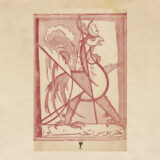
 Jalil Ziapour, who had studied at the best school of the day – and the cradle of art at that time – and had been trained under masters such as Souverbie (Suverbie) in painting and Niclausse (Niclousse) in sculpture, each of whom was considered among the greatest theorists of the art world, finally, after obtaining his doctorate in art, returned to his homeland for the first time in the year 1948, and in order to enlighten minds regarding new art in its dispute with old art, in cooperation with three of his friends, proceeded to establish an association named “Fighting Cock” and also published a magazine under the same name.
In this regard, the Master has stated:
“After my arrival in Iran, I realized that our art was very far from the world and our illustration and painting was a hollow imitation. Therefore, a struggle had to take place, a struggle between the worship of the old and traditionalism distant from the realities of the times, and this matter required precise planning. Thus, I established an association and named the association Fighting Cock because the beautiful and colorful appearance of the rooster is close to painting, and it is itself also a symbol of war and struggle, and I also chose a slogan for the association from Farrokhi Sistani, and that slogan was:
“The tale of Alexander became legend and grew old / Bring forth new speech, for the new has a different sweetness”
Artistic Thought and Legacy
After his arrival in Iran, with firm steps and a curious gaze and mind, Jalil Ziapour – who was now a rich and powerful master – unveiled the authentic Iranian culture and gave Iranian art, in a new guise, a fresh perspective, and after numerous studies and the necessary scrutiny, wrote down his artistic theory and ideology under the title: “The Annulment of the Theories of Past and Contemporary Schools” and began enlightening minds. He was a pioneering painter, an informed critic, and the flag-bearer of a movement that emerged proud from the constraints of the times under the most difficult cultural conditions, and through more than half a century of diligence in the art of Iran, delivering more than a hundred and some cultural, artistic, and social lectures in public and private assemblies, creating artistic works, writing many research books, publications, and articles, giving interviews, holding senior posts, and occupying government positions, he is among the luminaries who, according to published art books and magazines, have been considered companions of Nima and Hedayat on the path of innovation; and because of the use of geometric shapes and decorative art derived from Iranian motifs, as well as the divisions he carried out in the manner of Cubism – which for the first time set a new design in the modern art of Iran – they have named the Master “the Father of the Art of Painting in Iran.”
Jalil Ziapour’s paintings possess a personal style, far from imitation, which, by the admission of the leading figures of this field of art, are each considered not only a national cultural support, but a national wealth.
Teaching and the Final Years
Due to the affection he had for the youth and students, and his love for them, in the year 1953, at the request of the country’s General Directorate of Fine Arts, Master Ziapour proceeded to establish the Girls’ and Boys’ Schools of Visual Arts of Tehran, and also prepared the groundwork for the establishment of the Faculty of Decorative Arts.
 Ziapour strove for more than half a century to bring dynamism to modernism, turn away from imitation, pay attention to inspiration, broaden perspective, and compare works in order to elevate artistic thought, and in the years of his old age, he was also always striving to acquire the science and knowledge of the day, and despite having the illness resulting from the passing years of life, he still taught with indescribable energy and power in many colleges and universities, including the Faculties of Dramatic Arts and Decorative Arts, the Art University Complex, Tarbiat Modares University, and Alzahra (S) University, and was in charge of the guidance and direction of bachelor’s, master’s, and doctoral students.
Finally, this wise scholar, whose precious and valuable existence was prized by the people of art, drew the veil of dust over his face on a cold and long Yalda night on 21 December 1999, and at the age of 79 bid farewell to this transitory world, undoubtedly to begin acquiring science and knowledge in his other world.
May his soul be joyful, his memory honored, and his path filled with followers.