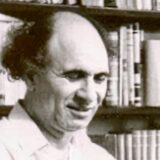
Jalil Ziapour is called the “father of the art of modern Iranian painting.” This designation is due to Ziapour’s personal style, free from imitation, which was formed based on his own theory and by relying on the indigenous culture of the land of Iran. His works are famous for possessing authentic Iranian themes, simplification in figures, adherence to traditional planes along with geometric lines, awareness of composition, and generally his particular style of painting.
Additionally, Ziapour’s research trips to various regions of Iran for anthropological explorations attracted his attention to tribal life and caused him to find their manner of behavior, customs and traditions, clothing, and ornaments noteworthy and to utilize them in his works. Therefore, because of his research inclination toward the lives of villagers, tribal themes have appeared allegorically in his works, and the precise and artistic use of the attire and culture of Iranian ethnic groups is one of the most prominent major characteristics of his works.
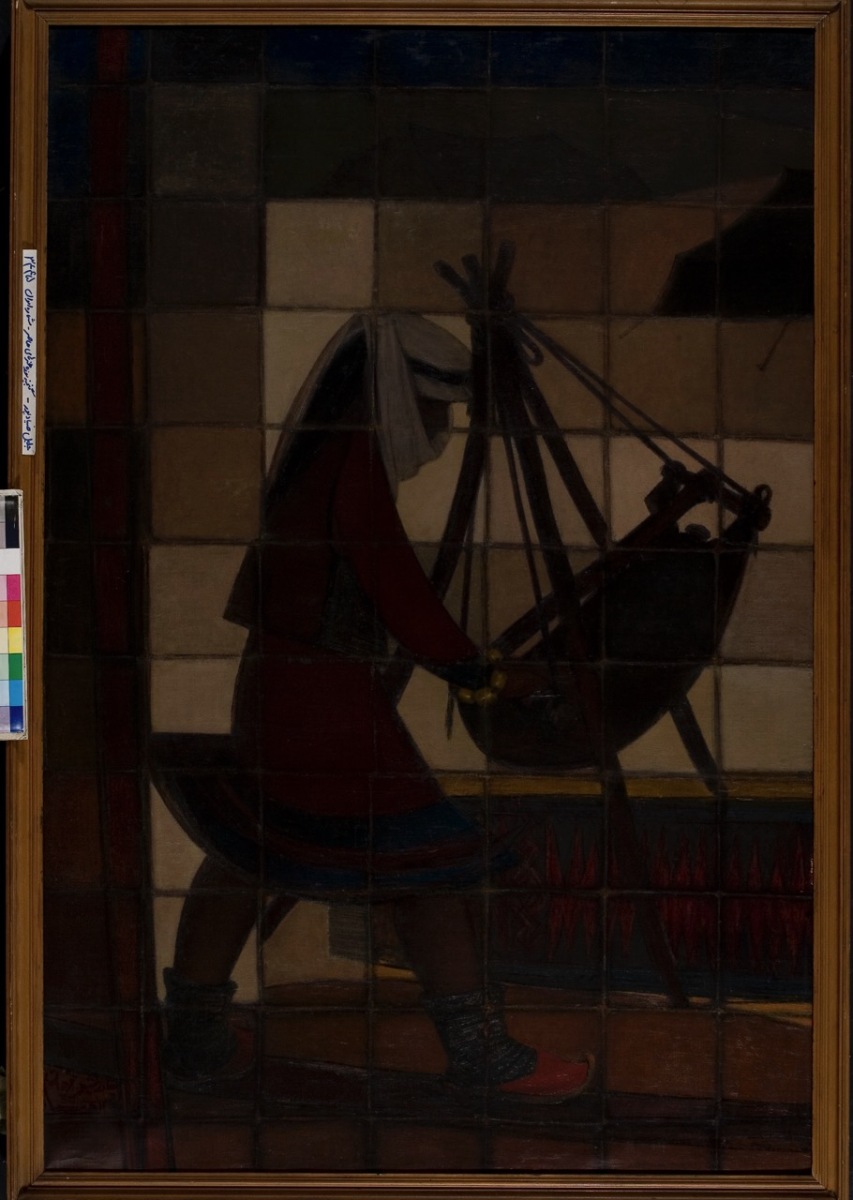
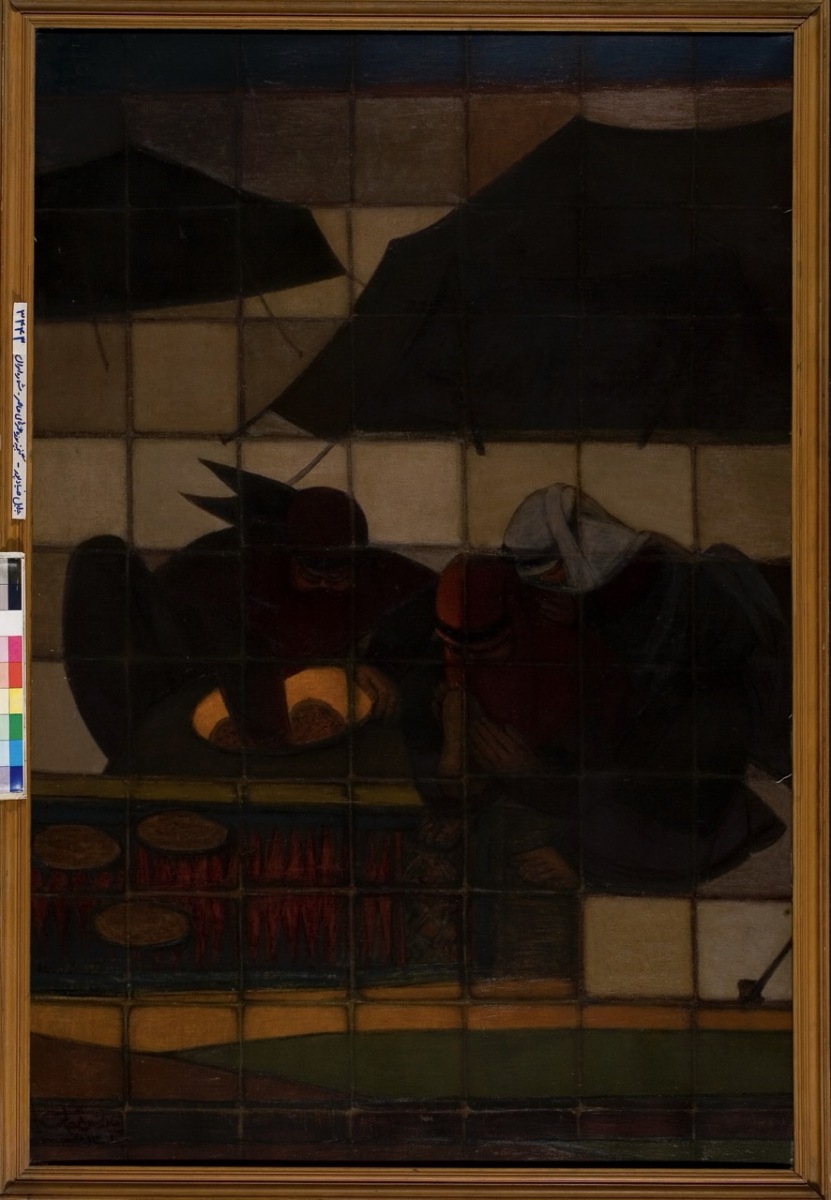
Ziapour has explained his works as follows: “The significance of my interpretation of the colors of tent-dwellers, tribes, and nomads, as well as my simple and poised innovation, is understandable to anyone familiar with the craft and possessing insight who employs a gentle gaze and thought. Every environment, by having its own special condition, compels its inhabitants to choose colors suitable for the environment out of necessity and circumstances. This environmental choice has a stability more lasting and durable among nomads than the interpretations of city-dwellers, who are subject to transient influences and changes.
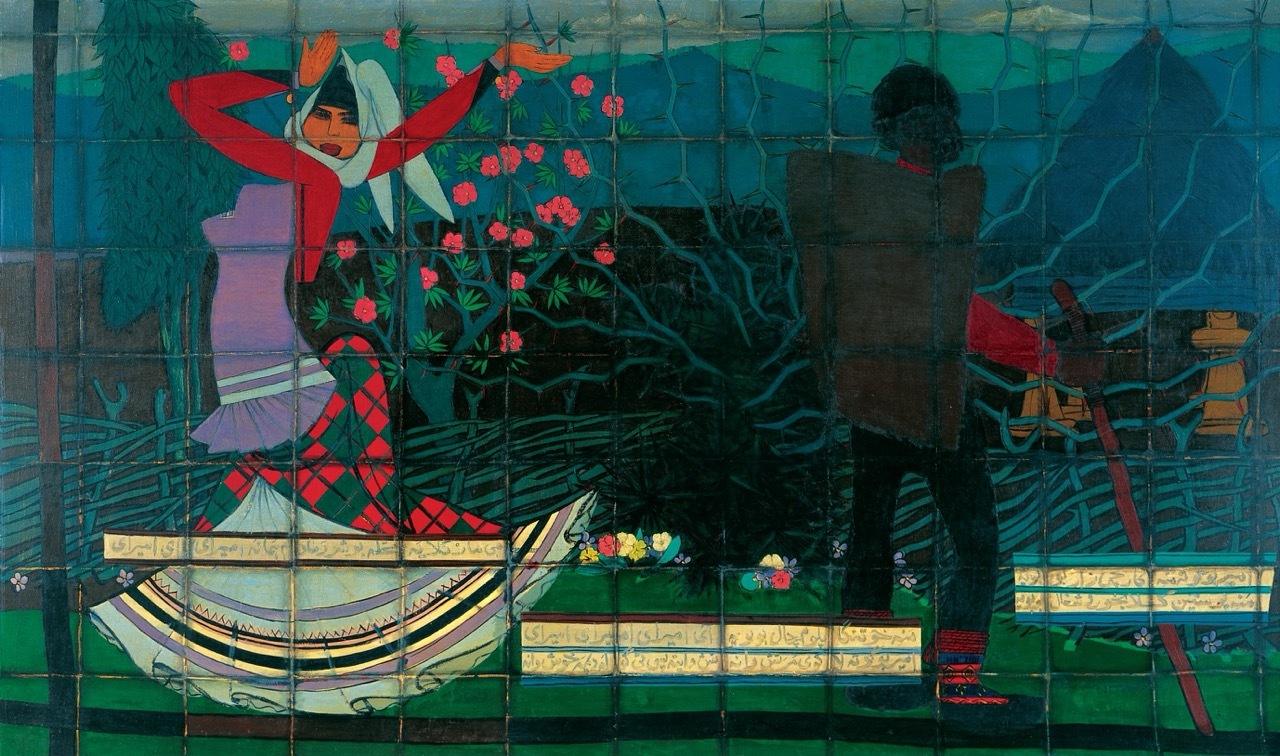
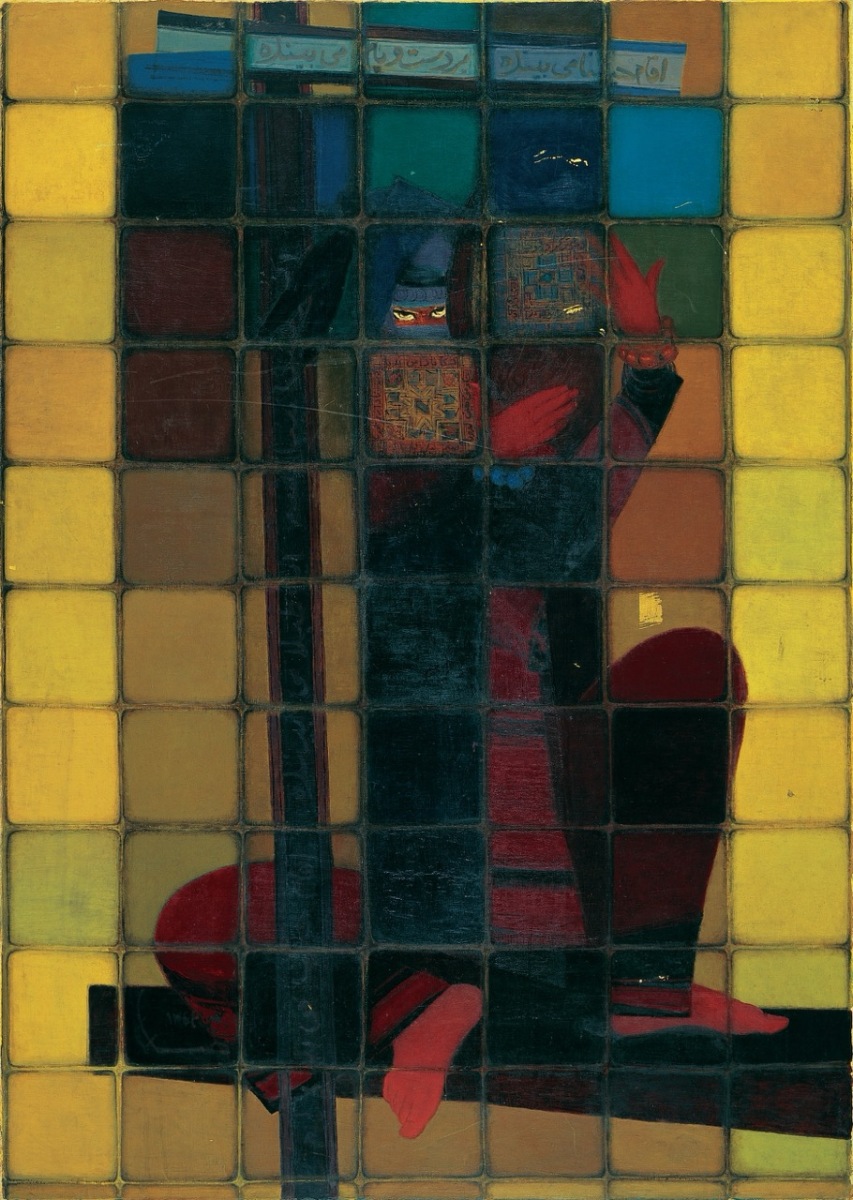
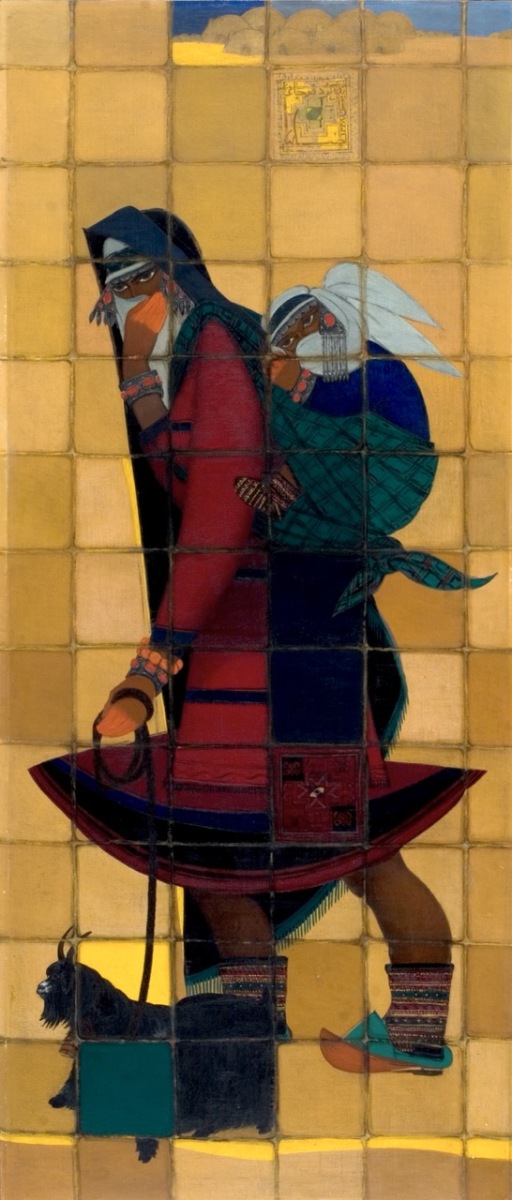
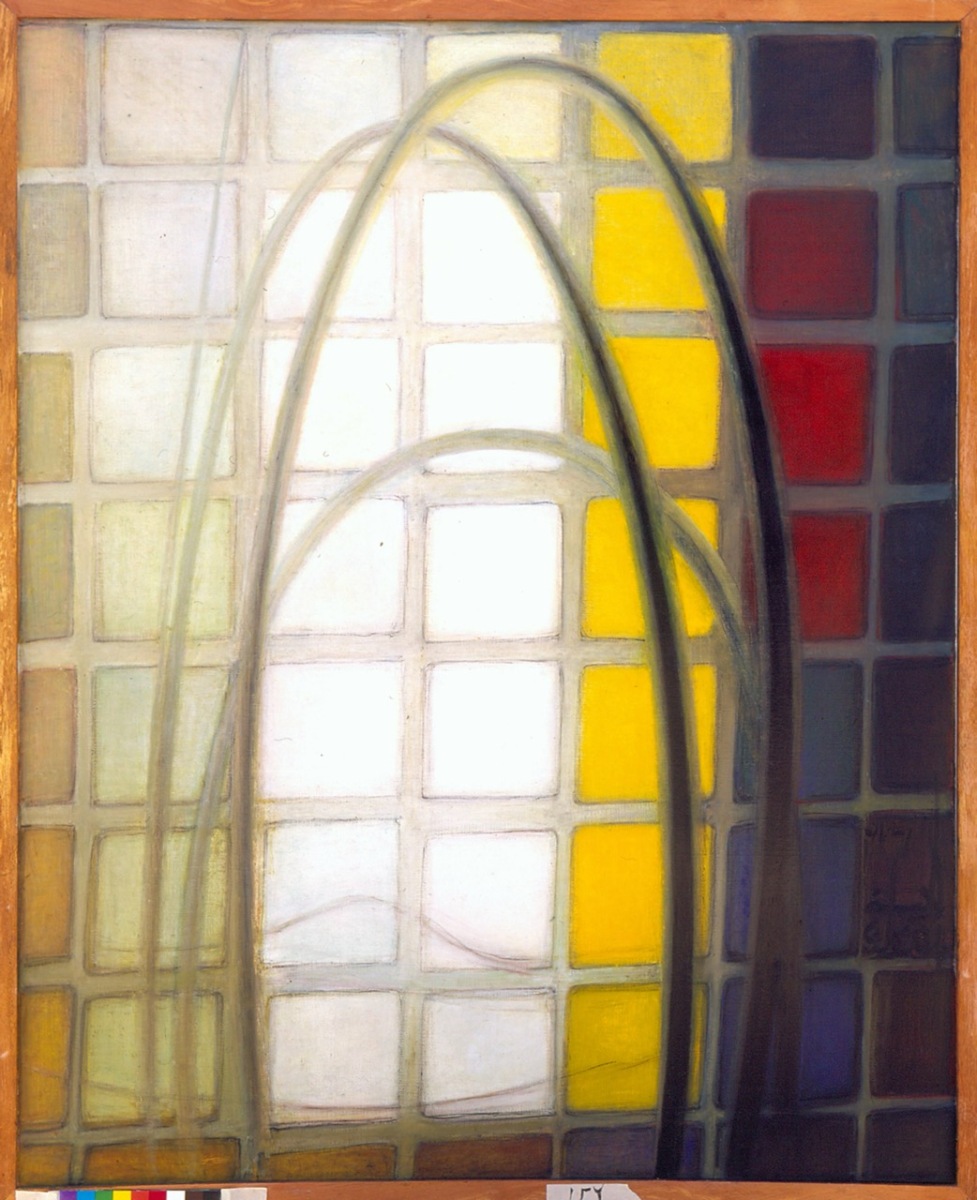
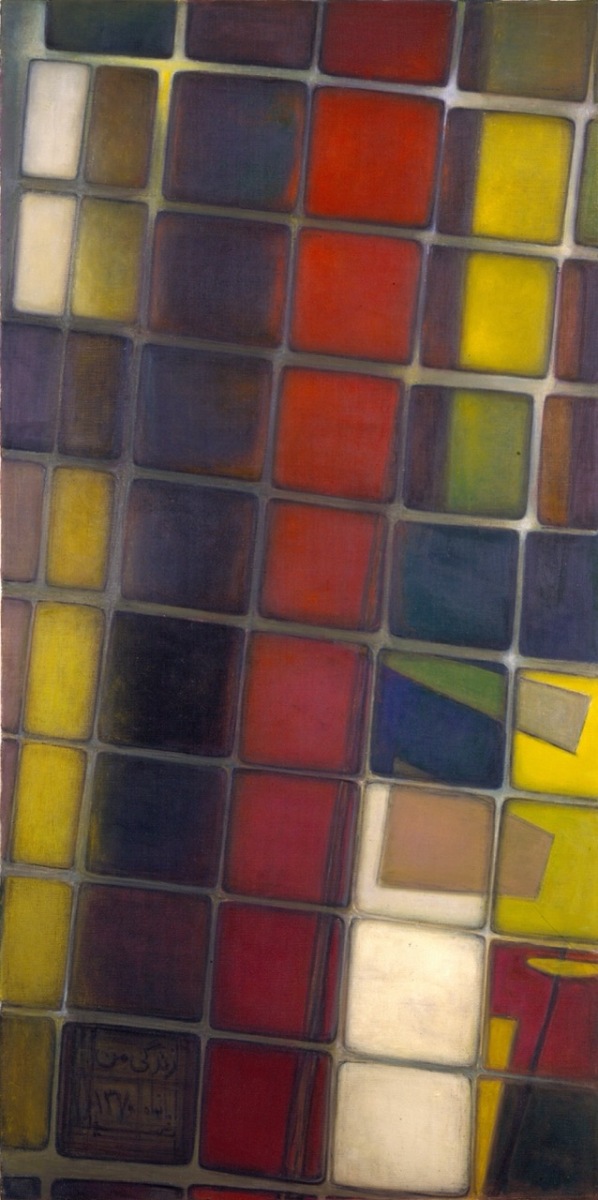
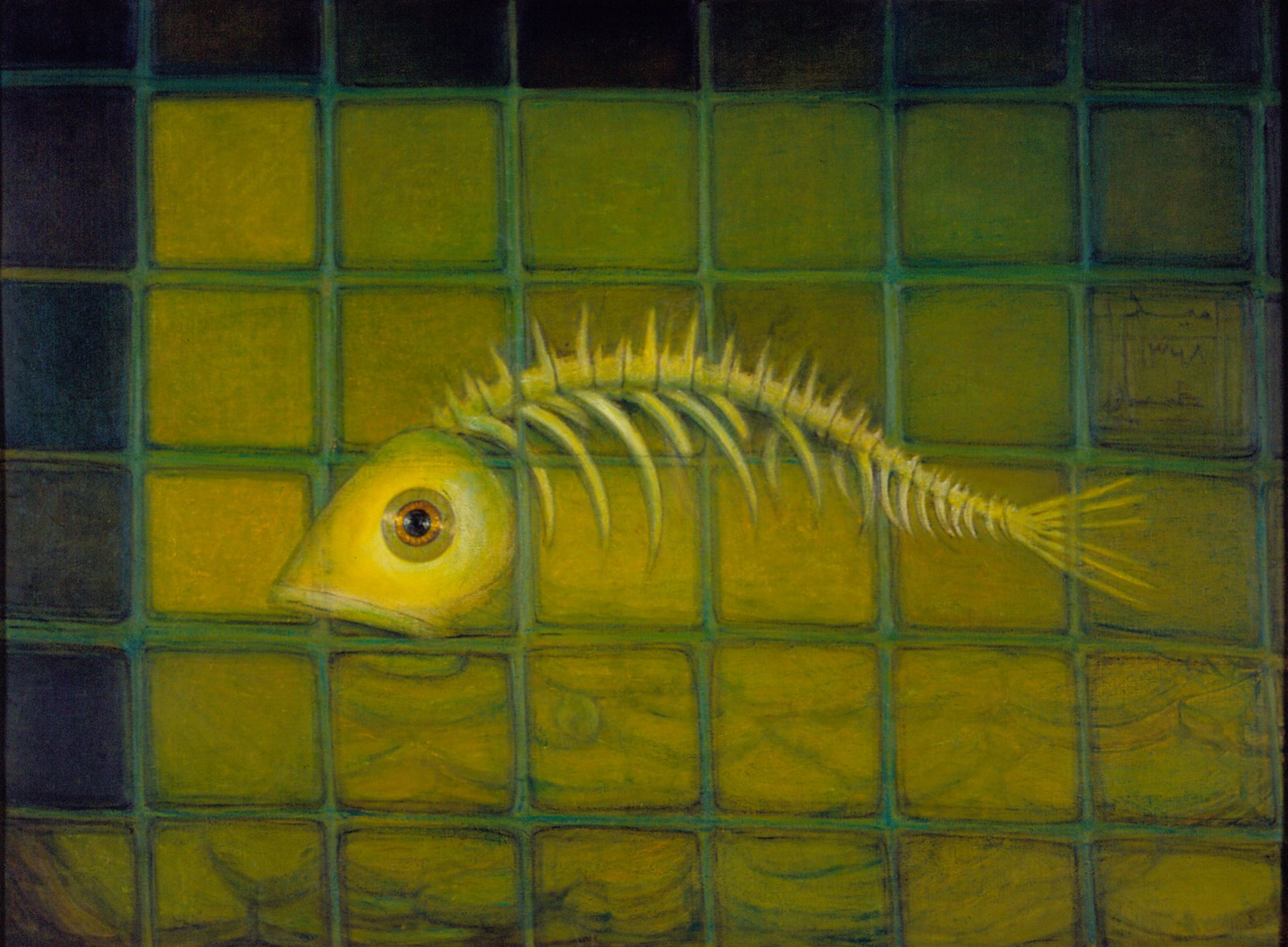
This explanation is necessary: my works have been prepared by making use of reminders. The simple four-cornered design in my paintings acts suggestively:
1- Like suggesting being a tile, which is an Iranian-Islamic representation and is known to the world.
2- It is a means of freedom in the displacement of color and in coloring, and holds extraordinary importance in innovation and suggestions.
3- It signifies constraint, which expresses the principle of my philosophical vision in the world of life and has a deterministic form.”
Over the course of more than half a century of cultural and artistic activity, Ziapour created a small number of works and spent the rest of his time on journalistic enlightenment, research in Iranian studies, and cultural and educational activities. Ziapour’s visual works are as follows:
1944- “Portrait of the Painter, Ziapour,” Impressionism, oil, 70×50 cm.
1945- Painting “The Uprising of Kaveh the Blacksmith,” Expressionism, oil, 100×70 cm.
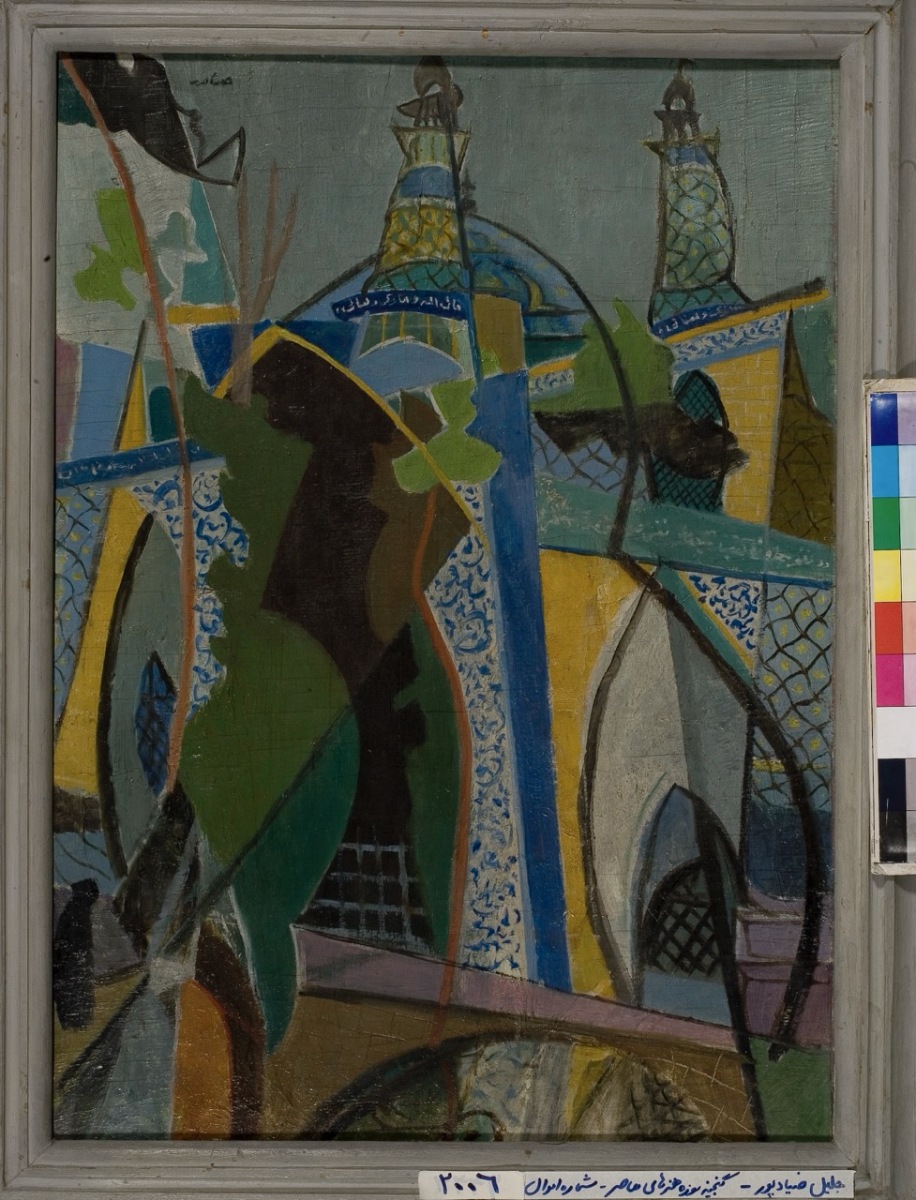
1948- Painting “Sepahsalar Mosque,” Abstract Cubism, oil, 120×80 cm.
1949- Painting “Three Eastern Chess Players,” Expressionism, oil, 80×50 cm.
– Painting “Girl with the Red Skirt,” oil, 60×40 cm.
– Painting “Rope,” Abstract Cubism, oil, 80×60 cm.
– Painting “Riding an Ant,” Expressionism, oil, 60×40 cm.
– Painting “Still Life,” Cubism, oil, 120×80 cm.
– Painting “Public Bath,” Abstract Cubism, oil, 120×80 cm.
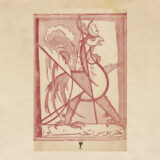
– Design “The Fighting Cock” (Khorus Jangi), graphic art.
– Design “Portrait of the Painter, Ziapour,” Abstract Cubism.
– “Profiles of the Activists of New Art,” graphic art.
1955- Plaster relief, bust of “Anahita,” goddess of beauty of ancient Iran, 75×70 cm.
1955- Painting “Kol Amir and Golbahar,” from the local legends of Qasemabad, Gilan, Ziapour’s national and distinctive style, oil, 190×120 cm.
1956- Painting “Turkmen Girl,” Ziapour’s national and distinctive style, oil, 180×80 cm.
1959- Painting “Hope,” Surrealism, 160×90 cm. This painting was later lost and the artist repainted it in 1989; the present version is oil, 135×100 cm.
1960- Painting “Quchani Kurdish Woman,” Ziapour’s national and distinctive style, oil, 200×83 cm.
– Drawing “Inner Pain,” Surrealism, 70×70 cm.
1961- Painting “Zeynab Khatun,” Ziapour’s national and distinctive style, oil, 120×95 cm. The first version, painted in 1957, was shown at the first Tehran Biennial in 1958 and was later lost; the artist repainted the work in 1961.
1963- Painting “My Husband Applies Henna,” Ziapour’s national and distinctive style, oil, 170×120 cm.
1966- “Carpet Design,” gouache, commissioned by the Ministry of Culture and Art, 3×2 meters; two pieces of this design have been woven as carpets.
1978- Painting “Baluch Woman,” Ziapour’s national and distinctive style, oil, 180×90 cm.
1979- Painting “Bandari Woman,” Ziapour’s national and distinctive style, oil, 160×70 cm.
1982- Painting “Lur Girl,” with clothing from one hundred years ago, Ziapour’s national and distinctive style, oil, 180×92 cm.
1983- Painting “Life of Tent-Dwellers,” Ziapour’s national and distinctive style, 3 paintings, each measuring 120×80 cm.
1984- Painting “Kurdish Woman of Sanandaj,” Ziapour’s national and distinctive style, oil, 180×90 cm.
1985- Painting “Anahita,” goddess of beauty of ancient Iran, Ziapour’s national and distinctive style, oil, 190×100 cm.
1991- Painting “My Life,” Ziapour’s national and distinctive style, oil, 160×82 cm.
1994- Painting “My World” (“A Window onto the Inner World” or “The Inner World”), Ziapour’s national and distinctive style, oil, 150×120 cm.
1997- Painting “I and Flight,” Ziapour’s national and distinctive style, oil, 135×105 cm.
1998- Painting “Mahsha,” Ziapour’s national and distinctive style, oil, 140×110 cm.