by
by Maryam Mansouri’s conversation with Alireza Mashayekhi (composer), titled “Our Music Has Been Asleep for a Thousand Years”, Hayat-e No newspaper (republished on the Aftab website, 26 December 2007).

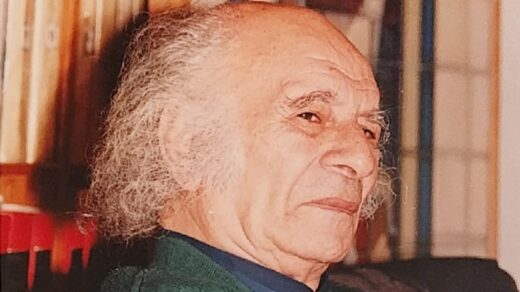
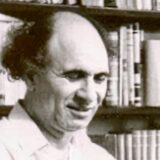
Master Alireza Mashayekhi, composer
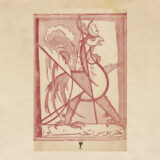
In this section, only a portion of Alireza Mashayekhi’s interview regarding the manner of the influence of Master Jalil Ziapour, founder of the Fighting Cock Art Association, on the course of his life has been included. Please refer to the source cited at the end of the text to read the full text of the interview.
Alireza Mashayekhi is one of the few Iranian composers who thinks about the concept of music on a level broader than the borders of Iran, and being new and becoming new are among his constant concerns. A concern that does not grow old. In an earlier conversation we had with Mashayekhi, we were seeking the essence of Mashayekhi’s philosophy in music. But this time, we sought to discover the path he has traversed in the course of his life to reach this stage.
In a part of this interview, Alireza Mashayekhi has said: “Two or three events that occurred when I was ten to thirteen years old influenced my entire life. The root of my modernism lies in these very events. One was that one of our relatives, who was also a teacher, asked me about a radio program, and I, who had heard from the adults that it was a bad program, said: ‘I have nothing to do with that program. It is not a good program.’ I was about to leave when he took my hand and said: ‘Why is it not good?’ I did not know what to say. He said: ‘You spoke about something even though you have no reason for it at all. That is not good.’ I felt very ashamed in those moments and made a vow to myself that this would not happen again. After this, another event occurred at a painting exhibition that displayed works leaning toward modern art, and a friend and I were talking when a similar situation arose again. I said: ‘They have done whatever they pleased and called it painting.’
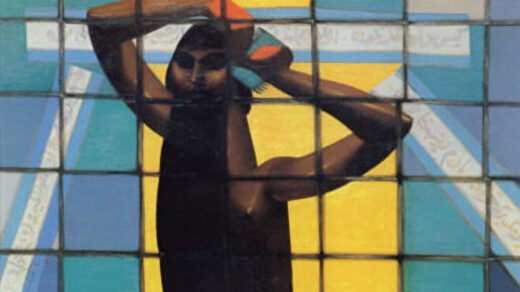
“A gentleman whose face I still remember after half a century placed his hand on my shoulder and said: ‘This story is a little more complicated than what you think. Let me explain a little about color, form, and composition to you, so that you do not think this way anymore.’ For about half an hour, he interpreted that painting for me, which I had no idea at all what it was or whose it was. With the event that had previously occurred, my reaction was intensified, and I suddenly realized that I had to think much more deeply than this and that I should not reject anything so easily. This time, it became clear to me that I had no right to ridicule something I did not know or to express an opinion about it. At this time, I was very familiar with and interested in the music of Beethoven, Mozart, and Russian composers such as Tchaikovsky and Rachmaninoff. A third event occurred. They held a series of exhibitions of works by contemporary artists with Cubist tendencies. Among these, the works of the late Jalil Ziapour affected me greatly. These suddenly created this thought in me: what would be the equivalent of these in music? These are not Mozart’s music. I must go and see what is really happening in international art in the era when Picasso lived and Jalil Ziapour was painting these pictures in Iran.”
Source: Aftab Website