by
by An article by Adel Jahanaray titled “In Memory of the Late Jalil Ziapour, the Modernist Painter of Gilan”, Artemisia Blog, 2009.

Master Jalil Ziapour, the Father of Modern Iranian Painting
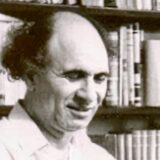
Adel Jahanaray, on the occasion of the eighty-ninth anniversary of the birth of Jalil Ziapour, has written an article on his blog entitled “In Memory of the Late Jalil Ziapour, the Modernist Painter of Gilan,” which we read below.
In Memory of the Late Jalil Ziapour, the Modernist Painter of Gilan
Gilan Province is one of the rich mines of Iranian culture. Many of our country’s contemporary intellectuals grew and developed in this land, flourished, and added to the cultural richness of the land of Iran. The establishment of music and theater schools in Gilan Province, and that too nearly 90 years ago, shows how much the people of this region are interested in art and its different genres. This interest is notable not only in the fields of music and theater, but also in the fields of poetry and fiction, and in the field of painting, too, with the presence of great figures such as Ziapour, this interest finds greater meaning.
Now that we stand on the threshold of the eighty-ninth anniversary of the birth of the late Ziapour, and a ceremony is to be held on this occasion on Saturday at 19:00 in the amphitheater hall of the Shahid Chamran Cultural Complex of Anzali, we take a brief, passing look at the works and life of the late Ziapour.
It is no exaggeration if we say that the late Master Jalil Ziapour introduced the term “art criticism” for the first time in a scientific manner into the literature of Iranian art. By the admission of many in the art community, especially the art of painting, the late Ziapour is considered both the father of art criticism in Iran, and it was he who made modern painting known in Iran with a view to authentic Iranian culture.
Ziapour trained a generation of whom today each is himself a pioneer and active figure of the contemporary art movement of Iran, and they have set a course in Iran such that, had it not been for the efforts of the late Ziapour and his students, perhaps the existing modern painting would have been pulled over the head of the country’s painting like an upside-down garment, and then the fare of those interested in painting and art would have been something in which neither a trace of Iranian culture could be seen (just as is unfortunately observed more or less in some arts with claims of modernism and postmodernism) nor could any modernity be derived from it.
A look at Master Ziapour’s paintings shows that when the art of painting is at the service of the painter consciously and at the same time in a scientific and knowledgeable manner, it can, while preserving culture and demonstrating its beauties and capacities, carry with it a color of the times and a sign of modernity and novelty.
In the painting “Zeynab Khatun,” the very fact that the painter makes one of the national artistic subjects and elements the basis of his work and, with reference to one of the folk poems of Iran (Jomjomak Barg-e Khazoon), gives life to an image that for years the people of this land rejoiced in by reciting its verses, is in fact indicative of the artist’s intelligence and awareness of indigenous art and its connection with the new world.
But the late Ziapour, in the figure “The Kurdish Woman of Quchan,” takes an anthropological view of the art of painting and depicts his interest and love for the people of our country in a fresh form and perspective; in fact, he represents authentic Iranian culture and clothes it in fresh and new attire. Perhaps it was this very precision and new outlook that led him to pen his views under the title “Abolition of the Theories of Past and Contemporary Schools” to open a new path before Iranian painting. Some believe that the work the late Ziapour did is on the scale of Nima’s work in the field of poetry.
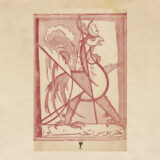
The late Jalil Ziapour was born on 25 April 1920 in Anzali and studied in this city until obtaining his high school diploma, and then went to the Faculty of Fine Arts in Tehran. After completing his studies, he continued his studies at the Beaux-Arts in France alongside giants such as André Lhote. In France, in addition to the field of “Painting and Sculpture,” he studied other fields such as art history, stylistics, the history of civilization, sociology, the study of motifs, and clothing. After completing his studies, he returned to Iran and founded the modernist “Fighting Cock (Khorus Jangi)” association. He says: “After my return to Iran, I realized that our art was very far from the world, and our illustration and painting was a hollow imitation. Therefore, a struggle had to take place, a struggle between the worship of the old and traditionalism detached from the realities of the times, and this matter required careful planning. So I founded an association and named the association The Fighting Cock, because the beautiful and colorful stature of the cock is close to painting, and it is itself a manifestation of war and struggle, and I also chose a slogan for the association from Farrokhi Sistani, and that slogan was: ‘The tale of Alexander became legend and grew old / Bring forth new speech, for the new has a different sweetness.'”
The publication of “The Fighting Cock” in fact opened a new window to artists who, until that time, perhaps, were either unfamiliar with its components, or did not have the ability to express them. In addition to his art criticisms and analyses, he was able to author 28 research and art books, and also published a rich book about the painters of Iran from the time of Kamal-ol-Molk until before the Islamic Revolution.
While Master Ziapour was a skillful and accomplished painter, in the field of local language and literature, he worked for years on the “Comparative Dictionary of Gilaki,” which is among his most important works in the field of Gilaki language and literature. This dictionary contains more than 60 thousand Gilaki words. Also, a carpet design with the motif of a Gilani woman and man and a border of the Espili broom is among the famous works of the late Ziapour. The father of modern Iranian painting finally bid farewell to life on 21 December 1999.
Source: Artemisia, Adel Jahanaray’s Blog