by
by Article by Hassan Shirvani, titled “The Short and Humorous Reply of a Tasteful Rooster to a Critic with the Pseudonym Tasteless”, Iran newspaper, Issue 8785, Monday, 2 May 1949.

Members of the Fighting Cock Art Association (1949)
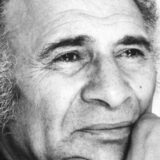
From left: Gholamhossein Gharib, Jalil Ziapour, Hassan Shirvani
This note is the short and humorous reply of Hassan Shirvani, a member of the “Fighting Cock” Association, to a critic writing under the pseudonym “Tasteless” who had found fault with Master Jalil Ziapour’s lecture and Cubist paintings. Shirvani shows that these works, despite their modernist language, have Iranian color, form, and figures; the very path that the “Fighting Cock” sought in joining new art with national identity.
(After my lecture on Gharib and the method of writing in Iran, and the suggestion of the media regarding expressing opinions on the interpretations of the Fighting Cocks and creating debate and dialogue in the field of art, those waiting for this opportunity made their presence felt, each in proportion to their accumulated knowledge, experiences, and manner of dealing with individuals and groups. Among them: a gentleman with the pseudonym “Tasteless” sent a piece to the Iran newspaper, to which one of the roosters, Hassan Shirvani, responded with a short reply.)
Mr. Tasteless, as was inferred from his article in issue 8781 of the Iran newspaper on Wednesday, 27 April, intended to write his opinion about Ziapour’s lecture (Gharib and the Method of Writing in Iran), which had been printed in several consecutive issues in this same newspaper. Unfortunately, for reasons he himself knows best, he abandoned what he had intended to raise and proceeded with another account. I wanted to ask my clever friend, who, by choosing the pseudonym “Tasteless” and the semi-serious manner of his writing, had given a special grace to his article, whether it would not have been better had he treated the subject a bit more seriously, so that he would receive a serious and instructive reply. This matter of yours falls into one of two possibilities: either you are truly a tasteful person but did not deem it fit to have said anything, or it must be said that the pseudonym “Tasteless” applies to you. (Of course, you must forgive me for dissecting the matter so openly.) In that case, it was necessary for you to wait so that those with taste could write their objections and receive replies; then, if you still objected to something and a difficulty remained unresolved, you could have asked us to answer it.
In general, your objections concerned three points.
1- Regarding Ziapour’s paintings (although criticizing those paintings had no connection whatsoever to his lecture on Gharib and the method of writing), I must say that you can be answered only when you write your objections, like a tasteful person, regarding the technical principles of painting and ask for clarification. The way you have complained about the painting, it is as if the paintings of the Sepahsalar Mosque and the public bath have irked you by making faces, and have flaunted their crooked and distorted lines (which in truth represent Ziapour’s masterful draftsmanship) to mock and ridicule you.
2- Regarding what you heard (what you heard in the waiting room), do not attach that much importance to it. Since in these kinds of cases, everyone is free to express their opinions, whether correct or incorrect, with honesty or out of bias; mentioning these kinds of conversations cannot constitute convincing reasons.
3- As for what you heard in the theater hall regarding Ziapour’s lecture, unfortunately Mr. “Tasteless” has ignored this part, which was more necessary for discussion than the other parts, and has made no comment, correct or incorrect. He has only expressed his opinions about literature (and that from the mouth of another person whom he has succeeded in identifying) by quoting this poem, which is neither free nor “bound,” but at the same time contains a world of meaning: “The door of renewal and modernization opened, literature became a hodgepodge.” As is inferred from this poem, Mr. “Tasteless” is not as tasteless as he called himself, but is rather a serious supporter of the literature of the rose and nightingale, and the candle and moth (at least). In that case, since you have seen that Gharib’s writings have no affinity with these kinds of metaphors and similes, which are characteristics of past literature, you have therefore considered literature a hodgepodge and a source of trouble for the supporters of the rose and nightingale!
There is only one point worth mentioning in this, which can be explained with logical arguments. Mr. “Tasteless” quotes his writer friend as saying: “This Mr. Ziapour, who speaks so much against imitation, why has he himself imitated European painting so much without alteration?!”
I must say, dear sir, that in this regard, your friend’s judgment is not correct. It is true that Ziapour presents works in the style of Cubism, but the color, form, and figures of his works are all Iranian and possess national characteristics. In this case, you will agree that by working in this manner, one cannot consider him an imitator and his works cannot be regarded as imitations.
In conclusion, I wanted to say: I have inferred that you are not unwilling to understand the language of modern art. If it is as I have guessed, write whatever you wish and be assured that we will answer your questions.