by
by Criticism by an objector under the pseudonym Seyyed Javad Gilani Vishkaei, entitled “Objections Take Hold”, Iran newspaper, issues 8789 and 8790, May 1949.

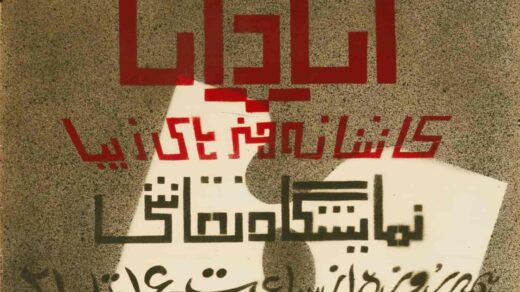
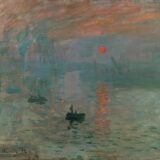
A symbolic image of the atmosphere of the press polemics of 1949
This note is the critique of a protester (under the pen name Seyyed Javad Gilani Vishkaei) of Master Jalil Ziapour’s lecture and the “Fighting Cock” Association, printed in the newspaper Iran. The text opens with an introduction from the association, followed by the protester’s sarcastic letter, which, with jabs at Kafka and Picasso, deems modernist art premature and ill-suited to the Iranian society of that day.
The grounds of support for modernism (by the Fighting Cock (Khorus Jangi) Art Association and its companions and supporters, and criticism of traditionalist conceptions) were comprehensive and ever-increasing.
Finally, the opponents saw it as expedient to engage in confrontation (something we were expecting). One of the objectors, who can be considered a representative of other objectors of his kind, wrote: “I, too, am ready to renew my youth and grapple with the Fighting Cock Association, whose founders are all high-ranking scholars and honorable and respected masters.” With buffoonery, mockery, humor, and self-abasement in the guise of becoming the dog at the threshold (to say that he is in principle knowledgeable about the issues but has now humbly risen to oppose), he wrote comments which, because it was impossible to take his words seriously, I was compelled to delete nearly half of (which were probably written after experiencing euphoria by the brazier and had no fruit for the reader other than listening to nonsense) and to present the rest after editing.
The reader can himself, by virtue of “read the detailed story yourself from this brief account,” envision the course of the criticism. Now, his words:
Respected Editor of the Iran Newspaper
It is requested that, if possible, you instruct that the humble manuscript of this writer regarding the Fighting Cock Art Association be published in that noble newspaper.
Reading a long and detailed article, which under normal circumstances would not have taken more than an hour of my humble time, Mr. Ziapour’s article, occupied me for more than three hours. I read it several times and felt regret. The author had thrown away like a piece of crumpled paper those prominent figures who today, in the words of the author of the article, follow “the Kafkas.”
Although the question arose for this devoted servant as to why the personality of “the Kafkas,” whose fame has become world-spanning, should not be imitable by the Iranian spirit, and how familiar Mr. Ziapour is with Kafka and his writings, and whether he has read even a single book of his works by way of example, that he shows such audacity, yet I realized that there are times when my humble lack of information causes such a question to cross my deficient intellect. For I, too, used to accuse old men of imitation and holding incorrect opinions; I, too, imagined that what I knew and had heard here and there was the absolute truth and what others thought was pure error, and that I was always a mujtahid, and I would pronounce condemned to annihilation those who took refuge in the corner of the opium-syrup den… and, in his words, imitated “the Kafkas.” But today I have grown old, or at least I consider myself old, and I no longer speak with such certainty and confidence. The truth is that, in my view, when it comes to art, literature, and the fine arts in general, every unsubstantial and uninformed person like myself considers himself to possess, for and within himself, the talent to express an opinion and to pass judgment unsolicited. Perhaps, too, by way of indulgence, one might say that everyone can be considered to possess this right to some extent.
An old Persian proverb says: “Even if all people are not cooks and cannot cook well, they all possess a sense of taste and can distinguish good and bad flavor.” Therefore, neither does he have the right to judge, nor do others have the right to reproach him.
But apparently, it seems that in a corner of the world (Tehran) four chosen ones have appeared, perhaps fallen from a hole in the sky, who themselves have understood the concept of art well, and now make sacrifices and force this concept down the throats of innocent people along with hard candy, vinegar syrup, and tahini halva.
But let me speak about Cubism: the very gift that Mr. Ziapour has brought for his dear compatriots. As far as my deficient understanding allows comprehension, apparently there is no error in the sentences I am about to write concerning Cubism. If we look at some foreign magazines, in a lecture that Picasso gave, he said:
“My commentators are more numerous than my paintings. I must confess that I do not understand as much about my own paintings as they do.” (Our friends in Iran, too, are bowls hotter than the soup!)
The third subject of my discourse is about art and the artist. In my opinion, if I may be permitted to express it, the artist cannot be bound by the chains of conditions, restrictions, and limits. But there are many who, on the pretext of this very opinion, abandon the people and deem themselves permitted to translate whatever they wish from word into deed.
In a wealthy country such as the United States of America, or in a country of varied pursuits like France, one might not deem such artistic people and the existence of their followers permissible, and not grant the people the right to object. But although it is not the right of an ignorant element like me to open my mouth to guide the wise, I can boldly say that in a backward, poor, weak, ignorant, and inexperienced land like Iran, adopting such a method is far from a rational act. All the same, there is no room for debate that an unparalleled craftsman like Mr. Ziapour is beyond my words and higher than my short reach, and the purpose of his art, God forbid, absolutely, could never be “gaining fame and commerce.” Perceiving to what extent the light of beauty has manifested in his being is not possible for me. But undoubtedly, those who hover like moths around his being are wiser and more aware, and the replies that his adherents will write to refute the arguments of this humble threshold dog will themselves be proof of this claim.