by
by An article by Mazandaranizadeh, titled “Criticism of Criticism, Fighting Cock Does Not Wait for the Permission of This or That So-Called Competent Person”, Iran newspaper, Issue 8793, 10 May 1949.

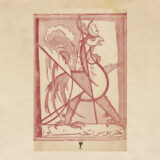
A symbolic image of the newspapers of the Fighting Cock years
This note is Mazandaranizadeh’s reply to a critic who had faulted Master Ziapour’s lecture on the method of writing in Iran and Gharib and who considered commenting on literature and art the sole right of those he called “qualified”. Writing in defense of the Fighting Cock Association (Khorus Jangi), the author argues that a general understanding of art and literature is the right of every literate person of taste, and that in today’s fast-moving age the artist cannot wait for the permission of this or that person.
The Iran newspaper published a criticism by Mazandaranizadeh in which he wrote:
Those who wish to shirk the burden of responsibilities, or those who, due to the inadequacy of their knowledge, fear activity in the path of advancing affairs, constantly shift the heavy burden of responsibility onto the shoulders of so-called competent individuals, and they speak so much of qualified persons that if anyone wishes to express an opinion based on their own taste, inclination, and discernment, with this kind of talk (that this task is beyond your competence and you have overstepped your bounds) they make a bogeyman and subject them to childish attacks. They did this so much that they kept the artistic environment of Iran quiet and stagnant in this manner. They have even stripped away the expression of opinion in literature, which has a general connection with the spirit and thought of every Iranian individual, and have made it exclusively reserved for a group of dust-covered idols (who are now nothing but antique pieces).
For several years in Iran, everyone did whatever they wished, according to their own whim and desire, without considering the conditions and principles of artistic evolution. By writing a single page of an article, drawing a candle and a moth, singing a mournful song, and playing “del-ey-del”, they became writers, painters, and musicians. No one was found to explain to them the magnitude of this kind of playing at art and its meaninglessness. If, by chance, individuals are found here and there who react against these old and vulgar ideas, they seal their lips and sit in a corner due to these very baseless clamors. Now, too, after all this time, when a few young Iranian artists have resolved to establish the Fighting Cock art association and are striving with unparalleled activity to breathe life into the dry and lifeless environment of Iranian art, once again a group has taken up the cudgel of excommunication and slander. I do not know whether it is out of ill will or a lack of knowledge of true art that they have engaged in illogical attacks and childish disparagements.
The honorable critic, apparently counting himself among the qualified persons for literary criticism, has found fault with Ziapour’s lecture on (Writing Method in Iran and Abroad), and has considered this act beyond his competence. I am certain that if this gentleman critic knew the meaning of true art, he would have never raised such an objection. For the art of writing, besides precise technical principles and factors, also has a general and universal concept of which any person of taste has some understanding (without being a specialist). A literate person who is familiar with the literature of their own country and to some extent with the literature of other countries can certainly, by reading a work, well understand whether a certain book has been prepared as an imitation or is innovative and original, and in terms of writing style, is old or new, and generally whether it is written well or poorly. Now, if some people cannot manage to understand these general characteristics of their country’s literature, it is because their general knowledge and literacy are still deficient. Explaining and discussing a general concept of the arts is the right of every literate person of taste, let alone Mr. Ziapour, who is himself a specialist artist in the art of painting and generally familiar with artistic affairs.
The literary criticism that the gentleman critic has considered the work of a qualified man of letters is something else, and general attention to the matter of writing is a general view. There are many issues, such as technique, style, and other principles in writing, judging which is the work of a specialist, and this is correct. But when the author of the criticism of Ziapour’s lecture has not paid attention to his remarks on generalities, and leaves even the general expression of opinion to specialists, it is clear that the honorable critic himself has, in principle, not found his way into the vast world of art and society’s share in it, and in this way proves his own unfamiliarity with art.
The honorable critic still does not know what a long lifespan a few years of life in the machine age is concerning the change and transformation of artistic ideas, and does not know what useful achievements and new ideas have been brought to light in their arts during this very period in countries whose people have not gone in search of so-called qualified persons for every minor expression of opinion.
If the honorable opponents consider the literary environment of the country of France during these few years (from the war until now) and their new developments and artistic fervor, they will become aware of the truth of my words.
No, my dear Mr. Critic, in the intense current of contemporary life and the lightning-fast material and spiritual transformations of today, a true artist cannot sit silent and not be aligned with these transformations and ready to move forward. One year in the life of today’s artist is equivalent to an entire lifetime in the life of the artists of the past. The expectation, too, that an artist who has been at work for only a few years should not criticize belongs to the mild life of bygone days. If the artists of the Fighting Cock art association had wanted to wait for such permissions, they would now have to be, like those qualified persons of yours, occupied with expounding the sighs and laments and expressing the helplessness and despair of the era of the rose and the nightingale.