by
by Manouchehr Sheibani’s article, titled “Critique of Ziapour’s Lecture”, published in the newspaper Iran, issue 8783, 30 April 1949.

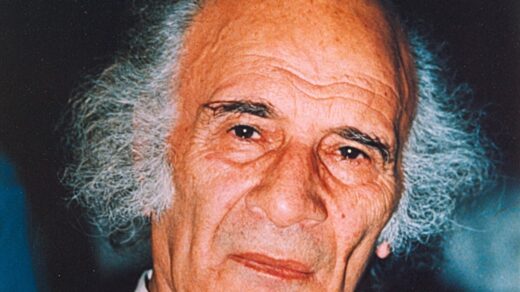
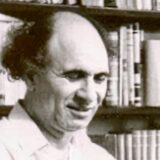
The late Manouchehr Sheibani; poet, painter, and filmmaker
This note is the criticism by Manouchehr Sheibani (poet, painter, and a member of the “Fighting Cock” Association) of Master Jalil Ziapour’s lecture on “Gharib and the Method of Writing in Iran”. Sheibani, himself a member of the association, regards Ziapour as a painter unqualified to judge writing, and holds that Gharib’s literary method does not accord with the spirit of the people of today’s Iran. The text is accompanied by an introduction from the association and a footnote by Ziapour himself.
Observers and those with traditional and partisan tastes had wanted to dismantle the Association of Radical Roosters from within, and for this purpose, they selected a vulnerable individual from within the association. The association, too, operated on this weak point like an appendix. For it had caused trouble several times, and no confidence in recovery could find its way into the mind. However, in any case, we later sincerely accepted his collaboration alongside the association with caution (especially I myself) because an artist is, after all, an artist and can also have a weak point.
In the opinions of our vulnerable colleague and friend, there were inaccuracies that we did not even deem worthy of a response. For the matters he objected to had been discussed in the association many times, since freedom of speech and expression of opinion is a necessary and unquestionable matter for everyone. He himself, who had pursued several artistic fields and entered their domains, held interesting critical and constructive views. Now, how has he considered what he did himself as right for himself, yet wrong for the other members of the association! It is a matter worthy of reflection.
The association did not take his criticism seriously, and his socializing with partisan figures and café companions convinced the association that they had misled him and that his opinions and criticisms had been dictated to him.
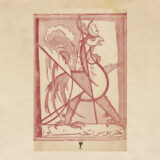
In any case, the newspaper Iran wrote: An interesting discussion and critique, by Manouchehr Sheibani (member of the Fighting Cock (Khorus Jangi) Art Association), Critique of Ziapour’s Lecture.
Respected Editor of the newspaper Iran, in publishing the text of Mr. Ziapour’s lecture, you had written that you have initiated a discussion about writing in Iran. Therefore, I (who am myself a member of the Fighting Cock Art Association) have a critique regarding Mr. Ziapour’s lecture, as well as Gharib’s writing style, and I write it (briefly, of course, to clarify matters for my dear friends and colleagues, and also for those young people and artists who have thus far had a favorable opinion of our association, have spared no effort, and are supporters of progressive art):
“The Fighting Cock Art Association, as Mr. Shirvani expressed in its one-year report, was created to bring about a movement in the artistic field that is in agreement with the times and the spirit of today’s Iran and the world.”
During his lecture, Mr. Ziapour pointed out that he is a painter and can only express an explicit opinion in the field of the art of painting, and that if he is now speaking about writing, it is because every artist must have general knowledge of the other arts. In this case, of course, he himself will admit that even if he does have some knowledge of the art of writing, since it is not his specialized field, his expression of opinion is not sufficient.
In the articles he has written about the art of painting, Mr. Ziapour has repeatedly pointed out that unless one is aware of all matters concerning the art of painting, one cannot express an explicit technical opinion; and he has even dismissed as worthless the opinions of painters working in schools from Classicism to Impressionism regarding Cubism and Surrealism. In that case, how has he judged the art of writing so recklessly (and that, too, in Iran, whose literature has a global reputation)? (1) He, being a painter, has absolutely no right to criticize the style of writing.
The literary environment of Iran does not allow Mr. Gharib either, who has begun writing, to criticize others’ style of writing. In Mr. Ziapour’s speech, as far as he has introduced Gharib and his writing style, I have no criticism of him, and my criticism begins from the point where he has cast a glance at the writing of today’s world and contemporary Iranian writing.
One must see whether the work Mr. Gharib has begun is related to the craft of “novella-writing” or if it is something else. He says the subject matter is not important. What matters is technique and technique alone. By placing beautiful words next to each other (without considering their meanings), a piece is created.
This way of thinking began in an era when people became indifferent to the realities of life and turned their attention to outward adornment.
The dizzying decorations of seventeenth-century European salons also required an intense verbosity in literature, where commonplace subjects were expressed with beguiling words.
If anyone dissected them, he would find nothing within them that could keep him satisfied. This type of bombastic literature has numerous examples in Qajar-era Iran; even at the very time when it was fully in vogue, it still had no value in the eyes of real artists and those who wanted to propel society forward through literature.
Mr. Gharib, who fights against antiquarianism, why has he himself adopted a method that in no way comports with the mindset of the people of today’s Iran and does not keep them satisfied? It must be admitted that anything enigmatic and ambiguous cannot be a work of art solely on the principle that it has ambiguity, and people are not idle enough to spend their time on these riddles, which are of no use to their lives and have come into being purely out of verbosity. You think about and look closely at that which you know has even the slightest connection with you and is of use to you. Mr. Gharib? The people of today are not children for whom you sing lullabies and weave tales to put them to sleep. For years, tales, like the ache of opium, have cast a shadow of lethargy over our eyes. It is no longer necessary for you, too, after centuries of misery and degradation, to bring these narcotic medicines as a souvenir for the Iranian nation, which needs a movement in its economic life.
An artist, in any case, in any nation and under any form of government, must be the representative of the spirit and reformist ideas of that nation. We need a realistic way of thinking. A reality that we know will help us in our reformist objectives. The (folk) literature that Mr. Gharib ardently champions seems to have a deeper meaning than the concept he has drawn from it. Those pains that weighed heavily on the hearts of the people during various eras all show themselves, through the wrapping of comprehensible words, in those simple folk pieces.
Today’s writer must determine the course of social transformation. We have raised so many pessimistic artists in our land, and have created so many opium-brazier stories throughout history, that we do not need new tales of this kind. An artistic piece today must, in addition to beauty, contain a point and content to cure a pain as well. The idea in a piece constitutes the very body of the artwork; technique and other things are clothes and adornments to display it. We cannot assume the importance of the clothes to be greater than the person (there is much to be said, but for now I will suffice with this brief amount, until later…).
1- The critic has not noticed that I, Ziapour, have expressed a general opinion about our own contemporary imitative writers, not a technical one, which of course is not my specialty (but this too is the right of every literate Iranian, concerning their mother tongue, especially when they are familiar with art) to have at least a general opinion.