by
by The article by Rasoul Moareknejad, titled “The Modernist Movement in Contemporary Iranian Painting”, the bilingual website “Asar“.
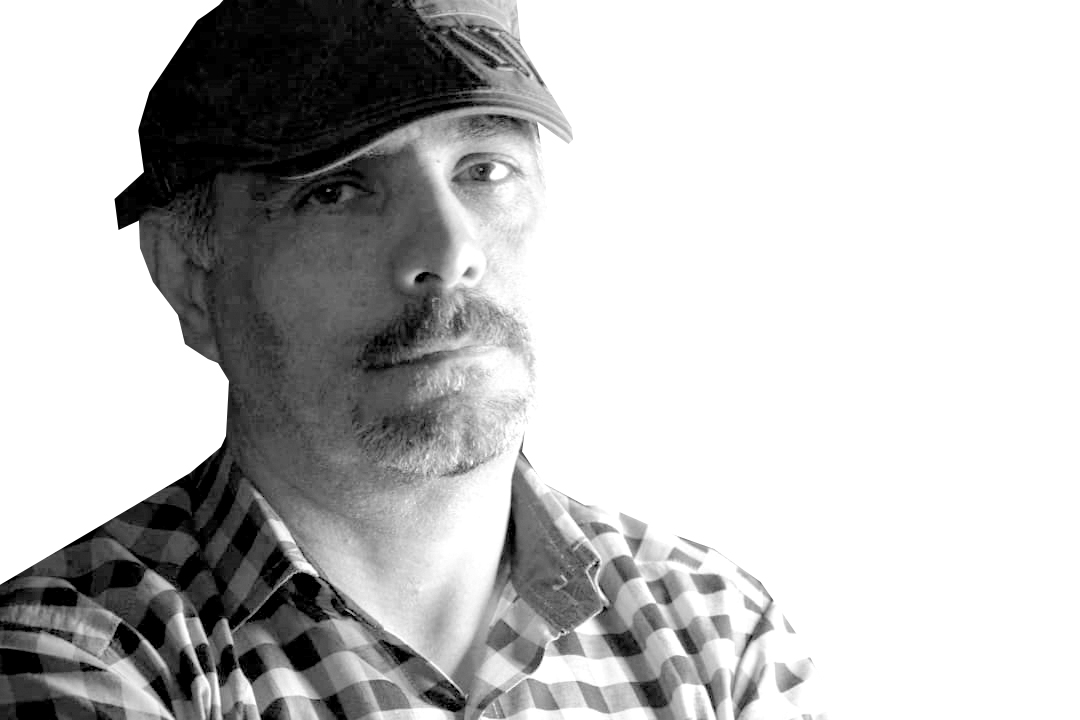
Rasoul Moareknejad, painter and researcher
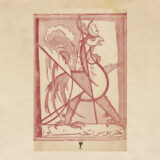
With the beginning of the second period of Pahlavi rule, new political, social, and cultural trends emerged, by which Iranian painting was also influenced. In the cultural sphere, one can point to the founding of the Tehran Faculty of Fine Arts (1940), the opening of galleries such as Talar-e Iran (1964), the “Fighting Cock” (Khorus Jangi) journal (1949), the commencement of the Tehran Biennial’s activities (1958), the sending of art faculty graduates to European countries and their familiarity with modern art movements such as Impressionism, Cubism, and Expressionism; and their return to Iran and their activities in the field of painting and the visual arts, all of which activities led to the emergence of the “modernist” movement in contemporary Iranian painting.
In the 1940s, modernist artists created works that had no precedent in the historical memory of the land of Iran and evoked the astonishment of society. These artists tried, through lectures and publishing books and articles about modern art, to create an atmosphere so that their art would become understandable to the general public. Among them, Jalil Ziapour (1920–1999) played a significant role.
After graduating from the Faculty of Fine Arts, Ziapour went to France and, in Paris, under the supervision of André Lhote (1885–1962 CE), became acquainted with the school of Cubism. After learning it, Ziapour’s effort was to be able to harmonize Cubist painting with Iranian painting. To this end, “he chose the square unit of tile geometry and local crafts as the generative cell of his paintings’ composition, and established the composition of his paintings on the axis of the combinability of dynamic colored cells; due to his research orientation regarding the traditional life of villagers and nomads, tribal themes appeared in an allegorical manner in his works.” And to this end, he wanted to replace the broken forms of Cubist painting with Iranian elements and the geometric shapes of these images.
Ziapour considered the use of geometric shapes, especially the square, as a shape that expresses the outlook of deterministic philosophy. Together with several artists, he formed an association that published a journal named “Fighting Cock”.
This action was considered one of the important and influential events in the evolution of the art society of that time. The publication of the Fighting Cock journal was banned after a few issues, and it subsequently continued its work under the title of “The Cock’s Claw (Panjeh-ye Khorus)”.
Ziapour says regarding how the association and the Fighting Cock journal were formed: “When I returned from France on my first trip (1948), together with two other like-minded peers who had suitable proposals for the advancement of art, we founded the Fighting Cock Art Association in my studio. Our goal was to make a new national art, through national inspirations, the orientation of our interpretations in the three fields of visual arts, literature, and theater. I wanted to introduce our national identity into the modern world by drawing inspiration from our heritage, without being an imitator or letting others be imitators.” He also adds: “Gholamhossein Gharib suggested the name Fighting Cock. The rooster, in terms of its physical form, is a solid and aggressive creature, striking in terms of coloration, and in terms of identity (in our ancient literature), the representative of the angel Bahman, and as a vanguard, its duty was to awaken the people.”
In that era, art debates and the conflict between tradition and modernism were such that the arguments of each side strayed to some extent from logic. Hossein Sheikh (1910–1991), one of the students of the Kamal-ol-Molk school, had said about the modern art and artists of his time: “Modern painting is nonsense. The late Kamal-ol-Molk laid the foundation of Iranian art. Painting means food for the eyes, the depiction of flowers and faces and so on, which people enjoy looking at, not crooked lines and busy green and blue colors where people stand before them and say, ‘What is this?’ What a waste of canvas! What a waste of paint! They go and paint the face of a Qajar woman very well, and then, instead of her feet, they draw two crooked lines. It is true that the artist must have initiative and also add things from imagination, but on the condition that, for example, if he sees a woman and paints her, he puts a beautiful dress on her. One should not allow modern work to be exhibited in galleries at all. Indeed, these modern painters should be advised!”
This dispute between modern and traditional art was even dragged to the floor of the parliament of the time: “Dr. Baqai, a member of parliament, interpellates the Minister of the Interior as to why he allowed the Fighting Cock booklet to be published at the high school level and propagate the ideas of the Tudehists. This matter leads to the banning of the magazine. The author of the articles on Cubism is summoned to an administrative hearing. A certain doctor interrogates him: ‘Who assigned you to propagate Cubism? Why have you chosen this field? What does Cubism actually mean?’ Ziapour provides explanations, and after his technical explanation, they apologize to him for the hearing and the banning of the magazine, and the doctor says, ‘We thought Cubism meant Communism.'”