by
by An article by Maryam Khalili, entitled “The Modern Art Movement of Iran”, the official website of Soureh Mehr Publications.

Tehran Museum of Contemporary Art; host of the exhibition “The Modern Art Movement of Iran”
An exhibition of works by Iranian modernist artists titled “The Modern Art Movement – Iranian Works from the Collection of the Tehran Museum of Contemporary Art” has been on display at the Tehran Museum of Contemporary Art since 14 December. These works are a selection from a collection that has been purchased and collected during the 28 years of this museum’s activity.
Prior to the staging of the current exhibition, a collection of works by modern European artists from the collection of the Museum of Contemporary Art had been on display. It seems that the consecutive holding of these two exhibitions can provide a ground for the critique and evaluation of the course of developments in contemporary Iranian art. For this purpose, in mid-January, a conference will be held in the amphitheater hall of this museum, where artists and experts will present papers and exchange views in this regard. In addition, during the staging of the exhibition in the museum’s galleries, each week one of the experts will analyze and critique the works of one of Iran’s modernist painters. The first session was dedicated to the critique of the works of Jalil Ziapour, which coincided with the anniversary of his death on 21 December. In subsequent sessions, the works of Hossein Kazemi, Ahmad Esfandiari, Marcos Grigorian, Kako, as well as the painters of the Revolution will be critiqued. In this regard, the activities of the art groups active in the Apadana Gallery, the Qandriz Hall, the New Art Gallery, the Saqqakhaneh School, and the Hozeh Honari will be reviewed and critiqued. In addition, two experts will also deliver lectures on the establishment of the Faculty of Fine Arts and the Faculty of Decorative Arts.
On the occasion of the staging of “The Modern Art Movement of Iran” exhibition, the Visual Arts Journal arranged a conversation with the exhibition’s curator, Dr. Iraj Eskandari. He has provided a comprehensive account of the course of developments in modern Iranian art and the activities of certain Iranian modernist artists, including Jalil Ziapour, a summary of which follows below:
The starting point of the modern art movement of Iran must be considered the year 1941, which coincided with the fall of Reza Shah’s government and the occupation of Iran by foreign forces. The events that occurred in the world at the beginning of the twentieth century, including the First World War and the independence-seeking and anti-colonial movements, also revealed the necessity of creating change and transformation in the social, economic, and cultural structures of traditional societies. Traditional societies, including Iran, took the new manifestations of Western industrial countries as their model. In Iran, this emulation took place without regard for the actual conditions and needs of the society. Many Iranian cultural officials and intellectuals, to compensate for the country’s backwardness, turned to imitating Western achievements. In this way, modernism penetrated Iranian society in a superficial and outward manner.
Before the entry of the cultural and artistic manifestations of modernism into Iran, the school of Kamal-ol-Molk was considered the representative of the country’s official art. By training numerous students, Kamal-ol-Molk established a school that for a long time cast its shadow over the sphere of Iranian painting. However, the establishment of the Faculty of Fine Arts at the University of Tehran to some extent undermined the absolute dominance of the Kamal-ol-Molk school. André Godard, the French Iranologist, and several other foreign teachers, along with some of Kamal-ol-Molk’s followers including Ali Mohammad Heydarian, began their activities at the Faculty of Fine Arts. With the presence of individuals who believed in naturalism in art, the dominant atmosphere of this faculty was opposed to modernist movements. Nonetheless, a tendency toward modernism began among some of the students. The first painting exhibition with an approach to Impressionist art was held at the Iran-Soviet Cultural Association in the year 1945. Impressionist tendencies at the Faculty of Fine Arts took on a Post-Impressionist form through the activities of painters such as Ahmad Esfandiari, Abdollah Ameri, Mehdi Vishkaei, Manouchehr Yektai, and Hossein Kazemi.
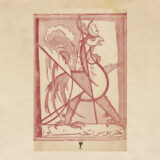
During these years, painters such as Javad Hamidi, Hossein Kazemi, Jalil Ziapour, and Mahmoud Javadipour went to Europe to continue their education. Jalil Ziapour, in Paris, in the studio of André Lhote, became acquainted with modern Western art, particularly the style of Cubism. Upon returning to Iran, he launched an association and a journal under the title of “Fighting Cock” (Khorus Jangi), in which he passionately promoted modern painting and condemned reactionary tendencies. In this way, the battle between modernism and traditionalism in the fields of art and literature began. Among the literary figures who collaborated with Ziapour’s journal was Nima Yooshij, the father of Iran’s new poetry.
Coinciding with this movement, the first gallery in Tehran, named Apadana, opened in the year 1949. In this place, modernists such as Javadipour, Kazemi, Hamidi, and Hushang Pezeshknia exhibited their works. The artistic movements that emerged in the 1940s continued during the period of the oil nationalization movement and the years after the coup d’état of 1953. At this time, a group painting exhibition was held at the Mehregan Club, which made the confrontation between the new and old art more apparent. In the year 1958, with the holding of the first Tehran Biennial, which was the most important official government measure in endorsing the modernist movement, a conflict broke out between the followers of Kamal-ol-Molk and the followers of modern art.
Jalil Ziapour was known as the leader and a staunch defender of modernism, and its representative. However, after some time, by setting aside the dogmatic imitation of the style of Cubism, he achieved a personal style. He attained this style through the simplification of forms and the application of subjects and motifs inspired by Qajar art as well as folk and rural art. Thus, Ziapour was among the first modernists who, by using elements of old traditional art, sought to find an Iranian identity for his works. Such a tendency also appeared in the works of other artists, such as Nasser Ovissi and Jazeh Tabatabai.