by
by An article by Ahmad Vaezi titled “From Primitive to Surrealism, the Annulment of All Past and Contemporary Theories”, Tehran Emrooz newspaper, Tuesday, 17 November 2009.
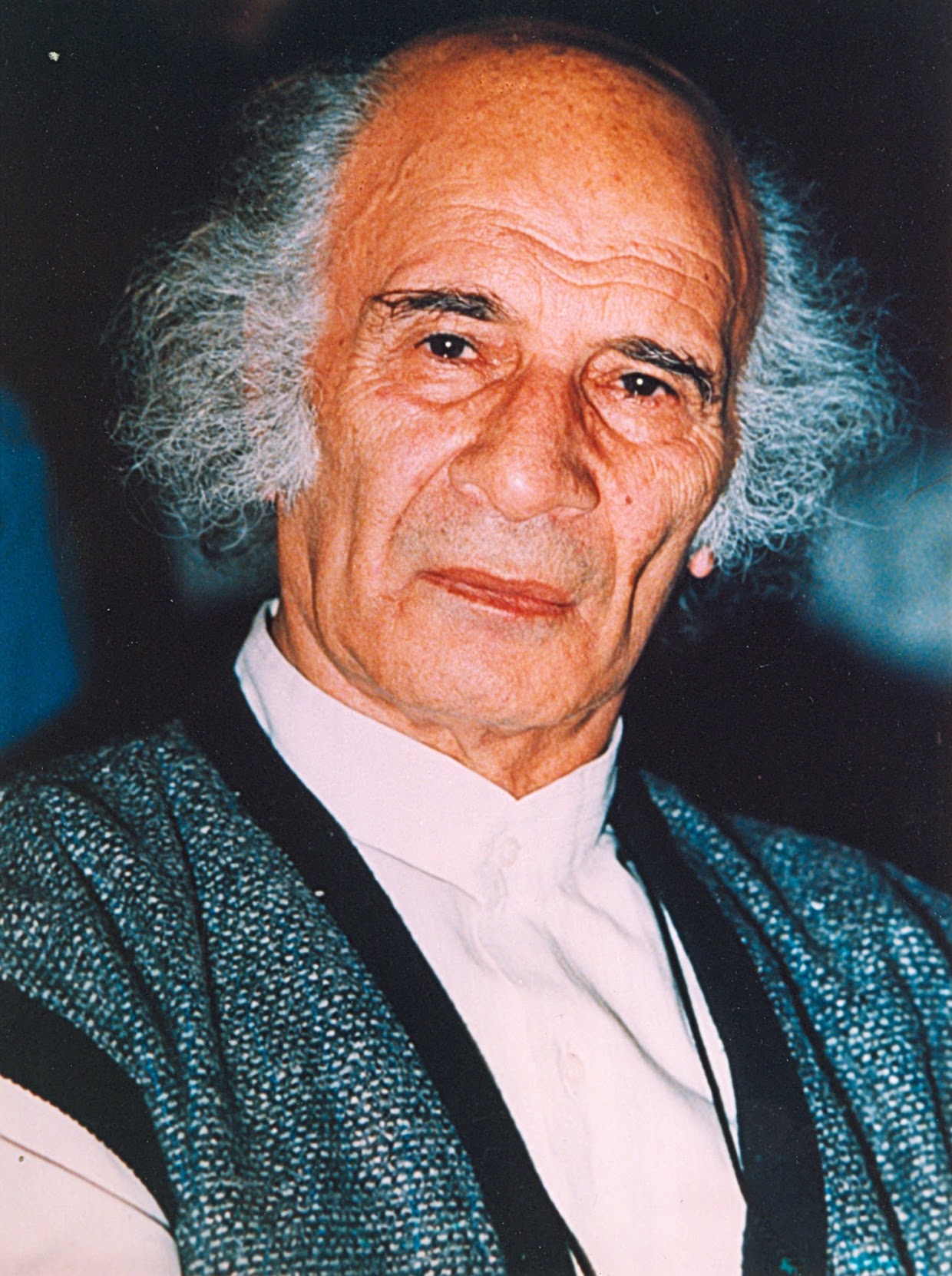
Master Jalil Ziapour, the Father of Modern Iranian Painting
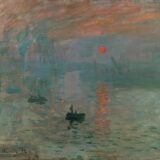
When Ziapour returned to Tehran, he was coming back from a land that was the cradle of the modern and avant-garde art of that era. In Paris, the clamor of Cubism and hundreds of other -isms could still be heard when Ziapour came from the Beaux-Arts to Tehran and faced an atmosphere in the art world whose official form was in the hands of Kamal-ol-Molk‘s students. In other arts as well, those movements had not yet emerged that we today recognize as the historical turning points of contemporary Iranian art. The young painter, with the dreams he had brought with him from Paris to Tehran and what he saw in his native country, set out from the very beginning to confront the old artistic methods. One of the products of this thinking was a booklet in which Ziapour’s new theory of painting is named “The Annulment of the Theories of Past and Contemporary Schools, from Primitive to Surrealism”. When we read Ziapour’s writings from that time under the title of The Annulment of the Theories of Past Schools, one can clearly see the enthusiasm and also the headstrong obstinacy of a youth who is determined to suddenly turn everything upside down and rebuild it anew. At the beginning of his theory, he examines the history and background of the art of painting. Ziapour at that time believed that painting had not achieved its main goal, and he writes in this regard: “How painting has failed to progress can be discerned by referring to the manner in which the periods of the schools have passed. In order to explain and display the parasites and to show the path and ultimate goal of painting, ‘how it must progress within its own limits,’ I shall provide the necessary explanations and present its general method in the previous world ‘as it was’ and then for the current world ‘as it ought to be.'” This is in fact the beginning of the new theory that Ziapour expounds. He goes on to examine the functions of painting from the early era of human life, and down to the latest schools of that time he finds fault with all methods of painting and calls them incapable of achieving the lofty goals of this art, and in a part of his new theory he emphasizes: “Until now, what they have demanded of painting has been stories and everything else except painting; that is, by means of painting, they have paid attention to the parasites attached to it, not to itself. Even to this day, they do not recognize the elements of painting that possess a beauty specific and hidden to themselves, and do not pay direct attention to them. Therefore, naturally, the beauties of these elements fall into neglect. The struggle of all schools, one after another, ‘which were rapidly propelling themselves forward,’ was only to free their collars from the grasp of the parasites that had lost their identity among their own identities, but they did not succeed.” Ziapour, who in France had become acquainted with the various artistic schools of that time, devotes a detailed section of his theory to the discussion of colors and, considering the working method of the Impressionists, analyzes the manner of applying color in paintings. Nevertheless, he does not consider the Impressionists’ method to be without flaws either. In the end, after concluding the analysis of the functions of painting and its history, he proceeds to present his solutions for changing this trend, and writes his views in 9 clauses, some of which are as follows:
- It is color and design and a kind of form and composition far removed from the ordinary that painting must work upon.
- The more unusual the theme in a painting is in terms of organization, the more complete the painting is, and the more valuable from a specialist point of view.
- If a painting includes natural or near-unnatural forms, the artist must deliberately destroy them, in such a way that they bear no resemblance to ordinary nature, so that the artistic elements may manifest completely and without parasites.
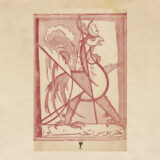
In these few clauses, one can see Ziapour’s desire to smash all the old structures. He repeats this same point in the “Fighting Cock” (Khorus Jangi) journal as well and affirms it. What Ziapour had in mind might seem to us today as youthful extremism, but if we examine it in the context of its own time, we see that it was not so misplaced. Although Ziapour, too, through the change of approach in his work and way of thinking in later years, showed that he himself was aware of the extremism of that time. Nonetheless, one cannot ignore the fact that the modernist youth generation of that era was present in all fields with such intense and fiery characteristics. Perhaps if it were not for these very extremisms, our modernist art movement would not have been able to reach the peaks it attained in the following decades. Perhaps Ziapour himself also foresaw these things when he wrote in the final clause of his theory: “It must be understood that no new method ever comes into being without the environment’s need for it; and no desire can ever be ahead of the desire of its own time; for every desire has a factor, and surely the principal factor of every aroused desire exists within the society of every seeker. Therefore, my theory is not, and cannot be, outside the demands of my present time.”