by
by Hushang Azadivar’s interview with Master Jalil Ziapour, produced in the Culture, Literature and Art Group of Channel Two of Iranian Radio and Television, summer 1989

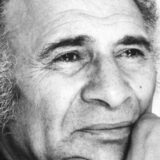
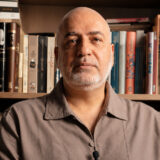
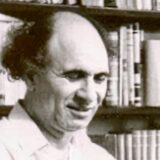
The late Hushang Azadivar; poet, translator, and documentary filmmaker
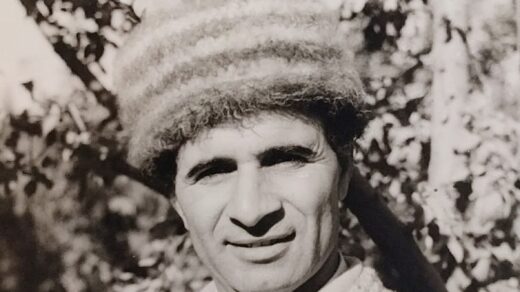
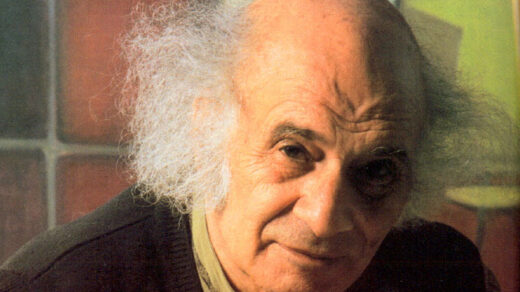
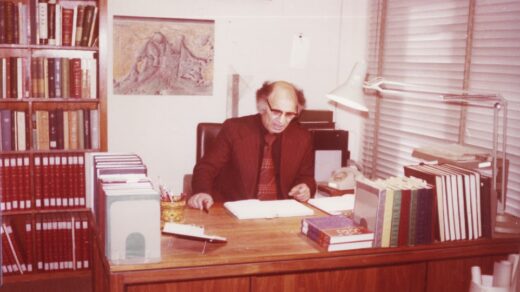
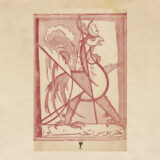
Dear readers, what you will read below is taken from a documentary interview film produced in 1989 by Hushang Azadivar, poet, translator, and documentary filmmaker, with Master Jalil Ziapour, and broadcast that same year on Channel Two of Iranian Radio and Television. This film, in addition to the archives of Radio and Television, is also kept by the Ziapour family and is one of the most complete films made during the Master’s lifetime about his life and the nature of his artistic activities. Admirers of Master Ziapour and those who have participated in programs honoring him remember this documentary. There, at the beginning of the film, the Master stands behind the podium reading a poem by Nima Yooshij (“Cock-a-doodle-doo, the rooster crows…”), and after the poem ends, the seats in the hall are shown, all of which are empty.
Now we invite you to read the full text of this conversation:
Q – Master Ziapour, if they were to write the history of modern painting in Iran, your name would certainly stand at the forefront of the founders of modern art in Iran. For this reason, before any other question, I would like to ask you: when did you enter the arena? What did you do? What difficulties did you face? And what results did you obtain?
A – I came to Iran from France around the year 1949. A fresh atmosphere was visible in Iran, or at least in Tehran. A Western movement had been set in motion in all aspects of our culture. This movement was observed in clothing, habits, and in our scientific and artistic circles. Our painters and art commentators were also of three groups. One group was following the traditions of 500, 600 years ago, and even in this path they did not possess broad knowledge of the riches of their own country. They pursued the very atmosphere of the Safavid period, even in portraiture, figure, clothing, and coloring. One would say, if you put this nose here it will be better, more traditional, and prettier. There was no critical sense at work. Another group were followers of Kamal-ol-Molk. These, at most, were subject to a conservative Impressionism and practically took photographs of nature, rather than painting it. You know that Kamal-ol-Molk went to the Louvre Museum in Paris, copied a number of classical paintings, and returned. He did not find his way into the new circles and movements of Europe. Well, even these efforts of his should not be ignored. At any rate, even in this path he advanced the understanding of painting in Iran by a great deal. But what he brought with him and taught had already become old in Europe years before, and new ideas had been raised in art. Kamal-ol-Molk’s students did not take even one step ahead of him and remained imitators of nature. There was also a third group who did not have much influence in that period. These were our young people educated in the West. They merely wanted to present their training. They would take Western methods and implement them here exactly. They, too, were entirely alienated from Iran’s cultural foundations. This situation was true of music, architecture, literature, and even poetry. At the university, too, they only taught the history of Western art, and there was no talk of the history of Iranian art. In short, in those days we set up a group and named it the “Fighting Cock” (Khorus Jangi) group. We also published a magazine named “Fighting Cock”. We had rolled up our sleeves to fight this chaotic situation in culture and art. This group sought to set a movement in motion in Iranian art.
Q – What happened that you brought up Cubism?
A – I brought up Cubism, and I had reasons for it. The design of Cubist work or simple geometry was a method that had a foundation in our homeland for years, or rather centuries. My goal was to present a kind of pictorial connection between our traditional images and modern Western works. Cubism means a method and format carried out with geometric volume, surface, and line. The social consequences of the machine age affect the artist. The artist, too, chooses the geometric shape, which is the best and most appropriate shape that could represent machine life. Geometric shapes, because of their very close resemblance to the tools and implements of the machine, became a means of inspiration for the artists of the machine age.
This method of painting arrived on the scene around the early twentieth century, and the artists who are renowned in this school today, in order to portray the machine age at that time, saw everything in the environment, the surroundings, and nature in the form and mold of the machine. Of course, their goal in doing this was not to deform nature, but rather they had the machine in mind and wanted to record the form of life of the machine age. The Cubist artist, at first, after breaking the natural shapes of everything and transforming them into geometric figures, used his usual coloring. These color concepts, besides displaying the face of the environment, also represented the spirit of the artist himself. In Cubist painting, decorative art intervened with all its characteristics. Because of this very decorative characteristic, Cubist painting became the adornment for the massive facades of factories, airports, and large stations. Perhaps one could boldly say that painting and other visual arts in the Cubist method have produced the best, most interesting, and most comprehensive simulation of the face of the machine age.
What seemed correct to me in the work of Westerners is that Western artists tried to find the necessary form and mold for every impulse, and these molds were rightly suited to the highly dynamic life and the upheavals of their lives between the First and Second World Wars. I did not want all artists to follow me.
Cubism itself had at that time been pushed back in the Western world, and other -isms had appeared. I wanted to draw everyone’s attention to the fact that these very carpets beneath our feet with their geometric patterns, these very tileworks and our decorative motifs possess an aspect of Cubism. Cubism was a pretext to show the Iranian artist how to bond tradition with the needs of his own time and not to fear the -isms. Tradition does not remain forever. It changes, even if slowly. We have a massive backing of pictorial arts. Our practitioners who deal with this backing must be quick of apprehension regarding this change and transformation, and receptive to the times, the era, and the life of their own age. Following tradition does not mean the reprehensible repetition and mold of the past, but rather it means giving room to tradition so that it may grow and transform step by step with the transformations of man. Before traveling abroad, I had made studies of Iran’s traditional arts and had even taken a course at the School of Ancient Fine Crafts. I had also consulted the paintings and arts contained within authoritative manuscript books, and after these I went to the College of Fine Arts. With the “Fighting Cock” group, a series of artistic discussions and constructive disputes came into being. Before this movement, no exhibition was established except in one or two specific places, but we set up exhibitions. No analysis and breakdown of artworks was carried out, and we analyzed and broke down these works. We would drop in everywhere, whether we had an invitation or not. A number of people also shared our thinking. Perhaps many do not know that Nima had placed the poem “City of Morning” at our disposal as a hand of cooperation with the Fighting Cock movement, and that poem is this: “Cock-a-doodle-doo the rooster crows / from within the hidden seclusion of the village / with its melody the path became full of it / it brings glad tidings to the free ear / it shows its path to a flourishing land / to the caravan in this ruined place / cock-a-doodle-doo heart and ear were opened / morning has come the rooster crows”.
Q – Who opposed you?
A – Our opponents were three groups; the first group was the miniature makers and people of traditional taste and fanatical devotees of the old masters. The second group was the Kamal-ol-Molk group, meaning the active students of Kamal-ol-Molk who had found a position for themselves. The third group were the Tudeh party members. These, for their own party propaganda, made interpretations of art so that this art would be understandable for orange sellers and mousetrap sellers, and they placed the two subjects of “art for art” and “art for the people” opposite each other and abused it, and wrote at great length about these matters. I was forced to prepare a letter and an article, and there I stated that determining “art for art” and “art for the people”, and bellowing this out, and making it into a “shirt of Uthman” pretext, has no result other than division among minds. Later, this same group contacted me and said, what do you suggest we do? I told them, for this political tension of yours and the struggle you want to carry out, you must at least choose a format that is suitable for your work. For example, you could have chosen Fauvism, not low and decadent schools.
An interesting memory came to mind about the troubles of that time. At that same time, when the uproar of Cubist painting had excited the youth and the artists, the Fighting Cock magazine was banned. They set up a sort of mini-administrative trial in the former Ministry of Culture and asked me, who gave you the mission to popularize Cubism? I said: I myself wanted to. In short, after many questions, they finally asked, what does Cubism mean? I explained it is a geometric method of painting, and consider these very rugs beneath your feet to be Cubism. They said, we thought Cubism means Communism. They apologized a great deal and requested that I not tell this matter to anyone. I didn’t tell it either, and you, too, take it as unheard.
Q – Painting, as an independent art or a communicative language, is known in our country only among intellectuals and people of culture. The general public, at most, uses it as a decorative object and has no dealing at all with its concept and content. In my opinion, a part of this flaw rests on the shoulders of our painters, and another part is due to the fact that the tradition of painting in Iran is a decorative tradition. What is your opinion in this regard?
A – Before giving you an explanation in the context of your question, I must point out a fact. You speak of decorative art in contrast to pictorial art as if this pictorial art lacks content and concept. If, by chance, there is no image in decorative art, this will not mean that it lacks concept. Decorative art, too, has interpretation, has meanings, and is comprehensible, and it gives us results exactly like pictorial art. It carries cultural weight and one can express an opinion about it. But let us get to the question that was asked. Considering the results I have obtained, I think that from the distant past in Iran, and even in the West, people of taste and rulers of the provinces have usually been the patrons of the painter and of painting. The common people had nothing to do with painting. Regarding poetry and music, too, the situation was more or less the same. These people of taste were usually those who wanted to be prominent, to fill their libraries, to flaunt their learning, or to make their own faces eternal by the hand of the painter. In our time, this situation changed. Revolutions occurred in the world, and artists set to work independently and with the support of the people, and they also founded numerous styles and methods. Unfortunately, in Iran this organic connection between the artist and the people, the intellectual and the people, and in truth between the governance and the people, has not yet been established. Of course, my talk is about before the Revolution. Our press and critics also did not do much work in this area. So you see that the sin is not on the neck of a single artist or a single style. But on the other hand, the people have had a great deal of connection with decorative motifs. Carpets, tiles, handicrafts, fabrics, and so on have always been in front of the people’s eyes. The people have been familiar with beautiful patterns and motifs from a long time ago, so they had more connection with it, and for this reason they turned to them more. I was saying an entirely new word, and this was not acceptable to them. I fought for 30 years to make it understood that painting without having insight is a job like porterage. There was a period when our painters had a national inclination. There were also a number of painters who had an inclination to the West and did their own work. I used to say to these painters of ours, where are you from? If you are of the desert, be of the desert, and if you are northern, be northern. Do something that is related to your own environment. Movements like Saqqakhaneh, coffeehouse painting, pardeh-dari, or, say, the calligraphic painting that we see presently have a national form, and the national inclination came into being from that same time and remains until now.
Q – What is your opinion about painting after the Revolution?
A – After the Revolution, from an artistic viewpoint, we made good leaps. Like calligraphic images or this very calligraphic painting that our youth execute with power. But from the viewpoint of pictorial painting, we have been almost zero. This type of painting has a propagandistic aspect. In propaganda, too, one must work at a popular level. A popular level never takes art to transcendence. But if you want my opinion regarding the painting of Iran today, I must say today’s painting is still an imitator and has not found anything that is the representative of our national character and identity.
Q – Could you also speak about your own paintings?
A – The works I did in the early days were carried out in the fields of Expressionism, Cubism, and Abstract Cubism. These works were for the purpose of familiarizing the environment with these methods. Among these works in the Expressionism method, if you have seen it, “Kaveh the Blacksmith” enjoys a special quality. I created it in the form of a wave, and in a symbolistic way I had in mind a revolutionary goal that must happen in our artistic situation. Later, I set aside this string of works and engaged in my own work. The works I carried out were in the field of the arts of our own environment, of course in a way that would also harmonize with our culture. These works possess three specific conditions.
One of the characteristics is the representation of restraint in these works. In the works and around the tiles that have been created, lines like bars meet the eye, and it seems the subjects are imprisoned behind those bars. This is a pervasive restraint that society places upon every ordinary and extraordinary individual. The second point in these works is tradition. I mean the exploitation of tradition for a fresh interpretation.
There, I used traditional colorings, but with the interpretation I myself had for the contemporary time. Because folk culture and anthropology were among my subjects of study for a time, my works and, for example, the clothing of nomads and rural people that I have worked on, intrinsically enjoyed very good colorings, which I have interpreted with my own method. The third point that meets the eye in my work is freedom of action. Although restraints are cumbersome for an artist who must observe them, freedom of action is something that every artist needs in their work.
By choosing the manner of working on tiles, which are entirely traditional and Iranian, this freedom of action presented itself to me, and I was able to not use a color whenever I did not want it, to remove tiles, or to paint several tiles in my desired color. Of course, I must also add this point that by having two main properties, one being the use of tradition and the other being freedom of action, my work is not dependent on any domestic or foreign school, and in this way possesses its own distinct identity.
Q – Please also explain a little about your family.
A – My wife Shahin and I have a son and a daughter. She (my wife) has always been my encourager, and in the first 17 years of life with her I wrote 17 volumes of research books. I suppose had it not been for her endurance, I would not have been capable of such a feat. Presently, too, she endures me in the same way. My family were all shoemakers. They migrated from Sari in Mazandaran to Gilan and dispersed, and I was raised in Bandar Anzali. My father, while performing his trade, used to prepare wooden statues for the ten-day mourning observances and send them to the provincial towns. I, too, used to make statues with brick and sedimentary clay from those very times. I had an interest in music. In 1938 when I entered Tehran, I went to the music conservatory for composition, but when the direction of the conservatory was placed at the disposal of Master Colonel Vaziri, I abandoned music and went to the School of Ancient Fine Crafts and after that to the College of Fine Arts.
Q – What are you doing at present?
A – I am busy continuing my artistic researches. I am on the verge of completing the Gilaki dictionary after 16 years of work on it, which is comparative. In the Islamic Art University Complex, I teach art history and painting, and at Alzahra University I also teach the history of apparel, textiles, and painting. I also assist a number of my students as an advising professor in their academic projects for graduation.
Q – Do you paint too?
A – I wished there were a place so I could complete the half-finished works that I have. In the years when hopelessness had surrounded me, I had thought of a painting and created it, which was lost. I want to recreate it if possible. The subject of this painting was a dried-up beach with sea thorns and shells. The sky above was toxic and venomous, and a fish had fallen amidst this space. We only see the skeleton of the fish that has fallen there and shines. The fish looks out from its two wet and fresh eyes, and is still hopeful.