by
by Interview with Jalil Ziapour, titled “Conversation with the Fighting Cock”, Ferdowsi Monthly, June 1967

Master Jalil Ziapour, the Father of Modern Iranian Painting
Ferdowsi Monthly conducted an interview with Jalil Ziapour in June 1967, the account of which you will read below:
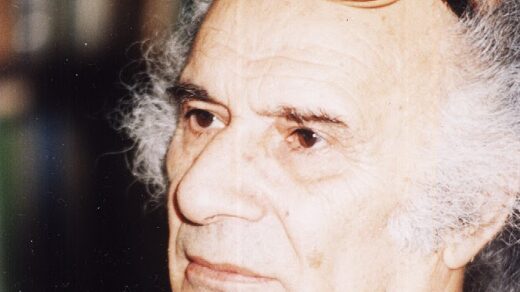
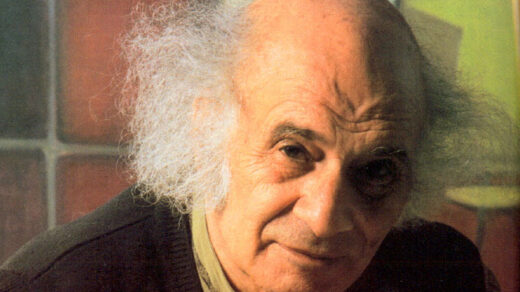
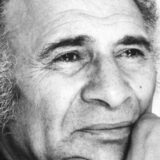
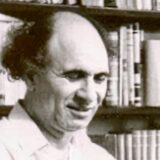
Back in those days when we went to school and had a passion for literary and artistic schools, whenever there was talk of strange and bizarre painting styles, suddenly the face of a man with thick hair would come to our minds, with a piercing gaze and measured movements, who for us was the epitome of “Cubist painting” and new painting, for the introduction of which, in those years, he suffered bitterly.
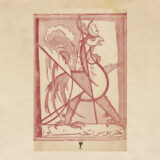
Later, he published a journal named “Fighting Cock” (Khorus Jangi), which introduced his thoughts in the field of new art and literature to young people eager for fresh innovations.
In any case, Ziapour is a familiar name, and this conversation is a reminder of an artist who once upon a time, single-handedly, endured the “sneers of the crowd” and stood with steadfastness; in other words, it is a renewal of a covenant with his beliefs and an opportunity for this esteemed artist to express his views on various issues of the art of painting.
Q- Please explain some matters in the field of new art, surveying its schools and giving a brief history of them.
A- In principle, new art has never started from scratch; rather, it has always had preceding threads and more primitive forms. But along the path of developments and progress, more sensitive and advanced artists have each, in their own period, endeavored to express their spiritual reactions and emotions in a simpler, clearer, and more appropriate mold. But at any given time, people accustomed to past and ordinary molds possess less understanding of and attention to new discourse. For this reason, new subjects appear heavy and unusual to them. Thus, in this way, it can be concluded that art in the sense of “new” never exists; rather, all nations, from the beginning of their environmental life, have advanced art in new and old forms in proportion to the progress of time. Therefore, transformation in art and the desire for novelty of each nation have been in proportion to their civilizational progress, and for this reason, the history of artistic developments is also different among nations. At the time when the schools of “Cubism” and “Impressionism” started in Iran, European countries had traversed various schools in the field of new art (in different branches), and in fact, the work that had started in Iran in a revolutionary and highly controversial manner was not new in Europe, and Europeans were leaving schools behind one after another, and their work was breaking and crushing forms. Perhaps the motivation for this goal can be considered the laying of the foundation of a specific mold that presented their environment and its effects (mechanized life, the distress of the First and Second World Wars, the psychological impacts on societies).
Q- Please give some explanations regarding the artistic schools that our artists follow.
A- In general, schools in every country have started from the beginning in an “initial” form and continued their upward trend until “ultra-modernism”. Just as in Europe, which can be taken as the benchmark from the perspective of new art, the schools of “Primitivism”, “Naturalism”, “Academicism”, and “Realism” were the foundation for subsequent schools, which are “Impressionism”, “Neo-Impressionism”, “Fauvism”, “Fauve-Impressionism”, “Fauve-Cubism”, “Constructivism”, “Crystalism”, “Abstract Cubism”, “Surrealism”, “Collagism”, “Supernaturalism” and “Ultra-Modernism”, “Objectivism”, and other -isms. However, our artists (those who went to Italy, France, Belgium, or America to complete their work without prior substance, meaning without familiarity with Iranian arts), under the influence of foreign artists and their study environment, began direct imitation. For some time, these West-traveled artists of ours were followers of the new schools of foreigners; some of these artists are still on this very path, while others, turning back halfway, began seeking novelty with regard to authentic Iranian elements; however, because they did not possess enough of the necessary elements for inspiration, they have remained stuck in their work with a few repetitive forms.
That group of our artists who are followers of foreign arts are now presenting imitative arts in imitation of American, German, Italian, and Spanish works (all of which have branched out under the influence of French artists), and such imitative works can be clearly seen in our various galleries.
Q- What is your opinion regarding the artists whose work we have seen in various galleries?
A- Perhaps naming all the artists and discussing and interpreting their works is a difficult task; therefore, allow me to speak only about those whose work has more substance and who seem to be the hopes for the future. Among this group of artists, Hossein Zenderoudi is good in the path he has taken, but for the time being, he is marking time. Nasser Ovissi’s approach to his work is correct and principled, but lately his work has become commercial and market-oriented. Abolghassem Saidi, who is a good painter and can be counted on, is still under the influence of France. Changiz Shahvagh has good artistic ideas and diligence, but he must develop them in practice. The approach of Hossein Mahjoubi in his work is correct, but he must acquire more strength. Sadegh Barirani is in the world of painting, but he still has Iran (meaning his own environment) behind him and does not see it. Sadegh Tabrizi can become good. Parviz Tanavoli can be counted on, and he has a correct approach. Heshmat Jazani’s work is good; he still has time to avoid going astray, and if he does any work, he wants it to be correct.
Q- To what extent is the influence of the West present in our art, and in principle, does our art have a national aspect or not?
A- International relations, inevitably, affect the social affairs of every nation and compel individuals to pay attention to new ideas. Susceptibility to influence is greater in underdeveloped countries, and in principle, the ground for this influence is greater. In any case, this influence is not important as long as it does not manifest in the form of imitation. But sheer foreign-orientation will raise a nation as an imitator and will kill initiative in the spirit of individuals. Every nation, no matter how much it has internationalist thoughts, still desires to preserve its national identity. Therefore, every artist must respect the aspect of nationality in the manifestation of their art, and if they carry any trace of foreigners, it must not be such that they dissolve their own personality among the works of others. Unfortunately, our artists, due to a lack of attention to this truth (perhaps due to a pretension to artistry), have paid less regard to the national aspect of their art; they are mostly pursuing work that causes the wonder of the people, and putting on the appearance of a modernist artist.
But regarding the influence of Western art, as I said, the West has had a great impact on the new art of today’s Iran (due to our artists’ lack of knowledge about their own national arts), whereas artists of substance who are knowledgeable about national arts, even while paying attention to foreign arts, will present work in which the national aspect of their art predominates. For an artist, working well does not require imitation and following after the foreigner. The past arts of Iran are so inspiring that they can be the source and generator of many modern schools. (There are many European artists who, by utilizing and drawing inspiration from Iranian works, have become the creators and founders of schools). Our past arts are the generator of many modern European schools, and before Europeans attained artistic schools and founded them, Iranians had already found those schools and expressed their feelings through them. A look at the various works of different periods of Iranian history makes this reality clear. Iranian glazed pottery works of the Islamic period have been the greatest guide for tasteful European artists. The Cubist and Surrealist motifs of Iranian painters in the school of miniature are the best evidence of Iran’s artistic history before the start of the Europeans’ work. New art in Europe has been in motion for no more than eighty years, and valuable works have been presented in its various fields; whereas the very same works can be clearly seen in a stronger, more orderly, and more artistic form in the works of past Iranian artists. An artistic work must be expressive in its statement, and familiar to the mind in form. If we want to conceive it in painting, it must be in the familiar coloring of the environment and the people.
Q- What is your opinion regarding galleries?
A- To start a new undertaking, especially one that is completely connected with the feelings and emotions of the people, a calm and slow path must be taken, and the channel of thoughts that were saturated with old molds must be changed, and they must be guided along the new path that is intended. The first step in this path is showing these works and familiarizing the thoughts and feelings of the people with artistic schools and works, and in my opinion, the existence of galleries is necessary for this familiarity, especially since it is also considered an encouragement for the artist.
Q- Well, now speak a little about yourself.
A- I wanted to be a composer. But because the possibility of this work was limited in our environment, I chose the work of painting and sculpture. In the year 1948, I started new painting for the first time in Iran with Cubism. My goal in this work was an artistic jolt that would be inspired by the assets of the past. For this reason, I gradually dissolved my style of work into a newer field and style that had more of a national aspect. In the field of this art, I can name the paintings “Zeynab Khatun”, “Kurdish Woman”, “Turkmen Girl”, and “My Husband Applies Henna”.