by
by Alireza Rezaei’s conversation with Jalil Ziapour, titled “A Conversation with Master Jalil Ziapour on the Fighting Cock Movement”, published in the “Rastakhiz” special issue, No. 625, 1977

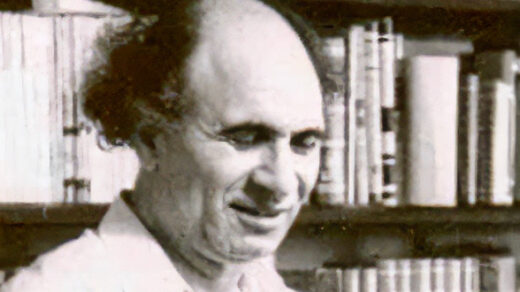
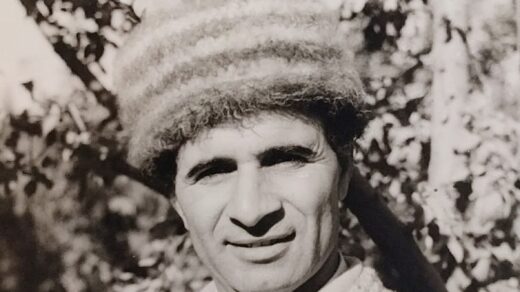
Master Jalil Ziapour, the Father of Modern Iranian Painting
The “Rastakhiz” special issue, No. 625, in the month of June 1977, wrote: “A Conversation with Master Jalil Ziapour on the Fighting Cock Movement”. Below, you can read this conversation:
Q – Now, if possible, tell us about the “Fighting Cock” (Khorus Jangi) movement. What was this movement? What approach did it have? On what basis was its foundation and line of thought? With whom did it start? Of course, I know who they were, but I ask for the reader of this conversation. In what year did it start and what was its goal? And to give a clue to the reader, and for you to also comment on its correctness or incorrectness: the movement was about “theater” or performing arts in general, writing fiction and short stories, and the visual arts, in which the question of painting was mostly raised. Is this categorization correct?
A – And in poetry as well, Nima Yooshij was with us.
Q – He was part of the Fighting Cock movement? I had not read or heard of it until now.
A – Yes, there were Nima Yooshij, myself, Gholamhossein Gharib, Hassan Shirvani, and even Manouchehr Sheibani as well, and Sohrab Sepehri, whom of course we later brought along with us.
Q – Sepehri is much younger?
A – Yes, but he hung around us and accompanied us.
Q – So Nima was among the artists who joined the movement later?
A – Yes. When Nima heard about the movement, for the “Fighting Cock” magazine and this commotion that would arise, he gave the poem “Cock-a-Doodle-Doo, the Rooster Crows” to the magazine for the first time for publication.
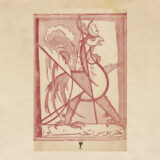
That was also because “Fighting Cock” was the name of the movement. He, too, gave the “Rooster” poem. And perhaps you do not know why we chose the name “Fighting Cock.”
Q – It would be interesting if you could explain fully. It could be important for the reader.
A – In our ancient literature, the rooster, always on behalf of the angel Bahman, would cry out from atop the hedges every morning, waking people up and calling them to work and effort. For this reason, because it crowed and sounded the wake-up call, we took the rooster as a symbol, both in terms of the work we were doing and in terms of the beauty it possessed. And “fighting” was also because we had an artistic struggle, and we deemed this name highly appropriate.
When we told Nima that our magazine was named “Fighting Cock,” he gave us that poem for publication. He collaborated with us the entire time and also wrote articles in our magazine for the guidance of young poets, under the title “The Neighbor’s Words.”
Q – Tell us about the others as well.
A – Yes. Gholamhossein Gharib in writing and Nima in poetry.
Q – Gharib was mostly in fiction.
A – Yes, but in a new form.
Q – You know, at the time when Mr. Gharib was raising the question of fiction, and that mostly in its modern form, this movement had already begun with Jamalzadeh and then Hedayat and Bozorg Alavi.
A – Yes, but as we heard, upon reading several of Gharib’s stories, the late Hedayat had said: “On top of our work, a new work has begun.” At that very time he had recognized that, with the approach Gharib had taken, it possessed novelty.
Q – They regard the beginning of fiction writing as being with the works of Jamalzadeh…
A – But not this manner of it. You know, Jamalzadeh’s approach was a realistic approach.
Q – Now that this point has been clarified very briefly, let us move to the second branch: Mr. Shirvani and the question of his theater. What did he do for theater?
A – Shirvani worked on two fronts. One was that, in principle, he would support and give wings to those who were working in theater, in terms of intellectual cultivation and activity. This in itself was educational work. To the extent his talent allowed, he wrote for the theater, wrote plays, and wrote several plays, one of which is “Mah-Pishani.”
Q – It seems it was mostly for children?
A – It was for adults too.
Q – I have read several plays by him for children and students.
A – No, he wrote good plays for adults as well.
Q – Did he stage them too?
A – Yes. He staged a few, such as “Continued from the First Page.”
Q – Where was it staged?
A – At the Farhang Theater.
Q – Where was that?
A – Lalehzar. By the way, during the period of our movement, at first the press did not show cooperation, because they themselves did not believe in it. But later, from two angles, they realized that our manifestations were useful: both in terms of the things we were saying, because it seemed to them that our words were not baseless, and also because there was a great deal of talk and it was fodder for the newspapers. So, from two points of view, they gradually paid attention.
The first person to pay attention to us was Rahnama, who had the newspaper “Iran” and collaborated with us to the end. Other newspapers too, such as “Mehr-e Iran”, “Post-e Iran”, and other newspapers.
Q – In that social situation, with what ideas did the movement begin? It would be better if you explained by mentioning the start date of the movement.
A – The movement began in 1948.
Q – Please tell us, to what extent was this movement social?
A – Social. From the socio-political aspect or from general aspects?
Q – In general.
A – In that situation, we were thinking about one issue. First of all, in politics, we had nothing to do with anything. That is, we ourselves had no political instinct.
Q – And Nima did not fit into this?
A – We had Nima beside us as a seasoned, elderly man who collaborated with us.
Q – Perhaps you consulted with him.
A – No, we never consulted with him, because consultation with Nima was accompanied by a certain amount of people-pleasing and conservatism, and in this respect we had no kind of people-pleasing or conservatism. We considered conservatism an error and regarded people-pleasing as deception. We said that people must be enlightened only in art, and we never had any dealings with political groups.
Q – Do you not think that, given the social and economic difficulties people had in that period, this work was an escape from their situation?
A – I want to say, we had felt it… but it is a personal instinct. We, a few people, were thinking together of an art movement. In the beginning, we felt that the opposing political groups were not sincere in their work. It was possible for us to speak in a way that aligned with our line of work, since their views neither matched our view nor our Iranian creed.
Q – So it was very conscious?
A – Yes. Especially since, from the artistic point of view, we were completely on two separate fronts. They would say demagogically: “art for society,” and we would say: “art for art’s sake.” They spoke in another way. Through demagoguery they set people against us, and we made people understand: an artist who lives in an environment, the works he creates, whether he wishes it or not, belong to the people, are for the sake of the people.
It was not the case that we should come and accept instructions and theories wholesale and make a hue and cry, saying this is art. So we had withdrawn ourselves completely. That was why our slogan was “Bring forth new speech, for the new has a different sweetness.” And because they had repeatedly attached political labels to us and had banned our magazines, in “The Cock’s Claw” (Panjeh-ye Khorus), which we later printed, we wrote that in this publication only artistic matters would be addressed, and we defined our path in writing.
Q – Who were most of the opponents?
A – We were fighting on two fronts: one was the political front, and one was the front of the followers and pupils of Kamal-ol-Molk. In our view, their works were backward and had to come forward. And the political groups, too, would say that these works you are doing are abstract and not social. We fought both this group and the naturalists. The difficult point for us was that the so-called classical front showed solidarity with the political group, because their interests lay in the two of them crushing us. Now see how the few of us fought over nineteen years until we pushed them back.
The press helped a great deal, because if people had not become aware of what we were doing, how could we have succeeded? With the help of the press, our activity reached the point where even from surrounding cities and countries they would ask for the “Fighting Cock” magazine, and we would send it to them. The point is that the work became difficult for us when these two fronts made common cause.
Q – How many issues of “Fighting Cock” were printed?
A – “Fighting Cock” has an interesting history. To print it, the three of us would pool a small amount of money.
Q – Whose license was it?
A – The license made no difference, because it had a groundwork and had to have certain particulars, and we would choose someone and obtain the license in his name. Each time they banned it, we would begin again under a new name.
Q – When was it banned?
A – It was banned several times. Kamal-ol-Molkian influences caused the bannings. They would go and speak ill of us, saying that “we” were destroying the culture of the country, that they are stooges, they are destructive; and a number of credulous people, in order to please them, would ban the magazine without any basis at all.
Q – It had no political aspect?
A – No, none at all. Once, when the magazine had been banned without reason and they had also dragged me before an administrative trial, they asked me: “Who instructed you to bring Cubist painting to Iran? Why did you study painting? For what reason do you continue this method? And why do you discuss it?”
I saw that the questions were very irrelevant and that all these whys had no meaning. I said: “Would you like to know what Cubist painting is?” They said: yes. So I explained. When I explained with evidence, I saw that they were looking at me in astonishment. When I asked the reason for their astonishment, they said: “We thought Cubism was a branch of Communism!”
Think of it: in the center of our education, in the Ministry of Culture of our intellectuals, so-and-so and so-and-so at that time could not discern that Cubism is taken from the word “cubic,” meaning volume; it is a geometric design!
Q – Please tell us, how many issues of it were printed?
A – Four or five issues were printed and then it was banned. We continued again, and this time we printed a magazine called “Kavir,” because we were upset by then, aggrieved, but we had not left the field, and we said that here is a desert region in which, apparently, there is no growth.
They banned “Kavir” too. This time we published “The Cock’s Claw.” They banned “The Cock’s Claw” as well. We got help from people who had a press instinct and wanted to put out a newspaper; other newspapers helped us, and it was agreed that we would write the arts pages for them.
Q – So the initiator of the newspaper arts page in Iran was your group?
A – Yes. It was for the first time, in the period of “Fighting Cock,” that newspapers set out to have arts pages.
Q – Which, to our great regret, apart from two morning newspapers, no newspaper, not even the well-known ones, has a regular arts page; and if they do have one, they have gone into its heart with assorted advertisements in such a way that they take away the interested reader’s desire to read. And apart from two magazines and one or two monthlies, the rest do not have an arts page.
A – With the utmost regret. I wished I could do whatever was in my power. But how long am I to cry out? Nineteen years is enough. I have a goal of my own, and I must attend to my work as well, and one cannot always roar.