by
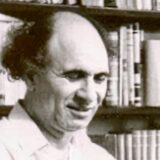
by Interview with Master Jalil Ziapour, titled “A Heavy Burden on the Shoulders”, “Donya-ye Jadid” Weekly, No. 5, Monday, 29 May 1967

Master Jalil Ziapour, the Father of Modern Iranian Painting
“Donya-ye Jadid” Weekly wrote:
“It is a brief and passing conversation with Ziapour, who, more than anyone else, carried a heavy burden on his shoulders and, more than anyone else, endured the bitterness of that burden. What is quoted from him can, at least, express the view of a pioneering artist for young artists who, in any case, tread a path and seek a goal.”
Q – The time of the birth of modern painting in Iran?
A – We cannot say from a general perspective when modern painting was born; because nothing is born suddenly, but rather the means must be provided for it to manifest at a better time. We cannot say that the painting of the Qajar or Safavid periods, or other periods, was unprecedented; these were the groundwork for other work in subsequent periods.
But regarding the manifestation of art in the European style in Iran, it must be noted that no such intention or deliberateness was ever present. For without looking at European Cubist works, our tiled buildings (mosques) are all Cubism, as are all the decorative patterns, such as carpets, that possess Cubist designs. Therefore, if I claim that I brought Cubism to Iran, it is not wise. Moreover, with us having such a history in schools of art, and that in a place where most foreign artists themselves claim to have been inspired by Eastern art, especially Iran, how can I say that I have the honor of bringing Cubism to Iran? As if I had brought cumin to Kerman!
The fact of the matter is that I was only able to draw the attention of artists who had fixed their eyes on European classical arts to the reality that we too have abundant artistic assets that can be a new ground for our work. Now all the artists who step into the field of art benefit from the results of fifteen years of artistic activity by me and my companions. This activity and movement has been effective in the progress of artistic work.
If it were not for the will and talent of our artists, this caravan would still be limping. If at one time I spoke of Cubism, my intention was for us to also look behind us. Our people walk every day on carpets that have geometric patterns, but they do not recognize that these patterns are also Cubist (geometric). I did not tell artists to be Cubists or to imitate European Cubism; rather, I have always said to utilize the elements of national art.
Q – About Pop Art and contemporary art?
A – It must be understood that the goal of art is the understanding and creation of the artwork. These days, an art has entered the market which is named “Pop Art” and is indicative of our artists’ haste to influence the public mind as quickly as possible. For this purpose, they use all artistic mediums: they mix painting with sculpture, and both of them with music.
Mixing these arts with one another is a kind of marketing and may for a while put some people’s names on everyone’s lips and create fame for the creator, but these disturbances deal a great blow to arts with a specialized identity. Our artists, who today, without having sufficient national substance, are under the dominance of and imitating foreign painters, can more quickly, unknowingly and aimlessly – and of course they have no goal other than self-display – step into the wrong field of mixed art.
Q – What is your opinion on the works of contemporary painters?
A – Some try to make their works national. Of course, this is a turning point, but their work is superficial, and this is a weak point. They must strive more deeply in their work because they are all talented. Like Tanavoli, who is a talented young man.
Ovissi took a path that could have created a school based on the Qajar school, in a loftier state, but he dragged the work down to banality, to the level of the marketplace. He did not know how or was unable to carry it forward properly, even though better works were expected from Ovissi’s talent.
The works of Mansoureh Hosseini are haphazard and offhand, having no connection with her environment. But Changiz Shahvagh is at a high level in terms of artistic thought. Qandriz did not have solid work, and if he had wanted to do so, his life did not last long enough. Nevertheless, appreciating the existence of the likes of Qandriz is a source of encouragement for living artists.
Massoumeh Seyhoun’s works are one hundred percent imitative. Although she has perseverance, her time is spent making works that copy fashionable and hackneyed designs.
Q – About the Biennials?
A – The establishment of the Biennial by the Ministry of Culture and Art is a very commendable and acceptable act, because a wide field of activity is provided for artists. Judging in the Biennial is hardly worth debating, because a completely correct judgment will never exist. Judgments are always relative and in accordance with the circumstances. What is of importance is the existence of the Biennial and the activity that its organizers perform.
Q – Have you participated in the Biennials?
A – I have participated in two Biennials. Once they gave me a gold medal, and another time – from what I have heard – a hostile dispute arose over my work. Obviously, from my personal point of view, it was of no importance because I had not participated to win an award; rather, cooperation and companionship in this endeavor was my aim.
Q – Do you also earn money from painting?
A – No, having an income in Iran is very difficult. They do not pay for good works, and for bad works they do not have money to pay, but for average works they occasionally spend money.
Q – What is your opinion about the indigenous painting of Iran?
A – Our current miniatures are so banal that it is a waste of words to talk about them. This art could, in specific times, reflect limited issues. If in the past our painters created delicate paintings in the margins of books and reached the level of perfection in this work, now the same works of the past must not be imitated.
The artist of that era presented things that were perceptible and tangible to him: those clothes, those ornaments, that goblet, and those jugs. Are such manifestations perceptible today as well?
Modern miniature painting, with the same staging and the same methods of the past, is truly unnecessary and objectionable. Especially since modern miniaturists, with their works, are a source of embarrassment.
Behzad (the contemporary miniaturist), his works are not artistic. Furthermore, his works are imitative and a mixture of Reza Abbasi’s drawing and the style of Indian miniatures. This kind of work is futile, and even assuming it were useful, its drawing and artistic composition are superficial.
In works of this kind, the faces and movements of the subjects are not such that they even seem to have been properly retained in memory. This is not a problem particular to him; all our miniaturists are like this, making forms that they know by heart, and if a new form is asked of them, they cannot design it.
Naturalistic rendering, in the sense of copying nature, is not artistic work but rather an imitation of nature. All the efforts of progressive artists are aimed at not being imitators and having a fresh vision. Given the existence of color photography, painting nature is just as banal an act as modern miniature painting.
Nature must be used as much as necessary, and if needed, it must be broken down; for natural forms are a pretext for expressing intentions, not the intentions themselves. Therefore, naturalistic rendering and nature-worship not only hold no merit for the artist, but defeat the very purpose.
Q – About contemporary Western painters?
A – To put it briefly: Salvador Dali, despite possessing a strong technique, is now playing the clown among artists. His works are solely for the astonishment of the viewer. Creating astonishment in the viewer is not proof of artistry. Our artists also try to arouse astonishment with their imitative works, under the name of “Abstract Art” and the like, and in this way make a show and get talked about.
Picasso, alongside good works, has also produced many worthless works, and a group, knowingly or unknowingly, are busy praising him.
Q – Iranian painting and the global reaction to it?
A – Except for a few people who pursue a path in one way or another – whose efforts, it is hoped, will one day bear fruit – the rest are imitators and followers of foreign artists. In this way, they consider themselves modernists. These objectionable and incorrect efforts are a source of embarrassment, and I am sorry that they are sometimes not even aware of the shamelessness of this matter.
Q – Modernism?
A – I love painting and modernism in general and am a supporter of it, and my struggle over the years has also been for the advancement of this very cause. But what work is modern and who is a modernist is a debatable matter. Lack of restraint, imitation, and pretension to modernism do not make an artist a modernist. This is a discussion that must continue in the future.