by
by This article was machine-translated from the original Persian and may contain inaccuracies.
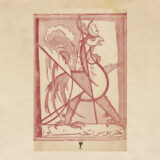
Jalil Ziapour’s article, titled “The Solicitude of the Likes of Messrs. Engineer Taherzadeh”, published in the newspaper Mehr-e Iran, No. 2179, Monday, 28 November 1949

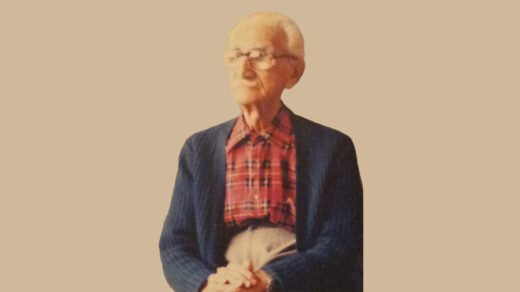
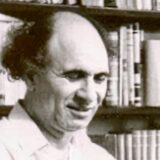
Master Jalil Ziapour, the Father of Modern Iranian Painting
The newspaper Mehr-e Iran wrote: In response to the article “A Critique of a Critique,” written by Mr. Engineer Taherzadeh Behzad and published several issues ago, a letter has reached the newspaper office from the young artist Mr. Ziapour, which we print for you:
“The solicitude of the likes of Messrs. Engineer Taherzadeh is born of the utmost purity, simplicity, and sincerity. This group imagines that we want to ruin Iranian art. As if it were in our power, even if we wanted to, to be able to destroy the ancient culture of a country! Safeguarding naturalist artists, or honoring those of service, is not a matter that is unacceptable. But it is clear to us that these people, while safeguarding the principles of the past, make a pretense of the natural change of artistic conditions. However, they do not deem this change expedient for their present day, and they practice negligence and conservatism in this task. It is here that they raise the cry of ‘alas!’, flaunt the works of the past, bring forward individuals to intercede and bear witness, and in every way depict us as unworthy heirs, making it appear that we are the bane of art and are destroying all the works and artistic dignity of the past. Whereas our contention is not with the past. For the past is past, and we speak of the present.
In every artistic field of Iran, there are several groups, each of which, under various titles, lays claim to connoisseurship of art, love of art, and artistry (how nice that recently, after a long time, their taste has been set to work and they have now girded their loins with resolve)!
Of course, in every country, affairs are in this same manner, and one should expect nothing else. Of these people, one group boasts of “we were” and “they were,” and, in the manner of a genealogy, has memorized a few names of past artists and considers it proof of familiarity with art.
Another group, with claims of this sort that they have suffered immensely to learn something! and because their age has reached a point where, in their own minds, they permit themselves any kind of abuse, call whatever arises from the taste and thought of the youth childish and misplaced; and by citing proverbs and aphorisms from various divans (as the Master says), they look sourly upon the young, and like superstitious yet kind fathers, with bluster and scolding, and a lack of substance and mastery, they want to admonish the clever and intelligent child. Sometimes with gentleness and advice, and at other times with sharpness and harshness, they show off their experience and learning in order perhaps to make their hollow position more secure, and meanwhile, with their grand conceptions, keep their idols standing firm as always.
Another group consists of some of those among us who have gone to Europe; these, too, by having casually seen a few things (supposing that because they have gone to Europe, they have therefore understood whatever they have seen), and with the more or less reading they have of current trends, want to present themselves as completely versed and informed individuals, and to offer their criticism and the expression of their incomplete opinions to the public with this same meager substance; and because they possess a bit of taste, art for them is more a means of gaining attention and self-display rather than a serious discussion around the reality of art. That is, one person strives for art, puts the very essence of his soul and life into it, and speaks about it with faith and enthusiasm, discusses its flaws and merits as is due with the necessary research, and is always in pursuit of perfection; and another, because he has found a pretext to appease his desires and whims (such as expressing opinions and showing off), proceeds to write and criticize.
Of course, such people have always been known, and in every environment, the existence of such persons is a natural matter. Therefore, moral criticism of such individuals is certainly out of place, and I only have a word to say about artistic thoughts and opinions (if there is any incorrect thinking); and since I am certain that it is only through criticism that the validity and invalidity of any artistic matter becomes clear and illuminates the public mind in such affairs, hence, without regard for the moral and social value of the various groups, I state the necessary artistic things that must be said.
In the article that had been written as a critique (against me), Mr. Engineer Taherzadeh expressed an opinion regarding my views on the art of painting. As the respected readers are aware, he wished to comment on my theory, which is itself a separate booklet on painting, but only made a remark regarding the phrasing and expressions of my article (that it would have been better if, instead of ‘perceptible effort’, I had written ‘visible effort’, and instead of ‘composition’, ‘combination’ and ‘harmony’).
It must be known that perceptible and visible are two separate stages, and there is no need at all for me to explain this, and my meaning was perceptible effort, not visible. Of course, there is no objection to putting ‘combination’ in place of ‘composition’, but ‘harmony’ cannot be used, for harmony and combination are two separate actions; where he insists that I use the word ‘combination’ instead of ‘composition’, he himself immediately uses the word “dessin” instead of drawing, and the word “anatomy” instead of the artistic dissection of the body! Where he speaks of the fundamental grading of painting, he states: In the art of painting, coloring is of significant importance, but not in the first degree. Rather, dessin (meaning delineation) is in the first degree. Second, the subject and combination of the painting, and third, coloring. I must point out that he speaks about painting in a way that even the painters of past eras do not believe in. For supposing that if at one time human knowledge and demands required that expectation of painting (which he has mentioned), today such views are no longer paid heed to.”