by
by This article was machine-translated from the original Persian and may contain inaccuracies.
An article by Jalil Ziapour, entitled “A Visit to the Borgese Gallery – Ardeshir Arzhang and His Works,” published in the weekly “Donya-ye Jadid,” No. 6, Monday, 5 June 1967

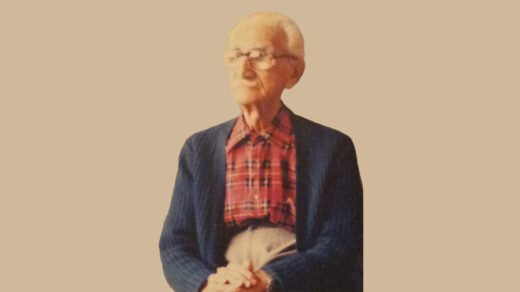
Ardeshir Arzhang, painter and sculptor
The lack of discipline and imitation among Iranian art students who had poured out of the Italian Academy was causing an uproar in Tehran and made me loathe whatever was new art. Why do you not pay a visit to Isfahan and look at the art of those ten- or twelve-year-old children? Is Isfahan not closer than Italy?!
At the “Borgese Gallery,” I saw some metalwork by Ardeshir Arzhang. Jesus, peace be upon him, had been designed and composed naked like Father Adam (as is usual with exercises in academies). Further away, I saw a sketch of a woman that was lifeless and formless, and other women had also been sketched who, in ballet costumes, were mimicking ballerinas. They were more like old dolls that had been stuffed with old clothing and rags, and they in no way showed the bodies of living, agile, nimble, and swift ballerinas. There were other sketches in which, like the rest, even within the academic context, at least the consideration and observance of scholastic exercises had not been maintained, and it seemed that these works belonged to the era of the maker’s exercises in the academy, and they had seemed so good to him that he had felt inclined to exhibit them! And again, I saw a number of hammered reliefs to which, with bronze-like colors, he had wished to give the superior charm of the antique. There were a number of hammered and repetitive turkeys, human figures, and tiny angels, of which it cannot be said that these creations were produced in Iran. For, first of all, the subjects belong to another environment, and secondly, they should not have been executed with so little technical consideration (for this sort of carelessness and playing the artist is restricted in foreign academies, and it is only in our country that it recklessly shows itself); and if these works were produced in Iran, then why are they not influenced by our local environment? What did the maker of these works want? And what was he thinking when he was making them? And when he was hammering to make turkeys and human figures in sheets of metal and shape little angels, he probably did not think that, from an artistic standpoint, he must observe many technical aspects and pay the necessary attention to creating pleasing compositions. Since our maker had the intention of creating decorative works, he should have known to take a path such that, while paying attention to both conditions of the works (decorative and non-decorative shapes), they would not have monotony or, so to speak, uniformity. If the maker was thinking in this way while working, then why did he not achieve the right result, and what was his intention in creating highs and lows in these scraps of sheet metal and embossing them? I was reminded of the hammered works of our own Isfahani artists and made a comparison. The monotony of shapes in the work of Isfahani artists finds a pleasing rhythm, at least through various plays of forms, the nuances of designs, and the highs and lows; and the artistic calculations that have taken on an unconscious form through practice and repetition lend variety to the works and bring pleasure. These artists are not much concerned with innovation. But precision and continuity have taught them what they must do, what things they must observe, and what to do to provide pleasure and agreeableness for the eye. This is a craft, but this very craft, owing to the maker’s interest, takes on an artistic form, and without having the goal of creating a so-called surreal or abstract work, it produces compositions that, while possessing strong and masterly forms, also feature interesting decorative compositions.
In the hammered works of our Isfahani artists, skill and many noteworthy technical aspects are present that can serve as a reliable guide for seekers of craft and art. Why is it that as soon as an art seeker goes abroad from Iran for a couple of days, without looking at the limitless wealth and power of the artisans of his own country and drawing inspiration, he imitates foreigners, and imagining that he is entering the city of the blind, flaunts his imitations before our people as artworks and personal innovations?
At the Borgese Gallery, the works put on display are in the domain of the academic school, and the hammered works possess a wearisome monotony and lack of calculation. The faces hammered into a single panel, due to the uniformity of the design and shape and the expressionlessness of the countenances, resemble melons and watermelons arranged side by side. It would be appropriate for our artists, if they harbor any idea of innovation in the field of hammering, first to pay a visit to our own Isfahan (for, first of all, Isfahan is closer than Italy and other places, and secondly, our Isfahani artists are more skilled than foreign artists) and also to take a look at those ten- or twelve-year-old children of ours who are proficient in their work, so that in this way they may at least show that they are the worthy children of the artists of their homeland. In this current exhibition at the Borgese Gallery (which, in terms of presenting the works of our artists, has a great claim upon all of us), two things have been done well:
1 – The wooden frames of the hammered panels (in the choice of whose color and shape taste has been applied).
2 – A plaster sculpture by the aforementioned maker, which appeared good within the academic style.