by
by Hoda Amini’s conversation with Mahmoud Javadipour (one of the founders of Apadana Gallery), Tehran Emrooz newspaper, 17 November 2009, Culture Section, p. 12.

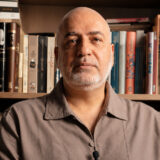
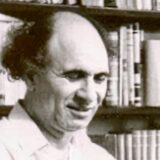
The late Master Mahmoud Javadipour, one of the founders of Apadana Gallery and one of the pioneers of the first generation of contemporary painting
Mahmoud Javadipour is one of the painters of Jalil Ziapour’s generation who, during the active period of Apadana Gallery (under Javadipour’s artistic direction) organized numerous exhibitions and lecture sessions there; programs that in those years, due to being novel and unfamiliar, were also criticized by many visitors. Although Apadana Gallery did not last more than a year, in this very short period it played a major role in introducing new art to its audience and making them interested in this field. We spoke with Mahmoud Javadipour about the activities of this gallery and Jalil Ziapour’s presence there.
Q – As far as has been heard, at the very beginning of the founding of Apadana Gallery, an exhibition of Jalil Ziapour’s works was held there, or perhaps it was a group exhibition in which his works were also included. Is that correct?
A – Yes, it was a group exhibition. My works, those of Hossein Kazemi, Ziapour, Ahmad Esfandiari, Javad Hamidi, Hushang Pezeshknia, and others, were alongside each other.
Q – Apparently it was a sensational exhibition. I would like you to talk about it in more detail.
A – Ziapour had just returned from Paris at that time.
Q – Exactly what year was it?
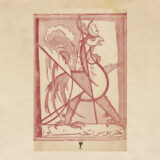
A – It was between the years 1948 and 1949. Ziapour had done some work in the field of Cubism, and since no one here was familiar with it, it caused a great sensation. At that time, painting was thought of differently.
Q – In fact, were Jalil Ziapour’s works in this exhibition the first series of modern painting in the new style to be displayed in Iran?
A – Yes, and because people did not know this kind of work, they would say, “What are these things? These are not paintings!” And of course, these comments depended on what sort of crowd the viewer belonged to. There were also viewers who had some familiarity with art, literature, and music, and could digest these works more easily. But for those who knew art only in its classical form, it was very strange, and they made severe criticisms. Consequently, we regularly held lectures there, showed films, and engaged in all kinds of activities to make art known to the people. In Apadana Gallery, we had an evening gathering once a week, and we would invite people who were familiar and compatible with that environment. The beginning of the gathering was like a party: we had music, and after that, the guests stood in groups in front of the paintings, and the painters would talk about the works like street performers. This enabled us, during the single year that Apadana Gallery was open, to familiarize a group of five to six thousand people with the art of the day, and this was a very great service that Apadana rendered to our country’s art.
Q – How did the critics react to Mr. Ziapour’s works?
A – The critics were not all alike either; there were those who were familiar with new art discourses and accepted them very easily, and the outcome of their work was usually positive. In contrast, there were also those who still believed art to be the art of Kamal-ol-Molk, and said, “What are these things that you are feeding to the people in the name of art?” Apadana played a major role in raising these debates at the time.
Q – How much did Mr. Ziapour himself try to explain this type of art to people who took a critical stance against these works and rejected them?
A – He, like the other friends in that group, would stand in front of the paintings, gather a group around himself, and explain how new art differed from classical art and what goals it pursued; and this greatly helped the understanding of people who, until then, had paid no attention to art at all. Later, many of them went after art themselves, having actually received their primary spark from that very time.
Q – It seems confrontations also arose?
A – Many issues arose. Because the people who came were from the intellectual class, the local shopkeepers, and those who wanted to cause trouble; they would come and fixate on something. One day, while Mr. Ziapour’s exhibition was underway, a colonel came in, looked at the works, and asked me, “Whose paintings are these?” I said, “These are Mr. Ziapour’s works,” and at that very moment Ziapour himself entered and I introduced him. The colonel asked, “Is this him?” and then slapped him hard across the face! Poor Ziapour was left dumbfounded. That is, they were agitated by these paintings to the point of behaving in this way. There were even people who tore up the works. In fact, both positive, good events and negative ones occurred in Apadana Gallery; for example, people who saw works contrary to their taste reacted this way. In subsequent exhibitions, things became a bit easier. After that, we held solo exhibitions of our works and changed the gallery’s program every week. To have financial support, we charged for admission tickets, and after every evening gathering when the guests had gone, late at night, Ziapour, Esfandiari, I, and others… would each tie a cloth around our heads and start cleaning and washing the rented dishes that had to be returned the next morning, so that we wouldn’t have to pay an extra night’s rent. We also slept right there at night. Occasionally we sold a painting, but the sale of works was very low.
Q – Please tell us about the characteristics of Jalil Ziapour’s works.
A – In those years, Ziapour moved away from figurative painting and turned to Cubism. After that, he wrote several books in the field of ethnography and, in his own right, made a great contribution to Iranian art. At that time, before the Faculty of Fine Arts began its work, art was limited only to classical arts, and there were people like Ashtiani and Olyazadeh who mostly copied. The art lesson in schools was also very rudimentary, and children copied from the drawing the teacher made on the blackboard. Once the Faculty of Fine Arts began operating, painting was taken seriously. Figures like Master Heydarian, who worked mostly in drawing, and Ms. Aminfar, who had studied at the Beaux-Arts and worked in Impressionist art, gave their students more freedom. One of the very useful programs conducted at the Faculty of Fine Arts was sketching, in which a subject was announced, blacksmithing for example. Then the studio would be closed and the students were not allowed to go out and, say, look up a book. They were forced to deliver the subject from memory on paper within a specified time. This forced the students to employ their imagination, and when the works were finished, on the day of judgment, all the professors would gather and judge the works. The grading started from a demi-mention, followed by a first mention, a second-class medal, and a first-class medal awarded to the students. This program was the greatest lesson offered at the Faculty of Fine Arts, and it gradually caused them to abandon imitation.
Q – How do you categorize Jalil Ziapour’s periods of work?
A – Ziapour graduated from the faculty one year earlier than I did. In those years he drew, and a lot of the time he also copied in that same manner of Kamal-ol-Molk and classical themes. After the sketching programs that the faculty held, Ziapour’s working direction suddenly changed, and he distanced himself from copying and imitation. In the sketching program, some worked much more easily, and some with more obsession and difficulty, whose work usually turned out weaker. There was another program called decorative arts, where they would tell the students, for example: a monument is going to be built in the middle of a certain square; as a painter, what do you think would be best to build here? This forced the students to think outside their field of work, which was painting. Or, for instance, they wanted a design for a toothbrush box, and you had to consider various issues for that design and enter a bit into the technical drawing lesson. These matters caused artists to move out of the poetic and classical phase and deal with how to visualize a subject and partition a space.
Q – Whose idea was the sketching and decorative arts program?
A – These were part of the curriculum of the École des Beaux-Arts in Paris. At that time, André Godard was the director of the Museum of Ancient Iran; he was familiar with painting, and together with a few others they designed the curriculum of the Faculty of Fine Arts.
Q – How do you evaluate the activities of Apadana Gallery in those years compared to the galleries that are active today?
A – At that time, we created something out of nothing and introduced people who knew nothing of art to art. After the programs we organized, newspapers and magazines would also start writing articles about art, the lives of artists, and issues of this sort.