by
by

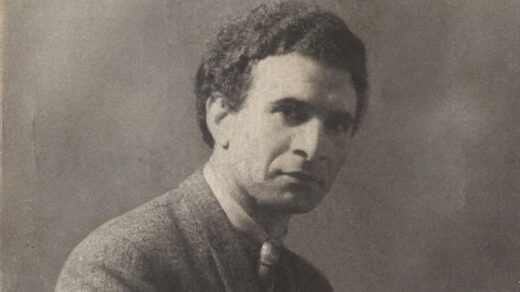
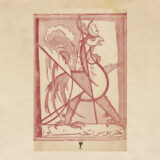
Master Jalil Ziapour; cover design of Fighting Cock magazine (Issue 1); May 1948
Painting
From those early days I felt that the painter’s aim and method must be other than that which is prevalent among us! Fortunately, seeing the artistic environment of Europe, especially Paris, had a deep effect on me and made me more steadfast in what I believed. Our artists often complain that our environment is not artist-nurturing and favorable, that the artist is not encouraged, and that people do not understand art!! Such misplaced objections arise mostly from the fact that they are generally unaware of this important principle that: “It is the artist himself who must provide a favorable and artistic environment, not the people”; and they are oblivious that the artist himself is responsible for this unfavorableness of his environment. How can people who do not see artistic creations, do not hear discussions about differing tastes, and whose eyes do not become acquainted with works of art as they should, be promoters of art and encouragers of the artist?! Even more misplaced and stranger is that our artists, each of them, old and young, by painting a couple of likenesses of the late Khaqan and a few landscapes of Shah Abdol-Azim and Golab-Darreh or coffeehouses, on the grounds that they are painting from nature, consider themselves master painters, and have great expectations of the people; unaware that they have blindly followed a kind of conventional and vulgar painting from past years, and are moving forward by stepping in the footprints of their predecessors. Not moving forward, but rather stagnation it must be called; for it is all blind and imitative. Even pure, incorrect, and mindless copying from nature.
Our paintings do not go beyond poetry and storytelling, and our poetry and poetizing do not go beyond rhymed prose and rhyme. The melody of our music is that same barbaric music, and the importance of our singing lies mostly in the poetry and its meaning, and that too in a haphazard and whimsical manner; that is, on the instrument, however the fingers happen to wander over it, and in singing, however the voice rolls in the throat and navel. Of course, no one denies that the fine arts must be expressive of human emotions, and a document of the contemporary spirit of the people of an environment; but all these means must be employed in a proper manner, and their artistic aspect must certainly have superiority over their haphazardness, and above all, the intention must be that it independently respects its own limits and aim, more than the limits and aim of other arts. And it must also be known that art, in its essence, means creating; that is, expressing emotions in a higher and non-vulgar manner; for willy-nilly every work, whether bad or good, in any case expresses emotions, and everyone, in whatever language possible, even if stammering, expresses their meaning; without, in expressing it fluently, being bound by the order and composition of words or the beauty of their similes and sentences.
“Most people believe that art is a God-given and natural thing; becoming a good painter or writer, being a good sculptor or musician, all of this depends on a person having natural talent. It is true that if someone does not have enough of what people call natural talent (and what I call acquired talent), they cannot become an artist; but in any case, in order to become a good artist, work and perseverance, understanding nature and how to use it to one’s advantage, and knowing the aim of art are necessary. It must be noted that nature never chooses a profession for anyone, and does not write on their forehead that this one must become a painter and that other one a musician. There is no ‘must’ in the matter except perseverance. Everyone, to the extent of their talent, strives in pursuit of their desire and in cultivating their taste in order to become a good artist, and gradually penetrates into it to obtain the necessary result. An artist must, through perseverance and habituation to their profession, enter a more private realm from the ordinary state, so that they can accurately see those subtler representations and manifestations of nature that are out of the reach of ordinary people (due to their lack of direct attention to them), so as to both cultivate their sense of sight and present their perceptions through the aperture of their own eyes with artistic principles and a deceptively simple skill.
٭ ٭ ٭
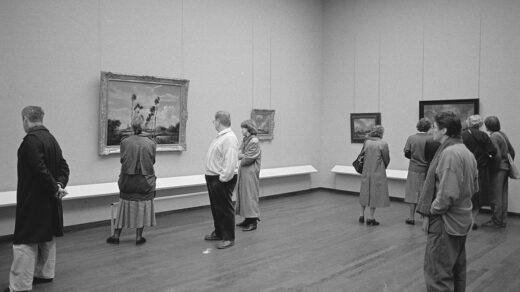
When a person of taste enters the Museum of Modern Art in Paris and sees all that uproar regarding the differences among schools of painting there, they are violently shaken and ask themselves why so much diversity in different tastes has arisen?! Such whys are enough to draw a researcher as far as is necessary and make them understand what is meant by art and painting. We must confess that our painters have for centuries been far from the real meaning of art. Let us set aside a small number of anonymous artists who left us a wealth and even became models for European nations, and whose works European artists still take as models for their new works and utilize; but it is not enough merely to boast of the dead, to turn over century-and-some-old decayed bones, and, by virtue of this line, ‘I am he whose ancestor was mighty-fisted Rostam,’ to hold our heads high.
٭ ٭ ٭
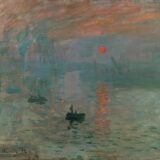
After this idea reached the minds of artists, that they must show their own perceptions rather than be the slaves of the tastes and preferences of others, various schools emerged, among all of which there were only two schools that reached the peak of their development and yielded the results of their long years of exploration. One was Impressionism, which created a revolution in the world of coloring and gave another luster to the meaning of painting; and the other, which is the newest of all, and from the standpoint of technique is directly related to the art of painting, not to poetry, versifying, and storytelling, is the school of Cubism, and between these two schools (that is, from Impressionism to Cubism) a tumult was raised and artists worked with extraordinary fervor. (All these activities were solely and exclusively so that painting could free its collar from the clutches of the parasites who had lost its personality among their own personalities, and manifest itself as it should).
This fact is so apparent in the painting exhibitions of Europe, especially in Paris, that no person of taste, even if they are not versed in art, can deny the matter. Although in Europe, too, many artists still, having put a rope around the neck of their decayed beliefs and old method, drag it along behind them, and out of prejudice (which arises from ignorance) cannot bring themselves to abandon them; nevertheless it is clear that, despite all this, they feel that they have spent a lifetime wielding the brush for a pittance (like most of our artists) and have gained no result. Only with eyes that glare fixedly, they look hostilely at those whose ears pay no heed whatsoever to their reproaches, foul language, and mockery. If only at least such an environment existed in our country too, and we had pioneers who were followed by a group of artistic enemies looking at them with a hostile gaze. But unfortunately, not only must one give up hope in the existence of such arenas of rivalry, but fundamentally one must believe that even these few individuals who, stumbling along, are pursuing the path of art, and out of sheer ignorance are caught in indecision, will sooner or later abandon the work.
For when we look at their condition, first of all, in miniature painting, setting aside the two schools of Behzad and Reza Abbasi, all the rest follow the footprints of these same two schools. There is no aim or purpose in sight. Beauty has no concept or meaning. There is neither line nor design in the midst, nor color nor mood; and always, like our poets for whom the rose and the nightingale are an inseparable part of their poetry, for these people, too, the subject of the miniature never goes beyond a plane tree and a cypress, or a stream of water and a flask of wine, a drowsy cupbearer and a wry-necked little sheikh. It is always the same tree with the same kinds of colors, the same beloveds with the same faces, the same arabesques and compositions with the same conventional colorings. As long as an Iranian has life in their body, they must see these kinds of miniatures, or the present miniatures of Mr. Hossein Behzad; still, credit where credit is due to Mr. Behzad, for the others, by mixing ordinary stippled painting with miniature, imagine that they are creating modern miniature.
And as for our painters from nature, each of whom made a trip to Europe (may their lives be long), each returned with one or two copied paintings from the Louvre Museum under their arm, and that too with bluster! Neither did anyone see their work, nor their copies, and never did a sound arise from anyone, and whatever anyone had seen was for themselves and no more. Even so, they expected and still expect that, with salutations and benedictions, they should be named among the great masters and as peers of renowned artists, and that their works should also be bought at relatively exorbitant prices so that they may be encouraged; otherwise, evidently they have not been encouraged, and the people do not nurture artists and do not understand art either; so they to that side, and the people to this side, and we have nothing to do with you.
No one denies that Iran is a source of taste and art, and from this standpoint is among the first-rank artistic countries. These very tileworks and the designs of carpets and rugs that have adorned our doors and walls are a complete example of Iranian taste and proof of the people’s direct attention to art and artists; but our artist must learn how art should be advanced toward the truth and perfection of the day, and must teach the people how they should look at art and what things they should expect from each art.
By Ziapour