by
by Text of a speech by Master Jalil Ziapour, published in Kavir Magazine, 14 February 1950

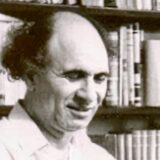
Kavir Magazine, 1949; from left: Jalil Ziapour, Gholamhossein Gharib, Hassan Shirvani
In life, human desire, according to the laws of nature, is based on need. If, in the face of this law, there are also cases that must be taken into account, they too will be taken into account. But this has absolutely nothing to do with artistry. That is to say, how one thinks is distinct from how one displays a thought.
What the public expects in art is precisely the effortless enjoyment of works to which they are accustomed, and the opinion of the critics of our tightly packed masses is also the same.
I must always shout with legible sentences and a resonant cry in the artistic environment, and constantly repeat that: how one thinks is distinct from how one displays a thought, and an artist is someone who, in defining and interpreting a subject, performs it skillfully through a specialized technique, and a work of art is that work which, solely in terms of the presentation of any subject, possesses technical elements of value.
Those philanthropists who beat their breasts for love of the people, indulge in unrestrained scribbling, and pretend to sympathize with them with a few words to please them, thinking they can (or must) bind artists, are mistaken. For perhaps the artists versed in the craft are more aware than those who pant outside the artistic environment and, with their ignorant agents, rip apart opposing artworks with knives and stable nails.
In such a society, it is obvious that to please the tightly packed masses, they expect artists to present their ordinary and comprehensible daily realities, shouting that we need explicit optimistic thoughts and an optimistic society, and bellowing:
“These melancholic artists, who distort our sacred nature, these retrograde degenerates who pay no heed to the tastes of society, these misguided, extremist, warped-taste individuals, these reactionary Surrealists and Existentialists, these Dadaists and disrupters of peace and intellectual order, divert humanity from happiness. They look upon society with contempt. They consider themselves above the entire society. This group of people are not artists. They are the outcasts of society.”
Yes, outcasts!
It is not surprising that these heralds and saviors of humanity call progressive artists the outcasts of society by these titles and, panting and sweating, incite the flood of the ignorant populace against them; but I must, with the utmost peace of mind and complete confidence, repeat as always that how one thinks is distinct from how one displays a thought.
These rabble-rousing demagogues, with all this clamor and uproar, have no aim other than attracting the common people. It is clear to even the most ignorant person that the level of societal understanding varies, and for this reason, their level of inquiry, study, discernment, and enjoyment is also different. A beginner never understands from Sa’di what they should, and does not derive the pleasure they should from Hafez. An ignorant objector never benefits from a superb work as they should, and a scholar unversed in art understands nothing of art. The limit of a scholar unversed in art bears the same relation as that of an ignorant person who understands nothing of art. To understand and enjoy art, both must keep abreast. I will always shout that without study and effort, enjoyment and benefit are impossible. Do not imagine that since you possess advanced knowledge, you can always enjoy art; no, you must also gradually acquire art literacy in parallel with other needs, and you must always keep abreast. You have never enjoyed art in the correct artistic way. You have found your own desires and imagined them to be a masterpiece of the art world, whereas you have perhaps never possessed the competence for such an opinion from an artistic standpoint. The competence to criticize and express opinions in art does not belong to those who do not distinguish how one thinks from how one displays that thought. High art cannot provide enjoyment to people who lack the necessary cultivation. Even these populist critics, those who feign love for the people and on these pretexts demand art for the tightly packed masses, and by force and coercion broker junk artworks for the common people in the art market, expecting progressive artists to follow the tastes of the populace, are oblivious that, knowingly or unknowingly, they are harming the culture of our nation. A progressive artist must never create vulgar art. Progressive artists are not those who are at their disposal and that of the populist critics, creating works in whatever way they want. A progressive artist is not someone whom some uninformed pseudo-critic would want to guide. Progressive art can never represent the ordinary intentions of the people. Today’s art never retells the tale of ordinary deprivations, nor does it ever consider itself permitted to express even extraordinary deprivations, nor is it ever obliged to display joys – from the standpoint of being optimistic about life and promising a bright future to the people – as propaganda and diagnosis. The artist is not a nanny who recites to the people the poem, ‘He took my hand and led me step by step, until he taught me how to walk.’ Nor is today’s art a newspaper, a magazine, or the tale of Hossein Kurd, to please the minds of a handful of uncultivated commoners. Art always deals with intelligence, mental agility, and sensitivity. Today’s art can only penetrate the thoughts, work, and emotions of more discerning people. Today’s art displays the necessary realities. New forms and molds are not so completely foreign to the people that they have no meaning. This art is foreign to those who go in search of props, and becomes difficult to understand for those who have not acquired sufficient gradual knowledge in art. A real artist, like a true thinker, strives to display their thoughts and opinions in the best way (as technical evolution demands). An artwork must direct the attention of listeners and readers toward realities that were not in their minds, and must detach them from the ordinary world and lead them into a newer world. There is no denying that the individual lives within society, and society is made up of individuals, and art arises from society, but when the artist creates a work that particularly reflects the interior of his own life, in this case, even though they may assume his work is an individual and personal one, it must still be understood that his work is a hundred-percent social work, and in any case represents and characterizes his spirit, and such an artist always has his back to the past and his face toward the world of new art. Therefore, he never returns to it, and today’s artworks are always representative of the manner of expressing the theme, not direct representations of the theme itself, and every artist who believes in an idea, in any intellectual direction, is subject to their own belief-based interpretations, which ultimately have a human and social purpose, and it is obvious that the manner of expressing thought in art is artistry, and the scale and level of selecting theme and subject depend on the general knowledge and insight of each artist.