by
by Text of Master Jalil Ziapour’s lecture at the Fighting Cock (Khorus Jangi) Art Association; published in the newspaper “Iran” (issues 8772, 8773, and 8774), dated 17, 18, and 19 April 1949

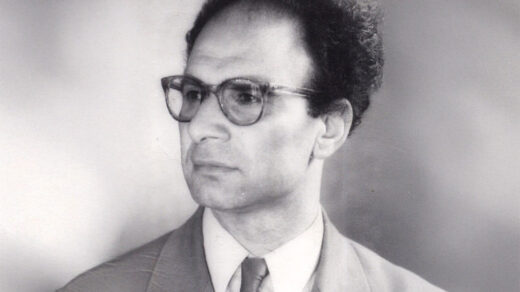
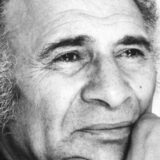
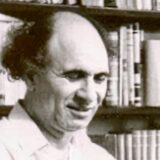
Master Gholamhossein Gharib; writer, poet, and member of the Fighting Cock Art Association
The day of the annual celebration of the Fighting Cock Art Association in the Farhang Theater hall on Lalehzar Street. On Thursday evening, at the annual celebration of the Fighting Cock Art Association, Mr. Ziapour delivered a lecture on Gharib (one of the founders of the Fighting Cock Art Association) and his method of writing, the text of which we now print. In our opinion, Mr. Ziapour’s lecture is very interesting in that it begins a discussion and opens a conversation, serves as the ground for dialogues, and creates supporters and opponents; and in this regard, we hope to receive abundant critical discussion, and we call upon our dear readers to judge. Here is the text of the lecture:
Gholamhossein Gharib, of whose importance in prose writing in the literature of Iran from this point onward I shall today explain a little to you, is a writer who in a short period has taken a positive and considerable step on the path of writing. In our environment, without exception, everyone considers himself a writer. Of course, the art of the modern novel has not been in our literature for very long, and for this reason it does not have a firm foundation and structure. Up to now, only a small number have worked on this art, while they are directly or indirectly under the strong influence of foreign writers and have borrowed from their manner of thought and writing, even from the titles of their writings. A large number of others are imitators whose lack of skill is evident throughout their writings from every point of view. This inattention, even to correct imitation, and the failure to consider environmental situations and mentalities, have caused a glaring backwardness in the principal aim of artistic writing. In Iran, writing has mostly taken on the aspect of imitation and propaganda for foreign literature.
If you have read the book Fetneh, with a little comparison you will see that it is an unskillful imitation of the book The Confession of a Child of the Century by Alfred de Musset. In this book, in addition to intellectual imitation, quite apart from the fact that in terms of psychological analysis the characters do not correspond to psychic realities, it also has unforgivable errors in terms of the technique of writing, the arrangement of material, and sentence construction in the Persian language. If you look at other writings named Ziba and Ayeneh of the same kind, whose authors, with the same dervish-like manner of thinking and the lamentations and wailings of the era of Romanticism and Idealism, which they have slightly mixed with Realism, have tried to make them emanations of an Iranian-like spirit. For this reason, they write in a “Lamartinian” manner and suppose this kind of writing to be pleasant and delightful. Of course, it is pleasant and delightful for some (those who have not yet brought the burden of life into the land of the machine age and are concerned with the lives and romances of bygone and antiquated eras.)
Perhaps you will say that literary opinion is not your business. But our mother tongue too is Persian, and no one can prevent us from expressing an opinion about the literature of our mother tongue. One must not be heedless: an artist who possesses a specialized technique, if, under the pretext of having a specialization, he is unaware of the world of art around him, is not an informed and qualified artist, and certainly has not entered the current of artistic evolution. The painter, the writer, the musician, and the playwright have a very close and inseparable connection with one another “in terms of their manner of artistic thought.” The painter, in general, must know into what current the writer has fallen, how he thinks, and at what level among the levels of his society he stands. The writer must know what opinion the painter has about beauty, and in what worlds he strives in painting and writing, and what his aim is.
Only by knowing these circumstances can a specialized artist measure his own position, whether he has fallen behind or is moving with his time. Of course, for this purpose a general study is sufficient, and it is not necessary for him to enter into specialized minutiae. Therefore, each of the specialized artists must be informed about the other arts (broadly and generally), and they have the right to express a general opinion about them and to measure their artistic level in relation to the movement of their own time. What I am recounting is not something that requires the criticism of a precise literary critic. These defects are so evident that any non-artist of taste who has only a general study of how world literature has evolved can immediately discern in what path our writers are walking.
Our writers have made writing (in the form of imitation) mostly a means of diversion and fame-seeking. That is, fame-seeking and putting themselves forward have driven them to writing more than talent and the concept of writing have. Especially to our novice writers, who follow Russian writers and want to write in imitation of them (and in their very manner at that!), writing appears so easy that anyone who takes a pen in hand and writes a few words imagines himself an artistic writer. Writers whose aim is solely national art and culture (not imitation and the acquisition of fame) must strive on this path. The Iranian writer must strive greatly so that, while studying foreign literature, he does not fall under the influence of their manner of thought (which is made by their own milieu). He should try to make his writings possess the color, quality, and psychic characteristics of the Iranian (not the Russian and French). By changing a name, for example putting Parvin instead of “René,” a work does not become Iranian. The Iranianness of a work has certain characteristics, and those characteristics are related to the manner of life and dependent upon the Iranian milieu and climate. Any artist who does not take this very important matter into account will certainly be deprived of a bounty (which consists of national reserves and can be the greatest impetus to artistry for Iranian writers).
It is not necessary that if the country of France has its Lamartines and Victor Hugos or “Sartres,” our environment too should follow them and be their deficient and inept copyist. Or if in other places there are “Kafkas” and “Zweigs,” we too should have “Kafkas.” It is not necessary that if the Soviet Union has Chekhov and Pushkin and Maxim Gorky and others, our young people too should imitate them with or without skill. No, none of these appropriations is necessary. Merely knowing the kind of work they do is enough for us. One must not be a bowl hotter than the soup. One must only know what ought to be done in art.
Gharib, who has literary substance in writing, has set to work with the necessary study of the schools and modes of artistic thought of today’s world, and by grasping the weak points and defects of novel-writing in Iran, and he strives for a logical movement and the creation of a new method (suited to the time). Gharib does not walk in the footsteps of foreign writers. At a time when everyone, with a few pages of study, set foot in the footprints of qualified writers, Gharib gazed intently at those footprints that had become the mark of earth and time, and he did not believe in imitation either. Gharib, especially, encountered this objectionable practice of some of the standard-bearing writers of our environment, who wanted to write nationally. But they had not understood the meaning of national writing and had begun work.
Our progressive writers thought that what was meant by national writing was that only colloquial words and expressions should be used. They thought that employing vulgar words was national writing. There would have been no objection if our young writers, together with our older writers, had used these vulgar colloquial words and expressions (provided that they had at least paid some attention to the essence of the matter). The pity is here that they sacrificed the substance to appearances. Worst of all, they looked even at these appearances superficially, did not know the value of these appearances as they should have, used them out of place, and suppose this kind of writing to be the revival of Iranian literature. National writing is not that they string together vulgar words and say: “This is the national language.” No, what is meant by the national language is not these obscene words of the uncultivated class. Language and expression are those factors that form the psychic structure of all classes of a nation. They are those stories that contain the aspirations and dreams, the satisfactions or frustrations of a nation. A national work is that work in which the spirit of that nation’s own life can be seen. A nation must see itself in it, its gestures and allusions, its desires and whisperings, its tales and proverbs, and its habitual phrases, not the abuse and conversations of riffraff and rabble!
Gharib paid attention to this great defect of our contemporary writers. He recognized the flaw in the work and then began to correct it. In his work named Qalamzan, you perceive the perseverance of Iranian artists. You perceive the steadfastness and tenacity of Iranian artists in the face of adversities, and their audacity and indifference in the face of scarecrows, and these persons’ persistence in reaching their goal. No sentence with this delicacy and explicitness, when he says: “This jar belonged to a time when people shared their loving confidences with the patient stone,” can better represent the dominance of environmental beliefs over the people. For us Iranians, this legend, with this shell, possesses a vast world of the mode of thought and beliefs of a period when people’s attachments and distrust of one another had caused no one ever to reveal his secrets to anyone else. A time when the people’s only refuge was patient stones. Stone, this body that at least had the capacity and endurance for the difficulties of the age and environment. Finding this kind of patient stones and using them in Iranian literature in a manner worthy of it can alone preserve its national aspect and represent national mentalities.
If you pay attention to Gharib’s work in “My Talking Picture Frame,” when he speaks of the old tinsmith of thirty or forty years ago, although in his writings the connections are outwardly broken, nevertheless such a firm connection is established in the essence of the matter that you never feel any jarringness or disconnection in the material, and you smoothly enter the world of life of thirty or forty years ago. You remember all the characteristics of that era with its mode of thought and its mementos. You enter a world half-dream and half-reality (which is a pleasant and beautiful stage) and you place your thoughts at the disposal of a series of your own memories that have a complete connection to those very times of thirty or forty years ago.
Gharib, the passion for art has coursed through his veins and sinews to such an extent that whenever he sees an artwork, he involuntarily thinks that he himself has not yet accomplished anything. His writings do not satisfy him the way he wants. This feeling in Gharib turns into an exhausting distress. To the point that he always makes common cause with me and says, for the advancement of modern national art, I too will have no fear, even of your words about sweeping the streets of Istanbul and Naderi, and shoulder to shoulder, I will endure every kind of hardship. This sentence is always his habitual phrase, when he says: “Life exists in only one form.” This abundant passion for art, especially if you pay attention to several places in his works, is well apparent; he says: “Often my thoughts would aimlessly turn to that old master tinsmith of thirty or forty years ago, and I would say to myself, lucky him that he has left at least one picture frame in the world. In these very times it seemed to me that the picture frame, with a bit of ostentation and arrogance, was flaunting its two or three broken flowers and bushes at me. At midnights, when I would go to my room for solitude, it seemed to me that all the objects that fate had compelled to be imprisoned in this room for an unknown duration, and to see everything and not utter a sound, had fallen asleep. But only the picture frame, as if it were awake, and with its out-of-place ostentation, wanted to convey that it never goes to sleep.”
Here, it is Gharib’s attention to the artwork and the ostentation of the work that constantly kept his thoughts occupied. Pursuing this very subject, he says: “Even when I would lose patience and turn off the light, it was still awake and its thin, misshapen skeleton could be distinguished in the darkness.” Here it is well evident how much artistic objects immerse Gharib in themselves and in the art he must create. He becomes distressed that artworks and masterpieces exhibit themselves and become objects of praise and admiration, while he himself has not yet attained what he desires. It is for this very reason that his talking picture frame, although it was the cause of creating an interesting work by Gharib himself, is nevertheless called thin and misshapen! This feeling is not only in Gharib; any other artist who possesses a passionate head and a great aim will experience this state. The existence of a severe critical sense in the informed artist is clear evidence of the existence of a greater desire within the artist himself. Where competition arises, it is due to the passion that is in his head. The sense of reasonable and commendable competition is never an obstacle to the rational and fair insight of the artist. Although Gharib called the picture frame thin and misshapen, in these few sentences he executed a just judgment, saying: “The picture frame, with this procedure of its own, made me think and acquainted me with the world of objects. So much so that at nights, with great interest and passion, I would squeeze myself together and stealthily, like a rogue, enter its small frame and see the reality of life which, outside the bounds of time and space, with all its volume compressed together, had settled therein.”
Gharib says: “If writers like the Sartres and Kafkas have used every type of writing as a working tool for the dissemination of their philosophical ideas, this action is contrary to the true concept of art. They have subordinated the art of writing to philosophy. They deal more with philosophy than with the beauty of the art of writing. Writing for them is only a means of conveying intentions, not of creating beautiful scenes by way of writing.”
With this background of thoughts, Gharib has begun writing and has brought forward art, with its true meaning for the creation of beauty, with the newest technique in Iran, and this is no easy task. Although he has encountered obstacles from the partisans of past schools and has seen himself caught in difficulties, here he only shrugs his shoulders and continues his work. Throughout his other work named The Glass Idol, this matter is well apparent: “being an inhabitant of the desert and searching for the glowing jewel, dwelling in the uninhabitable valley, its people worshipping idols in the ruin or his twin city (which is an allusion to the city of Tehran).” All these convey the passing of Gharib’s days and nights, his mode of thought, and his encounter with the objections of uninformed persons.
“It had been several years that we were acquainted. An acquaintance much closer than could be imagined. So much so that we had dissolved into one another and sometimes the two of us formed a single individual. This acquaintance had existed since my childhood, or perhaps from the time I was born. But in these very last few years, I would only see traces of him sporadically, until all at once, very well, as is necessary for recognizing a companion, I recognized him and realized his essence.” It is here that Gharib understands his talent and value and recognizes himself. In this state, when the artist realizes the value of his existence and the power of his talent, there is no longer any need for his ear to be indebted to uninformed individuals and critics (of course, he will suffer in life. There is no doubt in this. But what does it matter. This kind, and any other kind, of suffering is endurable for the artist. He copes with and bears the hardest of them, albeit with excruciating effort, in any case. Only because he wants to succeed).
Gharib expresses this exact same subject in another way: “Of course, it was not only my companion who was afflicted with the pain of being a desert-dweller.” (The desert in this sense is uninhabitable land, meaning an unfavorable artistic environment, because for true artists life always becomes difficult, and their living environment exactly resembles a barren, waterless, and grassless desert). He says: “Here and there one finds these kinds of people whose destiny had fallen into the hands of the whirlwind and who had been forced to live in the desert. There, they would forget life (the general life that pertained to other people and was to be built and fashioned by the spring of water and under the shade of the weeping willow tree). The desert was not the place for these things and these words at all. The weeping willow tree does not grow green there. Perhaps it is also for this reason that people always flee from the desert. Eventually, the salt marsh rears them differently. It compels them, after long periods of going hither and thither and traversing lands (that were as boundless as the region of the sky), to take pickaxes in hand and, with an invincible stubbornness (which belongs exclusively to the people of the desert), to search for the glowing jewel in the environment of the salt marsh. This was the result of the rearing and the life that that land (meaning the desert) taught them.” With this very allegorical explanation, how well Gharib sets the scene for the mentalities and the kind of life of artists.
Gharib skillfully reports a collection of sensations (sensations that are explained with difficulty or might only leave a faint image of themselves in the mind by way of the association of ideas). He never goes after ordinary and simple reporting (the understanding of which does not require thought and knowledge). His report is a precise report that possesses slippery and fleeting scenes. Gharib abandons ordinary storytelling; by gesture and allusion, he draws out memories that for years and years have gradually lain asleep in the corner of every Iranian’s mind, and he sets the mind to work with them. That is, he brings a person to stages in which, only in those kinds of stages, the feeling of beauty is possible.
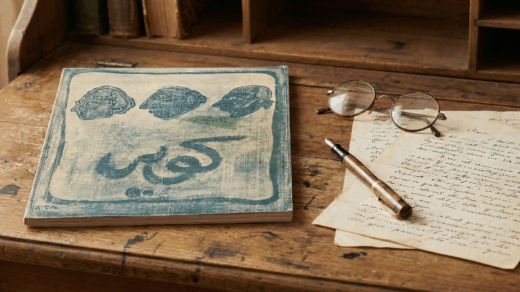
Everywhere in Gharib’s works, especially his recent work Golbang, national writing in its correct meaning has been observed. There, you feel your own daydreams and spellbound aspirations. You hear the reflection of the voices and the whispering of your ancestors. You also realize in the process the passion of Gharib’s nationality and Iranianness, how he has shown excitements in preserving national dignities and ranks. He has used the deepest and most poignant matters in this regard, with sentences he has crafted out of skill. You see a world of spiritual clashes and national zealotries accumulated, and you feel the eras when our ancestors suffered heartaches and endured pains. He says:
“In the corner of the Tusian alchemist’s hut, a treasure was found; for thirty whole years he delved among the frozen ashes with his fingertips and founded a lofty palace from the fish to the moon. From his silent nook, they found the path to this treasure and entered within it. The alchemist of Tus, having made a shield from the Simurgh’s feather, went to war against the armed and enchanting night-watchman (who had made of his black garb a night as dark as the face of a black Zanj). From the peak of Kandovan to the dormitory of the sun, there was war. Valiant men who for hundreds of years had been enchanted by the breath of rogues emerged from this hidden treasure-house and, upon seven silent castles, tore apart the black garb of mourning like the vitals of demons. The wall of the ancient golden cave appeared. Once again, the soft and sweet smile of enchanted beauties caressed the mountain and plain and sky, and wiped the soot of the night-watchman’s oil lamp from faces. There, a multitude of lives of different eras, compressed together like a mound of earth, had an enchanted smile dried upon them.”
I shall refrain from further interpreting these latter pieces due to the length of the matter, but I will say that Gharib, by creating his latest work, namely Golbang, has in truth proven two important subjects definitively and certainly: his commendable talent, and the crushing blow he has delivered through his works to the back of the straw-filled literature of our contemporary writers who, in imitation, have followed this one and that one or the ancients. Without a doubt, Gharib’s mode of thought and writing will not be without effect on the literature of Iran.