by
by This article was machine-translated from the original Persian and may contain inaccuracies.
An article by Jalil Ziapour, titled “Nima and His Poetry”, published in the weekly Shahsavar, No. 3, Monday, 9 October 1950
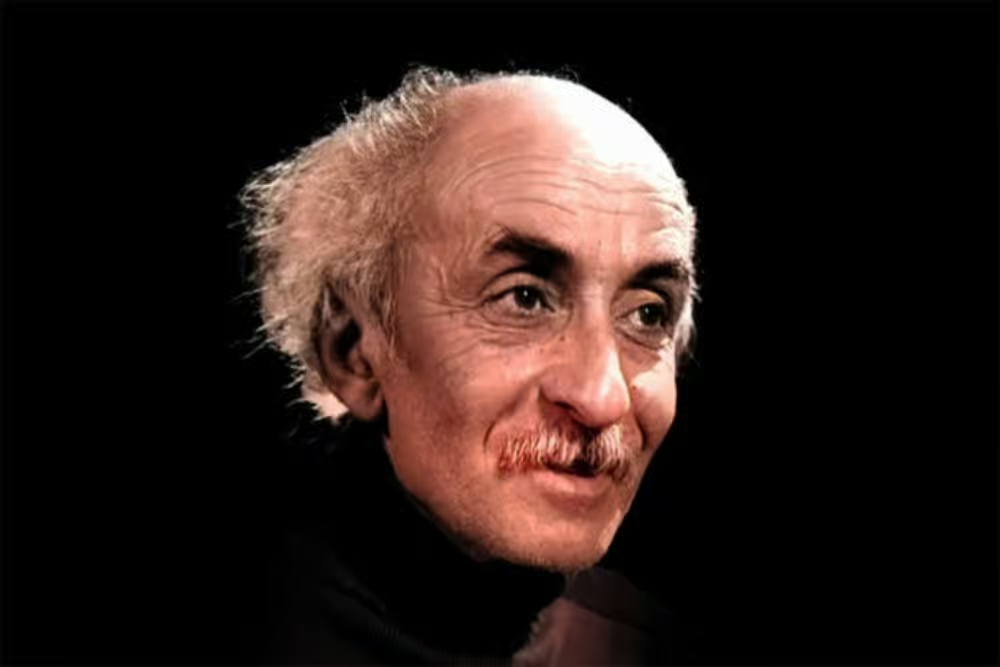
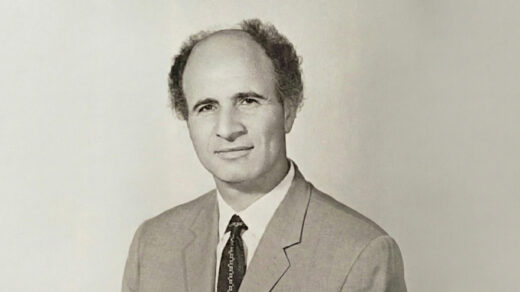
Nima Yooshij, the father of modern Persian poetry
For some time now, regarding Nima’s poetry and ‘Al-e Ahmad’s’ attention to Nima, a group has been expressing unfavorable opinions. This expression of opinion has even reached the point of insults and abuse. We are not yet familiar with criticism, and on the basis of the improper upbringing and servile attitudes that we have had for many long years, the greater part of our habits is founded on flattery; our ears and minds are full of sycophancy and adulation. Unwarranted praise for self-ingratiation and unwarranted refutation for self-display are more of interest to us than speaking the truth and criticism in the true sense. Therefore, if someone should happen to criticize, they are undoubtedly subjected to insults and harassment. For not only are we not yet accustomed to hearing truths, but not understanding the meaning of criticism, we have not realized its value, and we always suspect a hostile attack from the other side. Consequently, failing to grasp the intent, instead of criticizing, we resort to vituperation and disrespect.
The reply to Al-e Ahmad’s article by Partow Alavi was just such a criticism; there was no truth in its contents, and it was only a handful of nonsense. In fact, the impartial reader would realize that the writer of the article is either entirely far from a proper understanding of poetry, or that there is fundamentally an ulterior motive at play. This matter later became clear in a collective encounter with Mr. Jahangir Tafazzoli, who had the newspaper ‘Iran-e Ma at his disposal: they had collectively wanted to discredit Nima and pull him down from his pedestal, while they themselves (as they have stated) apparently agree with modern poetry (and moreover, a good modern poetry that, of course, Nima has not composed!); and it was for this very reason that at the head of the article concerning Nima (written by Al-e Ahmad) they had warned: “This article is printed for the evaluation and judgment of the readers, and it is necessary to remind that the writers of ‘Iran-e Ma do not agree with the author of the article regarding the subject under discussion.”
Placing these few words as a declaration of disagreement at the top of Al-e Ahmad’s article was for this reason: so that later, through articles like that of Partow Alavi (which was entirely mockery and hostility), they could perturb the minds of Nima’s sympathizers and supporters! and present themselves as not responsible.
Here, the source of this saying of Sa’di comes to our mind: “It is the custom of the ignorant that when they are left helpless against an opponent in argument, they shake the chain of hostility.”
I have nothing to say regarding Alavi’s writings. For they are so devoid of substance and far from the point that discussing them is seriously futile, and we know that for the literati who champion the ‘flower and nightingale,’ especially if an objective (aligned with specific views) is at play, speaking of poetic rules, prosody, meters, and the like is a good excuse to hold forth according to the taste of the literature-loving, compressed masses. That is, for those who never have the opportunity to contemplate the nature of poetry and its correct concept (just as in painting), and it is obvious that they cannot criticize any better than this either. This issue is not limited to the Alavis; rather, all poets and supporters of ancient poetry are afflicted by this mental limitation, imitation, and fanatical retrospection. These individuals never look at the present time or even slightly ahead. It is for this reason that a new expression has no meaning for them. Constantly hearing the same kind of metaphors and similes, and composing poems in which they always harp on the heart, the flower and the nightingale, the beloved and the sweetheart, the wine and the object of love, the intoxicated narcissus, and so forth, leaves no room for newer similes and metaphors to take seat. Under such circumstances, it is obvious that the artistic mind remains limited and closed. With a mind accustomed to the similes and metaphors of the past, can anyone awaken in the mind a scene that is cold and mysterious, yet at the same time rapid and life-bringing? And, with a few short, decisive words, describe the rapid beginning of life at a specific time and the particular state of that very time?
Nima’s ‘Afsaneh’ is not a matter about which they should engage in so much discussion and clamor. For the ‘Afsaneh’ collection is a popular work that is suited to the compressed masses. But his other poems, such as ‘Anduhnak-e Shab’, ‘Sham’-e Karaji’, ‘Ghorab’, ‘Ankabut-e Rang’: (the one who weeps with me with the turning of the night), ‘Aqa Tuka’, ‘Makh Ula’: (upon the plain it is raining, a strange rain), ‘Zikza’, and the poem ‘Gham-e in Khofteh-ye Chand’, are of course poems that require a comprehension and sharpness of vision greater than that within which the self-styled elite revolve. But this inadequacy of the artistic mind of those devoid of substance is a source of motivation for them. That is why they come forward with various excuses: that poetry means the expression of an understandable matter in simple language; and poetry means rhymed prose and rhyme; and poetry means that which the ancients have said. Poetry means such and such and such.
This group of poets and their supporters undoubtedly lack the sense of adapting to the conditions of the times, and of course, they also lack the necessary sense of judgment and criticism. If anyone, for the enlightenment of such poets and their supporters, explains that, for instance, Ferdowsi’s banquet scenes are tedious because they are composed in an epic meter and form suitable for a different discourse, it is at this point that the fanatical poets and their even more fanatical supporters deem this criticism as disrespect toward Ferdowsi and subject the critics to the winds of excommunication. Our noble poets, who are dear to us in their greatness and standing, if their work has technical flaws, these must undoubtedly be taken into consideration, and moreover, fanaticism (which stems from ignorance) must not be practiced. (Taking these flaws into consideration is not to demean a great figure or figures; rather, the intention is that the flaw not be repeated during the creation of new artistic works).
If I said that understanding most of the poetic points in Nima is difficult for our self-styled elite, it is because the concept of poetry is different for the supporters of the ancients and the supporters of modern art. (Just as this problem exists today in painting).
Among artists and supporters of modern art, poetry is interpreted thus: “The necessary expression of the poet’s feelings and perceptions without any kind of condition or restriction.” You may wish to call it free ‘prose’ or anything else. In other arts, too, this general concept holds true; modern art carries with it the necessary tools of its own expression in every era, leaves the tools of the past to the past, uses a new form, and never binds itself to the tools of the past (except to the extent of drawing inspiration).