by
by This article was machine-translated from the original Persian and may contain inaccuracies.
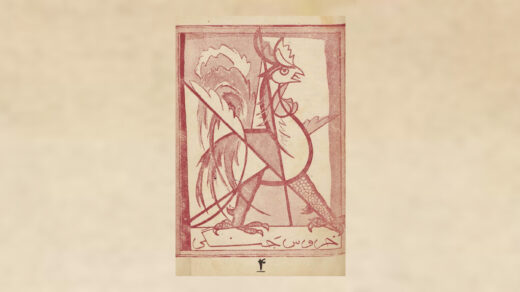
Article by Jalil Ziapour, titled “A Critical Text on Several Exhibitions Written by Jalil Ziapour”, Andisheh va Honar Magazine, No. 3, June 1954
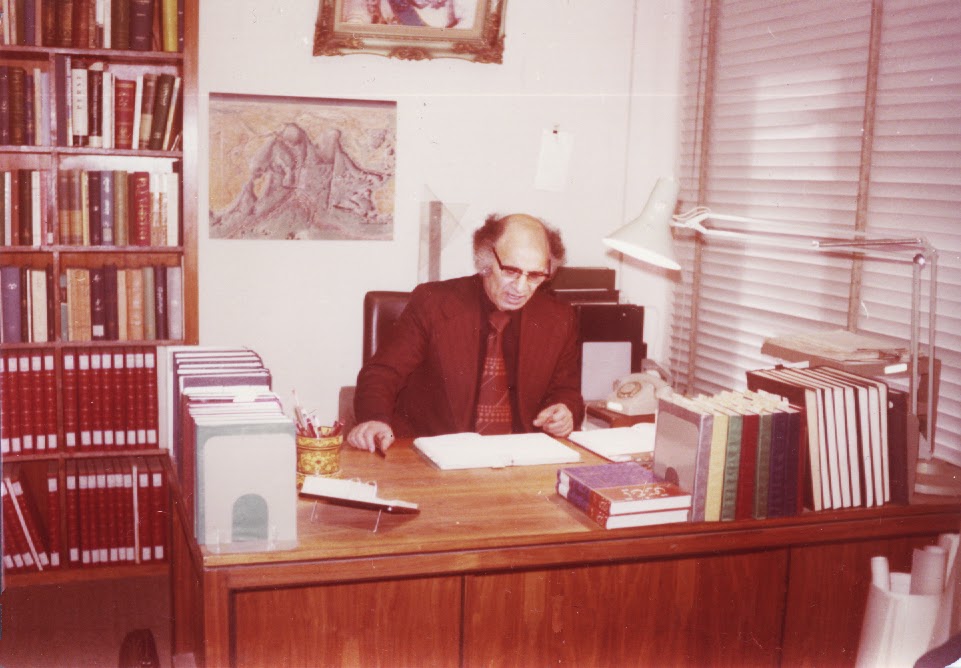
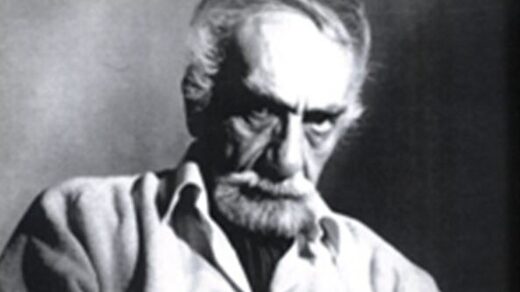
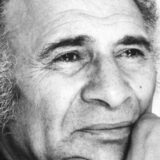
Master Jalil Ziapour, the Father of Modern Iranian Painting
In this month of June, several painting exhibitions were organized, the characteristics and artistic value of which I shall proceed to explain. An exhibition of the works of Mrs. Mamen was organized at the Armenian Club. These works were decorative, but very weak. Although the decorative nature of painting in no way conflicts with its being colorful, Mrs. Mamen’s coloring was such that it seemed to have no strength or breath to breathe and live. Nowadays, when painting has better recognized its technical factors, and the times also require colors to be resonant, sonorous, and expressive, this brilliance, vitality, and expressiveness do not exist in her works. In fact, a major pillar of her work, which constitutes the foundation of painting, is lame. From the perspective of drawing as well, they lack form; especially since her approach was decorative, it required giving the shapes a distinct form (to, so to speak, stylize them), but no effort in this direction was apparent; instead, she has cast a mundane and expressionless view upon the animals she has created. Unfortunately, in terms of composition as well, it was so loose that any viewer unversed in the craft could notice that the different parts of objects, bodies, and animals have been forcibly joined together like patchwork. What was most jarring in her work were the minute details that, like the fashionable miniaturists of our day, were seen in the feathers and wings of her birds and animals. On the whole, the works of Mrs. Mamen could not be of interest to professionals.
Another exhibition of the works of Mr. Vernet was organized at the Iran-America Society (these same works were also put on display at the Iran-France Society). At a general glance, the influence and impact of the works of Raoul Dufy and Segonzac are apparent in the domain of his works (of course, this state of being influenced is not exclusive to him; rather, most of the youth of Europe who have not yet found their artistic personality, according to their talent and desire, gravitate more or less toward one or two seasoned artists who have a formed and established personality, and then, if it is possible for them, they gradually pull themselves out from under their influence).
In the works of Mr. Vernet, on the whole, a keen observation is seen. In particular, some of his works possess sensitive drawing and expressive color. Among his oil paintings, (Anatolian Landscape and Winter in Tabriz) and among the drawings, (Family, Varayeh) are interesting and represent a promising future for Mr. Vernet. His works are, on the whole, worth seeing.
Another exhibition was organized at the General Department of Fine Arts of the country on the occasion of the advent of the Avicenna millennium. The works displayed in this exhibition consisted of carpets, enameled vessels and decorated glazed jugs, qalamkars and brocades, and a large quantity of miniatures, all of which were by the artists of Isfahan, along with a few paintings by the modernists and non-modernists of Tehran.
Regarding the handicrafts of the artists of Isfahan, I shall speak of their paintings. It must be said that, apart from one or two works executed on leather by Hossein Khataei in a very interesting and valuable manner, the rest are very bad. For they do not possess a distinctive character, and have been made either in imitation of the school of Kamal al-Din Behzad or in imitation of Reza Abbasi, and no progression or desire for novelty is manifest in their work; furthermore, by combining naturalistic rendering with light colors, tedious details, and so-called natural but unartistic proportions, they have produced banal works (of course, the miniaturists in Tehran do the same thing). Several large oil paintings by the artists of Isfahan are also to be seen, which were made with a naturalistic vision, an effort at fidelity in copying, perspectival errors, minute detailing from tile designs, ignorance of composition and color balance, and lacking calculation.
Next, there were the paintings of some of the modernists, which, apart from the curious, became the object of ridicule for most of the spectators (especially the rabble-rousers). But, truth be told, beneath their seemingly mocking countenances, reflection and an effort to understand new art, and attention to the ambiguity of the goal, were apparent; and for this very reason, the modernists’ hall was often a place of artistic passion and debate and, on the whole, a place of curiosity and effort. Among the works of the modernists, the works of Esfandiari, Sepehri, Mohassess, and Assar had become a source of trouble and reflection for the viewers.