by
by An article by Dr. Ali-Asghar Fahimifar and Dr. Rasoul Eskandari, titled “A Study of the Relationship between the Discourse of Nationalism, the Fighting Cock Art Association and the Apadana Gallery; A Case Study of the ‘Rooster Symbol’,” published in the scholarly quarterly “Kimiya-ye Honar,” Vol. 13, No. 50, pp. 123-137, Spring 2024.
Abstract
The relationship between the political and social developments of the years 1941 to 1953 and Iranian modernist art is the subject of the present paper. Following the abdication of Reza Shah, cultural policies were, on the one hand, based on the nationalism planned from the beginning of the coronation of the first Pahlavi monarch; on the other hand, they were influenced by the Marxist-Leninist worldview of the Tudeh Party. In the late 1940s, another type of nationalism emerged under the influence of the oil crisis and democracy, which is known as liberal nationalism. The central problem of the present paper is the lack of adequate attention to the relationship between the National Movement and the artworks and artistic groups whose themes and founding philosophy were linked to the ideals of Iran’s National Movement. In this study, by examining the rooster symbol and focusing on the Fighting Cock (Khorus Jangi) art association and Apadana Gallery, which declared their existence concurrently with the founding of the National Movement, an attempt is made to address this gap. Therefore, the research question is: how did the objectives of the National Movement manifest in artworks and art associations within the prevailing atmosphere of that period? The objective of the present study is to focus on this historical dimension of contemporary Iranian culture, and the findings indicate that the historical concurrence of the founding of the Fighting Cock (Khorus Jangi) and the National Front was not a historical accident, and that artistic groups emerged during this very period under the influence of fundamental socio-political developments. The Fighting Cock (Khorus Jangi) association and Apadana Gallery, as pioneering movements, sought to create a national art aligned with Iranian identity and culture, and the concurrence of the oil nationalization movement and its discourse was influential in shaping this process. In other words, a kind of intertwined political-cultural relationship directed society toward a path where artists also responded to developments in accordance with their knowledge, social position, and aesthetic outlook. The research method is descriptive-analytical, and data collection was conducted through library research.
Keywords: Iran’s National Movement, Fighting Cock (Khorus Jangi), liberal nationalism, rooster symbol, oil nationalization, Jalil Ziapour, Nima Yooshij
Introduction
Following Reza Shah’s abdication from the throne in September 1941, the new political and social atmosphere created an opening for art, allowing a fresh perspective on the complexities of the social and political life of the Iranian people to take shape in line with these developments. The nationalist discourse of the first Pahlavi monarch was not the sole dominant facet; rather, leftist social groups within the framework of the powerful and pervasive Tudeh Party created another significant pole or orientation in Iran’s cultural, political, and social spheres. Alongside these two forces, the challenges surrounding the granting of oil concessions to foreign governments confronted the issue of Iranian independence with a serious crisis. Iran’s National Movement declared its existence under such historical circumstances (Sharifi, 2013, pp. 90-97).
In scholarly literature and research, when seeking to understand the relationship between politics and art during this historical period, discussions predominantly bring to mind the relationship between the leftist movement and the art of that era; or, conversely, debates have been raised regarding the relationship between art and cultural nationalism (of the first Pahlavi). The present study intends to approach the relationship between art and politics by formulating the problem from a different perspective. This study’s approach considers the socio-political force of the National Movement and posits that although the National Movement lacked a centralized, defined cultural policy in its agenda, artworks connected to the political approach of this movement emerged from artistic groups. In this respect, the relationship between the National Movement and art can reveal other hidden dimensions of the developments in Iranian modernist art within the context of socio-political events. The focus is primarily on the art of painting and its related institutions, but in order to clarify the nature of this intertwined relationship, references to the literature of this period are necessary, given that many art associations and groups from 1941 to decades later comprised artists with distinct fields of activity.
The National Front of Iran was among the political forces that initiated the earliest freedom-seeking and independence-oriented efforts after September 1941 (Roger Louis and Bill, 1993, pp. 1-40). In the mid-1940s, leaders of the National Movement made an important political decision in opposition to the government regarding interference in elections as well as the expansion of the Shah’s powers; later, the issue of vindicating the rights of the Iranian nation regarding oil was attached to it, and the culmination of these discourses led to a sit-in by the leaders, supported by numerous politicians and the public, and consequently to the formation of certain civic movements (Katouzian, 1993a, pp. 78-150). Liberal nationalism in Iran found the opportunity for a rebirth after the Constitutional Revolution following the dissolution of the Tudeh Party and Reza Shah’s abdication from the throne (Keddie, 1980, p. 216). Under the influence of these very conditions, the National Front was formed three years later in November 1949 to foster cohesion and prevent collapse. To this end, the research objectives can be addressed at two levels: first, at the level of examining the artistic and cultural groups and institutions whose formation coincided with the oil nationalization movement; and second, at the level of a case study of five artworks that can explain the aforementioned relationship. In Iranian political literature, the nationalism of the National Movement, regardless of the outcomes, failures, and achievements it subsequently entailed, is known as liberal nationalism12 (Azimi, 2021, pp. 163-208). Accordingly, by drawing upon the views of several scholars who have addressed the comprehensive theory of nationalism, an attempt has been made to answer the research questions. Employing this theoretical framework helps distinguish the approach of cultural nationalism from that of liberal nationalism regarding the subject of culture and art, and can provide a clearer perspective on the intertwined and complex relationship among these categories. The fundamental question of the research, which seeks to address this facet of Iranian art from a different perspective, is: based on the concurrence of the founding of the Fighting Cock (Khorus Jangi) art association and Apadana Gallery with the struggles of Iran’s National Movement (in 1949), how did the ideals of the National Movement manifest and exert influence within the atmosphere prevailing over these associations and artworks during that era?
Literature Review
Regarding the topic under discussion, as far as the authors have searched, no independent book or article has been authored. However, articles and books related to this topic have been written. In an article titled “Investigating the Impact of the Emergence of Oil on Iranian Modernist Painters 1940-1980” by Ahmad Ravanju and Mohammad Samadirad, published in “Mabani-ye Nazari-ye Honarha-ye Tajasomi,” No. 5, 2018, no specific theoretical framework was considered for the research problem, and the primary influence on the emergence of modern art movements in Iran was assessed as being shaped by the conditions of this period and the cultural policies of the ruling state. In the book “Cultural Discourses and Art Movements of Iran: An Inquiry into the Sociology of Contemporary Iranian Painting” (Moridi, 2018), the origins and impact of nationalism are examined methodically, yet liberal nationalism and its impacts hold no independent place in the study. Another book is “An Exploration of Contemporary Iranian Art” (Keshmirshekan, 2014). In this work, the author’s approach is historical, examining significant and influential socio-political developments; the introduction takes a passing look at the impacts of liberal nationalism on contemporary art. Two books in the form of essay collections have been published by “Herfeh: Honarmand” Publications, titled “In Search of New Time” and “An Introduction to the Critical History of Contemporary Iranian Art” (Afsarian, 2018); in an article from this collection titled “Notes of a Somnambulist,” Farshid Azarang has analyzed the relationship among consciousness, self-awareness, identity, ideology, and nationalism in cinema and painting with a fluent and critical prose. His references in the article to nationalism and its relationship with politics are fleeting, ultimately reducing it to ideology. In an article titled “An Investigation into the Role of Intellectual and Governmental Currents in the Nationalist Approach of Iranian Modernist Painting during the Pahlavi Era” by Hosseini Rad and Khalili (2012), published in “Honar-ha-ye Ziba,” No. 9, the authors do not identify an essential distinction between the nationalism of the first Pahlavi period and that of Mohammad Mosaddegh’s government, and the definition of nationalism relies on a historical overview rather than a specific theoretical or critical approach. The specialized journal “Posht-e Bam,” Summer 2019, devoted its second issue to the Fighting Cock (Khorus Jangi), which includes a historical review, interviews, and critical commentary regarding this art movement. In this valuable collection, reference is made to the relationship between political developments and this movement, albeit not within the framework of a theoretical scheme or a specific research methodology, but rather primarily in the form of a historical review and an account of the general impacts of events on one another through interviews and notes. In another article titled “The Rooster and Its Role in Seven Paintings” by Mehdi Hosseini (2012) in the journal “Kimiya-ye Honar,” Vol. 1, No. 2, the emphasis is on the technical and formal characteristics of the works, with a brief glance at mythological meanings and connotations rather than necessarily political and social ones.
Research Methodology
This study is based on a descriptive-analytical method, and data collection will be conducted through library research. Artworks related to the research topic will be correlated with the historical events of the oil nationalization period and analyzed according to the proposed theoretical approach. Hence, an attempt will be made to conduct a comparison with significant and influential literary works of the aforementioned historical periods to better understand the research problem.
Theoretical Framework
Nationalism in the realm of culture and art encompasses broad and comprehensive debates, but this article focuses specifically and concisely on the category of the symbol as a political and social tool in nationalist (primarily liberal) movements, as well as the differential emergence of institutions in relation to the type of nationalism (cultural or liberal). A symbol, and consequently a myth, can be reborn through intellectuals and artists; in other words, a symbol that has remained in the recesses of a nation’s history for centuries can suddenly acquire a new function within nationalist discourse to express the historical and social existence of the nation (Dingley, 2008, pp. 45-48). Many theorists consider “a collection of symbols, myths, and (purposive) cultural actions to be the fundamental elements shaping the concept of the nation in the modern sense of the word; for the modern nation to truly be regarded as a modern phenomenon, it requires the unity of the myths, symbols, and memories of its pre-modern world” (McCrone, 2002, p. 12). Three prominent theorists of nationalism, Elie Kedourie3, John Armstrong4, and Anthony D. Smith5, have pointed out in detail the importance of art and specifically the symbol in actualizing the concept of the nation in history; in its function within the process of nationalism, the symbol broadens its historical scope, represents the will of the nation’s individual members, and thereby confers identity and credibility upon social forces, elevating them to the level of national and collective identity; it was on this basis that Durkheim6 believed, regarding the French Revolution, that the symbol linked the sacred (mythical) to the concrete7 (Joireman, 2003, pp. 5-8). Thomas Hylland Eriksen8, professor of sociology at the University of Oslo and a contemporary theorist of nationalism, states in analyzing this relationship between symbol, politics, and the concept of nationalism: “When these actions, as symbols, are objectified and transformed into national discourse, their meaning changes. Common ethnic symbols in nationalism, with the aim of reflexive stimulation, make use of individual cultural distinction and thereby create a sense of nationhood. Nationalism objectifies culture; in the sense that it allows people to talk about their culture as if culture were something permanent” (Eriksen, 2019, p. 178). Another facet of nationalist theories addresses institutions and associations in various types of nationalism; if we seek to understand First Pahlavi nationalism based on the definition of American sociologist Craig Calhoun9, we must say that it was in fact the creation of a type of “cultural rhetoric10” to “frame ideals” within the concept of the nation and national identity, and the “creation of a specific mode of thinking in confronting the modern world”; in this respect, the nationalist discourse of the First Pahlavi era asserted its hegemony over social and cultural infrastructures through the engineering of intellectuals (Calhoun, 2014, pp. 72-113). The establishment of institutions such as the “Society for National Heritage” (1931), the “General Directorate of National Arts” (1930), and the “Ancient Iran Society” (1931), along with the holding of the “Ferdowsi Congress” (1934) and ultimately the “Academy of Iran” (1935) and the “Organization for the Cultivation of Thoughts” (1938), demonstrates the implementation of the cultural policies of the First Pahlavi state within its intellectual and philosophical apparatus in this very manner (Gholipour, 2018, pp. 13-48). Although the National Movement of Iran understood the importance of culture and art, for numerous reasons it did not find the opportunity to develop cultural policies specific to itself; on the one hand, liberal nationalism manifested itself for the second time after the Constitutional Revolution in the guise of the National Movement; “the origins of the National Movement were precisely the popular resistance against the despotic rule of the late nineteenth century that ultimately led to the full-scale Constitutional Revolution […] When Reza Shah left Iran, democracy and independence were the most important political demands of the Iranian people […] Mosaddegh and the National Front became the embodiment of the struggle for independence and democracy” (Katouzian, 1993b, p. 86). This time, liberal nationalism gradually influenced cultural currents not necessarily through the engineering of intellectuals, but through a different process and upon the foundation of freedom that had emerged as a result of the transition from First Pahlavi rule. Liberal nationalism, both in its understanding of the category of individuality and in the historical trajectory of the social and cultural institutions emerging from it, expresses a lived experience distinct from cultural nationalism; “the difference between liberal nationalism and cultural nationalism is that in liberalism [human]11 existence strives to attain its autonomy from individuality, whereas in cultural nationalism autonomy is sought in the totality of the people” (Aramkaiser, 1997, p. 18). Symbols on the one hand and institutions on the other acquired a novel socio-political function and perspective in liberal nationalism. Liberal nationalism undoubtedly also required tools to realize its ideas. A shared language, culture, and art are also of immense importance in this type of nationalism; theorists believe that as long as these shared elements exist, the opportunity for the development of cultural education, and consequently civil and democratic institutions, is also provided. Collective identity12 gains validity in liberal nationalism through shared culture and symbols, yet under such conditions the nation must see itself in the guise of a democratic government, and the definitive reference of its legitimacy13 is linked to such a government. As long as the general interests or inclinations14 of a society align and coincide with the interests of the nation, the state gains the opportunity to homogenize cultural policies; hence national symbols, and even a shared tradition, contribute to the congruence between the national and the political (Maiz and Requejo, 2005, pp. 62-63). The subtle yet striking difference between liberal nationalism and cultural nationalism lay in the adoption of cultural policies to homogenize a nation with the state; therefore, the theoretical problem of this paper is grounded in the study of how the Iranian artist confronted symbols and myths at the political juncture of the oil nationalization era.
Cultural Associations and Groups in Relation to the Nationalization of Oil
The political turmoil and clashes of the early 1940s, alongside the economic and legal dimensions of the oil question, cast such a shadow over the complexity of affairs that any debate in the realm of culture and art within the discourse of the National Movement was, intentionally or unintentionally, deferred. It was not until 1949, concurrently with the emergence of the National Movement, that artistic associations and groups also declared their existence. Fakhreddin Azimi15, professor of political science and researcher in the field of history and culture, states regarding its nationalist orientation: “Unlike other nationalist tendencies whose scope rarely extended beyond elite circles, Mosaddegh’s civic nationalism was a popular nationalism that held widespread appeal across diverse strata of society and the masses. Proponents of the national outlook sought the realization of the spirit of constitutionalism and political independence, supported by the awakening of the nation, the activism of the popular masses, and the dynamism of libertarian and dignity-seeking values” (Azimi, 2021, pp. 177-178). Artists and artistic groups were no exception in this regard; the first modern art association that must be addressed is the Fighting Cock (Khorus Jangi), which was founded precisely in 1949 through the collaboration of a number of Iranian modernist artists. The Fighting Cock (Khorus Jangi) was published in five runs with the collaboration of Jalil Ziapour, Hassan Shirvani, Gholam-Hossein Gharib, Manouchehr Sheybani, Morteza Hannaneh, Hushang Irani, and Nima Yooshij from 1949 to 1951. In the manifesto “The Slaughterer of the Nightingale,” which served as the charter of the Fighting Cock (Khorus Jangi), the emphasis on an orientation toward the “new world” and the “struggle against tradition” is clearly manifest; this manifesto states: “In the name of beginning a new artistic era, we have commenced our ruthless battle against all artistic traditions and laws of the past […] The first step of any new movement is accompanied by smashing the old idols […] New art, which considers intimacy with the inner self as the conduit of artistic creation, embodies the full vigor and surge of life and is never separable from it.” In this manifesto, any approach of “art for society” and “art for art’s sake” was declared rejected (Gharib and Ziapour, 1949: p. 1); yet in practice, articles were published demonstrating that the Fighting Cock (Khorus Jangi)’s approach to political and social developments was not only not denied, but rather addressed a form of art that also possessed ties to the concept of the “national element”; a salient example is the article by Morteza Hannaneh, in which reference is made to the importance of “national music” in fostering the “progress of nations” and the role of orchestral music in relation to the formation of the foundations of national art (Gharib and Ziapour, 1949, pp. 3-7). In this article, at a time when democracy and polyphony were consolidating within the political power structure, Hannaneh raised the necessity of understanding and promoting polyphonic music. In the second issue as well, Gholam-Hossein Gharib, who was also a musician, wrote an article titled “Folklore in Music.” In this article too, the importance of the formation of “national art” within “social transformations” is discussed; Gharib considers the foundations of folklore and its colorful nature significant in configuring national art, stating: “This line of thought and attention to the primary source of art, which is the simple and natural music of the masses, continued more or less until, with the beginning of the twentieth century, the creation of an independent national musical style became the primary goal of musicians across the countries of the world […] A folk song that we hear with utmost simplicity and enjoy is the expressive voice of a nation or a group of people, which in a few moments places before us all the characteristics of the life of that nation or that group of people, such as its loves, braveries, failures, and victories, in a vivid and living embodiment” (Gharib and Ziapour, 1949, p. 19). The significance of the nationalist dimension of art was not limited solely to these two articles. In the third issue, an article titled “Dance” appeared by Sarkis Djanbazian, the subject of which is more or less linked to the two aforementioned articles. While enumerating the various types of dance, the author emphasized and examined the manifestation of the “national spirit” in dance (Gharib and Ziapour, 1949, pp. 25-28). The debate over national art and the identity derived from it was also repeatedly raised in the approach of Jalil Ziapour, as one of the founders of the Fighting Cock (Khorus Jangi). Ziapour states: “… We had another dispute as well with our own peers who would go abroad and return, their souvenir being the imitation of Western works. We would tell them: you learned the technique, yes, but your voice must be your own; where is your voice?!” (Mojabi, 1997, p. 8). Then, while expressing his ideas on national art, he articulates the primary mission as achieving “identity” and “preserving it,” while simultaneously maintaining its connection with the modern world; for this reason, he directed his efforts toward utilizing Cubism to achieve national art. Regardless of the extent to which his idea was successful in configuring national art or whether Cubism was at all the correct choice to embody it, it is his concern with national identity and national art and the significance of his problematization that are relevant in this paper. Discussions surrounding “national identity” and the connection of “art with the nation” were raised in the Fighting Cock (Khorus Jangi) at a time when developments were unfolding in parallel within the political structure; the issue of the dispossession of the Anglo-Iranian Oil Company and the policy of negative equilibrium on the one hand, and the endeavor to attach the democratic ideals of Constitutionalism to social and political structures on the other, had shaped a new perspective on the concept of nationalism and the category of the nation in political and social events (Parsikia, 2019, pp. 64-65). A crucial point is that the Fighting Cock (Khorus Jangi) magazine was published under the auspices of the journal “Qiam-e Iran.” Hassan Sadr, the licensee of “Qiam-e Iran,” was among the members of the National Movement who were active at the inception of the struggles for freedom and independence (Zaim, 1999, p. 25). Thus, the Fighting Cock (Khorus Jangi) association confronted national interests during a historical-political transition, and at this historical juncture it was not merely an impartial observer of developments. On the other hand, while liberal nationalism set aside sole reliance on “ancient Iranian history” and the “absolute centrality of tradition,” according credibility to plurality and equality (Behnam, 1996, pp. 64-112), in the Fighting Cock (Khorus Jangi) this conception likewise manifested through the critique of tradition and the imperative for the emergence of a new perspective on “national art”; a salient example of this approach can be observed in Ziapour’s lectures and his critique of the inefficiency of certain artistic traditions (Gharib and Ziapour, 1949, pp. 12-15).
“Apadana Gallery” was also formed in that same year (1949) through the collaboration of Mahmoud Javadipour, Ahmad Esfandiari, and Hossein Kazemi; this artistic group was not merely a painting exhibition, but included sessions for the review and critique of Iranian modernist art, musical concerts, the critique of tradition (in the realm of art), modern literature, and the introduction of young modernist artists, which was welcomed by modernists in a very short period of time (Mojabi, 2016, p. 28). The significant point is that prior to the founding of Apadana Gallery and the Fighting Cock (Khorus Jangi) association, the embassies of powerful and influential governments such as Russia, France, and the United States were active and took the initiative in exhibiting works. Iranian modernists, however, were seeking a space independent of embassies to present their works and carry out artistic activities. The agency of the artist during this era was based on distancing from embassies and a form of self-reliance and independence that was linked to the political independence of this period. Theorists of nationalism have regarded historical conditions of this kind as the emergence of a form of “social consciousness” that, within the discourse of influential classes and aided by an instrument such as art, also culminates in political agency16 (Norbu, 2003, pp. 2-17). National identity is neither inculcated nor imposed; rather, in a free and continuous process, it achieves widespread emergence within social and cultural institutions through the hands of the state or independent yet pluralistic parties (Maiz and Requejo, 2005, pp. 79-84). It should be noted that the cultural institutions and groups that declared their existence concurrently with the National Front were not limited solely to the Fighting Cock (Khorus Jangi) and Apadana; in 1949, through the efforts of Ruhollah Khaleqi, the “National Conservatory of Music” was founded. The cultural policies prevailing over the High Conservatory of Music during that period were influenced by the presence of figures such as Minbashian and Parviz Mahmoud, who opposed the presence and teaching of national music17. In the book “On the State”, Pierre Bourdieu states: “Nations are largely the creation of intellectuals who have an interest in the nation. Intellectuals are involved in anything related to cultural capital […] therefore, depending on their specialization, they are more or less tied to national cultural capital and accordingly have greater or lesser national or nationalist interests” (Bourdieu, 2021, p. 515). In this respect, the institution of art as a “social institution” transcended the boundaries of the mental realm and idea in this historical period to connect with an objective approach in political developments as well (Bastide, 1995, pp. 163-282). On the other hand, when the discourse of liberal nationalism emerged in society, individuality (as one of the pillars of modernity) also manifested its clear signs and expression within the cultural structure; in the third issue, while articulating the aesthetics of modern poetry in a simple yet profound language, Nima explicitly and purposefully emphasizes the individuality of the artist: “Allow yourself to encounter difficulties more often so that your personality too may have a way to grow. For this purpose, it is only necessary to delve into yourself […] what has been stored within you is attained through your own searching […] accustom yourself to discovering on your own and becoming attached to your own findings […] each person is a separate reservoir…” (Ziapour and Gharib, 1949, p. 11).
A Perspective on the Symbol in the Era of Liberal Nationalism; A Case Study of the Rooster Symbol in Five Artworks
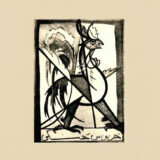
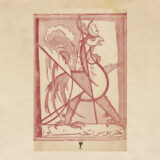
An important point that should be noted is the prominent presence of the rooster symbol in artworks (including the “Fighting Cock (Khorus Jangi)” magazine) between the years 1946 and the mid-1950s, that is, the height of the struggles of the Oil Nationalization Movement. Regarding the rooster symbol in the book “Farhang-e Asatir va Dastanvareh-ha”, Mohammad-Jafar Yahaqqi states: “The rooster is among the sacred birds and is dedicated to the angel Bahman. At dawn, with its cry, the rooster drives away the demon of darkness and calls the people to rise, worship, and till the soil […] furthermore, the duty of the messenger of Soroush also rests upon the rooster, and at daybreak it brings the glad tidings of the passing of the night’s darkness and the rising of the radiance of day…” (Yahaqqi, 2012, pp. 324-325). This symbol correlates with “struggle” and “awareness” or “awakening”, and through the contradiction within its significations, it expresses a transition from one state to another; from darkness to light, from silence to outcry, and from sleep to wakefulness (Oshidari, 1999, p. 257). In 1946, Nima Yooshij composed the poem “The Rooster Crows” and published it in 1949 in the magazine “Fighting Cock (Khorus Jangi)”. Following “Afsaneh”, Nima’s social and political symbolism not only introduced diverse and at the same time complex political and social significations into poetry, but its impact was also evident in other arts. A prominent example of this is his pronounced and influential presence in the Fighting Cock (Khorus Jangi). In a section of the important book “Dastan-e Degardisi”, while analyzing the significance of the social symbolism of Nima’s poetry and its influence on artistic currents, Saeed Hamidian states: “Yet Nima Yooshij made use of the most self-evident and fundamental principle of art: image instead of explicit statement. Although, as a truly committed figure, he did not overlook any of the era’s important socio-political events and transformations in the realm of poetry, without objectively repeating the experience of Constitutional-era poets in expressing numerous minor and major localized events, he articulated their mental and emotional reflections in a manner fitting for entry into poetry, aided by an effective and expansive system of his own symbols” (Hamidian, 2004, p. 148). Taqi Pournamdarian, in a profound study on the intellectual underpinnings and aesthetics of Nima’s poetry, in expressing the political and social nature of the poem “The Rooster Crows”, explicitly considers the poem’s symbols to be linked to the political atmosphere prevailing in Iran in the mid-1940s: “In all of Nima’s optimistic and hope-filled poems, one can observe lucid and accessible lines that, alongside a few limited symbols, expand throughout the poem and disclose the hidden truths of a society that, under the domination of world-devourers and oppressors, has sunk into darkness, poverty, and tyranny” (Pournamdarian, 2010, pp. 124-125). This poem was composed in a turbulent historical context, while ambitions to grant oil concessions to foreign powers were secretly underway, away from parliament. Historians and many experts have emphasized the “importance of national independence” and the “struggle of the freedom-seeking front” during this historical period (Abrahamian, 2013, p. 279). Under such conditions, Jalil Ziapour chose the rooster as the artistic emblem of his publication (Figure 1).

Figure 1. Cover design of the magazine “Fighting Cock (Khorus Jangi)”; work by Jalil Ziapour, 1949 (Source: “Fighting Cock (Khorus Jangi)”, issue 1)
As noted earlier, the mission of the publication was “raising societal awareness and awakening it” (Parsikia, 2019, pp. 24-30). Ziapour’s rooster painting itself revealed contrasting qualities in terms of form and structure. The contrast in the rooster’s figure is observable in several respects: first, the soft, rounded lines of the belly, head, and comb compared to the straight, aggressive lines drawn in the claws and the directional line of the feathers down to the tips of the claws; and the contrast between darkness and light in the belly relative to the rooster’s tail, which takes the form of a black-and-white contrast. The rooster’s claws and spread feathers were drawn in such a way as to also convey a sense of motion and movement. In the early 1950s, Abdollah Ameri also created a work titled “The Rooster’s Song” (Figure 2).
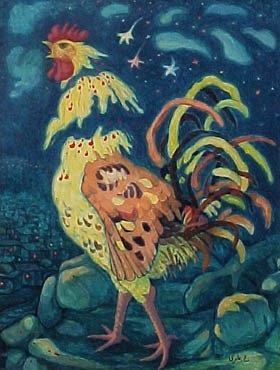
Figure 2. “The Rooster’s Song”, work by Abdollah Ameri, 1951 (Source: Mojabi, 1997, p. 208)
Ameri’s rooster is crowing atop a hill. The intensity and resonance of the rooster’s crow are depicted through the fractured rendering of the neck and red droplets that reference blood. In this work as well, the contrast of darkness versus light is rendered through the contrast of the bright figure of the rooster against the dark background of the village. The drops of blood on the ground in the foreground of the image also recall the opening section of Nima’s poem: “Cock-a-doodle-doo! The rooster crows / From within the hidden seclusion of the village / Down the slope of a path that, like a dry vein / Runs blood into the bodies of the dead…” (Yooshij, 2009, p. 625). Another work is by Hushang Pezeshknia, which is said to have likely been created in the mid-1950s (Figure 3). In this work as well, contrasts are presented in two conditions: in the crescent-shaped lines of the tail and the circle in the middle of the figure against the straight lines and triangular forms that dominate the entire plane, and the dark-light contrast between the navy crescents of the tail and the yellow circle in the middle of the figure. Pezeshknia symbolically represented the promise of morning’s arrival and light prevailing over darkness in a circle that symbolizes the sun; where Nima also writes: “Warmed by the warm breath of its chanter / The chill-bearing winter night / Divulged unspeakable secrets / Adorning the radiant morning with light…” Elsewhere in the poem, there is double meaning in the word “Abadan”: “With his song the path was filled by him / Bringing glad tidings to the free ear / Showing the way to Abadan / To the caravan in this ruined land…” (Yooshij, 2009, p. 626). Here, “Abadan” refers both to prosperity and to the city of Abadan, which during this historical period was the main center of nationalist struggles. Pezeshknia was among the painters sent by the government to Abadan from the late 1940s through the final years of the 1950s in order to depict the oil installations; during these years, two major subjects can be seen in his works: first, the condition of the workers, and second, poverty and the suffering-filled life of ordinary people in the south; a crucial issue that Mohammad Mosaddegh’s government had with the Anglo-Iranian Oil Company was the company’s deliberate and oppressive keeping of Iranian workers in poverty, along with the glaring disparity in their income, wages, and standard of living compared to British workers and employees in Abadan. Although it postdates the other examined works and was most likely created shortly after the coup of 28 Mordad, taking this political and social background into account, his rooster painting is a kind of reference to the situation briefly described above18 (Pakbaz, 2000, pp. 169-189).
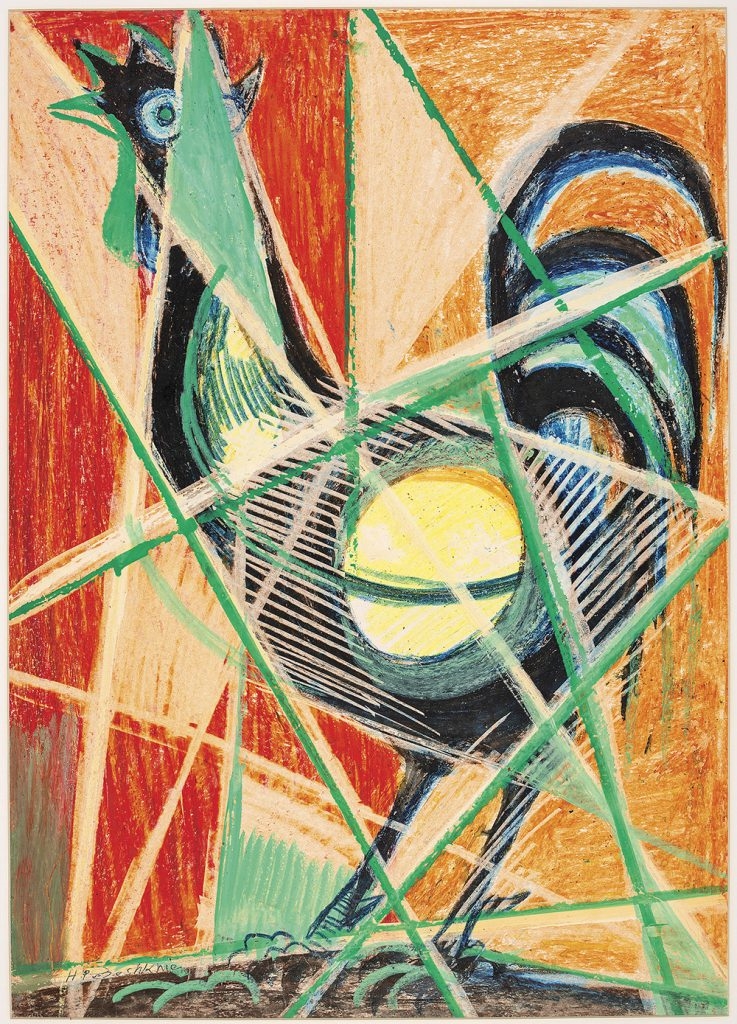
Figure 3. “Rooster”; likely mid-1950s, work by Hushang Pezeshknia (Source: Maleki, 2017: 26)
In 1946, Abdolhossein Noushin published the play “The Dawn Rooster.” Noushin insistently sought to articulate a form of “national theater” that would be consonant with the cultural and social foundations of Iranian history (Malekpour, 2021, pp. 1-10). In “The Dawn Rooster,” notwithstanding the works mentioned above, there is no physical presence of the rooster whatsoever, and its presence is distinctly symbolic. The play, published at the exact same time as Nima’s “The Rooster Crows,” is a political-labor drama. For various reasons (principally political, involving collusion between its owner and powerful politicians), the factory is closing down, and the workers have been threatened with dismissal by the factory owner. In the first act, conversations in a coffeehouse unfold among a crowd of workers concerning the issue of their dismissal. The protagonist of the story is the factory’s “Ali Agha, chief mechanic.” While a form of passivity and alienation is pervasive among the workers, Ali Agha, who symbolizes struggle and to whom one of the signifieds of “The Dawn Rooster” refers, triggers the action and tension in the narrative of the story by refusing to accept defeat with a statement that expresses his determination to vindicate their rights: “These people must be shaken and awakened from sleep…” (Noushin, 2004: 88). The contrast of darkness against gloom, which is fundamentally the narrative of the rooster myth, is articulated once again in this story through the words of “Ali Agha”: “Everything of ours, across our entire life, has turned black, but whitewashing is ultimately necessary […] the blackness must be washed; everything and everyone must be whitened…” (Noushin, 2004, p. 91). In another part of the story, the symbolic description of struggle is expressed once more through Ali Agha as he lashes out at the passivity of the workers: “(To Karbalaei Hossein) Then why do you say whatever must happen will happen?… (To Heydar) How can you say there is nothing we can do?… It is when men are asleep that the wolf attacks the flock. Must one wake people up!?…” (Noushin, 2004, p. 95). What is noteworthy in the story is the conflict that develops between “Ali Agha” and “Mansour,” the son of the factory owner. While Noushin leaned toward the leftist movement, the ending of the story demonstrates that he recognizes Mansour’s nationalist ideology. The conclusion of the story, which ends with Mansour’s patricide, represents a symbolic transition from a reactionary perspective to a modern political approach; (perhaps) from reactionary nationalism to liberal nationalism.
As previously noted, the National Front of Iran and freedom-seeking forces in general began a battle against colonialism and despotism in the 1940s. In this regard, we also encounter the keywords “struggle” and “awakening” within the context of literature and art; these concepts have also been emphasized in many writings, critiques, and studies concerning the objectives of the national movement19. As was also mentioned earlier, in Iranian mythology the rooster “drives away the demon of darkness.” In all the above works, the rooster is narrated within the context of a struggle. The evidence seen in the actions of the central character in Noushin’s play as well as Nima’s “The Mounted Man” is of this very nature. For this reason, the inclination to depict the figure of the rooster among first-generation modernist painters did not merely possess an imaginative aspect and structural appeal. In the aforementioned paintings, the symbolic dimension of the rooster’s pugnacity is emphasized through the deployment of aggressive lines and warm, red colors. On the other hand, in these works, the colorful figure of the rooster, endowed with diverse hues, symbolically calls attention to the intellectual and social pluralism of the era in question. In Ziapour’s “Fighting Cock,” the combative dimension is clearly observable not only in the depiction of the figure but also in the naming of the artwork. In this historical process, as noted, the symbol becomes the link connecting the subjective (in the realm of art) to the objective (in the realm of politics). In this historical period, the rooster is a symbol of the dawn of freedom and awakening, and at the same time a conception of the rise of the national movement of Iran.
Conclusion
The historical concurrence of the formation of the National Front with the establishment of the aforementioned cultural institutions is not an accidental coincidence; rather, it is the product of the emergence of a discourse that, regardless of its outcomes and weaknesses, sought to create a form of solidarity and independent identity in the process of modernity’s formation. The oil nationalization movement was not merely a political, legal, and economic event (or dispute). The Fighting Cock (Khorus Jangi) art association and the Apadana Gallery, as examples of the earliest modern art movements in Iran, as noted in the text, sought to create a national (modern) art aligned with Iranian identity, and the presence of the oil nationalization movement as a driving force in this process is noteworthy. In other words, an intertwined political-cultural relationship steered society in a direction that prompted the artist to respond to it according to their knowledge, social standing, and aesthetic attitude. The extent to which this response was influential and trendsetting in the history of contemporary Iranian art is a separate discussion that can be addressed in future research. On the other hand, while it is true that the painting of a rooster is ultimately the painting of a figure, it also contains within itself a condensed and generalizable narrative. In this regard, the artworks created in the relatively open political climate of the 1940s cannot be reduced merely to mental activities and a pure idea. The nationalism of oil nationalization was an anti-colonial nationalism with an orientation toward struggle. Its ideal was the struggle to reclaim the rights of the Iranian nation within the context of the nation’s freedom and awakening. The myth of the rooster was in fact the narrative of this struggle and this awakening in the context of art and literature. In other words, the artist’s agency at this historical juncture, in the context of a kind of sociopolitical symbolism, offers the opportunity to experience a different form of the concept of nation and freedom compared to cultural nationalism. While the institution of art in cultural nationalism relied on cultural engineering and an “authoritarian” integration based on a broader concept of the collective, anti-colonial liberal nationalism, through a non-coercive process and within the context of a form of “social consciousness,” sought to establish a new identity consonant with political developments. The Tudeh Party and the archaist nationalism of Reza Shah were not the only ideologies influencing contemporary Iranian art; rather, the liberal nationalism of the oil nationalization movement also affected a major portion of contemporary Iranian art, even if the impact of this representation occurred indirectly and in the realm of symbols and metaphors. Undoubtedly, numerous factors can be cited for the emergence of the Fighting Cock (Khorus Jangi) association and the Apadana Gallery, but in the authors’ view, art institutions such as the Fighting Cock (Khorus Jangi) and Apadana emerged under the influence of the discourse of the national movement and the intertwining of content and theme, which necessitates an intertextual perspective and reading.
Endnotes
1. Liberal Nationalism
2. Some scholars also refer to it as “civic nationalism” or “democratic nationalism”, and primarily anti-colonial nationalism; for further information, see Mirsepassi, 2015; Mirzaei, 2020; Azimi, 2021; Katouzian, 1993a; Sharifi, 2013.
3. Elie Kedourie
4. John Armstrong
5. Anthony D, Smith
6. Emile Durkheim
7. See: Joireman, 2003, pp. 5-8; Dingley, 2008, pp. 60-72. And in this regard, see Calhoun, 2014, pp. 72-113.
8. Thomas Hylland Eriksen
9. Craig Calhoun
10. “Cultural Rhetoric” and also “the framing of ideals” are terms in the book Nationalism by the contemporary American sociologist Craig Calhoun that can generally be understood or interpreted as discourse and the body of political and cultural literature; see also Calhoun, 2014, p. 22.
11. The Being
12. collective identity
13. decisive source of legitimation
14. public interest
15. Fakhreddin Azimi
16. Jacques Ranciere, the French philosopher and theorist who has discussed the function of art in political developments, maintains in describing such conditions that artists enter the scene as “political actors” and in fact artists and politicians address “identical subjects through parallel paths”; see also Moridi, 2019, pp. 52-54.
17. The renowned musician Ali-Naqi Vaziri composed the “Oil Symphony” on the occasion of the nationalization of oil during this historical period. In addition, the “Giti” art association began its activities in Tehran in 1949 through the efforts of several Armenian-Iranian painters. Little information is available regarding the particulars of this group’s activities; see also Sepanta, 2003, pp. 297-299. Regarding the importance of establishing the national orchestra, the artists’ approach to the significance of national music, and the intention of westernizers at this historical juncture to effect changes in what they deemed the traditional and ancient structures of music, see Mir-Montahaei, 2001; During, 2000; Khaleqi, 1959; Hojjati, 1996; Darvishi, 1993.
18. One of the foremost concerns of the National Movement was the manifest discrimination that the Anglo-Iranian Oil Company practiced between the workers and British staff (see Nejati, 1986, pp. 1-34). Regarding the works of Pezeshknia and his socio-political approach, see Pakbaz, 2000.
19. Numerous works have emphasized these concepts within the political ideals of the National Movement; only a few are cited below: Kourosh Zaim (1999), in the book The National Front of Iran: From Inception to the 28 Mordad Coup, states regarding the struggle of the National Front: “The legend of Mosaddegh is the legend of a national hero who appeared in a demonic era, fought the most powerful demon in the world…”; see also Abrahamian, 2020, p. 85; Rahmanian, 2012, p. 438; Katouzian, 1993, pp. 85-107; Katouzian, 2017, pp. 268-270; Nejati, 1999; Mokhtari, 2021, p. 120.
Bibliography
Abrahamian, E. (2013). Iran Between Two Revolutions, Tehran: Ney Publishing.
Abrahamian, E. (2020). The Coup: 1953, the CIA, and the Roots of Modern U.S.-Iranian Relations, Tehran: Ney Publishing.
Eriksen, T. H. (2019). Ethnicity and Nationalism, translated by Hamidreza Zibaei, Tehran: Farhameh.
Afsarian, I. (2018). In Search of New Time, Tehran: Herfeh Honarmand.
Oshidari, J. (1999). Encyclopedia of Mazdayasna, Tehran: Nashr-e Markaz.
Bastide, R. (1995). Art and Society, translated by Ghaffar Hosseini, Tehran: Nashr-e Toos.
Bourdieu, P. (2021). On the State, translated by Soroush Gharaei, Tehran: Mowla.
Behnam, J. (1996). Iranians and the Idea of Modernity, Tehran: Farzan Rooz.
Parsikia, F. (2019). Posht-e Bam Specialized Magazine, Tehran.
Pakbaz, R. (2000). In the Garden of Fellow Travelers, Tehran: Museum of Contemporary Art.
Pournamdarian, T. (2010). My House Is Cloudy: Nima’s Poetry from Tradition to Modernity, Tehran: Morvarid.
Javadipour, M. (2004). Among the Secrets of Enthusiasts: A Review of the Life and Works of Master Mahmoud Javadipour, Tehran: Farhangestan-e Honar.
Hojjati, N. (1996). Theoretical Foundations of Iranian Music, Tehran: Samar Publishing.
Hosseini, M. (2012). The Rooster and Its Role in Seven Paintings, Kimiya-ye Honar, 1(2), pp. 7-14.
Hosseini Rad, A.; Khalili, M. (2012). An Investigation into the Role of Intellectual and Governmental Currents in the Nationalist Approach of Modern Iranian Painting during the Pahlavi Era, Honar-ha-ye Ziba, 4(49), pp. 5-17.
Hamidian, S. (2004). The Story of Metamorphosis: The Process of Transformations in the Poetry of Nima Yooshij, Tehran: Niloufar.
Khaleqi, R. (1959). The Story of Iranian Music, Tehran: Mahoor Publications.
Darvishi, M. R. (1993). Looking to the West: A Discussion on the Influence of Western Music on Iranian Music, Tehran: Mahoor Publishing.
During, J. (2000). Tradition and Evolution in Iranian Music, translated by S. Fazaeli, Tehran: Nashr-e Toos.
Roger Louis, W.; Bill, J. (1993). Musaddiq, Iranian Nationalism, and Oil, translated by K. Bayat and A. R. H. Mahdavi, Tehran: Nashr-e Goftar.
Rahmanian, D. (2012). Iran Between Two Coups, Tehran: SAMT.
Ravanju, E.; Samadi Rad, M. (2018). A Study of the Impact of Oil Discovery on Modernist Iranian Painters, Mabani-ye Nazari-ye Honarha-ye Tajasomi, -(5), pp. 33-48.
Zaim, K. (1999). The National Front of Iran: From Inception to the 28 Mordad Coup, Tehran: Iranmehr Publishing.
Sepanta, S. (2003). An Outlook on Iranian Music, Tehran: Mahoor.
Azimi, F. (2021). The Identity of Iran: Exploring the Manifestations of Nationalism: A Civic Perspective, Tehran: Agah.
Gharib, Gh. H.; Ziapour, J. (1949). Khoroos Jangi Magazine, 2(1-5).
Gholipour, A. (2018). Cultivating Public Taste in the Pahlavi Era, Tehran: Nazar Publishing.
Katouzian, M. A. H. (1993a). Despotism, Democracy and the National Movement, Tehran: Markaz.
Katouzian, H. (1993b). Musaddiq and the Struggle for Power in Iran, translated by A. Tadayyon, Tehran: Rasa Cultural Services Institute.
Katouzian, H. (2017). The Persians: Ancient, Mediaeval and Modern, translated by H. Shahidi, Tehran: Markaz, 11th ed.
Calhoun, C. (2014). Nationalism, translated by M. Rafiei Mehrabadi, Tehran: Ashtian.
Keshmirshekan, H. (2014). A Study of Contemporary Iranian Art, Tehran: Nazar Publishing.
Mojabi, J. (2016). Ninety Years of Innovation in Iranian Visual Arts, Tehran: Peykareh.
Mojabi, J. (1997). Pioneers of Contemporary Iranian Painting, Tehran: Nashr-e Honar-e Iran.
Mokhtari, M. (2021). Man in Contemporary Poetry, Tehran: Nashr-e Now.
Moridi, M. R. (2019). Social Art: Essays in the Sociology of Contemporary Iranian Art, Tehran: University of Art.
Moridi, M. R. (2018). Cultural Discourses of Iranian Artistic Movements, Tehran: Aban.
Malekpour, J. (2021). Dramatic Literature in Iran, Tehran: Toos.
Maleki, T. (2017). Modernist Art of Iran, Tehran: Nazar Publishing.
Mir Montahaei, M. (2001). Tradition and Modernism in Conversation with Contemporary Musicians, Tehran: Nashr va Pazhoohesh Publications.
Mirsepassi, A. (2015). Intellectual Discourse and the Politics of Modernization: Negotiating Modernity in Iran, translated by J. Tavakolian, Tehran: Saless.
Mirzaei, A. (2020). Nationalism and Ethnicity in Iran, Tehran: Agah.
Nejati, Gh. R. (1986). The Iranian Oil Nationalization Movement and the 28 Mordad Coup, Tehran: Sherkat-e Sahami-ye Enteshar.
Nejati, Gh. R. (1999). Mosaddeq: Years of Struggle and Resistance, Tehran: Rasa Cultural Services Institute.
Noushin, A. H. (2004). Rooster of Dawn, Tehran: Qatreh.
Yahaqqi, M. J. (2012). A Dictionary of Myths and Narrative Lore in Persian Literature, Tehran: Farhang-e Moaser.
Yooshij, N. (2009). The Complete Collection of Poems, Tehran: Negah.
Yooshij, N. (1978). The Neighbor’s Words, Tehran: Donya.
Ansari, A. (2003). Modern Iran since 1921. Pearson Education.
Aramkaiser, D. (1997). Romanticism, aesthetics and natiomalism. Cambridge University Press.
Dingley, J. (2008). Nationalism, Social Theory and Durkhiem. Palagrave.
Joireman, S. (2003). Nationalism and Political Identity. Continum.
Keddie, N. (1980). Iran; Religion, politics and society. Frank Books.
Maiz, R; Requejo, F. (2005). Democracy, nationalism and multicultularism. Routledge.
McCrone, D. (2002). The sociology of nationalism. Routledge.
Norbu, D. (2003). Culture and politics of third world nationalism. Routledge.
Sharifi, M. (2013). Imagining Iran, The tragedy of subaltern nationalism. Lexington Books.