by
by Interview with Jalil Ziapour, entitled “Conversation with Master Jalil Ziapour, Iran’s Well-Known Critic and Painter”, Honar Quarterly, No. 17, Spring-Summer 1989

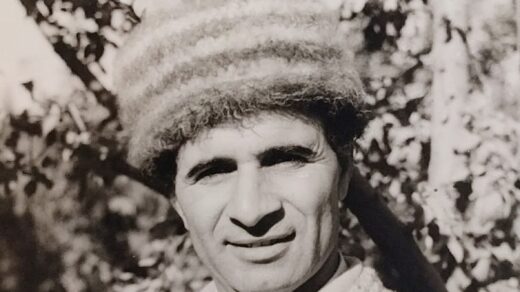
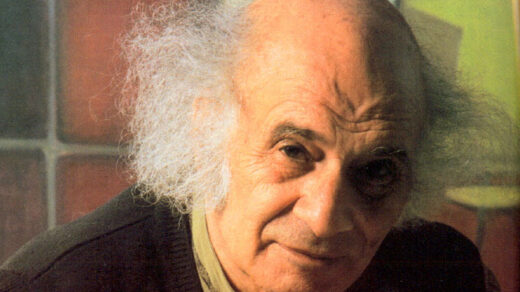
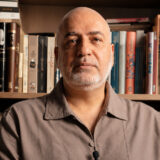
Master Jalil Ziapour, the Father of Modern Iranian Painting
Q- After returning to Iran, with what aims did you pursue the necessity of creating a transformation in the field of Iranian painting?
A- Studying at the School of Old Fine Crafts had brought me sufficient inquiry and alertness in the realm of artistic “whys.” I had found their answers. The working program of the faculty, which was carried out with the assistance of French professors in the Impressionist manner, had made known to us the features of that mode of work: how and why one must confront Realism.
The conclusion I drew from what I had understood was, in any case, that art is variable and that necessities bring this about, and that the forms existing in our ancient arts too had come into being because of necessities. But now they had fallen into repetition and were not keeping pace with the age. Through academic awareness we had also understood that the method of naturalistic rendering, or Realism-Naturalism, had long been rejected. Thus our artistic situation, from two sides (nature-making and the ancient arts), had reached an impasse and needed motion and change (that is, an artistic revolution). I made the painting The Revolution of Kaveh the Blacksmith after completing my studies and before my departure for France, in that same academic manner, and this was the image of my desire to put an end to the artistic declines of the environment in which I lived, which had to begin with protest: protest against the environment’s negligence toward necessities, protest against repetitive molds that had killed creativity and caused artistic degeneration.
My aim was to break apart the instruments of degeneration and to draw the attention of those involved to the demands of the time; I did not have in mind the presentation of a particular style. For style and mold cannot be imposed and injected by me or by the likes of me. It is necessities that suggest and inspire. For me it was enough only to sound the alarm and say: “Let us be ourselves, let us not repeat, and let us not be imitators.”
Q- At that time, was there any possibility for Iran’s cultural and artistic society to become acquainted with the concepts and forms of foreign artistic styles?
A- No! There was not. Moreover, we must bear in mind that the manner in which any society encounters and becomes acquainted with something depends on its condition and situation. Sometimes it becomes necessary for the encounter to be gradual so that the result may be acceptable. At other times, in the face of an emergency, a gradual implementation of contacts and encounters seems unnecessary, and one must act in a compressed and striking manner.
In our environment, some matters had changed condition as a result of social relations with the outside, and certain things did not keep step with this process. It is important to take this issue into account: harmony and simultaneity are among the compulsory matters of collective and global communication, and one cannot choose isolation and cut oneself off from everyone and everything. For the compulsion of the age inevitably drags the stationary along after it. Only one must be aware that in this compulsory tug and pull there is no requirement that we lose our identity among others (while preserving personality and identity, one can also be accompanying and, among others, global).
Our art was backward-looking and did not speak of necessities. Foreigners’ studies of our artistic works and their praises of this art gave an excuse to merchant-like artists to prepare repetitive, contentless, and decadent traditional works for buyers and dealers in shoddy goods (because miniature painting was famous and in any case had international prestige), and they acted in such a way that they accelerated the degeneration that had arisen (may God preserve and forgive their living, and have mercy on their dead). For they gave urgent assistance in making the degeneration of this traditional art manifest.
Q- At that time, were you captivated by the concepts of Western art or by its technique?
A- This is a question I have heard from many people, but I have passed it by unanswered and with bitter silence. The matter was my fascination with understanding realities (both concepts and artistic forms). I could not claim to be fascinated by foreigners’ innovations to the point of imitation. The upbringing and ethics of my authentic society taught me that “to mend one’s own old garment is better than asking for a borrowed garment.”
When I see foreign branded and metal-adorned clothing, with writing in a foreign language, on our young people (women and men), I feel sorry that we do not make clothing ourselves that would be worthy of us and a model for others.
With such an understanding, which of course arises not from prejudice but from regret over our own insufficient work and our unwillingness to rise, how could I have been fascinated by and imitative of others’ work?
No! I had no fascination for imitation. I was fascinated by understanding realities.
Becoming attentive to the forms suited to the requirements of the age, to “how foreigners have attained them so as to become children of their own time,” fascinates every person interested in understanding realities; and this itself is not immersion or becoming an outright imitator, but rather becoming aware of the hows and the realities. My presenting them also did not mean “imitate,” but meant “become aware”!
Q- Was it possible, without considering the necessity of preserving the supports and values of traditional art, to go to meet the schools and methods of Western art?
A- No! It is not possible. A worthy artist who has practical awareness of the values of his own traditional art does not go to meet Western painting methods and does not become fascinated by their work.
It is obvious that preserving traditional supports is necessary. Unfortunately, the place of a museum specifically for our book paintings (miniatures) is empty in the country. If such a museum existed, it would be the most important factor in studying our classical paintings in order to bring to fruition our children’s talent and awareness of their own classical paintings.
Certainly, going to meet awareness has no necessary connection with imitation, and I have always said: “Do not imitate and do not lose your identity. For it is the nature of man and of a nation not to accept identitylessness and anonymity.”
Another matter that it is necessary to mention is the subject of internationalizing art, which now and then some of our artists, in order to flee from realities, since they carry out imitative work, sophistically bring up as “internationalist” art! Although the germ of this benevolent humanitarian intention, in relation to general life on earth, is a global thought and vision, this cannot or should not mean that, in creating works, identitylessness should follow as the result.
In any event, we arrive at this point: taking identity into account (while creating so-called internationalist works) and possessing scientific awareness of this matter are among the duties of today’s worthy artist.
Q- Was your artistic movement more a war of taste, or was it a movement based on transforming Iranian art?
A- Let us not use the word taste. For if what is meant by taste (or a war of taste) is undertaking an individual and desired matter (as though I had wanted such a thing), no! It was not so. It was necessity, not the personal taste of an individual or of individuals.
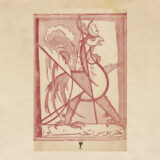
One or several movement-makers who rise up for the purpose of a transformation in national art, even assuming that they draw on taste, must also be equipped with the aim of cultural receptivity in order to devote long years of their lives to this work (as long as the years of activity of the Fighting Cock (Khorus Jangi) Art Association, over thirty-odd years), and, by mobilizing all their influential manifestations, replace backwardness with modernism and bring this important matter to the point of relative acceptance.
Therefore, as I have indicated, it was the spread of degeneration and the low level of artistic vision among the public that caused the foundation of this movement, and its path too was the collapse of degeneration, the creation of motion, and coming to oneself from backwardness. So in reality our movement was a movement with an aim and a foundation (out of good intention), not a war of taste.
Let me also say that every movement and understanding (under the title of a movement or any other name) needs time (waiting and patience) to bear fruit, provided that during this time a clear aim, literacy and the necessary awareness, and the elevation of the level of public culture serve as its support.
Q- The spread of new painting in Iran brought about, as its first step, the estrangement and rupture of the people with its concepts. Everything turned toward obscurity: space, time and place, and most important of all, the “good relation”! Why?
A- The reason for this is clear. In these recent centuries, our people had grown accustomed to easily viewing works of art whose elements required no thought to be recognized (they saw a watermelon as just a watermelon, and a cucumber and tomato as just a cucumber and tomato, or a grandmother’s face with the same natural wrinkles of old age, and saw no need to trouble themselves with recognizing the elements and thinking about them).
Throughout the course of traditional art, our people had spent a lifetime becoming accustomed to the smooth and magnificent colors of book paintings, and had become familiar with the lines, the movement of motifs, and the coherent and calculated curves on the tiles of mosque doors and walls (which, like soft music, plunged people into a pleasant calm), and had dealt with reasonable faces and bodies (like normal human beings). The delicacy and refinement of works of art and traditional ornaments (always in a repetitive, easily accessible form) had caressed their taste, and their traditional literature, rooted in their soul (together with such painted scenes, which aided their taste and enthusiasm), had long accustomed them to these things.
So now! How were they to give up all these easily found things to which they were addicted, which had brought them the support of a particular vision, and set them aside?!
Master after master, having compelled traditional students to trace from the work of past masters and having made of each one a cautious imitator (in making changes), so that he would still be acceptable to the people, according to customary tradition, free from objection, and worthy of praise, and having always shown the people one face of the coin of life for their satisfaction, left no room for another kind of seeing for our people.
With these constraints, can our people and our artists bound to the repetition of tradition submit to new art and new vision, which in their eyes is nothing but coarseness and rough speech?
It would certainly be strange for our people that instead of confronting delicacies, they should suddenly confront coarseness, or that they should suddenly be awakened from sleep and faced with the monster of the life of their time! Did our people, asleep and forcibly awakened, who were still rubbing their eyes, not experience rupture and estrangement? And did you not expect them to have it? And did everything not assume for them the form of obscurity and stupefaction? And was seeing that other face of the coin of life not repulsive to them, like swallowing bitter medicine?
How well old Nima saw, and how well he said:
In vain I wait
for someone to come to the door
Their collapsed door and wall
break over my head
……….
At the edge of the village a lone man
his bundle on his shoulder
his hand on the door, says to himself:
The grief of these few sleepers
breaks sleep in my tearful eyes!
Q- Just as Nima Yooshij is known as the father of new poetry, you too are considered the father of new painting. Tell us about your memories in relation to Nima and about his support for your thought.
Old Nima…, yes, he looked upon our actions with excitement. It was as though his looking was the condition of a wretched man who said to himself:
The road is empty
the pear is chilled
everything withers from long suffering!
As a sign of being of one mind with us, Nima began with his poem “The City of Morning” (the cock crows cock-a-doodle-doo), and it was printed in the first issue of the journal Fighting Cock. He also always wrote pieces entitled “The Neighbor’s Words,” in which he guided young poets toward the proper path of this art (so that they would not speak superficially), and he constantly reminded them of the need to have substance.
The poems we had from Nima were often choice selections and sometimes suited to our condition and days, and referred to circumstances in which, from time to time, we found ourselves facing sneering and mocking individuals:
Is he laughing for me,
the one who comes laughing and laughing?!
I weep at that laughter he has
and at that weeping that is his, I smile upon my lips
My wounded one laughs in secret
a laughing one weeps
Nevertheless, we did not take our eyes off the goal, for a duty was upon us.
The inclusion of Nima’s poems in the journal Fighting Cock stirred up the supporters of flowers and nightingales and the compact mass of the people. But it eagerly drew the attention of the seekers of the new (even though it was defective and heavy to the ear and understanding).
One of the supporters, who looked at matters more open-mindedly, said: “Old and new art are like father and child. Old art must be respected like a father, and new art must be allowed to grow and flourish like a child, and neither should be abandoned.”
For some time, in the same direction as and contemporaneously with our activity, a crushing debate had arisen in the field of new poetry and Nima’s poems, and the matter of Jalal Al-e-Ahmad and Alavi in this regard had escalated and even reached insults, and the newspaper “Iran-e Ma” had laid out this table. I remembered this saying of Saadi, who said: “It is the custom of the ignorant that when they are left helpless before an adversary’s argument, they shake the chain of hostility.”
In the meantime, they were pulling Nima down from the seat of his understandings. Inevitably, in the newspaper “Shahsavar” (third issue, 9 October 1950), under the title “Nima and His Poetry,” I wrote: “We are still not acquainted with criticism. Servile positions, which for many long years have occupied the greater part of our habits, have filled our ears and minds with flattery and adulation. We have learned improper praise or denial of people much better than correct and sincere criticism. If, by chance, someone offers rightful and meaningful criticism, he is without doubt accused of discourtesy.”
Alavi’s answer to Jalal’s article was such an understanding. In fact, the impartial reader understood that our writer was far from a correct understanding of poetry, or that there was some ulterior motive or malice at work, which of course there was.
I have nothing to say about Alavi’s writings (which I have read), since they were incorrect. Discussion around his statements is also pointless, and we know that our poets of flowers and nightingales are confined within the four walls of rules, prosody, meters, rhymes, and the other musts and must-nots of versifying. This condition is not limited to him; rather, all those attached to old poems and poets, and many other Alavis, are caught in this limitation of thought, dogma, imitation, and remaining in place.
New expression is incomprehensible to everyone (let alone to those addicted and trapped in tradition-worship). They are accustomed to hearing one particular kind of allusion and metaphor; they constantly speak of heart and flower and nightingale, beloved and sweetheart and wine and mistress and intoxicated narcissus, and there is no longer any place within them for accepting new metaphors, similes, and allusions.
These are the very people who, after being awakened from heedless slumber or unconsciousness, were placed face to face with the monster of life and do not have the ability to see the other face of life, and with their wailing lamentations raise the cry of “alas!”
At the Festival of Culture and Art, which was held in the Iran Bastan Hall on the occasion of a poetry reading, Mr. Azarakhshi, in opposition to new poetry, read Nima’s poem “Ay Adamha” in a broken and jumbled manner, out of inattention and impatience, to show how bad and improper Nima’s poetry was (that it lacks meaning and necessary grammatical rules!).
After the anger of his words and the continuous applause in defense of the speaker, in the presence of the minister of the time (while everyone was standing), I pointed out to him that he had read Nima’s poem inattentively or did not know how to read it, and in this way had wanted to ruin Nima (and with a steady gaze I stared into his eyes). Since he knew me, he looked at me with a pale face. His lips were trembling. For it was possible that I might immediately go up to the lectern and teach him the correct reading of a good new poem, and he did not want that.
The last time I saw Nima was the same day when, at his invitation, we ate bread and abgusht together (at his house). Nima set his foot on the wooden stepped pillar of the house’s veranda, went up to the roof, and brought down a dust-covered bundle, and Gharib and Shirvani selected poems from among them.
At that same time, at the friends’ prior request, I made a mask of Nima’s face with paraffin and plaster, and he was as happy as a child.
I never saw Nima again. But whenever I think of him, I remember this elegy of his:
Dawn stands with me, anxious
It seeks morning, so that from its blessed breath
I may perhaps bring news to this soul-lost people
But in my liver, a thorn from the path of this journey breaks
Q- On the basis of what need was the journal “Fighting Cock” published?
A- The journal “Fighting Cock” was published on the basis that it should be the expression of our current state to the people. The name “Fighting Cock” was proposed by Gholamhossein Gharib.
The society’s location was the “Ziapour Atelier.” This atelier was located on the former Takht-e Jamshid Street, on the western side of the wall of the present Oil Company palace, which had a garden full of trees.
Drawing attention was difficult. But gradually, personalities and young people of taste and clear vision drew near to us (and the media, especially, expanded the grounds for art discussions in the environment, and in this way placed their facilities at our disposal), and our numerous lectures and answers to numerous questions provided ample room, and the “Fighting Cock” publications also encompassed a part of it.
Q- Before you, Iranian Impressionists also had activities in transforming the art of painting. How do you evaluate this movement?
A- The Impressionist style is the very one that was implemented in our faculty or art college in Tehran by the French, and which we practiced; and today too, a mixture of them in the form of a camel, cow, leopard is taught in the numerous painting faculties of Tehran.
Of course, even this simple Impressionism, at that time, was being pulled on one side by the realist inclinations of some young artists eager for outward nature.
Impressionism, which expresses impression with reflective effects from nature, set Realism aside with this logic: “Since, due to the rotation of the earth, the elements of nature continually change their chiaroscuro, state, and condition moment by moment, and with this continual displacement, no reality is static, realist painters too will not be capable of capturing constantly changing moments except exclusively through receiving impressions and recording a collection of fleeting effects, which is precisely what Impressionism itself can be.”
This Impressionism also had several stages of advancement into other isms, of which Neo-Impressionism, Expressionism, Pointillism, and Fauve-Impressionism were offshoots and served as a “connecting bridge” between itself and other schools.
The youths who, after completing the faculty course, had not yet had the success of going abroad and also did not practically know the offshoots of this simple method, set about creating works using that same learned and simple Impressionist method, in which they utilized Iranian subjects and elements.
After my return to Iran, due to the curiosity these artists had to become aware of advanced foreign arts, and gaining courage from my steadfastness in seeking the new and paving the way, they found the audacity to utilize them and advanced their work up to Fauve-Impressionism.
But we must know that whether Impressionism or Cubism or the other isms, none of them can express our Iranian identity (unless we want to accept a composite work taken from the foreigner like a Western garment).
Therefore, my approach to and evaluation of the Impressionism existing in Iran is the same justification I have for the other foreign schools existing in Iran. Because I still say: “Becoming aware of the condition of others’ molds goes beyond making use of them.”
I must not forget to say: “Although international connection compels us to make borrowings from others, it should not be such that our identity comes under domination. (If we think about how they have done something to compel us to borrow their culture and art, and why, in return, we should not do something so that they borrow from us, it is then that our view toward the principle of having identity and ‘borrowings’ will differ, and another resolve will arise within us to think of a way – like others – to preserve our own identity).”
Q- The first look toward modern painting in Iran became prevalent with an inclination toward which style of Western art?
A- One should say the first (striking) look, because through our interaction with the West (and also the East) from several centuries ago, and during the Safavid and Naseri periods, we have had looks toward Western paintings. But we had the full-fledged official look toward Western painting with the establishment of the new School of Fine Crafts (by Master Kamal-ol-Molk in European naturalism or classicism), and then with the establishment of the art college at the University of Tehran (by André Godard – the director of the Iran Bastan Museum at the time, accompanied by French professors – and Iranian professors who were students of Kamal-ol-Molk) in the simple Impressionist style. This faculty or art college was established with the approval of the government of the time in the year 1940-1941.
Whether our cultural officials had wanted us to become acquainted with Western arts alongside the national arts or not, in any case, in order not to fall away from the main point, I must say that after the Impressionist style, Cubism was a controversy that had a double cry (louder than any sound). Because if until then a cover had made the resentment against Impressionism tolerable, with controversial Cubism, the cover was removed, and cries and lamentations arose, and on the principle of “one death, one mourning”, the matter was settled once and for all; for many long years (about more than thirty-odd years) Tehran became the arena of artistic debates, and the media in the meantime stoked the fire of the fray, amplifying the commotion and creating an active and lively environment that was very interesting.
Q- Tell us about the cultural-artistic atmosphere of the year 1950-1951. Apparently, at that time the Cubist style was a controversial style in the Iranian artistic society!?
A- Yes, it was a fruitful time, full of excitement and debate. The desire to become acquainted with new art (in reality), to understand the subject, anger and aggression, everything was present in these artistic debates. It was a wide-spread table full of instruction in the field of questioning and inquiry.
I consider those exciting years full of memories. Our confrontation with the unjust obstinacies of the people of taste was bitter and biting. But in any case, this confrontation was necessary.
We, based on our slogan:
The tale of Alexander became legend and grew old
Bring forth new speech, for the new has a different sweetness
(From Farrokhi Sistani)
We left no backwardness, to any degree, unanswered, and as far as our awareness allowed, we decisively set aside and exposed the factors of retardation and profiteering.
Our excitements did not subside. On Tehran Radio, under the title “The Art of Painting in the Recent Past and the Present,” I spoke sufficiently, first to settle my account with the existence of contemporary art of the naturalists and traditionalists.
At this same time, one of the artists seeking a name had chosen the subjects of his paintings from washerwomen and Kurdish men dancing and other subjects of this kind, and had created them with a mixture of Impressionist brushwork and uncalculated borrowings from geometric lines, free from the calculation of compositions.
In several newspapers, “Payk-e Solh”, “Iran-e Ma”, and “Jahan-e Now”, they raised a commotion in this regard, praised him greatly, and introduced him as a people’s artist!
Thinking lest these art connoisseurs and critics (very expert!) should deceive our young artists merely because of the choice of popular subjects, and at this same level of subject selection recognize them as great artists and thereby mislead the artists seeking a name themselves (and also the people), I therefore wrote in the newspaper Azarpad: “Our artists should be attentive to this point: they should not listen to the opinions of those who pose as art connoisseurs, and should distinguish propaganda from correct criticism.
People do not know that this artist favored by the compact mass of the people has, in the span of only three months, cooked up twenty-five paintings, one must say!
For any painting to be a work at an average level, and for technical principles and the making of content to be sufficiently observed in it, one must know that at least more than three months’ time is necessary. In three months, how can one create 25 popular masterpieces?! Unless it is mashed potatoes or kateh rice (O people’s artist?!)
Would it not have been better for our mocked artist to make only one painting (but make it well)? He has preferred speed of execution, inattention, and haste to thinking, patience, and precision in work.” (Azarpad newspaper, No. 4, April 1950)
One of those knowledgeable about art (a Frenchman) saw this exhibition with me that same evening. With surprise he said: “He has been completely ruined,” and he was sorry. I said to myself: “Yes, it is not his fault. They have ruined him.”
In the magazine “Jahan-e Now”, we read this headline in large letters: “What on Earth Is Cubism?!” It also had an introduction and conclusion seasoned with ridicule.
The writer of the article had attacked me and, because of the resentment he had toward crooked and misshapen paintings, had seized Cubism by the collar and, with the help of the Egyptian Tawfiq al-Hakim, had exposed it to ridicule, showing such wit that I regretfully pictured his mocking face.
In (the weekly Azarpad, eighth issue, 1950), in answer to the witty writer, I wrote: “I have always said that in order to know any art and understand its condition, one must pay attention to the conditions of its time; otherwise, with ridicule and sneering, we get nowhere.”
I have no prejudice in this matter, and I see no objection if someone does not like it and protests. But from people such as those responsible for disseminating culture and art, who have pens in their hands and should know what it means, I find it unbecoming that instead of spending their time on guidance and cooperation in enlightening public minds and raising the level of thoughtfulness in art, they should devote it to clowning and soil the columns of magazines with unpleasant materials and nonsense (for the purpose of being amusing and making a number of people laugh).
According to this magazine’s writing, Tawfiq al-Hakim holds an interview in a restaurant with a painter named Otto (perhaps imaginary), and raises questions in the field of Cubism, while the other party too gives evasive answers (and it emerges that the questions were not serious, but a mixture of ridicule; Tawfiq al-Hakim too, who like our pen-wielding friend was witty, makes Cubism the object of mockery).
By bringing this account of the interview from “Jahan-e Now” magazine, quoting Tawfiq al-Hakim, I wrote: “Of course it is not surprising that in our environment they should show an unfamiliar reaction to geometric painting (Cubism) and imagine it to be an alien method. For they do not know that in this work, with a special difference, we have been dealing with it for several thousand years.
The artists of our country have for centuries themselves been the creators of methods of geometric motifs, and have broken off the heads and tails of natural forms and applied them in a thousand and one forms and on various materials, from bowls and jars to carpets, tiles, and metal vessels, and have even made them penetrate into the life of every Iranian individual.
How is it that they now throw the stone of excommunication at those who wish to guide the rightful continuation of their own heritage in a new form? This is out of ignorance.
Those who now imitate the methods of the past and do not seek novelty in their work are certainly making a futile effort; they ruminate on the arts and lives of their past eras, and are not children of their time.”
In the Apadana hall, amidst the dense crowd, a gentleman with one hand on his hip and one hand behind his back was looking at my paintings, biting the corners of his lips in anger, and searching for someone to take his resentment out on. We were introduced to each other: “This is Dr. …, a university professor in the Faculty of Engineering (dyeing department).” “Nice to meet you.
Sir! What are these? What does this rope composition mean? What do these incomprehensible lines signify? These are not understandable to the people. I won’t say the people; shouldn’t at least we, who are so-called from the educated class of this country, understand something of this nonsense? Well, I have expertise in colors. If one principle of painting is that it should be colorful, then why do I, who am a dyer, understand nothing?!”
For me, there was nothing more baseless than these words to make me lose my temper. I cut off his speech and asked him several questions. He evaded. It was as if our master dyer was not at all willing for anyone to question him. For this reason, he gave no one the opportunity to speak.
I fell into thought. This ancient nation, which for at least more than half of this antiquity has constantly dealt with the design of geometric motifs, and this master of ours who, according to his own words, because he is a dyer, should be more aware (which he is not), regarding this matter, who is to blame for their ignorance? The artists? The people of taste? The officials of culture and art of each era? The media? Certainly, all of them together.
Another of the interesting events of the era of artistic struggles was the stirring of Ettela’at newspaper! This newspaper, which seemed to have turned a deaf ear to the clamor of the artistic atmosphere, despite all its inattention, suddenly devoted a detailed five-page account with photographs and particulars to new painting in its monthly Ettela’at (ninth issue, third year, December 1950) and wrote: “In order to understand new painting and the school of Picasso (!), we will give a living example. Gil Wilson (the renowned American painter) shows with six images how a healthy man gradually goes mad and destroys himself.
New painting, unlike classical painting, addresses condition more than form and body, and this condition is more the reaction of the painter himself than the subject of the painting; that is, the painter brings to the canvas what he himself sees and feels. It is for this reason that new painting cannot be correctly understood. Because the reaction of no two people concerning an event is the same and, in truth, it is like the story of the seven blind men who each perceived and described the shape of the elephant in a certain way. Also, the aim of new painting is not the creation of beauty in the classical sense. Its aim is to describe the psychological state and the reaction of the painter himself. One can say that art in the new school has changed taste and direction, and has nothing to do with ugliness and beauty. What the painter draws and desires is the embodiment of condition, not form.”
Of course, the article printed in the monthly Ettela’at lacked certain necessary explanations, but in any case (may the evil eye be far!) this mass medium too had taken a step on the path of enlightening public minds (even if sarcastically)!
This very occurrence compelled me without delay to bring up necessary explanations about another problem of artistic vision that was obscure to our people, and that was the displacement of limbs and organs, such as an eye on the forehead, a nose on the cheek, a chin on the jowl, and lips on the top of the head (for example).
Therefore, on the date of December 1950, at the Palace of Art (Giti Art Association), I delivered a speech entitled “How the Fourth Dimension Penetrates into Painting.”
In the year 1951, the arrival of Hushang Irani from Europe and his finding his way into the Society, along with his insulting radicalism, caused me to withdraw myself from the circle of friends. Thus, the second period of the Fighting Cock magazine was published on 6 May of that same year, in a square format with offensive propagandistic content (without my involvement). In my opinion: “No matter how reasoned and worth hearing speech may be, bitterness in it will not be pleasant.”
After a few lectures in the field of formalism and a new understanding of it, as well as introversion and the nature of artistic events, Irani, since he did not approve of the Society’s environment, which did not welcome insolence (or was not as insolent as he desired), left Iran!
Q- What is your understanding of Cubism?
A- Cubism was a mold with the presence of which the form of machine life was better depicted. Geometric shapes, among various shapes, were the only suitable form that had a close, objective resemblance to the machine and its effects.
Q- Iran’s artistic society possesses rich assets in traditional arts such as tilework, carpets, and so on. How, with such a background, should we come to accept foreign artistic styles?
A- Coming to know foreign artistic styles is not an issue, because this act is for gaining awareness. But adopting them is problematic for us if we want to put them into practice, and you are right. I have not desired such a thing. Gaining awareness of the state of others’ artistic molds is beyond using and imitating them. The meaning of this statement is that we should not imitate their artistic molds (just as they have been in pursuit of molds suitable for the work of their respective times, let us also strive to discover the appropriate molds of our own time).
If you refer to my published words in the public media, you will find that wherever necessary, I have emphasized that: “The artists of our country have for centuries themselves been the creators of geometric motifs, and have always trimmed the tops and bottoms of natural shapes and applied them in their desired and necessary forms onto various materials (from bowls and jugs to carpets, tiles, and metal vessels), and have made them permeate even into the very lives of every single Iranian.”
Q- You have taken effective steps in introducing the values of Western art in Iran. In return, have you made efforts to introduce Iranian art to the West, and have European artists paid attention to Iranian art?
A- Introducing Western art and their various schools to the extent needed, yes. But as I have mentioned many times, this was only for the purpose of raising awareness of foreigners’ diligence in pursuing the appropriate mold for their work (which was accomplished), and my goal was not to propagate their art so that it would be disseminated in Iran. However, like any person with open eyes and ears (very open indeed), I was fascinated by their activity and wanted us, in contrast to the imitator artists who were repeaters of traditions and had become the instruments of artistic degeneration, to achieve certain awarenesses (for the purpose of awakening) and bring forward examples in this regard.
But regarding the introduction of Iranian art (our past arts, of course), Westerners themselves, out of innate curiosity, have researched it sufficiently, have written books, and insignificant translations of them are available. (Never mind that their judgment and view of our art has not always been correct, which leaves much room for discussion).
Also on this matter of whether European artists have shown attention to the art of Iranians, I must say yes, they have paid attention, just as Richard N. Frye has quoted: “Western people of taste, especially some of the most intellectual among them, protest against themselves regarding the nature of their judgment on our paintings, and have said: ‘Our way of investigating the art of Iranians is incorrect. Because Iranians take art together with craft in the service of life and as an obligatory matter, not as a work of taste detached from the affairs of life.'” (N. Frye, 1984, p. 192)
The French scholar Jean Buhot has written: “The Iranian art of painting of the Islamic period has not remained confined within its own center, but has penetrated into the surroundings. But we Westerners can never, as we ought and should, realize the true value of Iranian painting. Because we sacrifice everything to the chiaroscuro and the form of our subjects.
The Impressionists are far from the brilliant and uniform environment of Iranian painting. Iranian painting is like a large and beautiful piece of blazing diamond.
Recently, for some thirty or forty years, French painters have discovered the way to realize the true value of Iranian painting. Among them Matisse, Bonnard, and other painters have taken the joyful aspect of Iranian colors and attempt to abstract them from the external object.
Braque too has noticed the particular grace and beauty of the expansive surfaces in Iranian painting, and has drawn inspiration.” (Henri Massé, 1957, pp. 331 to 338)
Herbert Read in his book (Art Now) has written: “There is no doubt that Matisse engaged with distant sources such as Iranian and Chinese paintings, and went in search of the qualities of color harmony and introduced them into his own art.”
(Henri Matisse was one of the supporters of Iranian techniques and had in his possession a very exquisite collection of precious Iranian works, and he confesses that Iranian methods have influenced his works.)
The contemporary English painter and archaeologist Frank Brown Goten says: “The very excellent examples of Iranian techniques have influenced the general styles of world techniques, and in this respect, the world is indebted to the artistic services of Iranians. Such is also the view of the Englishman William Rothenstein, who has made adaptations from Iranian art in his own works.” (Zaki, 1941, p. 30)
In addition to these awarenesses, we must know that imitating Iranian art became customary among European artists from the 17th century AD onwards (the Safavid period), just as Rembrandt, the famous Dutch painter, made a striking exact-to-exact imitation of Master Reza Abbasi, and I myself presented these sketches by Rembrandt during my lecture at the History Review Seminar (which was held at the University Complex of Art on 28 and 29 April 1987).
Furthermore, at the home of my professor Niclausse, the sculptor, I came across a large amount of our own book paintings (printed miniatures), which the professor noticed and, with a cheerful face and laughter, said: “Are you acquainted? These are very useful to me and I draw inspiration from them.”
Q- What viewpoints did André Lhote (your professor) have in the field of Iranian art, and what suggestions did he express in the field of transforming Iranian art?
A- The viewpoints of Europeans in general (especially the French) toward our past arts are at a high level. Concerning the current camel-cow-leopard hodgepodge of painting arts as well, they are not oblivious to its going astray. We should also know that young European scribes who have found their way to Iran under the name of international critics, all of them, based on personal sentiments and also the people-pleasing policy, describe the imitative activities of our young generation as an effort toward approaching the path of global collective communication (internationalism).
Regarding André Lhote as well, I never heard any suggestion or viewpoint from him in the field of transforming Iranian art, nor did I come across any Iranian works in his possession.
Q- You always spoke of the synthesis of geometric shapes (Cubism) and its connection with the motifs of traditional Iranian art. What is the name of this new synthesis?
A- I do not remember having spoken (especially so decisively) in the field of synthesizing Cubist painting. Because I know that Iranian Cubism and European Cubism have a distance in “vision” and “perception” from each other. But the fact that these two find an affinity with each other in a general mold of form (albeit in two different ways) is a matter that must be considered from the perspective of vision, technique, and perception, and their identities must be distinguished from one another.
Moreover, now (assuming the impossible) one cannot engage in synthetic Cubism either. Because it has been a long time since this mold said its piece in Europe and has been left behind, and today too in the West is the space age, and time passes swiftly, but we are still stuck in the bend of a single alley.
Q- Who were the followers of the school of Kamal-ol-Molk? What were they thinking, what logic did they have, what realms did they traverse, and did they stand against you or beside you? Or were they indifferent to your movement?
A- It must be said that most of our people were among the followers of the school of Master Kamal-ol-Molk. Because their work was in the classical school (nature-making).
1- The followers’ view was based on the premise that painting should be made as close to nature as possible.
2- An artist is one who observes and pursues this goal.
3- The followers’ logic was that nature is always beautiful and is the best model for the artist.
Their world was a journey of fascination with nature, and they looked at it with a mystical view and saw thousands of mysteries and secrets in it.
The Master himself, although he spent about three years studying the works of European painters in the Louvre and Versailles museums, became attached only to academic and classical works, and was never drawn to the Impressionist works that were popular at that time.
In a glance at the book “Painting of Iran in the 12th-13th Centuries” (Volume 1, p. 113), we read: “Kamal-ol-Molk is the first master of the European academic painting method…, the Master, in attending to details that are individually and carefully observed and recorded, and with keen eyes that do not overlook even the smallest and most delicate play of colors, has presented paintings that can easily be accepted in place of photographs or color slides.”
He often used to tell his loyal student Ashtiani: “I can make a painting so accurately that if they take a photograph from nature, there would be no difference whatsoever.”
According to reports, after returning from his trip to Europe in the year 1909 (corresponding to 1329 AH), the Master opened the first school for teaching European academic painting under the name “Sanaye-e Mostazrafeh”, and in this way the customary and mixed style of the Qajar period made its way to the coffeehouse, and European painting replaced it.
The Master took nature as a model and set about training students who later each became a master in this field, and the next students gradually arrived. But the renowned among them were the Masters: Ashtiani, Ali Mohammad Heydarian, Hasan Ali Vaziri, Hossein Ehya (= Sheikh), Oliaei, Mohsen Moghaddam, and other masters; to become acquainted with them, one must refer to the artistic reports of this period.
Among these masters, it was later Hossein Sheikh to whom they gave the administration of the Kamal-ol-Molk School, and students were raised under his supervision who for some time (and even now) followed the teachings of Master Sheikh, and all possessed talent (unfortunately, minus open-mindedness in this art – a method that had been current since the time of Master Kamal-ol-Molk).
Master Mohsen Moghaddam, while preserving a more advanced academic method, turned to Impressionism, and Master Ashtiani recently applied bold brushstrokes in the field of Impressionism which, according to the followers, were called “free brushwork.” The rest engaged in meticulous detailing hair by hair and became the true successors of their school.
All of these masters and students and students of students (except for the lofty indifferent leaders) were opposed to me and defended their accumulated learning and findings, and their defense consisted of framing, defamation in some resentful magazines, phone mockeries, making accusations of being Tudeh, sending Rokn 2 after us, and putting the Fighting Cock publication on the line for suspension.
On the other hand, generals who were lovers and supporters of new art and eager for a free space took our side and neutralized the actions of the opponents.
Later, when they saw no remedy, they took the negative path of struggle, in this way that they would not read our writings and would not come to our exhibitions.
One day, one of them openly said to me: “The best way to oppose you is indifference to your actions and behaving negatively.”
Q- How did you confront renowned masters with traditional taste (like Behzad)? Did they too accept the necessity of this transformation?
A- Among these masters, only Master Ali Motie and Master Ali Karimi were the most open-minded of them, who believed in the necessity of artistic transformation in traditional paintings and were logical and good-natured in their discussions. But Master Behzad himself, because he was aware of my exposures regarding his commercial creations and those of the followers of this style, always sufficed with a self-righteous look, offering mutual courtesy and a respectful greeting.
Q- What impact did your painting “Kaveh the Blacksmith” have on Iranian society?
A- At that time when I was making the painting of Kaveh, I said that I was in fact making my goal symbolically. This painting was exhibited at the “VOKS” house (the Soviet cultural society) among the works of all the artists of Tehran, from classical to collegiate, and attracted the attention of the compact mass of the people who wanted to purchase it. I did not consent. Then Mr. Fateh (the then head of the Oil Company) wanted to buy it. I was informed that he wanted it for his English compact mass; in any case, I did not consent. Until Mr. Moshiri, the engineer (a collector), bought it from me, and the matter never reached the point of Kaveh having an impact on Iranian society.
Q- After the transformation and the Fighting Cock movement, what was the fate of the art of modern painting in Iran?
A- With the return of art students from foreign countries (after the artistic uprising – with the help of the media – had paved the way for the activity of new art, and gallery owners exhibited the works), the Ministry of Culture and Art of the time also took artists under its protection and did not withhold financial assistance. The arena for working in the field of new art became wider.
But the returning students from every country presented works that, without exception, lacked national identity. If this work had been an auxiliary display for our wake-up call and only to that extent, it would have been more of a help. But unfortunately, in the continuation of the presentation of their works, two principles were exposed: pure imitation of Western art and their ignorance of environmental substance!
Had these people gone abroad to learn the art of foreigners and propagate it among the people? (A question that had also been asked of me). Or had they gone to those parts for the purpose of studying (only studying) how they work and their artistic molds? If it was for the second purpose, then where are those substantive elements from our own art?!
So, altogether, the situation was not suitable. With all those problems, deprivation, and opposition-creating discussions, we had not paved the way for Western art to make itself comfortable in this paved path; rather, we wanted to find an opportunity in this paved path to create works with identity, not another chaotic bazaar. Thus, my renewed uproar toward the incorrect perceptions of the artists returning from their travels began, and it compelled the media as well to help, to conduct detailed interviews, and to reflect my words abundantly.
The magazine Sepid o Siyah wrote in its special issue (the year 1967): “Ziapour, several of whose paintings are now exhibited in this exhibition right next to the works of several classical painters, had from the very beginning of the struggle set his goal on giving attention and precision to the necessity of the needs of a society in transition in artistic fields. The interesting thing is that in his works, he never stepped outside the space, theme, environment, manifestations, and phenomena of his own society. But after him, the disorder escalated to such an extent that they even imitate rejected examples from other societies and place them on display in our society so that God’s people may sit and watch them! It has been a while since I have seen Ziapour. But I very much wanted to know what his opinion is now regarding these chaotic situations?!”
Q- What was the reaction of the political society – the government and the political opposition – toward your innovations?
A- Yes, interesting things happened. In the beginning, the government did not interfere in our work. Politicians and government departments were observers of the situation and sometimes, by way of recommendation, put a spoke in the wheel of our work. So that that interesting incident occurred and the Fighting Cock magazine was suspended.
It seems to me that the political situation in the years 1949-1950 was not favorable for the government. Since I was not a man of politics and parties, I do not know exactly what happened that we became aware that in the National Consultative Assembly, talk over the journal Fighting Cock had dragged on and led to an interpellation; who had interpellated whom, I do not know. The newspaper Ettela’at, in issue 9615 of May 1949, had written: “The text of the interpellation of Dr. Eqbal… in the Assembly.”
At that time, since I was at the disposal of the Ministry of Culture, I received a letter in which they had summoned me to an administrative trial session.
Before the day of the trial, I took a copy of the journal Fighting Cock and, together with Gholamhossein Gharib, went to the Ministry. I requested an appointment with the minister (Dr. Eqbal). He accepted and asked my purpose. I said: “In the Assembly, they have mentioned the journal Fighting Cock as publications of the Tudeh party members that they distribute in primary schools.”
He took a look at me and said: “Yes, I have not seen this journal.” I opened the copy of Fighting Cock and placed it before him. I had placed the heavy article on Surrealism in front of him. He cast a glance at the first few lines and said: “What does it want to say?” I asked permission to read it myself: “The root of all kinds of thoughts and ideas exists in a latent state in the depths of human life. Despite the complexity of the brain structure of each of these ideas…”
He had become curious and said: “This is of no use for a primary school. Nor is it of use for a high school and university…” I said: “The contents of this journal are contrary to the views of the Tudeh party members.” He said: “I have given orders that it should not be published. What now?” He laughed and pointed to the tea. “Publish another one.”
More interesting was my administrative trial, which took place under the chairmanship of Dr. Sharif Razi. On the upper floor of the southern building of the Ministry, several people cross-examined me in turn: “Has anyone commissioned you to propagate Cubist painting? Why have you chosen this field? What does Cubist painting essentially mean?”
I said: “Cubist painting means geometric painting like the motifs of carpets and tiles, and no one has commissioned me to propagate this painting…”
Suddenly they fell silent and looked at each other, and after a few moments said with a smile: “We apologize. We thought that Cubism meant Communism!”
Passing over these matters, finally in the year 1976, the official and governmental authority wrote in its English publication under the title of the High Council of Culture and Art (Center for Cultural Research and Coordination): “Contemporary Iranian painting from the years 1949-1950, in the arena of the controversy between the old and the new, entered a new stage through the paintings and writings of Jalil Ziapour.”
Q- In what fields did your activities crystallize, and what services have you performed over these long years to aid the culture and art of your country?
A- Allow me merely to summarize my activities and not deal with each of them in detail.
1- Over these years, I have had seventy-three artistic lectures in cultural-artistic assemblies and on Tehran Radio and Gendarmerie Radio (as well as interviews in the media), all of which have been inserted in the public media.
2- I have had twenty-one investigative-historical lectures in congresses inside the country.
3- I have written twenty-eight volumes of investigative-artistic books. Eleven volumes of them, which have been printed, are in the field of Iranian clothing, and several volumes are in the field of art and history, and are now rare or scarce. (The rest of my investigative-historical materials are those that will be ready for printing with a re-examination).
4- In addition, I wrote a book of some two thousand-odd handwritten pages relating to fifty years of visual art (with documents, from the time of Kamal-ol-Molk to the present) which is now gathering dust in the possession of the Department of Traditional Arts. This book includes the working condition of contemporary artists and the media’s opinion regarding them.
5- I have in hand a comparative glossary of the Gilaki language that I have been working on for years, and it contains about fifty thousand words.
6- I held two seminars at the Islamic Art University Complex in the year 1987, in which, at the request of the university, I delivered lectures on the following subjects: “A re-examination of history and the fundamental role of Iranians in culture and civilization; the popular aspect of the art of the Islamic period of Iran.”
7- Thirty-one paintings, drawings, and sculptures, which include eleven two-meter canvases and three back cover designs and a Cubist portrait of myself, and a number of medium-sized paintings. One classical painting and three plaster and metal sculptures.
8- A carpet design measuring (2×3) meters on a black background (with a Gilani motif), of which a pair was woven.
Q- How do you evaluate the art of painting after the Revolution?
A- Painting in the period of the Revolution found application in two aspects: illustration and calligraphy-painting.
Illustration quickly inclined toward weakness with the gaining of power by the technique of photography, and now it also has no backing. Those who are aware know that illustration itself is not limited to portraiture (which is individual likeness-making). Rather, type-making in a collective form possesses social importance, which must be addressed with awareness and technical principles; and in this matter, none of those involved have shown sufficient observance (in the working principles of how they should be), except for a few individuals from before the Revolution whose presence was not utilized during the period of the Revolution.
Now too I do not see people who have shown technical power in social type-making (except that, out of the necessity of revolutionary propaganda, they haphazardly brought into being works so that a word and a message might be accomplished).
In my view, illustration before the Revolution did not have a solid foundation in the broad sense of the word. And after the Revolution, too, it has not had the backing needed for suitable presentation.
Therefore, the illustration of the age of the Revolution is a very weak item, and in order to reach the aim of this social technique (so that it may be utilized), much striving and learning is necessary.
But the achievement of revolutionary art must be considered the motion of the art of calligraphy-painting. For it is both entirely Iranian, and the use of the method of decorative tradition in the age of the Revolution is progressive in nature (one must strive that it does not reach an impasse).
Q- What proposals do you have for a fundamental transformation of the various aspects of Iranian art?
A- For foundational understandings on the path of a new movement, in my view, it would be proper that a transformation of the kind I am stating be brought about in teaching, from the art conservatory to the art faculty:
1- Use should be made of our decorative art (the two techniques of carpet design and illumination). (Carpet motif is the mother of the motifs connected with our craft arts – and illumination possesses the inner substance of adornment). It is necessary that these two techniques be taught practically, and for this work use must be made of highly experienced masters who can foster the sense of creativity in future artists. In the final examinations, too, definitively one work of sufficiently striking size from each of these two techniques, in which creativity and novelty have been implemented, must be put to judgment (in this way, the art student will be compelled toward creation or creativity).
2- During basic painting (fundamentals) from nature, theoretical analysis must be engaged in for the transfer of the qualities of book art (miniature), so that the condition of the works of our past artists may be clarified (what they have done, and what characteristics of nature they have picked up, and what things they have laid aside and ignored, and why?). In addition, teaching analytical art history in this direction can be the aforementioned helper on the path of artistic thinking.
3- For the principled and natural satisfaction of curiosity about global arts and schools among the students of this technique, and for the purpose (only) of familiarity and awareness of the workings of the methods and gaining self-reliance in technical abilities, a period of practice in the international method and schools of painting is mandatory to execute (so that anxiety over ignorance and unawareness of what has passed and is passing in the world will not be present).
Imparting these themes to art students and emphasizing artistic creativity will decisively steer the students toward the appropriate path, and in a serious period and pursuit of practical action and a continuous and correct working procedure, the objective will be secured and it will bear fruit. I am hopeful.
Sources:
1. Frye, Richard N., (1984), The Golden Age of Persia, translated by Masoud Rajabnia, Soroush Publications, second edition, Tehran.
2. Massé, Henri and René Grousset (1957), The History of Iranian Civilization, with the collaboration of a group of European Iranologist scholars, translated by Javad Mohyi, Gutenberg Publications, Tehran.
3. Zaki, Muhammad Hasan (1941), Iranian Arts After Islam, translated by Mohammad Ali Khalili, Eqbal Publications, Tehran.