by
by Text of the lecture by Master Jalil Ziapour at the Fighting Cock (Khorus Jangi) Art Association; published in the magazine “Nabard-e Zendegi” (Issue 4), the year 1955

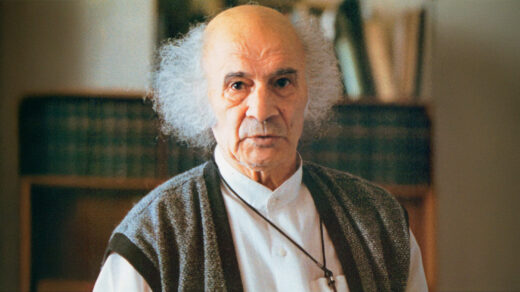
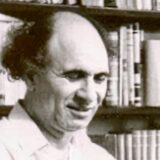
Master Jalil Ziapour, the Father of Modern Iranian Painting
It must be known that nascent needs, with their early manifestations, continuously affect the minds of sensitive people and manifest in the state of penetration and expansion, and in this state, only individuals more aware of social affairs perceive their existence sooner than others and seek to present them. At that time when the fulfillment of needs is not easily possible and deprivations impose their pressure, the reaction begins. In any case, the premature or nascent representation of these almost perceptible needs is carried out by the artist (who is an easily impressionable individual). It is obvious that artists differ from one another in terms of speed of mental transmission and sensitivity. There are many artists who, compared to other artists, possess greater power of mental comprehension and foresight, and their minds perceive emerging needs in advance (even if their feeling and comprehension of them are entangled).
Sensitive individuals can be divided into two general categories. Some are people of taste. They possess a sensitive mind for predicting latent events, but do not hold the means of their manifestation in their hands (since they have not pursued the means of expression); they can understand art, can find their way into artistic imaginations, and comprehend the artist’s thoughts, but themselves lack the power to manifest artistic mental states. The others are the artists. They, in addition to possessing all the merits of the first group, possess the power to manifest their impressions (through various elements of artistic expression).
Reactions in everything in life (especially in art) are a very great blessing. Reaction is the cause of breaking habit and a warning against stagnation. Preserving habits is equivalent to following the worship of the old (that is, inattention to the necessary needs of the time). Among all individuals, a group researches art and, in accordance with the needs of the time, determines and establishes beautiful or unbeautiful works based on the opinions of the majority or minority, and comes to believe in social or individual art. The opinions of the minority or majority about beauty arise from their habits, interests, memories, and knowledge. Therefore, the criterion of beauty based on the opinions of the people is prepared by a specific group ‘who are the supporters of the minority or the majority,’ and the expression of opinion by individuals on the beauty of a work (that it must be such and such or must not) is obtained from the disagreement or agreement of their opinions, and all writings related to beauty stem from here (which is variable).
With this view, beauty, too, always holds true for backward arts that have become generalized and are favored by the majority. Therefore, new art, when it is new and has not become generalized, can never be beautiful from the perspective of the public. Thus, the modernist artist always pursues his work and moves forward, regardless of the opinions of the public and their aestheticians. For he knows that if his works are unbeautiful and unaccepted, they will later become beautiful and favored, and it may well be that they will never be favored.
Anyone who defines and interprets beauty at any age and in any manner has defined and interpreted it correctly (and the definition of the specialists or critics of the minority or the majority is also correct in its own place), because it is impossible that, until someone’s taste has been cultivated over time, and they have seen, distinguished, and weighed various beauties, and aligned their brain with the necessary needs of the time, they should be able to accept other beauties. Artists, due to mutual encounters in social life, store attachments, habits, and memories within themselves, and exhibit them after arranging them in the necessary form. Whenever individuals perceive them, they experience pleasure and call them beautiful. Thus, in truth, artists compose the necessary beauty, and this composing is the very act of creating, because the meaning of creating in art is that the selected forms of specific subjects are skillfully composed by the artist. (At this time, an artistic beauty has been created).
Artistic beauty never exists in nature in the arrangement that the artist creates it. The artist takes the primary material (however little it may be) from nature, arranges, composes, increases or decreases it, and creates another beauty (other than natural and ordinary beauty). Natural beauty is never comparable to artistic beauty. For artistic beauty is composite and ordered, and indicative of human inner states. Therefore, it possesses a property of a different kind from the property and beauty existing in nature.
A work of art is worthy of attention and consideration at that time when thought and view have, to some extent, the reach of feeling over the work, and at this moment, the thoughtful viewer or listener becomes intensely captivated by understanding and feeling, and since their feeling finds a way, to some extent, into the subject, they become curious to perceive it. There is no doubt that during curiosity about any discovery, one feels pleasure. When it reaches a point where most of the feelable parts become perceptible to them, at this moment the discoveries become pleasurable. These pleasures discovered out of curiosity, although their durability is greater compared to effortlessly obtained pleasures, yet there is no doubt that their own durability has no value compared to undiscovered pleasures or pleasures that are on the verge of being obtained, and a more valuable beauty is always present in that work in which the sense of curiosity, view, and thought are all far from its sphere of comprehension, and are drawn only at the stage of feeling.
It must be known that in order to benefit from the pleasure of beauty, the pleasure of its stage of feeling is always greater than its stage of comprehension. For any beauty that has reached the stage of comprehension, for this very reason, gradually becomes ordinary and commonplace. The feeling of the highest beauty exists in a fleeting and elusive mind. The pleasure of the theme, too, is present in this elusive formation. In this situation, the artist is always seeking to comprehend matters, striving like curious people, doubting his own comprehension, searching again, feeling, and continually continues the search.