by
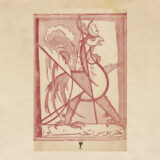
by Text of a lecture by Master Jalil Ziapour at the Fighting Cock (Khorus Jangi) Art Association, 1949
I have repeatedly been asked to write about the characteristics of the miniature (this Iranian painting of the Islamic period) and to draw a comparison with the miniatures being made now in our time. Unfortunately, such an opportunity did not present itself until now, when I proceed to explain the characteristics of this type of painting. The word “miniature” (Miniature) in old Europe was used for delicate and small pages and writings, the corners of which were written with the red pigment “minium” (Minium), or on which floral motifs were drawn as decoration. This name is applied even today to paintings and writings that possess decorative details and are drawn with varied colorings of vermilion and lapis lazuli.
The miniature, from the advent of Islam until our time, when Iranian painters staged and painted historical and epic texts, flourished and remained in its strength until the end of the Safavid dynasty. From then on, tastes changed and this type of painting also gave way to other kinds; however, in all cases, fluidity of expression in the flow of line and design, the blending of strong colors into pale ones, the decorations and grandeur of garments, and the comprehensive telling of stories while maintaining simplicity and faithfulness in preserving the characteristics of nature despite not being subordinate to it, were technical features that drew the attention of the old artists. They wanted everything for the expression of their feelings, and they drew help from all elements of nature in order to display the scenes they had stored in their minds. It is obvious that if our artists were interested in nature, it was only from this perspective: that nature placed tools and models at their disposal so that they could express their intentions. For this very reason, they were never subordinate to or bound by nature, and did not imitate it. The surviving works of our artists confirm this statement.
By paying attention to the paintings of these great old artists of ours, we see in them several points of difference with naturalistic painting:
1- The exaggeration of movements in the paintings is so great that it strikes the eye at first glance (women and men painted in a scene have a specific and exaggerated movement compared to nature. Likewise, the variety of movements has been considered so deliberately that this point immediately comes to mind: that the painter insisted on observing the variety of movements, and it is concluded that the painter recognized the variety of movements as one of the technical principles and considered himself obligated to observe it).
2- They were not bound by time, unless they definitely wanted to paint night as opposed to day. In that case, they used dark blue or lapis lazuli for the night, showing stars in it, but to show day they often used gold, which contained the concept of the golden sun and indicated the atmosphere of sunlight at sunset (sometimes it has also happened that they showed the daytime sky with a light blue color). At times, daytime can be distinguished with close attention upon the general colors (without having chiaroscuro). Sometimes they were not bound by time (even the unity of time), and this itself shows that Iranian artists had abundant freedom of action and displayed their intentions in whatever way their creative minds deemed necessary.
3- In coloring, they followed their own taste. That is, they changed the colors of the environment according to the requirements of their taste and impressions; for example, they gave importance to the compatibility of colors and to their power of expression, and they knew that the gradual interpenetration of colors makes the eye glide over them and awakens a pleasant, dreamlike anxiety in the gaze. At the same time, they also moderated the intensity and weakness of colors so that the eye would attain the delicate pleasantness of the general surfaces. They gave importance to coloring and recognized its value for expressing their purpose. Therefore, by paying attention to their works, the characteristics and conditions of life of each era can be perceived from their works.
4- In drawing, they had an interesting artistic play, and they tried to show delicate folds and wrinkles that would have pleasing chiaroscuro by means of an appropriate design without light and shade; they turned the brush skillfully between their fingers and created pleasing designs (especially in order to better display the ensembles that formed a subject, they outlined them, or, as it is termed, did qalam-giri around them). This qalam-giri, which does not mean limiting forms by means of lines, gave flowers and leaves, streams, stones, and other things a special appearance; as it is said, it caused all of them to come forward. As a result, from a technical point of view, the forms acquired greater corporeality and life.
5- Another point is the matter of general compositions and what is technically called scene-making in miniature, in which the artists did not attach importance to what ran counter to habit, and strove as much as possible to bring themselves close to their ultimate goal (which is the expression of their purpose and its embodied display).
6- Another principle is also the matter of the distance and nearness of objects, and what is called “perspective,” which on the surface it seems our artists do not or did not observe. But with closer attention, it is inferred that our artists saw objects just as they felt them (not as they outwardly appear and could be calculated and known by their appearance); accordingly, our artists knew that manifest realities differ from the reality of feeling (which arises through a specific way of seeing), and for this reason, they never sought to photograph nature for us. If they saw things in the environment and nature and had a specific memory of those sights in their minds, they tried to awaken those memories in us by every means and in every way (whether natural or unnatural). Therefore, the matter of following nature, or faithfulness to its outward appearance, and attention to ordinary realities and other things that could have taken freedom of expression and action away from our artists, is ruled out by this explanation (especially since environmental conditions also added to the cause, being themselves an inspiration for such choice and freedom of action).
7- Another point is the matter of anatomy in painting, about which it must be said: Iranian artists did not draw naked bodies in the European manner. In principle, there was no cause for this, for them to deal with naked bodies; therefore they did not pay attention to it like the Europeans we know. Nevertheless, they did attend to the general character of positions of the clothed and partly naked body, in which they deliberately used exaggeration, and they devoted the utmost degree of care to them; and they did not forget to show the corporeality of the bodies through the coverings, and to arouse the viewer’s feeling for discerning the heaviness of the limbs and the proportion of the different members.
Now, with this description, it is necessary to know what our artists in the past knew of the art of painting, and what services they rendered to us and to the world of art. In general, the conclusion drawn from their works is this: a – Our artists knew that art was a means of expressing feeling, not perception (for since perception is open and evident in relation to feeling, its expression is an ordinary matter, and the artist is above ordinary people. Thus their expression of feeling must also have been above ordinary expression of feeling). Therefore, they should not be subordinate to the expression of forms and ordinary reports. b – Since they had their own specifically Eastern decorative taste and sensibility, they had no interest in “perspective” in the European form. Only sometimes, with the help of color, did they show a gentle and pleasing distance and nearness, and they eliminated intense darkness and intense lights so that the paintings would not acquire depth and the eye would glide calmly over the paintings. c – They knew that if, from the point of view of anatomy, a little attention to positions outside the coverings was necessary, one had to act in such a way that the position in question would appear natural, but at the same time would not lose its decorative aspect. d – They knew artistic shape (form), and knew that faces and movements must possess a state, and that they should never be used and repeated in the same way (that is, they distinguished using something from the elementary act of copying). e – They knew that colorings, shapes, behavior, and action in painting are subject to the conditions of time and place; that is, they knew that they had to reflect feelings related to the realities of the age (not like the artists of our time, who are oblivious to the present age and paint from the Safavid period and the past, with the very conditions that they themselves do not possess).
With this description, we understand that our old artists were conscious in their work (that is, they had knowledge of their craft), and it is for this reason that their precious works, through their power of eloquence and expression of feeling, their freedom of action in expressing their purpose, their decorative and novel colorings, and their possession of form and artistic compositions, have been placed on the foundation of modern art and have become a source of inspiration for the world of painting in the various schools of Impressionism, Fauvism, Expressionism, Cubism, and also Surrealism in Europe.
Now let us see what, in our own time, our miniature-making artists are doing, and how these precious resources, which are a model for others, have become a model for us ourselves. With the influence of a foreign style of painting at the end of the Safavid dynasty, Iranian painting lost its outstanding character, and attention gradually turned toward so-called Farangi paintings, and a new combination of miniature and flower-and-foliage work on pen cases emerged (of course, the delicacy of the Iranian spirit could be seen there); but in any case, the influence of the foreign manner of work and vision was clearly evident in it. This imitative painting gradually took on a very interesting form in the Afsharid, Zand, and Qajar periods, such that foreign influence diminished and the creative power of Iranian artists became apparent in the works. (Spiritual delicacy, together with the particular character of geometric patterns and the unity of composition, displayed itself, and in the Qajar period took on a desirable form; from the conditions of the time, it acquired reality and faithfulness, showing that for the artists of this period, the criterion of their work was existing conditions).
It was not long before it once again turned into a vulgar imitation of so-called naturalistic Farangi painting (without the power of invention). Thus, after possessing all those resources, it became a cause for shame, and it did not become possible for the continuation of that pure Iranian style to be properly pursued (for alongside the aforementioned style of painting, miniature painting kept limping forward with repeated repetition). Until, in these recent times, that is, when the supporters of this craft defended it in a vulgar manner and, like decals, kept reproducing sheikhs and beloveds with goblets in hand. An old man, holding a cup, tears open his shirt with a ridiculous expression, or, like inexperienced theater actors, they create artificial scenes and recount sexual deprivations in the most vulgar way.
Stranger still is that they claim that by copying from old works, or by coming a little closer to or farther from them, and by training several pupils like themselves (which is itself a calamity), they have come to the aid of miniature painting and have saved this so-called national art; otherwise, by now it would have rotted through seven shrouds (unaware that not only have they not caused its salvation, but by this means they themselves have caused its death and even the rotting of its seven shrouds). These gentlemen are unaware that they have set their hands to a useless task, and for some time have needlessly spent their precious hours with the brush of His Lordship the Cat, and with it, from top to bottom, they begin a thin line and gradually end in a thick line. They make the face of an old man whose turban has fallen from his head and who has fixed his eyes on the face of his beloved, who wears a half-crown and turban and so on and so forth, has disheveled tresses, and offers wine.
If you tell these so-called staunch and compassionate artist-gentlemen of the miniature that instead of the horses and dogs and cats and rabbits and gazelles that they draw from the side and in profile, they should make them from the front, since they have no practice in making their forms from the front, they cannot manage it. Worse still is that they try to employ anatomy and perspective in it! And they are unaware that if they give the miniature, that is, this very old painting of ours (which became the model and source of inspiration for foreign artists in creating new arts for themselves), the anatomy and perspective of naturalistic painting, they have begun a task that foreigners themselves began some six or seven hundred years ago, and managed very well, then abandoned, and now have turned to their own way of working, or have used perspective and so forth in another way. With this description, it is clear that the miniaturists are very far from the subject and from the essence of the matter.