by
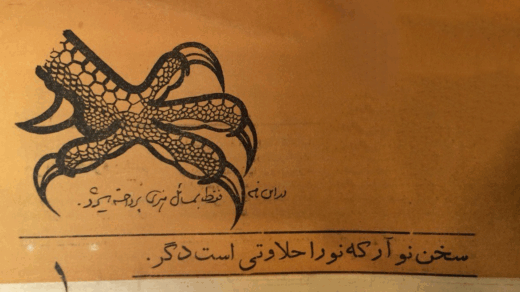
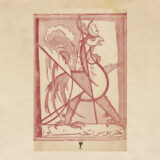
by Text of the speech by Master Jalil Ziapour; published in the magazine “The Cock’s Claw”, 22 April 1953
For several years, I have kept silent and observed the state of the College of Fine Arts. In this ruined place, there is no one to attend to the situation and see what is happening to these youths. A handful of talented and passionate boys and girls waste their precious lives in this College of Fine Arts in a strange manner, and ultimately grow up bewildered and imitative. (An imposed culture must grip the people from all sides so that the necessary result is achieved)!
O you who live with art in this land, you are the children of those artists who were the guides of art in the world. Art represents your character. You represent the character of your nation, and artists are responsible for their society. Do not let your character become the plaything of those who impose. For consecutive centuries, you have taught art to others. Pay attention and tread the path you have chosen with the utmost care, and know what you want, what you ought to want, and what you must do. Also! What must be done?
What are you doing now, and what plan are you pursuing without knowing it yourselves? I say: for about ten years now, our College of Fine Arts has been running under the supervision of someone who has resided in our homeland for twenty years, and who previously lived in a place that is now famous as the art capital of the world, and who has also held the honorary presidency of the College of Fine Arts for about ten years. Pay attention to what he says about art:
It is certain that from the time of Cro-Magnon man until today, the human race has progressed. Nevertheless, the artist of our time does not draw better than the people who lived in caves. Or he says: art moves, but it has a movement peculiar to itself; art neither progresses nor regresses, but rather oscillates. A day will come when crooked noses and upside-down feet will no longer be common, and once again people will not have the right to have more than two eyes and one nose on their faces, and will this not be the final cure for chaos? After that, “Constructivism” (Constructivisme) and “Cylindrism” (Cylindrisme) or something else will reappear and be accepted as a savior, which believes in the boundaries of those same diverse eyes and eyebrows that exist in different faces. He, who limits artistic life to an oscillatory movement between two hypothetical poles, does not believe in progress for it. Has he not, by this means, separated art, which is one of the fundamental manifestations of human life, from the flow of life, and left it in a corner to its own oscillatory movement?
Why does art have an oscillatory movement while life has a flow and progressiveness? Is art separate from life and the path of its progress? If human life has a flow, why is one of its manifestations oscillatory? Where in human knowledge does this oscillatory movement of art fit? Yes, because all these questions remain unanswered in the mind of our expert, he is forced to say: “Then what must be done?” because he knows that he does not yet know what art is and what path it treads. After all that living in the capital of art and twenty years of life in our land (during all of which twenty years he has dealt with the precious works of artists of different periods of Iran), why has he still not been able, with all this capital, to present a correct interpretation of art to our youth?
The art history curriculum in the College of Fine Arts is so arranged that our art students learn about all ancient and modern countries (except for the arts of Iran). So where is it? The art of our past people over these several thousand years, whose works have fascinated the people of the world. Why is the history of Iranian art not taught in the College of Fine Arts? Was this College of Fine Arts established so that Iranian children would have no knowledge of their own arts and only obtain information about Greece and France? Where in the world does a nation set the educational curriculum of its children in such a way that they gain no knowledge of their own art? Should these youths not know what their ancestors did and what artistic feats they performed? It has been ten years since this College of Fine Arts was established; if we accept that every institution has deficiencies in its early stages, why, after ten years, have they not sought to reform it?
Observe that our expert expects that, ultimately, he should not see more than two eyes and one nose on a face, and considers anything other than that to be chaos, and imagines that the artist, by doing this, wants to create the appearance of a new creature, and still cannot deduce that the artist wants to present a new message and has something to say. Therefore, with mockery combined with mental bewilderment, as well as questioning and a sense of ‘I do not know what must be done,’ he points out the “isms” that came and went, and come and go, and in the end he says: “Then what must be done?”.
Yes, what must be done: I do not wish to display the highly excellent or average designs of this time as examples for the gentlemen to see what a striking difference exists between past and contemporary designs. Even so, I cannot accept that humanity has progressed while its manifestations have remained stagnant, or that the artists of our time have not drawn better than the artists of the past. How can it be that humanity is not aware in identifying the concepts of its life compared to its past and demands the necessary forms to express its feelings and awareness, yet cannot create them better than in the past? Our expert still speaks like the Sophists and the ecstatically infatuated, and has not yet been able to untie these knots of his trance-like world, in which we consciously struggle. That is why he contradicts himself and does not know what to say! Sometimes he imagines that making more than two eyes and eyebrows is for the sake of creating variety, and sometimes he thinks that creating “isms” is to please the mind! And because it occurs to him that the “isms” also came and went, and what in the end? He expects humanity to sit idle and not create “isms”, or once again to make those same two eyes and eyebrows, which is a beautiful reality!
In his view, all this clamor of life is ignored, and he searches for the fountain of the water of life in the darkness, and absolute beauty in a changing world, or if he believes in change and variety, it is within the limits of those same diverse eyes and eyebrows that exist in different faces. He, who has limited artistic life to an oscillatory movement between two hypothetical poles, does not believe in progress for it. Has he not, by this means, separated art, which is one of the fundamental manifestations of human life, from the flow of life, and left it in a corner to its own oscillatory movement?
It is surely not outside of these two reasons: either they do not want to “because colonial theories do not permit it” or our professors do not have the substance for this work. Which of these two is acceptable? Perhaps both! But the first is more certain, because the examples and curricula show well that there is no intention in mind other than imposed views, the destruction of national identities, and generally the goal of cultural colonialism, and the administrators of the College of Fine Arts also execute them blindly. The practical decorative curricula of the College of Fine Arts are mostly European. For example, what relation does decorating a Louis XVI room have to the taste of Iranian youth, who are never familiar with the decoration style of the Louis XVI period, and assuming they were familiar, have absolutely no need for it? Why are such curricula given to Iranian youth? Why in architecture do they only copy and imitate Roman and Greek buildings or the latest European fashions, in which neither climate is respected in the buildings, nor national identity and artistic taste in the decorations?