by
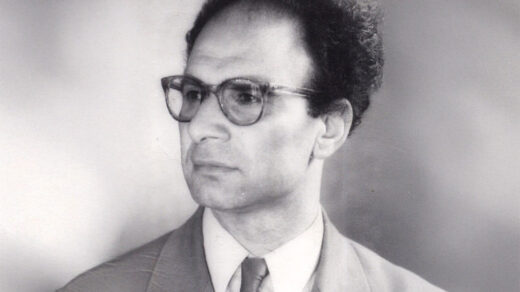
by Text of the lecture by Master Jalil Ziapour at the Fighting Cock (Khorus Jangi) Art Association; November 1949

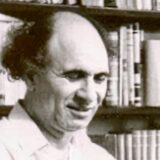
Master Jalil Ziapour (the Father of Modern Iranian Painting), 1949
Our people-loving opponents, in order to win the favor of their tightly pressed-together populace in Iran, had set the slogan of popular art in motion, and with the help of their sufficient media, they were demagogically providing learned answers and eager service, and they justified art in such a way that, in principle, each and every one of our people, at whatever level of perception they may be (from the hardworking orange-sellers and mousetrap-sellers to educated individuals – and every other class) should benefit from it according to their own understanding!
My God, this is that peerless masterpiece of the matchless Creator which itself exists, and we are within it. These people want the artist to take instruction from it in order to say what?! What does this outwardly pleasing, man-deceiving slogan want to say? But in any case we know that the art of the artist’s hand is a symbolic utterance drawn from the nature of creation, and the mass art desired by the supporters of the tightly pressed-together populace has an outward symbol at the level of the common people’s understanding, and these two have a hierarchical distance in society, and every level in its own work must raise the level of social understanding and must not give room to stasis, retrogression, backwardness, and superficial embellishment. For this reason I wrote: (To turn the simple and unitary matter of art into two opposing beliefs, “art for art’s sake” and art for society, and to make it into Uthman’s shirt and raise an outcry, is nothing but providing for mental dissension).
These apparently absolute realities, which govern all human affairs, are not truths that will remain in their state forever. For the flood of need and events gradually transforms the root of such realities. But every reality is stable only in the thing itself. Like good and evil, wherein the essence of the act is eternal. But in form and appearance, depending on demand and time, it is changeable and transformable. A thinking human being can easily, with this changeable reality, quickly place himself in the current of a mode of logical thought and fly lightly above all misplaced attachments and bring himself to the necessary region (that is, the region free of unnecessary restraints). Here it is thought that assumes an important duty, and the mind too participates in it in the form of interpenetration, and to a considerable degree permeates itself through thought and changes the manner of perceptions.
The importance of the mind in human life is not so slight that anyone would have failed to realize its value. Its existence is the greatest motive and the most influential means of creation, and it is the very thing that, after the feeling of need, pushes ordinary reality back and causes new realities (even if with a delay) to be accepted. In this state, since the claim based on new realities is unusual, and people generally, because of a lack of quickness of apprehension, feel the needs that are budding in the course of life later than artists do, therefore these new realities become difficult for them to accept. Whereas the mind of artists is stirred by quickness of apprehension and by their encounter with immature needs, and like a diver in the depths of needs, it goes in pursuit of necessary desires.
André Breton says: “To discover a new reality, one must follow subjectivities and probe the depths of the mind. For only by stirring the mind does bringing newer and more necessary realities into being become possible.” It is with this belief that the Surrealist artists have begun work and exploration, outwardly without taking into consideration the purpose and meaning of a matter (while in the inwardness of the matter, that meaning and purpose is conceivable in itself). If the Surrealist, as Surrealist thought, seeks satisfaction of mind and flees from realism, it is because this realism is an ordinary, insufficient, and limited reality and pleases only a great number of uncultivated people. For this reason the art of realism is an ordinary art.
The Surrealist or (Super Naturalist) (Super Naturalist) strives to place wider fields before limited realists. With this method, naturally, it gives realists sufficient power to perceive the higher forces of nature (that is, the super-naturalistic stages) and directs the mind toward more numerous and more extensive realities. It is for this very reason that creating any kind of wonder (which in every state is the greatest factor in stimulating the mind) is counted among the noteworthy factors of the Surrealists, and it is by this path that they lay the foundation of a great mental movement.
I have said before that in order to bring a new work of art into being, it is not necessary for a person to spend all his powers pursuing a series of operations (in the name of tested things: which are fetters on the feet of initiative and innovation). It is these very attachments and unchangeable – or changeable but slow – conventions, and this very insistence of hidebound critics and art experts on employing them, that have caused the Surrealist, in order to break such obstacles to their necessary operations, to decide upon an effective art movement, and to become entirely united in this matter that the mind can never be bound to anything in life (which appears fixed, unchangeable, and depending on exigencies, expedient and limited).
For this reason, Surrealist artists make the subject of changeable realities, which is accepted by any conscious person, a guarantee for the consolidation of the foundations of their artistic desires (along with their other foundational beliefs), and assert a wider right for their artistic manifestations in the face of the expedient limitations of opponents, and wherever they encounter the intellectual and mental stagnation and the hollow criticism of critics and objectors, they respond with such weapons and theories that say: in principle, everything undergoes transformation and everything that comes into being is due to necessity and need, or that say: the desire of a logical mind arises from the dark and unformed needs, or the need in the process of forming, of a needy society, or that the mind too possesses a process of gradual evolution that gallops ahead, and for this reason they say: “No individual and no law can in any way limit the Surrealist from the semantic dimension.”
Despite all this, these artists have abundant points of objection and have repeatedly engaged in conflict with opposing groups. Maurice Nadeau, author of the book “The History of Surrealism”, says: the theories of the Surrealists are not satisfactory with regard to general conditions, and this issue (as Breton shows in his book “What is Surrealism”) is still under discussion among themselves. They have repeatedly asked what useful work these artists can accomplish socially, (for the attention of the opponents is mostly focused on having the aloof artists also join the group of followers of the uncertain mass politics, and enter political and class struggles, and in this way they want to utilize their mind and soul). For this reason, Pierre Naville, although he sometimes speaks two-sidedly and with such partisan remarks as: “that our period is not a period of prophecy but a period that predicts”, and in this manner takes steps in favor of the Surrealists, yet in principle he is not so optimistic about the Surrealists from the standpoint of positive social method, and from the artistic manifestations that the Surrealists displayed in the years 1925-26, concludes that these people possess mental and metaphysical manifestations rather than practical and decisive ones, and in continuation of this same issue Maurice Nadeau says: “Assuming the impossible: if these artists can somehow exonerate themselves in this regard and want to prove that they think materially, not metaphysically, and that they do not step in the realms of abstract thoughts, even so they cannot adequately express the essence of their intent as to what they are saying and what they want. In addition to this, they still have not submitted to art in the service of society. It is not clear what their ultimate purpose finally is and what they have in their heads with this mental uproar they have provided for the people and people of taste?!”
There are, of course, abundant instances of this kind of objection, but the point here is that the opponents of Surrealism and progressive schools, since they are above all momentarily attentive to a specific society and momentarily consider its interests above all else, therefore resort to all means to achieve this aim and control everything and everyone, and they consider Surrealism deviant from the perspective that they must not accept it, or in their own words, its goal is not properly clear! And since sometimes in the midst of this it seems they have grasped something of the truths of these artists’ speech or had known it themselves beforehand, they step aside somewhat more slowly and more reasonably and engage in expedient thinking! And also, in the course of logical discussions, they sporadically make excuses! Such deductions, as we shall see, are well evident from the grounds of the claims of the two sides.
Maurice Nadeau says: “These artists do not have the ability to express their intent.” (But heedless of the fact that this claim cannot be true in any case. For if the Surrealists cannot make a group understand a matter, it is not because they lack sufficient logic and reason, but because the other side lacks the favorable grounds for comprehending the matters, or has them but out of expediency does not want to accept it. That is why, taking exceptions into account, they occasionally exhibit good taste and finally prepare themselves to comprehend the intents of the Surrealist artists. But as was stated, since they presume that the Surrealist cannot introduce himself as he is and as he should (just as is the custom of the opponents, and they have both thought and concluded for others), here too, they both think and conclude for these artists.
Maurice Nadeau says: The desire of the Surrealists has become an enigma for us, yet the totality of the thoughts of this group can be analyzed thus: (The Surrealists possess two kinds of thought. One is its metaphysical aspect which, according to the interpretation of Pierre Naville, is a kind of theory that may have arisen scattered and irregularly from the totality of events and accumulated experiences in the affective backgrounds of these artists; and the other is its logical and regular aspects, such that the manifestations of the second kind may be a kind of gradual evolution.”
With this explanation, such a conclusion is drawn that: the first matter, according to the opponents’ interpretation, naturally is not worthy of attention; and the second one, although it apparently seems logical and they feel that the claim of these artists might truly be based on foundation and correctness, yet since in any case it contradicts their aim, therefore they have no intention of accepting it and say, “Assuming the acceptance of the gradual progress of a mind toward perfection, must one, for this very reason that the gradual elevation of the human mind is certain, accept the freedom of minds and beliefs and individual desires (without taking into account the present situation), and must such persons who, without taking others into account, rush forward rapidly on such pretexts, be left free; or in case of accepting it, can leaving them free be a reason for leaving the human mind free toward perfection and elevation?” And they conclude: “That no, none of these is a reason that we should leave the mind free without control in the path of life in the desire of an ascending course. If mental freedom that causes elevation and evolution is to be accepted, it is certainly in thinking in another way, that is, thinking only in agreement with our desire and theory, not Surrealistically and Existentialistically.”
They further say, “There too where ‘Breton’ in his writings conveys that precise discomforts exist among them, he had understood well that if he does not observe what is necessary in his discussions and does not properly logically and correctly handle the discussion, naturally he will fall into danger and will remain removed from his claimed position. In September 1926, in a publication he released under the name Legitimate Defense, without answering the question of ‘Pierre Naville’, how well and skillfully he wanted to pull himself out of the arena of our severe and crushing criticisms. Here ‘Breton’ complains about us opponents and calls us fanatic and foul-mouthed and considers our objections hostile and ignorant! Yes, he supposes our method biased and ignorant. But he should not forget that for us and in our method, no artistic ambiguity has value until it is analyzed through correct logic and its intent is completely specified. We cannot let individuals put their inward and mental experiences and reserves into practice without our having controlled them. These artists want to manifest their mental experiences in a complete freedom without specifying their goal. They want to pour a handful of mental melancholia, under the name of experiential reserves necessary to manifest, into the market of society, a society that has enough melancholia-inducing troubles for itself! After all these talks, which are the meaning of the desires of this group of artists, ‘Breton’ begins to attack and makes the inner and outer worlds a means for galloping ahead, and obtains another means of attacking, and directs the senses to mental worlds and their gradual elevation, and in the end he says: Yes, here two difficult matters arise; one is science and discoveries and their gradual evolution, which willy-nilly is imposed on us, and the other is the sorrowful operations of the massive host of human society, which no individual can consider himself unshared in; and these two difficulties are instinctive, and neither can be ignored. That is, ‘Breton’ wants to say: that despite knowing this matter, nevertheless, solely for the sake of the necessity of the mind’s freedom in progress and evolution (which is practical and logical), they must leave them free! So that in any case they reach their individual ideal, meaning the creation of non-social and abstract works.”
With these concise yet noteworthy backgrounds, which were sufficient for a general comprehension of the beliefs of both sides in art, it is clear in what mode of thought each traverses. The general conclusion of the matter is that Surrealist artists and progressive schools, without taking into consideration the beliefs of different groups, engage in continuing the reaction that the environment has brought about for them and whose emergence they cannot help, and they also want by means of this reaction to advance in favor of perfecting their theories in art. But the opponents call this kind of thought and artistic operations abstract and non-social, and are fiercely opposed to it. Because they want, in any case, whatever anyone brings into being to be to the benefit of the common people and in a manner comprehensible to them, not any other kind! Therefore, the progress of any artistic desire and manifestations that is incomprehensible to the common people is entirely rejected and deserving of the severest excommunication! Freedom of action in art, too (that the artist must be free), in the opinion of the opponents, is apparently very obligatory and certain (but a necessary freedom and under conditions which conditions, in the wrapper of society-loving, are entirely imposed) lest a deviation occur!
These kinds of freedoms and conditions and these kinds of pretexts and philanthropy are such a good handle for the opponents and critics. There is no doubt that, willy-nilly, everyone is under social impositions on the basis of natural determinism. But the point is how one must separate social impositions (which naturally rest on the foundations of natural determinism) from the coercion of a group, and who must distinguish this natural determinism from expedient imposed determinism? Is there anyone who can distinguish the deviation or correctness of an action? The whole society, or individuals from that society? Are these individuals not the very same thinkers who, having specific beliefs about the ‘individual mind’ which, from the manner of their way of life, have deemed it advisable to employ those beliefs and given themselves the right of leadership? Are it not the experienced and individual mental reserves of these thinkers that have made them successful in carrying out such things? If they say that an individual mind that considers individual interest and an individual mind that considers public interest are two opposing minds, and moreover, it is the experienced mental reserves that must intervene in the affairs of society, not raw and inexperienced mental reserves, certainly there is no word against this objection, and the inexperienced mind must never intervene in affairs. But must it not at least test this view, and for this test, must it not investigate? Thus a person must have complete and limitless freedom. For this reason, objecting to the existence of the individual mind and abstract thoughts and their coming into operation in society (if one does not want the mind to enter the stages of free investigation so as to become experienced) is not fitting at all; and if the exudations of the individual mind, which in any case are born of the totality of social factors and influences, are not understood by the common people, it is not a reason to incite them to grab the artist by the collar, cast him down from his seat of honor, and roar that since we do not understand his art, he must therefore create a work that is pleasing to our mind and taste, and as long as we do not understand, difficult-to-understand art must not come into being either.
In this case, must the artist advance step by step with the common people? Then when and how is he to bring into being works that raise the taste and understanding of his people? In order to raise this taste and understanding, must he not always display higher stages, and do difficulties not naturally arise in these displays? Must these difficulties be resolved from the side of the artist or the people? It is precisely here that the opponents of progressive art, due to a lack of necessary attention, have turned the simple and unitary matter of art into two opposing beliefs, and made it a means for criticism and the broadcasting of their personal motives. Heedless of the fact that if they scrutinize the root and origin of these two apparently opposing beliefs, they will find no difference whatsoever. Except that, in order to feign partisanship for social rights, they have started an irrational discussion, fabricated a social and non-social artist, and claim that the “artistic product” must be commonly understood, and if the artist is avant-garde and progressive, his distance from his society must not be to such an extent that a connection cannot be established between them.
One must ask, what artist is there whom one can consider (even if he be the most avant-garde person in the world) far removed from his own society? What artist is there who does not take into account the realities of the lives of those around him and his environment, with which he has become accustomed and which have formed his artistic backgrounds and knowledge, and who brings works into being out of things he does not know and has not been affected by? The claimants of art for society forget that if the belief of art for art’s sake (which they themselves have coined) finds meaning before avant-garde artists, in any case its meaning cannot be that: art for art’s sake means “possessing the artistic aspect before everything else.” Such art comes into being in painting because the course of art requires it. Because the need of the time brings it forth for the artist. Because the artist is overflowing with the impressions formed in his affective backgrounds. Service to society is automatically concealed in this act, not that it is brought into being deliberately to serve society. No one’s heart has burned or burns for anyone else. Just as the heart of society did not burn for hundreds of the likes of the Beethovens, Anatoles, Cézannes, Rembrandts, and many wretched Iranian artists who throughout history (have brought global masterpieces into being) and during their lifetimes grappled with difficulties and death. Are these same individuals not considered the leaders and gods of art today? Are they not the same ones whose works, because they were far from the realm of the understanding and perception and pleasingness of their peoples, were therefore rejected under titles such as (art for art’s sake and the like)? Are they not the same ones who today are welcomed to the point of worship? (The very same ones who in their own time had brought non-social art into being?)
Those who, based on specific beliefs, excommunicate avant-garde artists under various hostile titles, forget that such excuse-making can never be a means to drive real and informed artists from the field. Do these objectors, along with the followers of “Pierre Naville and Nadeau and the likes of them”, not know what a great harm constructing “art for art’s sake” and thereby casting division between artists and society will entail in the path of raising the artistic understanding of society, and what a great error it will be!
The issue of science and discovery and the realities of the acts of human society which Breton has mentioned, are two noteworthy and undeniable matters. No one loses sight of the fact into the mouths of what dragons of oppression humanity has plunged during the period of its life, and what failures it has seen in every respect. There is no doubt in the existence of this principle. Real artists never deny human suffering and do not lose sight of the sorrowful struggle of humanity over the course of many centuries, but in their work they are certain that: the coming into being of a necessary artistic reality is always indebted to flight from the imposed realities of dictators and order-taking critics. It is these same past orders and conventions from which progressive artists flee to an extreme degree. It must not be forgotten that it has been the existence of these conventions and commissions and unnecessary realities that has always wounded the inventive and creative soul of artists, causing artistic revolution and reaction after reaction. Who is there who would discern the reality of this matter as it should be?
Surrealism, with its necessary mental method (assuming it goes astray or shows a reaction), leaves a wide aperture open for the curious and shows them an escape route so that they may come out of whatever intellectual stagnation, limitation of expedient laws, and artistic conventions there is. For a prisoner, nothing is more valuable than freedom. The Surrealist too, like a prisoner, momentarily seeks this freedom. Like a thirsty person who thinks of nothing but quenching his thirst, he too thinks of this freedom of action. He turns everything upside down like a madman. He scatters all sorts of things to be said, seen, and heard from the dimly lit house of his mind to the outside, and his mental exudations assure him of freedom of action and flight and salvation from fetters. Only in this flight, that is, in the display of reactions, can one finally encounter another, more correct reality (albeit again by way of the mind), and that is: subsiding from inflammation to tranquility and beginning the correct path of Surrealist art. This is the very same thing that the more tranquil and thoughtful Surrealists traverse.
Surrealism must not be considered a school among the schools in the realm of meaning, and metaphysical; it must be considered, in reality, a living being that wants to continue its life like other creatures. The Surrealist, with his mental method, seeks out higher culture, and since he sometimes excavates within the dark pits of the mind, he encounters in this excavation reserves of experiences (which seem necessary). Therefore, sometimes he reluctantly submits to these experiences as well (he does not neglect chance either). The Surrealist in any case considers himself an avant-garde and deliberately and out of disgust flees from ordinary taste and beauty, and abhors whatever is will and logic and artistic law, and whatever is wrapped in the wrapper of convention and in artistic experiences. The works of the Surrealist of this time are dissonant wails from a scratched throat, whose echo returns again to the depths of his own uncomfortable and disturbed mind, and he feels pleasure in the fact that this wail is the echo of his own free voice. The Surrealist knows that it is again he himself who will rescue him from this anxiety and discomfort. Therefore, he engages in admiration in order to find his desire. Are these shudder-inducing wails of the Surrealists, which are echoed in the form of a work, not representative of the exigency of human society in this period? And are Surrealist works not indicative of this turbulent and chaotic spirit?!