by
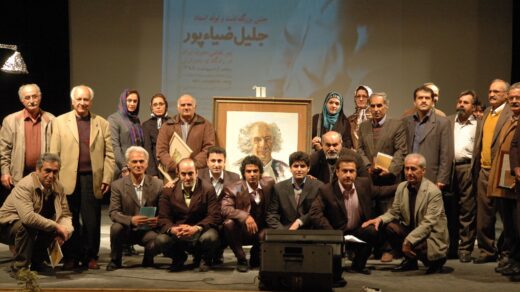
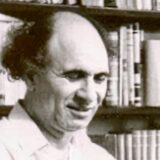
by The Seventh Commemoration Ceremony of Master Jalil Ziapour, Elahe Gallery, 29 December 2006

The Seventh Commemoration of Master Jalil Ziapour, the Father of Modern Iranian Painting; Elahe Gallery
The seventh commemoration of Master Jalil Ziapour was held on Friday, 29 December, at Elahe Gallery. In this ceremony, many of the Master’s friends and students, who are currently considered the pillars of the art of painting in Iran, including Gholamhossein Nami, Mahmoud Javadipour, Abbas Mashhadizadeh, Mohammad Ali Baniasadi, Touka Neyestani, Alireza Sami-Azar, Kamran Adl, Nima Petgar, Farhad Fakhrian, Yahya Dehghanpour, Hassan Arzhang, Saeed Behroozi, Engineer Hesabi, and others, were present and honored the memory of the standard-bearer of modernism in Iran. Dr. Sami-Azar, Gholamhossein Nami, and Master Mashhadizadeh delivered remarks to the audience at this ceremony. Read the details of this report:
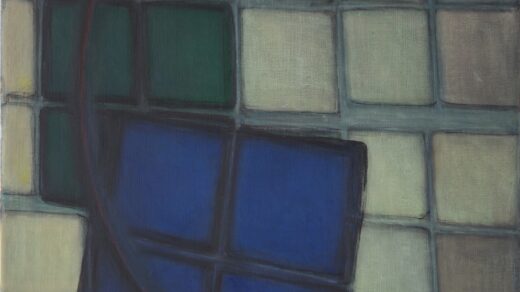
Elahe Gallery once again experienced one of its most crowded ceremonies on Friday, 29 December. This time, Elahe Gallery hosted all the art lovers who, for the seventh year, were honoring the memory of Master Jalil Ziapour, the father of the art of modern painting in Iran. In this ceremony, which was organized through the efforts of his family, a number of Ziapour’s valuable works had been put on display, and on one of the gallery walls, a short film about the Master’s life and work, as well as a brief interview with him, was being shown. Ziapour’s companions and students, next to his works, were recalling their memories of the Master and also speaking about the life and activities of this star of Iranian art. This ceremony was so friendly that it did not seem anyone would want to make a speech. But when all the friends gathered, the organizers gradually asked each of them to speak about Master Ziapour, and they did so.
Abbas Mashhadizadeh: Mashhadizadeh (sculptor) and one of Ziapour’s companions, first pointing out that some ask why the number of the Master’s works is small, said: The counting must begin with the Master’s programs, not with his works. Efforts that were deliberately spent on removing the stony obstacles, the ants and locusts, and the harassment and vexations, so that the possibility would be created for the young people of today to present their works during these years and in the future. For such a task, endless expenditure of money, time, and effort was required, which only Jalil Ziapour was capable of, and no one else. His memory is honored and will be even more honored. He, who in the continuation of his speech recited this verse: The turn of the sellers of the old has passed / We are sellers of the new, and this is our market, continued: Whether anyone wishes it or not, without dispute it is highly obvious that the only

pioneer of modern artistic thought in Iran is Jalil Ziapour, and this certainty is his most accepted position. In this position, by traversing all paths to make known and understood the supremacy of Iranian culture and art with modernism and a new way of living, he strove and made efforts. Referring to the establishment of the first Conservatory of Fine Arts in Iran, Mashhadizadeh said: One of his undertakings has now become 54 years old and is galloping forward; it is the garden of the fine arts conservatories of this land, which has now turned 54 and was established under the gardening of Jalil Ziapour in 1952. Mashhadizadeh added: In that year, Mehdi Vishkaei had been asked to establish a conservatory, and he said that it was beyond his capability, but Ziapour would certainly accomplish this task; and so it was that in 1952, he carried out the opening of this school, and an army of artists, who are the pride of our contemporary art history inside and outside Iran, is the result of his work. At the end, Mashhadizadeh made a bold proposal. He said: Here, I stand officially, and with the utmost courtesy and humility in my smallest capacity, I declare that it is fitting, proper, and good that the name of the Museum of Contemporary Art of Iran be changed to the Jalil Ziapour Museum. I have been making this argument for 30 years. Who is more eminent and worthy than Jalil Ziapour for the only contemporary museum of Iran’s capital to be named after him? This is his right.
The second speaker was Gholamhossein Nami. He began his remarks as follows: May the memory of Master Ziapour be honored tonight and every night. Whenever I think of Master Ziapour, I always think of one aspect of his personality more than his other aspects. An artist has various dimensions, and the dimensions of Ziapour’s personality, who is the standard-bearer of contemporary Iranian art, must be better known. Nami continued that the most important dimension of Ziapour’s personality is his analytical and critical aspect, which became the most important factor in the establishment of modernism in our society. In the 1940s, in that closed society, with what courage this man assaulted all the rotten and regressive traditions, and how he resisted against the people of that era who knew nothing but miniature painting and Kamal-ol-Molk, and the result of that resistance is the establishment of modernism in the artistic society of that time. This aspect of his personality is the most important of his aspects, even more than his paintings. Nami emphasized: Ziapour did not have time to paint, and most of his hardship and

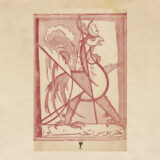
effort was to establish this different perspective that the philosophy of modernism has had toward art and the world. Master Ziapour started the Fighting Cock (Khorus Jangi) movement in the years 1948 and 1949, and it was an effort through which, in that tradition-bound and regressive society, with the utmost power and a very strong mindset, they established the philosophy of modernism in that society. We must see how much influence an artist has had in any given society. Nami continued: I have always, especially in this period, declared that throughout the 70-year history of our modern painting art, which started from Ziapour’s efforts and continues to today, we have not had a critical approach. Whereas Ziapour’s effort in that era, with that passion and excitement, caused the issue of modernism, novelty-seeking, and modern art to open its way in that society, and the importance of Ziapour’s effort lies precisely at this point. It was his effort and his very comprehensive struggle that began against traditionalism and regression in art, and today the young generation sees its result. The young generation must know in what period and through what efforts today’s art has been achieved. Master Ziapour is the standard-bearer of Iran’s modern art movement.
In conclusion, Nami said: The criticism that I must raise today regarding modern art is that we do not now have the effort and capability that Ziapour had. Today we must wait for another Ziapour, which unfortunately has now been cut off. The issue is that we do not have a strong current for the criticism and review of the course of art. The young generation must strive to launch such a current, so that we may have a critical approach to this process in Iran.
In the continuation of the ceremony, Dr. Sami-Azar also delivered remarks concerning Ziapour’s place in the history of modern art and asked that his position be honored more than ever before.