by
by This article was machine-translated from the original Persian and may contain inaccuracies.
An article by Nader Mousavi Fatemi, titled “He Was Always a Master,” Tandis biweekly, special issue for the Eighth Art Research Meeting, the Tenth Commemoration of Master Jalil Ziapour, Barg Gallery, 10 November 2009

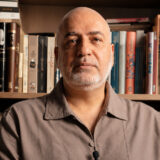
Nader Mousavi Fatemi
In the year 1985, I was studying painting at the University of Art and had the honor of attending the classes of great and noble masters such as Mehdi Hosseini, Mohammad Ebrahim Jafari, and others.
There was a buzz that, starting next semester, Master Jalil Ziapour had been invited to collaborate. The professors heralded a new transformation through his presence, and the students, full of excitement, awaited the next semester. In those days, we did not know that they would later call us the third generation. The next semester arrived, and three generations were side by side.
A determined man, with firm steps and measured words, despite the signs of the passage of time on his face, began thus with a resonant voice in the gathering of students and teachers: “Dear ones, my children…” and he continued…
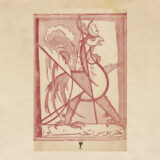
What I had heard was true: the Fighting Cock (Khorus Jangi). Which this time, not out of war but out of awakening, heralded the morning and spoke.
The honesty of his words was reassuring, and what he said was out of knowledge. He knew art history and had a critique of it (later, I saw a small booklet printed on newsprint titled “The Annulment of the Theories of Past and Contemporary Schools, from Primitive to Surrealism”). He knew art and tradition well, and considered himself and his children responsible for its preservation; not out of repetition, but with a new sweetness. He had learned from the contemporaries of art in France, and retold the new expression in the words of André Lhote, and spoke about his studies on the relationship between modern art and tradition. In an era when every work and movement different from tradition was called modern, he thought beyond the modern, and painted and created beyond it, not only his own work, but the movement of modernism, the image of which was visible in the mirror of the second generation.
Fascinated and enamored, I searched for my future in the sparkle of his eyes, and my only question was: how can one “be a master”?!
After two difficult theoretical and practical exams, I attained the honor of being his student in his home!
Now, I stood next to his sturdy easel and an unfinished work, near the master’s color palette, with this question: “Will I be a worthy student?”
Before anything else, it was the teacher’s affection that flowed. Calmness in conversation, ensuring the student’s understanding of the material, a planned program, the precise start and end times of the session, homework, accompanying me to the elevator door, and ensuring everything was in order. (Which, of course, was the case for every student.)
A house in Shahrak-e Gharb, whose walls were adorned with works of considerable size, with harmonious coloring, strong composition, and striking draughtsmanship. In those days, I did not know much about art; nor do I these days! I only know that I do not know. And a kind lady who would sometimes ask with a smile, “Would you like some tea?” That, too, out of hospitality.
My father always says, no banner remains raised, except through the presence of a standard-bearer!
And a little girl who, out of playfulness, would sometimes appear, and from time to time, his son – Gilsha!
In those days, as in these days, I painted with vibrant colors. Once, the master, as a test, asked his student: “What is the difference between the colors of your painting and my painting?” Cleverly, I replied: “The difference between master and student!” And he continued: “Look closely! The dust of life and old age has settled on my colors.” Years passed before I came to understand a new concept of old age: Wisdom!
And the dust of life was nothing but experience.
His words were grand and he lived grandly; in the station of a master, he was generous. He gave his word and acted upon it.
He was a supporter and he supported; he was strict and hardworking, and disciplined out of precision. Out of rectitude and perfectionism, he would not compromise, and he was “lovingly” a master. He addressed his students as his children, taught unsparingly, worked relentlessly, and sought to discover the existing fruit within his students.
I remember that while he was unwell, he stood in the frame of the exit door and I was waiting for the elevator to arrive. I asked him to go inside and rest; he smiled and said: “I am not only a painting teacher!” And I understood the custom of seeing someone off! All the way to the burial.
We were always full of questions and seeking answers, and each time he would ask, “What answer do you have?”
His hidden humor was visible beneath the skin of his face, and in response to our insistence, he would say: “For the time being, do this!” And how late I understood that the human being means “for the time being”!
Every moment of his presence was a lesson; whether he made allusions out of humor, or was serious out of his findings.
In the station of a master, he was a green leaf that protected the cocoons so that they would become butterflies and experience flight and freedom. I know he still smiles at the dance of the butterflies and, pleased, awaits the birth of butterflies. For this is the custom of mastery.
For the time being, I review my lessons, and for the time being, out of gratitude, I become a student again.
An offering to my master, who was always a master.