by
by A note by Mohammad Ebrahim Jafari, titled “Once Again on the Pretext of the Anniversary of Ziapour’s Death – In the Tone I Like,” Part One, Farhang-e Ashti Newspaper, No. 1634, Page 5, Thursday, 1 January 2009

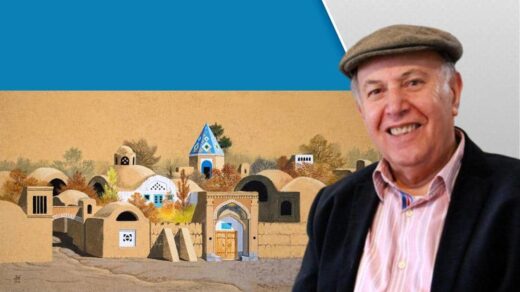
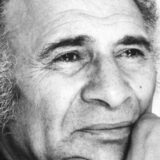
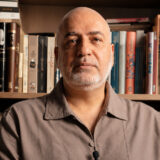
Master Mohammad Ebrahim Jafari (painter, poet, and university lecturer)
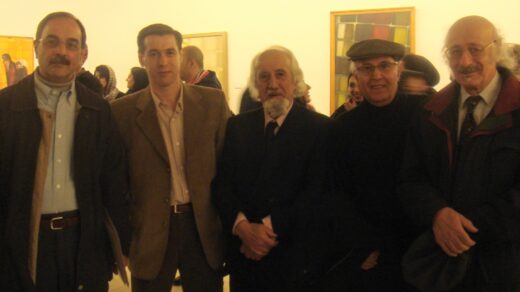
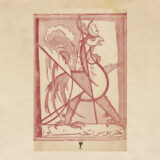
Usually, the magic of printed type makes the writer braver and more liberated than themselves, but it gives the reader the opportunity, by changing the tone they give to the words, to draw whatever interpretation they like from the printed words. In my opinion, one of the problems of today’s newspapers is the way words are read, with a predetermined assumption; because the word has no meaning, the truth is in the tone of its pronunciation. Just as in “Let us not muddy the water,” the meaning is not that we should not muddy the water. I believe it is the great Jami who sings: “I recanted what I said, for there is / No meaning in speech and no speech in meaning.” I had written a note at the request of one of my young friends, whom I had once met in a class session of “Introduction to the Roots and Branches of Art” at a university, and who attended every single session until the end of the term. When reading his exam paper, I had felt that he enjoyed writing so much that he would set aside other arts. To my complete disbelief, I saw the note printed in Farhang-e Ashti newspaper in the hands of the kids, and since the next day I was participating in the memorial service for the late Jalil Ziapour, which was the subject of the note, I took it with me to read it, in the tone that I like, for those who love the late Ziapour. This note, with its style of writing and correct punctuation, seemed to me so expressive of the Master’s mood and spirit that it made this decision inevitable for me. On Tuesday afternoon, in the distance between Shahrara (the location of my studio) and the upper reaches of Africa Avenue (the gallery of the Mah-e Mehr Institute, the venue for the ceremony of the Master’s ninth death anniversary), the traffic was so heavy and, as usual, utterly chaotic that I arrived late by nearly two of the three hours of the program. As for the participants of the session, if I were to mention any name other than Master Mahmoud Javadipour (my own good, old master and one of the contemporaries of the late Jalil Ziapour), I would fall into hesitation over the order of writing the names, which would distance me from getting close to the mood of Master Ziapour. For I do not know, if the late Jalil Ziapour had a tangible presence in such a meeting, when he saw Alireza Sami-Azar, Nosratollah Moslemian, and Mahsha and Gilsha Ziapour along with the wife of that late artist listening to my explanation for the reason of my arriving late, after interrupting my talk, which of the aforementioned individuals he would shake hands with first, and with whom and from where he would begin his countless things to say, which were always in a state of birth and expansion. For me, this very strange reason is enough not to mention, other than the speakers of the meeting, many of the artists, masters, and ladies and gentlemen who participated in organizing this lively meeting, and even not to recall the members of the education department of the Mah-e Mehr Institute, and especially the students of the late Ziapour and, naturally, the students of his students. Right upon my arrival, I realized that the well-known Mehdi Hosseini (knowing whose latest research and summations regarding the life, outlook, and influence of the great figures of art and culture has often been interesting, instructive, and fruitful for me) had delivered his speech and, after taking a breath, had listened patiently and attentively to the long speech of the living and unwritten history of the visual arts of Tehran and perhaps Iran, Abbas Mashhadizadeh. Unfortunately, I was not present for his latest talk about the late Master, but I know well that when Mashhadizadeh wants to make a “word portrait” of the deceased, his verbal portraits often remind me of the visual portraits of the old masters which are made with pieces of stamps, seals, and manuscripts, and in which, besides the physical resemblance to the late artist, layers of his imagination, outlook, belief, and conceptions can be seen. He reminds me of a singer who gets more pleasure from his own tone and voice than from the time, the ground, and the mood of the landscape in which he is located. It would be unfair not to say that anyone who is aware of the nuances of the dastgahs in which Abbas sings will hear pure gushehs and gain the ability to unveil untold and unwritten truths. With more than 30 or 40 minutes remaining until 8 o’clock, when the meeting was scheduled to end (but did not), a young cameraman and director, along with his friends, was busy adjusting the microphone through which Parviz Kalantari was supposed to speak about Master Jalil Ziapour. I was informed that I had to move my car. When I returned, I saw the crowd packed into the gallery space, circled around Parviz. He was speaking so soulfully and effectively, with the drawl of his voice and the tone of his words, that at first I thought he was speaking of the impact of the late Ziapour’s famous words and discourses during his own youth and the Master’s middle age. Parviz usually, at the start of his speeches, with a quiet, gentle, and effective voice that matches the infectious smile on his face, tells his audience that he has nothing to say; but when he begins and sees the impact of his delivery on the attentive listener, he conveys with the fewest words the greatest concepts he has deemed necessary to the audience. He too knows well that the truth of words is not in their apparent meaning, but in the tone that the speaker or writer attains in passing through the curtains of their imagination. “Song is not always for listening; sometimes singing, like salt on a wound, is for staying awake.” Parviz’s speech was shorter than his usual, and for me, the latecomer! plenty of time was left, but I was not so inexperienced as to start my program before serving refreshments to the audience and a breather for those who were smokers and could not smoke. During this opportunity, considering the fatigue of the attendees, I decided to have an impromptu performance instead of a conventional speech. The first thing I did was take the published note of Farhang-e Ashti newspaper from the hand of one of my friends, and with the memory of Jalil Ziapour (and indeed with the strength that flowed through my soul from the conversations, objections, and impatience of that Master upon recalling, moment by moment, my first meeting with him along with Gholamhossein Nami) I began this short note, which I had written with a sentence by David Thoreau. “Go forward with confidence in the path of your dreams / Live the life you have imagined / When you simplify your life / The laws of the universe will also be simpler.” A beginning that was in fact truly a different beginning from the past, and could be called an impromptu performance without any prior decision having been made… I told memories, read poetry, and engaged some of the audience members in dialogue and challenge, in a way that reminded me of the meetings, the classes, and most of all, the writings I had read in “Fighting Cock” (Khorus Jangi). After my performance, a young theater graduate who had read my note in Farhang-e Ashti newspaper, and whom I later learned had been following my impromptu talks for years (which he called “occasional lectures”), and had even seen the white wall that I had in the space of the Museum of Contemporary Art for about two months instead of a drawing during the first International Exhibition of Contemporary Drawing of Iran in the nineties.
To be continued…