by
by Text of Master Jalil Ziapour’s lecture at Pahlavi High School, published in the newspaper “Mehr-e Iran”, No. 2153, 20 October 1949

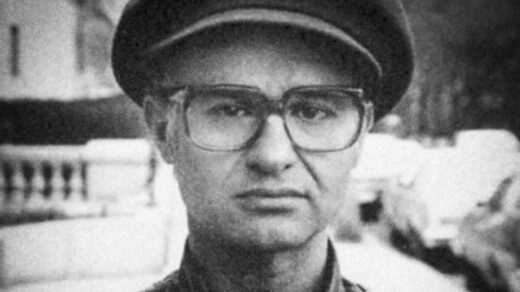
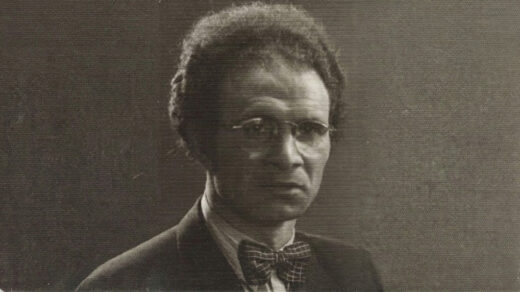
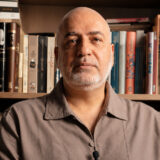
Master Jalil Ziapour, the Father of Modern Iranian Painting, 1948
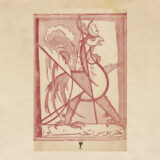
Curiosity about the new art spread from the artists who had graduated from the faculty and the intellectuals to the high schools. The talk was novel. Every Friday, at the premises of the Fighting Cock (Khorus Jangi) Art Association, one of the cocks would give a special lecture for about three hours (with a 20-minute interval for tea and coffee). The audience sat on the special stools of the atelier in the wooded open air. The speaker’s place was behind a carpeted counter. Eager listeners, from old to young, from administrative employees to educators and judicial staff, sat on the stools and listened to our words. And during the intervals of the lecture, they would ask questions and engage in discussion. It was a passionate discussion. It seemed the audience was not dissatisfied with coming to such a place on their day of rest and holiday; perhaps many obscure points still remained for them, but sooner or later they would receive their answers (either they would find them themselves or we would clarify them for them).
Our opponents spread the rumor that we were insulting their idols and intended to disrupt the national culture. They were never willing to accept that we were striving for the preservation and survival of the present time (so that this, too, would not be sacrificed to traditionalism). They did not understand that valuing the artistic sanctities of the past does not mean imitating, continuing, and repeating them. Therefore, on appropriate occasions, we would reiterate this point in our speeches, and we would keep our opponents, who wanted to obstruct our progress by stultifying and inciting the unaware public, informed of the new course of our actions. Wherever our reach extended, we made people aware that respect for the past is not incompatible with progress; it is enough only that we not imitate the past, but rather take inspiration from it and cast a new design.
On one occasion, at the invitation of the principal of the former Pahlavi High School, I spoke about “the necessity of keeping pace with change and transformation and the responsibility of the artist,” and, referring to the youth, I said: In constructing the national character, you must know that artists and educators have a significant share. To know a nation, people always refer to its works, and through those works, they realize its intellectual, spiritual, and civilizational value. (1)
Although I have spoken to you comprehensively yet briefly about the art of painting, my talk today is on the necessity of keeping pace with change and transformation and the responsibility of the artist in the country. You must know that in the character-building of any nation, the artists of that nation have a significant share. Because artists are the creators of works through which they manifest the precise emotions of the spirit of their environment in the form of various arts. To identify a nation and the nature of its way of life, people always refer to its works, and through them, they realize its intellectual, spiritual, and civilizational value. If Nizami, Hafez, Ferdowsi, Saadi, Rudaki, Mas’ud Sa’d Salman, Saeb, and the Islamic philosophers had not existed, and if Kamal al-Din Behzad, Reza Abbasi, and others had not existed, what would we have? If these individuals had not existed and had not left works behind, what would we have had to make our identity known? What was there of genius and doctrinal and intellectual excellence in our people to draw the world and the Orientalists to our land and make us known to the world? A nation is alive and proud only when it is more cultured and has more numerous and more illustrious artists. The artist is the representative of a nation’s existence. The artist is the prominent character of a civilized society. The finest and deepest spiritual emanations of any society take shape in the minds of artists, and artists express them in comprehensive and delicate forms as the fine arts, thereby introducing their society.
Artists are the ones who make known the life and contemporary mode of thought of their society; every nation in every era has its specific artists. Just as Ferdowsi was the presenter of the spiritual qualities of his time, Hafez and Saadi are also representatives of their time. Kamal al-Din Behzad and Reza Abbasi were also artists of their era and presented the life of their own times. Every painting by Behzad presents the coloring, the state of life, the clothing, and the taste of Behzad’s era, just as the counsels and subtleties of Saadi show the nature of the customs and social intercourse of his era. Thus, every artist is naturally the representative of the way of life of his own time. He creates works out of the things by which he is influenced. In this, there is no imitation. This is highly natural. But what I wish to point out, and which is of importance in the historical progress of any nation, is understanding the value of art and distinguishing an artistic work from an imitative one.
Unfortunately, due to the lack of cultural growth, we still do not appreciate the value of art as we ought to, and we still hold this opinion of it: “Think of bread, for melon is water,” and with these very statements we provide the grounds for inattention to art. Or, with the vapid utterances of some uninformed spokesman, through such words as when he says, “We should not have a higher school of music or an academy of painting in this country,” treating such institutions like an apothecary shop that advertises: pepper, turmeric, cinnamon, etc., we pour poison into our minds. This in itself is the misfortune of a nation, if it does not know that these very art institutions are the means of training artists to keep the national character alive and to elevate the national identity.
We must know that every era, in proportion to its own needs, has its own requirements, and the children of every era must be raised according to the requirements of the day. If yesterday we thought in a certain way because need and progress dictated it, today it is natural that we leave the thoughts of the past to the past and adopt the thinking of today. It is impossible for a new thought to arise without reason and without need. If yesterday they thought like Hafez, today one must think and move forward like today, that is, in accordance with the mode of thought of the most civilized people. The program and organization must also be arranged in proportion to the state of the environment (while at the same time being progressive), in such a way that old thoughts gradually depart and new thoughts replace them. This work is entirely dependent upon the method of education and training. If the authorities desire the progress of the environment, they must bear this point in mind: that thinking correctly, or practicing a discipline as one should, requires proper instruction. Every discipline must advance by the latest correct and current method of the day. My view here is especially directed toward the fine arts. To you, who are the future men and artists of this country, I recommend that art is a task of great responsibility; it is not enough for someone simply to possess taste. In addition to passion and taste, this work requires perseverance, knowledge, and insight. If you commit yourselves to this work, strive to enter it deeply.
Strive to grasp the correct concept of art. Do not begin work blindly and in the form of imitating nature and following the method of painters of the past. Prepare yourselves to advance pace by pace with evolution. Always keep pace with evolution, for if you do not keep pace, the age will inevitably compel you to keep pace with evolution. Do not fall behind, and do not tread in the footsteps of the predecessors in the form of mere imitation. For the predecessors possessed experiences suited to their own era. Those experiences are not for today. Never look backward except to see, understand, and draw conclusions once, and then pass swiftly beyond it and be a child of your own time.
1- The Tudehites, in promoting decadent crowd-pleasing art and attracting the masses, did not have the progress of art in mind. It was necessary that lectures be delivered on the national spirituality of art.