by
by An article by Arvin Ilbeygi titled “Flight into the Newly Known”, Moj-e Now Blog, 2009.

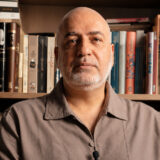
Arvin Ilbeygi
Arvin Ilbeygi is one of the diligent and culture-loving members of the Caspino Group in the city of Anzali, who engages in cultural and artistic activities. Mr. Ilbeygi, on this group’s blog called “New Wave,” has written an article titled “Flight into the Newly Known” which we read below.
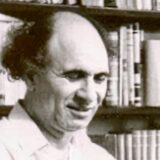
On 25 April 1920, an infant opened his eyes in Anzali who, three decades later, transformed the art of painting in Iran. The pleasant-weather port of Anzali at that time was a city resting upon rosebushes and a spring filled with limitless citrus blossoms; a green, clean, and peaceful city that was traversing the path of prosperity and development at an unusual speed. Jalil was the first child of the large family of Sheikh Hassan Ziapour. His father was a renowned master craftsman in shoemaking and had a well-run shop in the old bazaar of Anzali. Sheikh Hassan had pinned his hopes on “seeing his own continuation” in his eldest son, but later he saw that insistence was of no avail, and among Jalil’s four brothers and four sisters, no one went their own way separate from the inherited trade and customary traditions as much as he did. The Ziapour family home was in Nadimbashi Alley. When Jalil reached primary school age, he began learning in a school that was nearby (at the site of the current Sharaf High School). The coastal street, with a view of sailing ships in the distance and intertwined trees alongside, was a strange route for the small student’s daily commute. On cold days, his leisure hours from school were spent playing at the Shir-e Sangi site, and on warm days, the sea made him an agile swimmer. As he grew older, his father increased the insistence and compulsion to employ him in the shoemaker’s shop, but the pressures were futile and he desired another path. He was fond of music, painting, and sculpting, and it did not matter to him whose sarcasm he would have to endure. Very soon he was able to scrape together a little money for his education expenses by painting for tasteful clients, doing calligraphy on the glass of bazaar shops, and tutoring younger children. The young Ziapour was a passionate youth, thirsty to explore the essence and manner of the world’s arts. One day while he was drawing at school, his friend asked: “Do you want to be Kamal-ol-Molk, Jalil?” and he replied: “No. I want to be myself.”
During his high school years, he had to cross Anzali Bay every day to reach Ferdowsi High School. Ferdowsi and Mahdokht were the main schools of the city, in whose classrooms an influential generation studied and spent its leisure time with theater and music. The amphitheater hall of Ferdowsi had organized artistic programs, and art was the dominant recreation. When Ahmad Ashourpour sang for the first time among his classmates and, welcomed by the children, pioneered a great path toward the modern music of Gilan, Jalil Ziapour was also there.
In his free hours, he would take a boat and venture into the heart of the Anzali Lagoon. He would stand in the reed beds, listening to the colorful lines of the reeds and the continuous sounds of the birds, insects, and creatures of the lagoon. Sometimes, hoisting a sail, he would steer his boat out to sea. Then he would sit on a quiet shore and write his notes about everything; he would write until the sun sank into the water. Ziapour, like many artists of that generation in Anzali, was also fond of sports. He spent a lot of time swimming and doing gymnastics, which resulted in several minor and major championships.
After obtaining his diploma, he went to Tehran for further study of art. Traveling from a city that was the cradle of modern Iranian theater and a pioneer of the cinema and artistic exchanges of the era placed Ziapour in a privileged position. He had heard that at the Tehran School of Music, Belgian instructors managed and taught, and that there was also a field called “Composition” which was what he desired. He took an entrance exam and performed extremely well; so much so that word spread in the school that someone had come from the provinces and answered all the questions. The school gave him a room and also took on his living expenses.
Shortly afterward, the government dismissed the Belgian instructors. Colonel Vaziri assumed the management of the school, and policies changed. Ziapour also withdrew, because the field that interested him (composition) had been eliminated. After that, he joined the old School of Fine Crafts to learn traditional decorative arts instead of music. There, he learned illumination, carpet design, miniature painting, illustration, and tilework, until the Faculty of Fine Arts of the University of Tehran was established. In the year 1941, he went there and studied interior ornamentation, decoration, painting, and sculpture. In the year 1946, he graduated with first rank in his bachelor’s degree and, receiving a first-class cultural medal, obtained a French government scholarship to continue his education. Before departing for France, he strove greatly to better understand the art of his own land; therefore, he visited all the libraries that had manuscript books and scrutinized the paintings of old Iranian artists. Among them, he saw a work that transformed him greatly: Behzad’s “Haft Awrang.”
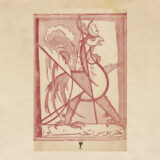
To travel to France, he once again had to pass through Anzali. He returned to his birthplace and, with one of those same ships whose gigantic images he had stored in his mind in childhood, left the ancient dock of the port for Europe. In France, he went to the National and Higher School of Fine Arts in Paris (Beaux-Arts) and studied art under masters such as the painter Souverbie and the sculptor Niclausse. At that time, Beaux-Arts was considered the best art school in the world, and its professors were among the greatest theorists of art. But Jalil Ziapour’s abundant eagerness and energy were such that, through insistence, he obtained permission from the French government to study simultaneously at another college as well. Thus he also enrolled at the Académie de la Grande Chaumière so that, in addition to painting and sculpture (which were the principal fields of Beaux-Arts) he might learn art history, stylistics, sociology, the history of civilization, the study of motifs, and clothing. Even his innovative spirit was not satisfied with the colleges, galleries, and museums of France; he went to André Lhote and tried to learn what was not accessible. In these years, despite the difficulties, he did not leave travel to Iran out of his schedule, and in the year 1949, after obtaining a doctorate in art, he returned to his homeland forever. He had realized that “the art of Iran is very far from the world, and its contemporary illustration and painting are an empty imitation.” He resolved to rise in struggle against this situation. In collaboration with three of his friends, he founded the “Fighting Cock” (Khorus Jangi) Association with the aim of enlightening minds regarding modern art, understanding it, and disputing with old art. The association’s motto was: “The tale of Alexander became legend and grew old; bring forth new speech, for the new has a different sweetness.” The location of the association was Ziapour’s own painting atelier, and its fixed program consisted of the fervent lectures by him and his like-minded companions on Friday evenings. Three groups were also counted among the opponents and enemies of the Fighting Cock: the first group, the Tudeh party members, who said that painting must be comprehensible to everyone; the second group, the miniaturists, who stood against modern art; and the third category, the realists, who were supported by the aristocracy and the court and believed that realist works must prevail. Ziapour’s three companions in the Fighting Cock were Gholamhossein Gharib (literature), Hassan Shirvani (theater), and Morteza Hannaneh (music), among whom Hannaneh withdrew very soon. To disseminate their views, they also founded the magazine “Fighting Cock,” which for years afterward left an unrivaled effect on Iran’s visual arts. Nima Yooshij (the father of modern poetry in Iran) joined them in the first issue of the Fighting Cock and composed thus:
Cock-a-doodle-doo! The rooster crows
From within the hidden seclusion of the village,
From the descent of a path which, like a dry vein,
Runs blood through the bodies of the dead,
Weaving upon the cold wall of dawn,
Permeating every corner of the plain.
With its song, the path has become filled with it,
It brings glad tidings to the ear of the free,
Showing the path to flourishing lands
For the caravan in this ruined abode.
Softly it comes
Warmly it sings
It beats its wings
It scatters its feathers.
The ear is alert to the bell of its voice’s caravan,
The heart is set on its exquisite melody.
Cock-a-doodle-doo! On this dark path
Who is it that has fallen behind? Who is it that is weary?
Warmed by the breath of its singer,
Was the cold-bringing winter night
It revealed unspoken secrets
The bright adorner of luminous morning.
Breaks kisses with the body of the earth,
The coquettish morning, the slow-traveling morning
Since it released this song from its very core,
And drew it out through the burning of its soul.
Cock-a-doodle-doo! From the visible realm,
The blind night flees toward the hidden,
Like the impurity of the Druj which at the threshold of morning
Is driven away by the melodies of day.
The horseman hastens on the way,
Even though in the darkness his horse bolted,
The sneeze of dawn caught in his nostrils,
The heart-opening design of the white day.
Now to his eyes,
Just as the day,
The path before him bright,
Has brought joy,
He rides his horse.
Cock-a-doodle-doo! Heart and mind have opened,
Morning has come. The rooster crows.
Like a prisoner of the grave-like night,
The bird has escaped the narrowness of the cage,
In the desert and the long, far road,
Who is it that has fallen behind? Who is it that is weary?
In the publication “Fighting Cock,” Ziapour published his artistic theory under the title “The Abolition of the Theories of Past and Contemporary Schools” and took upon himself the standard-bearing of a movement that, in the most difficult cultural and social conditions, was going to affect half a century of Iranian art history. On the back cover of the magazine it was also stated: “Under the supervision of the Fighting Cock Art Association; our aim is to raise the level of public knowledge.” Master Ziapour later wrote: “I wanted us to bring our national identity into the new world by taking inspiration from our own inheritances, without being imitators or allowing others to be imitators. And this movement was based on an aim, not a war of tastes.”
After five issues, opponents plotted, and the court, mistaking the word “Cubism” for “Communism,” banned the “Fighting Cock.” Although after some time they were apologized to for this mistake, Ziapour published another magazine named “Kavir.” In “Kavir,” he printed his first abstract Cubist painting, named “Public Bath.” That same year, 1949, he wrote an article entitled “Painting,” in which the first theory of modern art in Iran was expressed. A year later, “Kavir” too encountered problems from the ruling authority of the time, and Master Ziapour published “The Cock’s Claw (Panjeh-ye Khorus).” In “The Cock’s Claw,” younger painters such as Sohrab Sepehri and Bahman Mohassess joined the circle of his collaborators.
Two years later, he was invited to work by the country’s General Administration of Fine Arts, and in the year 1953 he set about founding the visual arts conservatories for girls and boys in Tehran and preparing the preliminaries for the establishment of the Faculty of Decorative Arts. In these years he made many research trips to different regions of Iran, which aroused his attention to the life of tribal peoples and their clothing.
In later years, Master Jalil Ziapour, in addition to his personal activities in painting, research, and writing, assumed the management of centers such as the “Museum of Anthropology,” the “Administration of Exhibitions,” and the “Artists’ Center.” Also, because of his “use of geometric forms in the re-narration of decorative arts and the materials of Iranian art in the manner of Cubism,” he was rightly called the “father of modern painting in Iran.” Dr. Ziapour spent the final two decades of his life, with great energy and eagerness, teaching at the faculties of Dramatic Arts and Decorative Arts, the University Complex of Art, Tarbiat Modares Faculty, and Alzahra (s) Faculty. Precise planning and carefulness in teaching, alongside the power and impact of his speech, made him an incomparable and beloved master, the result of whose efforts was the training of outstanding students such as Parviz Tanavoli, Hossein Zenderoudi, Massoud Arabshahi, Mohammad-Ali Shivai, and many others.
Master Jalil Ziapour closed his eyes to the world on 21 December 1999, on a cold Yalda night, so that from then on, in the minds and hearts of the admirers and artists indebted to him, he would continue his worldly life.