by
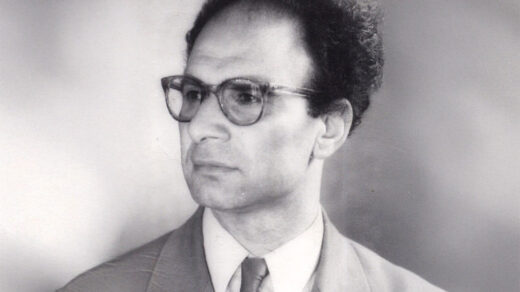
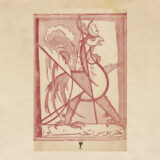
by Text of a lecture by Master Jalil Ziapour at the Fighting Cock (Khorus Jangi) Art Association; June 1949
The pupils of Kamal-ol-Molk, who, at the vanguard of naturalistic painting in Tehran, had acquired fame among both the elite and the common public, and for whom this naturalism was the explicit text of nature, and who kept the ordinary proportions of nature and its existing coloration before their eyes, faced no difficulty other than imitating nature with a precise gaze and customary manual work. Benzor (director of the Munich school, who was among the prominent figures of European painters) had said about Kamal-ol-Molk: “He has been the most peerless copyist of classical European paintings, and in attending to the details of the work and the most delicate play of colors, he painted in such a way that one can easily accept them in place of color photographs.” Kamal-ol-Molk had told his loyal pupil, Ashtiani: I can paint a picture so accurately that if a photograph were taken from nature, there would be absolutely no difference between them in any respect. (1)
The pupils of that late master also followed nature to this extent, just as he did. It was only recently that one or two individuals, to showcase their prowess under the name of working with a free brush, presented one or two works in a very simple Impressionist style. (Even though they knew neither the meaning and raison d’être of this style, nor how to apply brushstrokes in it – they merely reduced the minute details, but overall preserved what they themselves called the realistic form.)
I was compelled, from time to time, out of necessity and expediency, to deliver lectures for the awareness of the curious and the general public regarding various schools, their backgrounds, their raison d’être, and their characteristics, or to write articles in the media, and also to willingly accept the invitations of cultural institutions to lecture on specific subjects, so as to impart some knowledge to the people with the intention of revealing the state of the art arena in today’s world. Therefore, I begin my remarks with those insights. It is not necessary for the seeker to traverse a long and distant path. If someone truly has the desire to understand, they will find their object of interest in the history of art.
To know from what years the foundation of modern painting was laid, I shall for the moment place my finger on around the sixteenth century and consider the artistic world of that era. We must know that nothing comes into being by itself, unmediated, separately, and suddenly, and that all things always have a comprehensive connection with one another. However, this connection is such that the succession of time sometimes leaves the leading thread of these connections under a veil of obscurity.
In the 16th century AD in Italy, two painters named Caravaggio (Caravage) and Carracci (Carraches) worked in two different styles. Caravaggio controlled light in painting and employed it in whatever manner he deemed necessary. For example, sometimes in an ensemble or gathering, to give expression to the faces, he found it appropriate, instead of working in the open air and sunlight, to operate in a dark place by means of light from a single aperture, or he painted with only a spark of light (which he made the pretext for illuminating certain parts of the face), or he utilized light from a hole in the ceiling of his studio, so that light would enter his studio only through an opening and illuminate his model’s face. By this means, the examples of his work were distinct from those of others. Carracci, unlike Caravaggio, created works in the open air, with natural light, without control of light, and decorative. The working methods of these two painters, in accordance with the inclinations and tastes of painters, spread everywhere in Europe and found their respective supporters.
France, too, had its own derivations amidst the tastes of these two painters. Some painted like Caravaggio and others like Carracci; during these times, Simon Vouet, due to the connection he established with Italy, fell under the influence of the paintings of “Venice,” and by this means popularized decorative paintings in France. Since he executed colorful and pleasing paintings, he was soon accepted by people of taste and the general public. In particular, he prepared suitable designs for carpets, which were well-received. His colleague Jacques Blanchard, who had comprehended the art of the “Venetians” much more deeply than Vouet himself, unfortunately, due to his death at the age of thirty, could not leave behind many works of his artistic understanding for others. A little later, around the year 1594, another painter named Nicolas Poussin arrived on the scene, who blended the method of Carracci with French taste, brought a school into being, and was counted among the great painters of France.
In Holland, too, the two styles of Carracci and Caravaggio gained influence. For this reason, the Dutch in this era mostly began with family subjects, portraiture, and landscape painting, and they brought into being a distinct artistic milieu and schools that were considered among the important schools of painting in Europe. From among the artists of this milieu, two painters emerge in whose works the method of Caravaggio is far more clearly perceptible than that of Carracci. One is Frans Hals and the other is Rembrandt. The characteristic of Frans Hals’s work was that his fluid brushstrokes were visible in all his works, and unlike others (who took up colors with the very tips of their brushes, mixed them together and into one another, and worked licked and smooth), he, with his broad brushstrokes, rescues the eye from the twists, turns, and minute details of others (which were tantamount to a cage for the spirit and the eye). Rembrandt employed this exact same practice as well (albeit in another way).
In Northern Holland, where Hals and Rembrandt lived, due to religious conflict and the restriction of painters in their choice of painting subjects by the Protestants, the canvases of painters residing in the northern region acquired backgrounds of a heavy atmosphere (as a result of religious constraint). Everywhere, brown colors are evident in the places where the subjects of the paintings have appeared on the canvas, and the air of warm, heavy, and humid cellars is clearly felt. In contrast, in Southern Holland (the Flanders region, the place of the Catholics), painters had freedom of subject and action, and their political and social relations were greater than those of the northerners. Hence, an artist like Rubens appears there, and his works demonstrate that the southerners (unlike the northerners) possessed a cheerful spirit and differed from them in terms of coloration. Rubens creates a world full of joy and fantasy, whereas Rembrandt has a dark, sorrowful, and heavy realm.
The Germans and the English at this time were strangers to art, and in the art of painting, their taste and sensibility were not at these levels. Only one German named Elsheimer was doing something after a fashion, and even that was in such a way that from his working method and coloration, a kind of parsimony, narrow-mindedness, and envy could be felt. The artists of Spain were directly under the influence of the arts of Italy, and by blending Italy’s working method with their own taste, they created a school specific to themselves, and artists such as Ribera, Zurbarán, and Velázquez arrive on the scene.
Since artistic reactions were being generated one after another, in France, the presence of Roger de Piles, the fervent critic of this same era (who was captivated by the works of Rubens), is stirred up by a group into an effective artistic movement, so as to flex its muscles against Nicolas Poussin. Inevitably, Poussin finds himself at a stage where he is compelled to debate. Thus, discussions regarding the law of color application begin. With this kind of debate, the ground is prepared for a reaction, and the desire for variety directs people of taste toward “Flemish” paintings, and the artists’ belief regarding the “Baroque” style weakens. (2)
Among the opponents of “Baroque” in France, Chardin was the only one who had fame in the eighteenth century. Because he had understood the “Flemish” techniques much better than the others. The subjects of his painting were mostly still lifes, and he composed them with understanding. His works were not tiresome and heavy like the works of Northern Holland. Moreover, he chose fresh subjects and boldly began to paint things that others did not have the courage to undertake. This boldness of Chardin had astonished everyone.
If it were said that Italy (although it was the model for the progress of the art of painting for the people of France and England) had itself lacked brilliance up to this time, it would seem strange. Except for a little in “Venice” and Tiepolo, its other places were in stagnation, while France at this time had a great artistic movement. Furthermore, Italy was still moving in the artistic atmosphere of the sixteenth century, and in fact, it was as if the seventeenth and eighteenth centuries had not been there and had not passed! And it had only just turned anew toward ancient objects. This turning toward ancient elements was because new discoveries had been made in the cities of “Pompeii” and “Herculaneum,” and inevitably, this directed the imagination of the Italian people toward the past, and they were forced to cast a glance behind themselves. From this point onward, Rome (the capital of Italy) becomes the arena of activity, and foreign artists gather there from every corner. “Rome” becomes the origin of a new movement called Romanticism, whose followers show great interest in ancient elements, and the artists set to work myth-making, which the discovered ancient elements had awakened in them. This approach had two causes: one was that they did not find them devoid of beauty, and the other was that, in any case, they possessed a perceptible nearness to nature. Hence, they could not remain indifferent to these recent discoveries.
David, at that same time, considered this group antiquarians and deemed the emergence of the Romantic school in Italy a period of decadence. The Romantic school in France begins from the studio of Greuze (although he himself did not directly show activity in this school, his method of instruction was such that this school was established within it). Those in whose names this school is mostly registered in France are Delacroix and Ingres, who were contemporaries but differed greatly from one another in terms of theories, aims, and working methods. Abundant debates are exchanged between the two, and finally, Ingres finds himself compelled to protect his students from the artistic attacks of Delacroix and his working style. Because, in the view of Ingres, the working method of Delacroix was very superficial and slapdash. And Ingres attached excessive importance to drawing, while Delacroix also felt all this precision of Ingres in drawing to be tiresome and attached more importance to coloration.
At last, Romanticism, which had devoted itself entirely to storytelling and myth-making and dealt with the fantasies of dreamers, fatigued the spirit of people of taste. (Is not this expression of fatigue a ground for desiring something new?) Therefore, another reaction opposing Romanticism begins, and Realism (“Réalisme”), which permeated from writers into painters, steps onto the scene and finally paves a way for the people who were thirsty for realism. Courbet was the first person who began to create works of “Realism” and rescued himself from the clutches of storytelling. He sought nothing other than tranquility. He brought gentle and natural subjects that provided peace of mind onto his canvases. A few village girls beside a spring, a few fattened cows lying on the grass, constituted the subjects of his painting.
Ultimately, the pursuit of tranquility and realism, no matter how pleasing they may be, if they lack a state and a reality that strike a chord in the heart, will be rejected like anything else. For this reason, a reaction named “Impressionism” (Impressionnisme) inevitably arrived on the scene in opposition to the school of “Realism,” and a great danger arose for “Realism.” Because the Impressionists argued that the reality which the Realists spoke of did not exist. Moments pass one after another, and from these passages, changes inevitably occur in the outward appearances of objects, and since painting is related to the sense of sight and, in the first degree, has a direct connection with the outward appearances of objects, therefore the eye never sees a scene uniformly throughout the day. Rather, it observes different scenes at different moments. Thus, one must strive by any means to bring onto the canvas the effects that nature reveals to us in one or several moments.
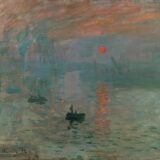
In this way, the Impressionists dismantle the apparatus of the Realists with scientific reasons, and Claude Monet for the first time displays a work of his that confirms the truth of the Impressionists’ claim and proves to be pleasing. At this same time, since the science of colorology had made considerable progress, it became a great aid in the mode of thought and the advancement of the Impressionists’ reasoning, and instead of mixing colors together, they place them side by side and, with that, begin greater artistic displays. Manet, Claude Monet, Degas, Sisley, Renoir, and Cézanne, all with differences in their mode of vision and work, belong to the school of Impressionism. Manet was the first person who, under the influence of Claude Monet, opened a newer path for beginners, broke the conventional rules of painting, and prepared his palette for use with only a few simple colors. Claude Monet, by means of light and air, was able to show the precise and sensitive nuances of nature on trees and buildings. Renoir adds a kind of poetic delicacy to traditional lights. Degas, unlike his colleagues, works mostly on movements and the ordinary life of his era (especially on the life of dancers). Sisley had well understood the secret of showing delicate air and the differences of times of day in painting. Cézanne does not remain in the stage of the Impressionists and becomes the fountainhead of the future Cubist painters.
Despite the variations that had come into being within the school of Impressionism, the thirst of the seekers of novelty still was not quenched, and Van Gogh, Pissarro, and Gauguin began their activity. Van Gogh, in depicting the dramatic states of life, powerfully shows a way to the Impressionists, and advances painting from “Impressionism” to “Fauvism” (Fauvisme). Pissarro does not remain fruitless from his exploration, and from simple Impressionism he sometimes reaches new Impressionism. (The difference between these two schools is that the moderns, unlike the ancients, place colors completely separately and side by side instead of mixing them. And if the ancients had some reservation in this matter, the moderns cast this reservation aside as well). Gauguin had an affinity for the working method of Pissarro, and most of the time he followed his path until he found a distinct school. Even so, his works are a mixture of the old and new Impressionist schools and Fauvism.
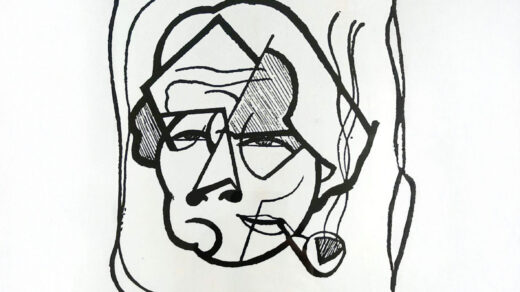
The desire for novelty, which out of necessity (from the comprehensive change in the conditions of that era, had intensely manifested itself in artists) did not subside soon. Because Cézanne, who had put forward a newer path, could still guide the tasteful curious along a more extensive route and toward a goal with a broader panorama. Thus, the school of “Cubism” (Cubisme) comes into being automatically with the groundwork of machine life, and in defiance of the gentle and soft lines and surfaces, which the eye no longer accepted for the times and which did not recount the new age, the need for a suitable mold was taken into consideration, and geometric lines and surfaces set foot into the arena of painting and the taste of painters. In this way, the pioneers of this school, by utilizing Cézanne and pursuing his goal, expanded the arena of this school. To the point where Jean Cassou says about this: “I do not think anyone could ever explain the work that Cubism did in the world of painting in a manner that is worthy.”
The torchbearers of this school, namely Braque and Picasso, entered the arena of Cubism with two completely different personalities. One went forward in his work mildly and very cautiously (yet with power and a specific goal), and the other madly, thirsty for disrupting and overturning whatever conventional rules and considerations of painting there are. The brush in his hand is like a cleaver with which he prunes the branches and form of nature. However, he is as sensitive and intelligent as possible; in his works, he always leaves the path of understanding, progressing, and thinking open for others, does not limit or imprison them, and becomes the motive for their sense of initiative. He himself rapidly leaps from the customary schools (which were ordinary and insufficient for expressing his inner feelings), and the work that Rembrandt had done in his era, Picasso does in this era with multiple times the power.
In machine life, which necessitated the existence of such a school, the people still could not comprehend this sole consolation and reality of the material spirit of life, which had its own specific poetry, in the style of Cubism, and their myth-seeking mind (which for a long time had been accustomed to soft poetry and legend) was not satisfied with this working method. Therefore, the school of “Surrealism” (Surréalisme) took the place of “Romanticism” in another form (meaning Romanticism put on new clothes), and now for some time it has been advancing parallel to Cubism. One wears its true clothing, and the other, having borrowed from writing, has lost its painterly identity within it.
1- Several years after this speech of mine, two sources in the context of my statement (not to confirm me, but for the reality of the matter) regarding Master Kamal-ol-Molk have been published by other reporters. For further awareness, please refer to: A – Kamal-ol-Molk: Tradition-Breaker and Tradition-Setter (Art and People Magazine, Issue 152). B – A Glance at the Painters of Iran in the (12th and 13th Hijri) Centuries, Volume One.
2- “Baroque” and “Reform” are two different approaches that had a background in Italy. In “Baroque,” its followers observed more principles and conventions in their works. That is, in altering the subject of the work and their structure, they intervened in such a way that the work would not lack a traditional basis, while at the same time possessing some novelties; and in this matter, they exercised a persistence, and in any case, they did not dispense with tradition in a manner that would take the form of reform.