by
by This article was machine-translated from the original Persian and may contain inaccuracies.
The complete text of the lecture by Master Jalil Ziapour at the University Complex of Islamic Art (at the invitation of the Center for the Seminar of Islamic Wisdom and Art); April 28 and 29, 1987

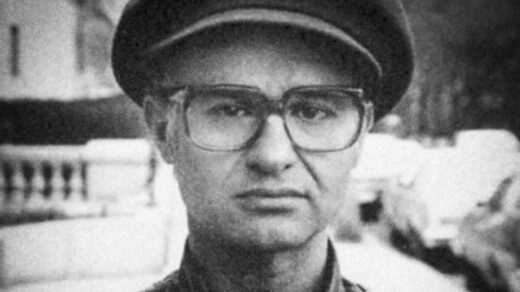
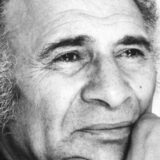
Master Jalil Ziapour, the Father of Modern Iranian Painting
This lecture was organized based on the questions raised by the Center for the Seminar of the Wisdom of Islamic Art.
First Question: How is the aspect of “our art being of the people” made clear and determined? And in the motifs of our works of art, how does the aspect of “being collective” and “possessing a collective grandeur” take on a visual dimension? And what popular cooperation exists in these motifs?
Answer: I must say that every question may have other questions that can be raised alongside it, which, if they are also paid attention to, can lead to a better result. Our first question also has such a status. What qualifications did Iran originally have to become a model? (Since the prerequisite for being placed as a model is to possess substance) As the famous saying goes:
How can an essence that has not received from the Giver of existence
Ever become a giver of existence?
In the event that it possessed substance and merit, it would be a matter of great surprise! That Iran, the superpower of that era, which apparently lacked sublimity, despite having such a position, was defeated by only sixty thousand Muslim soldiers!! What is hidden in this occurrence!? We can reach it. But first it must be clarified whether the Iranians possessed merits or were empty of content? Subsequently, it must be clarified what essential role they played in the fertilization and modeling of Islamic culture and civilization.
We know that to investigate the past of any society, two paths exist: 1. Studying the written records remaining from the past (on the condition that the writings of past and contemporary researchers are free from the biases of affinity and animosity and prejudices). 2. Studying the illustrated records (which is, of course, a more reliable path).
Here, both types of records will be used. (However, very compressed and a small fraction of a vast amount, and within the limit of the patience of you, dear ones). As they have written (if they have not exaggerated, or if we have not been so self-alienated as to consider ourselves entirely rootless and become cynical), researchers emphasize that Iranians were sometimes at the forefront among other nations, and they have long considered the land of Iran to be the hub of various artistic methods, such that others learned Iranian techniques from the Iranians. (Iranian Industries After Islam, Muhammad Hasan Zaki, p. 301)
Joseph Caldwell has written: “The people of the Iranian plateau have had a significant share in the creation of early human civilization.” Wilber believes: “that the Iranians were the first people who invented the alphabetic script.” Roland Kent has written: “that before the cuneiform alphabetic script, no other alphabetic script existed.” Waddell in the year 1927 AD published a book entitled “The Aryan Origin of the Alphabet.” (The Contribution of Iranians to the Genesis and Creation of Script in the World, Rukn al-Din Humayun-Farrukh, pp. 20, 22, 583)
You know that the invention of writing was the greatest human emergence in the field of symbols of mutual understanding between individuals. Before the script in alphabetic form, pictorial designs were for communication between individuals, and in academic parlance, they are called “hieroglyphs.” In Egypt, this type of script was known. Until fifteen years ago, pictorial script had not yet been discovered in Iran, and it was assumed that the theories of researchers regarding the priority of the invention of alphabetic script by Iranians, without having a background in pictorial script, were illogical and groundless. Until the Iranian excavator Engineer Hakemi discovered it in Khabis (Shahdad) of Kerman next to the desert, and this discovery forced the denying archaeologists, who still emphasized the antiquity of Egyptian civilization, to think more calmly.
Apparently, Iranians from ancient times until the advent of Islam have been inspiring and models in many fields (and afterwards as well). Among others, in philosophical and religious thoughts, in music and architecture, in the visual arts, in pottery and metalwork, in textiles, in the use of the astrolabe, in literature and administrative affairs, and many others.
“Demonasce” has written: “Before Islam, during ten centuries of their religious history, Iranians presented beliefs and thoughts to ancient nations.” (History of Iranian Civilization, in collaboration with a group of European Iranologist scholars, pp. 127 and 153) “Henri Puech,” in the discussion of Iran and Greek philosophy, has written: “The intellectual influence of the ancient Iranians in Greece has been fully proven, and this theory of the Iranians that: ‘man is a world on a smaller scale’ has appeared in the treatises of Plato, and the mystical references of the ancient Iranians about the final judgment (the Day of Resurrection) are reflected in Plato’s Republic and in the theories of ‘Heraclides.’ The Greek ‘Anaxagoras’ was forced to flee his city due to his support of the thoughts of the Iranians. With the entry of the Iranians into Babylon, the Iranian religion, which was based on monotheism, with all its related cultures, influenced the Jews (who were monotheists at a lower level).” (The Achaemenid Empire, Olmstead, pp. 446, 639, 656 and 659)
Félicien Challaye writes: “With the entry of Cyrus into Babylon, many of the principles of the Ahuric religion of the Iranians spread among the Jews and then penetrated into Christian beliefs.” (A Brief History of the Great Religions, p. 213) Kirk Linger writes: “Belief in angels, eternal life, and the resurrection was among the principles of the Ahuric religion, and Ahura Mazda was a luminous and beautiful creator; the realm of Ahura is luminosity, and the Ahrimanic realm is darkness.” Linger says: “In the Iranian Ahuric religion, a great concept was hidden that existed neither in the ancient Egyptian religion nor in the very deep Hindu thought (in neither of them); and that was that the world has a history and follows the law of evolution. Among the slogans of this religion was: whoever walks in the Ahuric path is a benefactor, and whoever creates obstacles in the way of achieving Ahura, or does not cause a delay, is an evildoer.” (A Brief History of the Great Religions, pp. 209, 211, 213, and 214)
“Allamah Ayatollah Nuri,” in his book “Jahiliyyah and Islam,” has quoted from Ibn Khaldun that: “The Ahuric religion, whether by Iranians or other tribes, was influential in southern Arabia (Yemen and the coasts of Oman) and had gathered many followers.” (Human Beliefs and Views – Jahiliyyah and Islam, p. 382) In the book “History of the World of Islam,” we read: “Ancient Iranians, in the Ahuric religion, used the astrolabe to identify and calculate the distance and proximity of the altitude of the sun and stars and to find the distances between them.” (The aforementioned book, Imadzadeh, p. 93)
Herzfeld believes: “that the columns known as ‘Ionic,’ based on older existing documents, are in essence Iranian columns, and have been groundlessly attributed to Greece.” (History of Iranian Industries, Christy Wilson, p. 55) In the depiction of the ancient city of “Musasir” (in Azerbaijan), an interesting temple is shown which has six stone columns in the front, and its roof is in the shape of a gable, which the Greek temple resembles. Herzfeld says: “This type of building, before becoming common in ancient Greece, was built in Iran, and according to historical antiquity, it was the architectural style of Iran that initially influenced Greek architecture, and the temples of Greece were imitated from the Musasir temple of Azerbaijan; and furthermore, the Greek capitals of the Hellenistic period are also of the type of the historical ‘Da-o-Dokhtar’ capitals (near Rangan Mountain of Behbahan).” (Ancient History of Iran, pp. 65 and 67)
Olmstead has written: “When they were making excellent bronze vases in the Iranian lands, the Greeks were still dealing with potter’s clay. The artists of Athens showed a great interest in drawing Persian motifs and depicted them on their vases. By collecting metal specimens from areas of Egypt, Cyprus, and other places and comparing them with each other, one can see clear signs of the influence of Iranian works in them, and one can understand how the future path of Greek art was traversed under the influence and sway of Iranian art.” (History of the Achaemenid Empire, p. 667)
In the book “History of Iran” (compiled by five Russian researchers), we read: “Iran is the birthplace of tiles with polished, shiny, and golden glaze, and in the countries of the Far East and in European countries, they had not the slightest knowledge of their design and preparation.” (The aforementioned book, p. 319) In the book “The Sassanids,” we read: “The specimens of glazed pottery belonging to the early Islamic period (obtained in the vicinity of Persepolis) were all made after the models of Iranians of the pre-Islamic period. The process of making glazed vessels and tiles transparent is among the valuable services of Iranians to the pottery industries of the world.” (The aforementioned book, Christensen, pp. 127 and 145)
Christy Wilson says: “The balance, emphasis, and grandeur seen in the entirety of the carvings of Persepolis are not observed in any of the carvings of the nations of the world.” (The Sassanids, p. 110) Herzfeld says: “According to existing specimens, the pre-Islamic carvings of Iranians are an important part of the arts of Iran and the world. The depiction of horses and other animals made in this era possesses such spirit and strength that it has rarely been seen in the carvings of other contemporary nations. Chivalry and heroism were shown in these designs a thousand years before reaching the same degree in Europe.” (The Sassanids, p. 110)
Diakonoff writes: “The pictorial art of the Iranians of the Parthian period was manifested in all its various branches.” (The Parthians, p. 124) Dimand has written: “The influence of Iranian painting in Iraq is apparent from the wall paintings of the Palace of Samarra, which are attributed to the third century AH. Certainly, the illustrations of the ‘Manichaeans’ influenced the work of the Iraqis. Because in the second century AH, a large number of Uyghur ‘Manichaeans’ migrated to Iraq and exerted a greater influence on the work of the Iraqis. Mani’s book was also illustrated in the customary and common style of Iran. This Iranian style continued in Iraq until the eighth century AH.” (Handbook of Islamic Arts, pp. 39, 43, and 45)
Christensen writes: “Arab music branches off from Iranian music, and what was played at the court of the Caliphs of Baghdad was the descendant of the music common in pre-Islamic Iran; and the folk songs of ‘Andalusia’ (in Spain), which possess the spirit of Iranian musical melodies, went there through the Arabs.” (History of Iranian Civilization, in collaboration with a group of European Iranologist scholars, p. 225)
This was a very negligible amount of the influential factors of the Iranians in the ancient world. With such capital and influential factors, why should the Iranians have lost their resistance against a small number of Muslim Arabs? Researchers of social history believe that the majority of the people of Iran and the soldiers deliberately underperformed in the war with the Arabs. Why should they have done such a thing? And after they eventually embraced Islam, why did they show such enthusiastic desire for the progress of Islamic civilization and culture? In this regard, let us pay attention to some noteworthy accounts together. Based on sociology, the collection of healthy empirical and customary affairs of any people is first compiled under the name of public law, and it often happens that such customary laws, in their vulnerable core, from their positions of weakness, fall under the influence of opportunists and despots and become ineffective, and violations of public rights tend to increase, and finally exceed the limit of tolerance and lead to rebellions and revolutions. In history, we know such lives like the two sides of a coin. One side of this coin is the talisman of pleasures and the other side is miseries (and often, the sweet nectars belong to the dominators and despots, and the stings and miseries, in the long run, are for the oppressed). For as long as it has been, we have known lives this way through history. In the life of any people, there exists the germ of artists’ inspiration from pleasures and miseries, which bears fruit sometimes in the long run and sometimes in the short run.
It took a thousand and some years, and little by little the souls of the Iranians reached their lips until they were finally able to free themselves from under the burden of the pressure of a religion that was not practiced correctly, and a government that had replaced morality and spirituality with corruption. It was long before Islam that we were trapped in the misery of injustices, transgressions, and the inhumane harshness of the dominators. “During the era of the Medes, the Scythians residing in Azerbaijan (who were cousins of the Medes) trained the children of their cousins in riding and archery. Cyaxares the Mede massacred all the leaders of these cousins of his (on the suspicion that the relative-teachers were extorting tribute) after an invitation to a feast. This massacre took away the courage to serve from the servants and led to the formation of underground organizations and massive rebellions. Astyages the Mede issued the order for the death of all newborns because of a troubled dream he had seen. But his general, ‘Harpagus,’ hid Cyrus, who was the maternal grandson of ‘Astyages.’ Astyages found out, killed Harpagus’s son, made him into a stew, and fed him to the miserable father. The grieving father made the young Persian Cyrus the leader of the rebels. During the war and rebellion, when there was a perceived danger of retreat and defeat of the rebels, Persian women and mothers cried out to their men to fight, use our breasts and flanks as shields, and uproot the roots of oppression.” (The Medes and the Founding of the Empire in the West of the Iranian Plateau, Jalil Ziapour, pp. 466 and 474)
Xenophon has written: “The Persians today are no longer those Persians of the past. They force prisoners to give gold to be released. They do the same with the innocent. The wealthy also fear the consequence of their deeds.” (Ancient Iran, Pirnia, p. 1538) Babylonian inscriptions relate that the Persian government used to put up taxes and tribute for bidding and contracting, and the winners of the bidding, with the help of their brokers, would fall upon the people and, by collecting more than they had paid to the government, took it from the people and stripped everyone of their livelihood. (History of Iran, five Russian researchers, p. 32) Olmstead has written: “Bribe-taking officials took land from the subjects by force and leased them to greedy moneylenders. The landowners’ situation was also no better than that of the subjects and peasants. For they had to give gold and silver to pay tribute and gifts (in order to gain proximity to the king and future benefits). For this reason, the entire Persian period was filled with the history of rebellions of oppressed peoples.” (The Achaemenid Empire, p. 407)
“Rawlinson,” “Dula,” and Maspero have written: “The houses of the wealthy of Persia were full of corrupt and criminal servants. The empire that Darius had established did not last more than a century and broke the material and spiritual backbone of Iran. ‘Xerxes’ was the worst model of debauchery for his subjects, and after spending twenty years in conspiracies and desires and neglecting the administration of the realm, one of his close associates named ‘Artabanus’ killed him. His body was buried with royal grandeur.” (The Story of Civilization, Our Oriental Heritage, Will Durant, pp. 560 and 561) “With this background, the Parthian era also saw its village organization steered toward a slave-holding organization. During the Sassanian era, slavery replaced village organization, gained permanence and stability, and became more widespread.” (History of Iran, researched by five Russian researchers, pp. 66, 89, and 93)
Many sources testify that in the era of Peroz (grandfather of Anushirvan), the condition of the people was difficult. The peasants fled the villages. Agathias has related: “that during the reign of Anushirvan, Neo-Platonic scholars and philosophers left Iran because of the atrocities and cruelties of the holders of power, the nobility, and the harem-keepers. A man named ‘Mazdak,’ in the time of Kavad (father of Anushirvan), incited the majority of the people to abolish discrimination. The deprived and the dissatisfied supported Mazdak.” (The Condition of the Nation, State, and Court of the Sassanians, Christensen, p. 172) “But Anushirvan the Just, through deceit, planted the Mazdakite leaders upside down in the ground after a feast and tried very hard to suppress the general rebellion. The kings after Anushirvan also went to such extremes in wrongdoing, oppression, and greed that they ruined the moral wealth and fanned the fire of rebellions, insecurity, and military mutinies. A large portion of the spoils of war was always spent on the expenses of the court, ceremonies, and the personal expenses of the kings and their harems.” (From Parviz to Genghis, Seyyed Hasan Taqizadeh, pp. 2 to 23)
Tabari writes: “If a king like ‘Hormizd’ IV ordered his troops not to approach the cultivated fields, it was not out of compassion and support for the property of the subjects, but for the protection of the landowners (i.e., the real owners of the crops).” (The Condition of the Nation, State, and Court of the Sassanians, Christensen, p. 34 et seq.) Ammianus Marcellinus has written: “The peasants subordinate to the landowners had no control over the lives and deaths of themselves and their families. Slaves were obliged to run on foot behind their horsemen. The subjects of Iran were so disgusted by Yazdegerd’s actions that they wished for his death.” (The Condition of the Nation, State, and Court of the Sassanians, p. 34 et seq.) Ayatollah Motahhari quotes from the book “Social History of the late Nafisi”: “that the population of Iran prior to the advent of Islam was estimated at about one hundred and forty million people. The Iranians of that day, both in terms of soldiers, weapons, and war equipment, and in terms of the abundance of population, food supplies, equipment, and possibilities, possessed an extraordinary superiority over the Arab Muslims. The Muslim Arabs were not even familiar with the warfare techniques of that era at the level that the Iranians and Romans were. With the population of Iran at that time, a countless group of whom were soldiers, this vast number with a specific military order, placed before only sixty thousand Arab Muslim soldiers, deliberately underperformed and did not fight heart and soul, until they brought the life of the Sassanians to an end. That is, the law and custom of government and statecraft in Iran at the time of the emergence of Islam had so disturbed and emboldened the people that the majority of the nation yielded to accepting any other religion ‘except the existing Iranian religion,’ let alone Islam, which cried out for ‘freedom and equality.’ That is, the very thing that the Iranians and free human beings were seeking.” (Mutual Services of Islam and Iran, pp. 96-101)
The call of equality with the slogan of “equality – brotherhood” of Islam attracted the suffering and eager Iranians, and they did what they had to do. Now, we want to know what approaches our people adopted to maintain it after achieving this success? And what services were they able to perform in advancing the goals of nascent Islam? That is, now with these introductions, we finally arrive at the answer to this question: (What essential role did the Iranians play in modeling Islamic culture and civilization?)
In the histories related to the founding of Islam, we read that all the follower nations, each to the extent of their cultural substance, strove to advance the goals of the young Islam, but they say that the Iranians had a larger share in this advancement of goals. Now, I will recount to you very briefly, as is my custom, what historians and researchers have written in this regard:
Dozy (the Dutch researcher) writes: “Among the most important nations that changed their religion and became followers of Islam were the Iranians, who in many respects were the heirs to a vast and refined civilization. They, more than any other nation, placed their forces at the disposal of Islam and showed more sincerity in this way than any other nation; even the Arab nation itself, from among whom the religion of Islam arose, did not serve the religion of Islam as much as the Iranians.” (Mutual Services of Islam and Iran, Shahid Motahhari, pp. 101, 373, 375, 383, and 435) René Grousset has written: “The Samanids and the Buyids were commissioned by the Abbasid Caliphs to protect Islam from the harm of the invasion of the tribes of Central Asia. These two Iranian dynasties, for nearly two hundred and fifty years like devoted soldiers, performed their mission well and kept the greedy Turks and Mongols at the borders of Iran for so long that by the time they entered Iran, in terms of training and familiarity with the characteristics of Islamic rituals, they had become almost half-Muslim and half-Iranian.” (History of Iranian Civilization, in collaboration with a group of European Iranologist scholars, p. 284)
In the book “Mutual Services of Islam and Iran,” we read that the Muslims of the countries of the Indian subcontinent (and the islands of the Indian Ocean, Pakistan, Chinese Turkestan, and China, Malaysia and Indonesia) owe their Islamic culture to the unique efforts and activities of Muslim Iranians. (Even in the western and northwestern countries of the African continent, and in the continent of Europe, and Asia Minor as well, Iranians have a significant share in the propagation of the Islamic religion). Thousands of Iranian Muslim jurists, mujtahids, mystics, and poets in the Ghaznavid era went from Iran to India and engaged in Islamic propagation. In Kashmir, one Iranian popularized Islam. (The aforementioned book, pp. 80, 389, and 394) Arnold, Masson, Rosen, Huart, Rothenberg, Brockelmann, and Edward Browne have all unanimously given the opinion that: “The progress of Islamic culture is indebted to the thought, literature, and art of the Iranians.” (The Contribution of Iranians to the Genesis and Creation of Script in the World, p. 665)
“de Menasce” and Henri Massé have written: “Among the greatest thinkers of the Islamic world are the Iranians. The great Islamic scholars, who were mostly Iranians, enthusiastically compiled their books in their religious language (which was the language of the Quran).” (History of Iranian Civilization, in collaboration with a group of European Iranologist scholars, pp. 268 and 285) and in this way served the enrichment of this language. (Mutual Services of Islam and Iran, Shahid Motahhari, p. 435) In the book “The World of Islam,” we read: “Among the scholars of Islam, a large share belongs to the Iranians (especially Shia Iranians).” (The aforementioned book, Imadzadeh, p. 195)
Richard N. Frye has written: “The Arabs borrowed from the pre-Islamic sources of the Iranians more than from all other sources of other nations. As for what ‘Ibn Khaldun’ says, that most of the Islamic scholars (both in the religious sciences and in other sciences), except for a few who were Arabs, the rest were all non-Arabs (especially Iranians), this statement of his is not open to doubt and is an obvious reality. Also ‘Frye’ says: although the extent of this borrowing or influence cannot be enumerated, and it is obvious that the extent of the borrowings cannot be determined through a single study, yet the role of the Iranians in the history of Arabic literature (especially in philology and grammar) is so clear that it needs no mention or emphasis.” (The Golden Age of Persian Culture, p. 17) and (The Heritage of Persia, p. 386) “Shahid Motahhari” has written: “Iranians, in the fields of grammar, lexicography, rhetoric, poetry, and history, rendered great services to Islam. The services of Iranians to the Arabic language were greater than those of the Arabs themselves to their own language.” (Mutual Services of Islam and Iran, p. 435)
Ibn Khaldun writes: “From the time when Islam emerged and the Arabs mixed with other nations, corruption occurred in the Arabic language. Thus they sought to reform it. The first person who compiled rules was ‘Abu al-Aswad al-Du’ali,’ then ‘Khalil ibn Ahmad al-Farahidi,’ and then ‘Abu Ali al-Farsi’ and ‘Abu al-Qasim al-Zajjaj’ (all of whom organized Arabic grammar according to the method of ‘Sibawayh’).” (The Muqaddimah of Ibn Khaldun, Volume Two, p. 1163) In Dehkhoda Dictionary, under the letter “S,” we read: “Sibawayh – Si-buyeh – was Iranian. He wrote books on Arabic grammar. ‘Jahm ibn Khalaf al-Mazini,’ in defining his personality, has written: After Sibawayh’s ‘al-Kitab,’ anyone who brings anything in lexicography should feel ashamed. The burial place of Sibawayh is located in the Sang-e Siah neighborhood of Shiraz.”
In the book The Golden Age of Persian Culture, it is quoted from Ibn Khaldun: “that it was Sibawayh, and after him Abu Ali al-Farsi, and then al-Zajjaj who served the Arabic language, all of whom were Iranians.” Ibn Khaldun says: Most of the transmitters of Hadith, all scholars of the principles of jurisprudence, all scholars of theology, and most of the commentators were Iranians. And he says: Yes, it is the manifestation of what the Holy Prophet said, “If knowledge were hung from the neck of heaven, a group of the people of Persia would reach it.” (The aforementioned book, Richard N. Frye, p. 166)
Ayatollah Yahya Nuri has quoted from Jahiz’s book “Al-Bayan wa al-Tabyin”: “that one day, one of the elders of Quraysh saw a child reading Sibawayh’s book and shouted: Shame on you, O child. This work of yours is the custom of beggars and schoolteachers!” (Human Beliefs and Views – or Jahiliyyah and Islam, p. 242) In Baladhuri’s “Futuh al-Buldan,” we read: “When Islam appeared, among the Quraysh tribe, only seventeen men, and among the women, two, and in Medina, eleven people were literate.” (History of the World of Islam, pp. 59 and 199) Ibn Khaldun has written: “The science of eloquence is a modern science among the nation of Islam. Later, this science became common among the Arabs.” (The Muqaddimah of Ibn Khaldun, Volume Two, p. 1172)
Nöldeke writes: “From the time of Shapur [son of] Ardashir onward, the direct rule of the Iranians over the border-dwelling Arabs of Rabi’ah and Mudar had begun, and gradually, over five hundred and twenty-two years and eight months, twenty-two Iranian administrators and governors ruled in Arabia. The first of them was ‘Imru’ al-Qays’ and the last was ‘Sayf Dhi Yazan,’ who was retained on behalf of the Muslims according to the command of the Holy Prophet. During these five hundred and some years, and even before that (from the 470-year era of Parthian rule), many influential factors of Iranian characteristics had spread among the Arabs.” (History of Iran and the Arabs, p. 104)
Among the influential factors were Persian words. During long-term interaction, many words from Persian entered the Arabic language. (Of course, the interpenetration of words in languages is a normal matter. Any two or more nations that are in contact with each other, inevitably, the mutual exchange of words becomes necessary.) In the introduction to the Dictionary of Persian Words in the Arabic Language, we read that “Addai Scher,” Bishop of the Chaldean Churches, wrote a book entitled “Al-Alfaz al-Farisiyyah al-Mu’arrabah” and in it expressed great surprise at why the Persian language has invaded and penetrated the Arabic language more than any other language! Books and series of articles have also been written in the field of the entry of Persian words into Arabic. But the first work that appeared as an independent book is a book named “Al-Mu’arrab min al-Kalam al-A’jami” written by “Abi Mansur al-Ahwazi,” known as “Jawaliqi,” which contains about seven hundred Persian words that have been used in the Arabic language.” (Introduction to the Dictionary of Persian and Arabic Words, pp. 30 and 294)
Another of the influential factors is script. Pope writes in this regard: “The oldest sign of beauty and calligraphy in Iranian writings is related to the cuneiform script. A Magus wrote the teachings of Zoroaster on leather in beautiful golden script. Throughout their history, Iranians resorted to calligraphy to embody their religious and artistic ideals. This subject was of interest to Iranians from long before Islam and has continued throughout the entirety of the Islamic period.” (The Contribution of Iranians to the Genesis and Creation of Script in the World, pp. 671 and 678)
“Ibn al-Nadim,” in the book “Al-Fihrist,” quotes from Ibn al-Muqaffa’ (Abdullah Ruzbeh): “that the Iranians knew more than seven types of writing. In the Umayyad court, there was a man named ‘Malik ibn Dinar ibn Dadbeh’ who was one of the scribes of the Quran, and he was Iranian.” (Al-Fihrist, pp. 12 and 22) “Ibn Khallikan,” in “Wafayat al-A’yan,” has written: “Writing in the time of the Mundhirids, who were vassals of the Sasanians, went to Yemen via Himyar and Hira. ‘Wolfensohn,’ in his book ‘Semitic Languages,’ has written: ‘The Yemenis took the script from the Iranians, and the Arabs themselves did not have a script, and the script reached the Quraysh via Anbar, Himyar, Hira, and Ta’if.'” (The Contribution of Iranians to the Genesis and Creation of Script in the World, pp. 710 and 737)
“Suhaila Yasin,” in her book “Arabic Calligraphy and Its Development in the Abbasid Periods – in Iraq,” writes: “that Ibrahim Sijzi, inspired by the script of Ishaq ibn Hammad (who was famous as Jalil), invented the Thuluthayn style of writing. (We know that Sijzi is the Arabized form of ‘Sakzi,’ and this word, in the form of Sakkeh-zi ‘the dwelling place of the Sakas – namely Sistan – Sakastan,’ is an Iranian name, and Ibrahim Sijzi is the very same Ibrahim Sakzi, meaning ‘Sistani’). Around the year sixty AH, Ibrahim Sijzi made an innovation in the script known as ‘Musnad’ (which later became famous as ‘Kufic’) and called it ‘Mu’aqqali.’ Yusuf Sijzi (Ibrahim’s brother) extracted two styles from the Mu’aqqali script, which in terms of learning, reading, and writing, were far easier than the Musnad (or Kufic) script. In this way, when we look at the list of calligraphers from the advent of Islam to the sixth century AH, out of every ten calligraphers, 9 of them are Iranian.” (The Contribution of Iranians to the Genesis and Creation of Script in the World, pp. 713, 735, 737, and 782)
“Another of the influential factors of the Iranians is architecture. (The architecture of the Iranians, in the construction of mosques and Islamic buildings inside and outside Iran.) In the era of Mansur (the Abbasid Caliph), about one hundred thousand Muslim workers built the city of Baghdad over a period of four years, and the Iranians had a great hand in building this city.” (History of Islamic Art, Christine Price, pp. 19 and 20) (The name Baghdad given to this city is Iranian and is composed of the two words ‘bagh’ plus ‘dad.’ Bagh means God, and ‘dad’ is from the infinitive ‘dadan’ [to give], which in total means God-given, i.e., the God-given city.)
Christy Wilson quotes from Tabari: “that the Mosque of Kufa was designed by Iranian architects in the year fifty AH. The great mosques of the early Islamic period outside of Iran were constructed under the abundant influence of the Iranian architectural style. The influence of Iranian architecture on the palace of ‘Al-Mshatta’ is so great that experts initially imagined that this palace must have been built by one of the last Sasanian kings. But later it became clear that this palace was built during the Umayyad caliphate.” (Iranian Industries, Christy Wilson, pp. 55 and 132) “The Alhambra Palace in Spain is the work of Iranian architects.” (The Contribution of Iranians to the Genesis and Creation of Script in the World, p. 664)
Godard (architect and archaeologist) writes: “In the Islamic period, mosques were built according to the construction plans of the Parthian and Sasanian eras.” (History of Iranian Civilization, in collaboration with a group of European Iranologist scholars, p. 169) “By the testimony of historians, the works of Islamic mosques and schools (which were built by the hands of Iranian Muslim architects) are more magnificent, more decorated, and grander compared to similar buildings among other nations, and the most important of them are located in Iran.” (History of the Islamic World, p. 175) “According to the writings of the geographers of the third century AH and according to the opinion of all archaeologists, it has been established that the pre-Islamic architecture of Iran, with all its characteristics, has left a deep influence on the architecture of the Islamic period.
The techniques and industries of Iran of the Islamic period have greatly influenced the industries of Diyarbakir, Mosul, Iraq, and Asia Minor, and Asia Minor was the intermediary for the transmission of Iranian technical methods to Europe. Byzantium imitated the pottery of Iran known as Gabri, and Italy imitated it from Byzantium. The working style of Afghanistan and Turkestan is the Iranian style. The Fatimid style of Egypt has also borrowed mostly from the Iranian style. Throughout the Islamic countries (Andalusia, Morocco, Algeria, Tunisia, Sicily, Tripoli, Egypt, Syria, Arabia, Asia Minor and the Balkans, the southern part of Russia, Diyarbakir and Mosul, Iraq and Transoxiana, Afghanistan, and India), Iranian techniques have spread.” (Iranian Industries After Islam, pp. 42, 302, and 305)
“The palaces of Akbar Shah of India were decorated by the hands of Iranian artists, and this king established a school in which more than one hundred people studied painting under the supervision of Iranian masters.” (Handbook of Islamic Industries, Dimand, p. 70) Dimand writes: “The Mosque of Damascus was designed by an Iranian architect. Among the appropriations of the Muslims of the early Islamic period from pre-Islamic Iranian works are floral and foliate decorations. The continuation of the decorative style of the Iranians is completely evident in the metalwork of the early Islamic period. Iranian metalworkers in the Seljuk era perfected the technique of inlaying metal, and Mosul metalworkers in Iraq, having learned the principles of Iranian inlay work, when they migrated to Syria and Egypt, set about popularizing this Iranian work.” (Handbook of Islamic Industries, pp. 27, 34, 134, 140, and 147)
“Most of the pottery in which the most beautiful decorative designs and motifs have been used, and which has become known as Islamic pottery, is the work of Iranian potters of the Islamic period. The technique of how to use various colors of white, blue, and turquoise in pottery is indebted to the skill of Iranian potters. The craft of underglaze painting (like minai tiles) became common in Turkey through Iranian potters.” (Handbook of Islamic Industries, Dimand, pp. 157 and 208) Dimand quotes from Koechlin (the French archaeologist): “that the process of luster-glazing is among the great innovations of Iranian potters of the Islamic period, and it is from the city of Rey that this technique penetrated into other cities. The unglazed pottery of the early Islamic period is a continuation of the pottery-making of the pre-Islamic period. One of the artistic characteristics of pre-Islamic Iranians is the making of floral and leaf decorations, their arrangement, and their rhythmic repetition in composition. The decorations of palmettes, or half-palmettes which have small round cuts and holes, these decorative elements of pre-Islamic Iranians were adapted by Byzantium. The records of such decorative Iranian floral and leaf designs are present in Al-Mada’in and Ctesiphon (in present-day Iraq). In some cases, Muslims adopted these decorations without any change. The decorative designs, geometric shapes, and intertwined leaves that became common during the Abbasid period are based on the principles of the work of Iranian artists of the pre-Islamic period, and this type of decorative designs penetrated from Iran (through the regions of Iraq and Turkey) to the most distant points under Islamic influence.” (Handbook of Islamic Industries, Dimand, pp. 33, 34, 92, 93, 166 and 171)
“de Menasce” writes: “The most prominent examples of the art of the Islamic period (from architecture to pottery) have Iranian characteristics.” (History of Iranian Civilization, in collaboration with a group of European Iranologist scholars, p. 268) Olmstead writes: “Most of the income of the people of Susa in the Achaemenid era was obtained through weaving diverse and colorful fabrics.” (History of the Achaemenid Empire, pp. 96 and 97) Plutarch has written: “Among the stores obtained from the treasury of Darius were excellent purple fabrics, which they had collected over a period of one hundred and ninety years, and up to that time their brilliance had not faded. The red color of these fabrics was obtained from honey, and their white color was taken from the whitest and purest oil.” (Ancient History of Iran, Pirnia, Volume Two, p. 1407) “The silk fabrics of early Islam were woven in the pre-Islamic Iranian style.” (Handbook of Islamic Industries, p. 243) “More than fifty pieces of fabric from the Seljuk period have remained, which are direct imitations of the textiles of pre-Islamic Iranians.” (The Sassanids, Christensen, pp. 115, 149) “Iran after Islam was also the leader of Islamic countries in the textile-weaving industry, and Iranians were the technical teachers of other countries. The covering of the Kaaba was prepared from Shushtari brocade.” (Hujjat al-Haqq Abu Ali Sina, Seyyed Sadeq Goharin, p. 183)
“The industrial influence of the Iranians spread to Egypt, Syria, Sicily, and European countries, persisted, and influenced the arts of those countries. The Chinese liked the silk fabrics woven by the Iranians, and the Umayyads, the Abbasids, and the subsequent caliphs showed a great inclination toward Iranian fabrics.” (Iranian Industries After Islam, pp. 226, 227 and 301) “Among other influential factors of the Iranians on the organizations of the Islamic period were taxation principles, the social system, coinage, and administrative and bureaucratic principles that were utilized.” (The Golden Age of Persian Culture, p. 32) and (The Heritage of Ancient Iran, Richard N. Frye, p. 386) In the book “Mutual Services of Islam and Iran,” we read: “The Muslims took their administrative systems from the Iranians. The registers and bureaus of the caliphate apparatus were organized in the style of bookkeeping of the Iranians, and the administrative and register language was the Persian language, and in the Timurid era all governmental and religious offices were in the hands of the Iranians.” (The aforementioned book, Martyr Motahhari, pp. 381, 387 and 389) Christensen has written: “Secretaryship among the Islamic states (up to the vizierate) was a complete imitation of the secretaryship and vizierial principles of the Iranians.” (The Condition of the Nation, State, and Court of the Sassanians, p. 57)
Another of the influential factors under consideration is the existence of libraries. The librarianship and book-writing of the Iranians and their interest in the fields of culture, literature, and literacy have astonished researchers. “Private libraries were full of books in the Sassanian Pahlavi language, and these books were considered the greatest source of Islamic science. Khorasan, Fars, and Isfahan had more schools and libraries than all the Islamic lands, and for this reason, they were famous as the land of science and literature. ‘Yaqut,’ who lived in the late six-hundreds AH, with great surprise, spoke of the extent of the libraries of the Iranians (in various cities) and wrote: ‘In Merv of Khorasan, I saw a public library the like of which was nowhere to be found. In one of them, there were twelve thousand volumes of books from which I extracted information.’ The library of Bukhara was the center and source of Ibn Sina’s knowledge. ‘Sahib ibn Abbad’ in Isfahan had four hundred camel-loads of books. ‘Muwaffaq al-Din al-Mutran,’ ten thousand volumes. The library of Shapur in Baghdad, ten thousand volumes. The library of Aymin al-Dawlah, twenty thousand volumes. Maragheh, four hundred thousand volumes. The Bayt al-Hikmah of Baghdad had four million volumes of books.” (Mu’jam al-Buldan, Yaqut, p. 199) (The important thing to keep in mind is that in those times, preparing books by handwriting and their repeated copying, and keeping them in libraries, was possible only for people who passionately loved the acquisition of knowledge). Ettinghausen has written: “Islam owes its attainment of its world Islamic culture to Iranian culture and art, because of nourishment from the inherited Iranian culture.” (The Golden Age of Persian Culture, Richard Frye, p. 202)
Up to here, I brought very brief and compressed material from written records for you, dear ones, and we noted together that all of them indicated that the Iranians, in the path of a proper response to the call of Islamic equality, in fertilizing the human content of this call, enthusiastically strove in different directions with whatever they had in substance, and offered it with absolute sincerity. And of course, the newly Muslim Iranian artists, in the midst of this success, inspired by the circumstances, achieved artistic compositions that had signs of affinity and references to solidarity, and human and popular emotions, which we will reach. The answer to our first question has ended here.
Our second question was this:
-
How are the characteristics of the art of the Islamic period (in terms of being popular, and having collective grandeur – without ‘we’ and ‘I’) recognized, and how do they take on a visual dimension?
Answer: In my previous talk, I had said briefly: “that in the Islamic period, shapes took on a popular expression, and I had said that it was the short and long arms of branches and foliage, the connections, and the intertwined geometric designs that were able to manifest the most eye-catching references to solidarity and unity. In terms of the technique of design-making, their color, layout, and compositions each have their own suggestive expression, and together they also collectively present a specific expression. To become familiar with the manner of their suggestive expressions, one must encounter them through a two-sided insight (that is, through the outer vision – objectivities – and the inner vision – subjectivities). It is from the outer world that, through sight, increasing stores are added to the inner stores, and these stores, from our perspective, do not have a familiar shape; and when each of them reaches the mind through associations, we depict them through semi-natural templates and entrust them to the hand of imagination, and it may well be that the symbols of nature also have a worn-down shape in the mind and they must be recognized with the help of shapes close to the familiar. (I draw the attention of you, dear ones, to familiar, unfamiliar, and intermediate shapes, which contemporary artists each use in a certain way, and we see them in the new arts)”
Familiar Shapes: They are those with which we have become intimate through nature and the accessories of life, and their shape has become ordinary in our mind and we have a close familiarity with them, such as (tree, house, human, animal, glass, flower, and other shapes). Attention to this shape or form is specific to those who do not think of shapes other than ordinary nature. Unfamiliar Shapes: They are those whose shape we do not know and we cannot draw them into a familiar image in our imagination, and we only nurture an unstructured archetype of them in our fancy. But through manifestations, we sense their existence, such as: pains, depressions, joys, and other symbols, with which we and artists can deal through intermediate shapes. Intermediate Shapes: They are intermediary shapes (they are neither the shape of pure nature nor formless and unstructured archetypal shapes). Rather, as a link between the familiar and unfamiliar, they show archetypal shapes and make shapes conceivable in the mind in an incomplete and worn-down form (relative to familiar nature).
It is with the help of the suggestive shapes of this intermediate relationship that we must enter the complex inner world and obtain and depict shape-like forms from the necessary stores. (Here, it is up to the artist to ascend by gathering substance and acquiring sufficient insight, and be able to speak to us of meaningful themes). But the suggestions of the inside have no language of interpretation and explanation except through suggestive shapes (just as outer suggestions, with hand, eye, and eyebrow, convey concepts). If an artist is able to lead the seemingly formless inner contents to the outer world and transfer meaning with the help of intermediate suggestive templates (even if it is minor, even at the level of “sensation”), he is definitely on a better level. (Since the point I am referring to requires subtle thinking to settle in the mind, be sure to think subtly so that the continuation of my talk is not incomprehensible to you).
As long as suggestions represent outward appearances, understanding the concept does not cause a problem, because we are familiar with them through the natural and intimate shapes of the exterior. When we want to display the seemingly formless inner contents, we inevitably need a guide to reach this path. Our guide is those very intermediate formal suggestions that on one side have a hand in the outer world and on the other hand in the inner world, and like a bridge connect the two sides. Just as understanding written materials for anyone, even if they know how to read, may not be easy, understanding visual suggestions too (if we are not familiar with their characteristics) may not be easy. Fortunately, all of us, through our human makeup from nature and experience, have more or less familiarity with both outer and inner suggestions, in proportion to the superficiality and depth of our thought. Our encounter with them, if not in the form of understanding, at least is in the form of sensation and in proportion to the insight of each person. It is in this way that our connection (or our connection-like states) is established with the help of intermediate formal suggestions. However, in some individuals, that substance of touching the suggestions works like fleeting and unharnessed memories, and has not become a handy tool and instrument for them to know their application and know that familiarity with them is practically necessary for evaluating the undefined shapes of contents, and is valuable for discovering the states of the inner world. The difficulty of the inability to touch some motifs and images lies right here (that is, the difficulty of not harnessing the undefined shapes of the inner world). It is for this reason that I said anyone, even if they know how to read, may not find it easy to understand unfamiliar (or distantly familiar) materials, and must have at least a basic familiarity with the principles of suggestions.
Now, for a basic familiarity with each of these suggestions, we draw close to them. The two-sided conversation of us humans with each other, establishing communication in the field of affection, positive and negative, is through visual suggestions. The combination of these three suggestions together strengthens the affective connection. We all have familiarity with these three suggestions. Likewise with cold suggestions (unkindness and neglect), warm suggestions (warm and affectionate encounters), and bitter suggestions (bitterness of encounters and bitterness of life). These suggestions have recognizable forms in our designs and we all have more or less familiarity with them. But as I said, as long as suggestions represent outward states, receiving them is easier. However, to find a way to the inside, we must become familiar with the inward-leading suggestions (the so-called symbols or signs) which are auxiliary factors, so that we can reach the speech of the painter through his images (which are his special words) and see what he wants to say. In fact, every set of images in a painting is a book in which the painter has written a theme with the help of the collection of visual suggestions. If we are familiar or become familiar with these suggestions, we can read that book (namely, the painting). If not, in reading it, we content ourselves with the mere outward appearances of its words and their superficial meanings, that this is a tree and that is a human, and that is light and shade and that is light-colored and that is dark-colored, that is such-and-such person and this is such-and-such thing which is very well and masterfully made to resemble their appearance. Now, who that such-and-such person is, and who his ‘I’ is, and what characteristic he possesses (that is, what kind of interior he has and what goes on inside him, we have no way of knowing). The outward-looking eye, due to the habit of looking at appearances, remains barred from deep-seeing.
“Vahshi” wrote:
A fault-finder once said to Majnun,
“Go find a beauty fairer than Layla,
For though Layla is a houri in your eyes,
In every part of her beauty there is a defect.”
At the fault-finder’s words, Majnun was agitated,
In that agitation he smiled and said,
“If you were to sit in the eye of Majnun,
You would see nothing but the goodness of Layla.
How do you know what kind of beauty Layla is,
Since your eye falls only on her tresses and face?
You see her stature, and Majnun sees her display of grace;
You see the eye, and he the arrow-casting glance.
You see the hair, and he the curl of the hair;
You see the eyebrow, he the gestures of the eyebrow.
You see the lips and teeth, how they are,
Majnun’s heart is bleeding from her sweet smile.
The one you have named Layla
Is not the Layla who has robbed me of my peace.”
They exhibit seemingly speechless paintings among the people, in which they have also spoken of many matters. However, only the eye that is familiar with the suggestions of this art sees and reads them. Mawlavi said:
With you I shall speak in speechless words,
Hidden from all ears, I shall speak.
None but your ear shall hear the discourse of you and me,
Though I shall speak it in the midst of people.
What should we do to become familiar with these visual suggestions? We can start with the recognized suggestions. Such as:
What should we do to become familiar with these visual suggestions? We can start with the recognized suggestions. Such as: the two suggestive colors, black and white, where white is chosen in weddings as a sign of good fortune, light, and purity, and black as a sign of grief and dejection. Throughout our lives, we have found an emotional familiarity with these two colors. Otherwise, it is not written on black colors that they are the color of mourning, nor are white colors patterned to represent purity. Rather, they have acquired emotional meaning due to darkness and light. White can also become contaminated, and black can also be a sign of dignity and stillness. But the emotional suggestion of grief and joy of these two colors is a well-established sign in the mind, and for this reason, whenever necessary, we choose one of these two colors by itself as a sign of mourning or grief.
So are other allusions, each of which has left signs of itself in us. Among them, we must count the four seasons. Because we all have a close and tangible familiarity with these four seasons. We remember spring mostly by the color of its flowers and greenery and its colorful and fragrant ensemble. In such a way that if a painter presents any colorful ensemble in the tone of the colors of spring flowers, such that without the shape of a specific flower or plant, he presents only the color and scent of the flowers, it will be a sign of spring for us because it will be reminiscent of spring color, and we will say, “It is as if it were spring.” Yes, such a colorful ensemble, without having the shape of a flower or plant, is reminiscent of spring. Any other season will also be like this. Just as grays, whites, and cold blues, due to their resemblance to winter colors, are reminiscent of winter and convey coldness. Thus, in this way, we all have in mind a colorful and appropriate conception of each season from the allusions of the four seasons of the year. Because for ages they have settled in our minds in the form of annual repetition, and colors in the meantime, without presenting a specific shape of a season, act as allusive intermediaries and become representatives. It is in this way that the painter receives help and establishes an emotional relationship with his people.
We too have allusive relationships with artists in many ways. In motif-creations, these common signs have a fundamental duty. Since the artist’s motif-creation must convey concepts through these very common allusions, it also encounters the difficulties present in this work. For example, the difficulties of the level of conveyance of broad allusions, which in both the transmitter and the receiver may not be on the same level, and may have intensity and weakness in each. Because in addition to the enumerated common allusions, for example (of the four seasons and black and white), each of us has broader allusions of colors and shapes, the choice of which, in turn, represents our other characteristics. The experienced artist who is aware of these issues is always seeking to give shape and color to those allusions, and if there are people willing to understand these allusions that have distantly familiar shapes, they must, alongside the motif-creator, follow the broad allusive characteristics and the literacy of this art, and be meticulous; otherwise, they will benefit from such arts only to the extent of their capability. Therefore, we arrive at this point that deeper conveyances depend on the stages of maturity and skill of the artist, and better reception depends on the viewer’s familiarity with broader common allusions.
The qualified artist, from nature and its form, first perceives its attribute, and then interprets and expresses the attribute. That is, the interpretation of the attribute is what matters to the artist, not the form itself, and the presented form is itself a pretext for interpreting the attribute and is, in essence, the artist’s speech. In making a vessel or a human, the goal is not to make their form. Rather, the goal is to show the attributes and the manner of their creation.
You look at the countenance of the person,
We are bewildered by the works of creation.
(Saadi)
Therefore, every inspiring form imprints its attribute in the mind of the painter, not its form, and the painter interprets and expresses that attribute, not the form. Just as the softness, warmth, coldness, and harshness of the motif are the allusive attributes of pictorial motifs, and in this work, every artist seeks the enlightenment and insight of that which he is after! And in his patternings, he pays attention to results that agree with his quest, and whatever he perceives, if it is his desired object, he depicts. And to infer whatever the artist patterns, our receivers and the artist’s transmitters (both) must be polished and reinforced through the necessary way, so that the receiver receives well and the transmitter conveys well. I inevitably suffice with this very brief allusive explanation, which was a fraction of a vast amount, up to this point where it only serves as a guide for us – to understand the characteristics of Islamic motifs.
We saw in the pre-Islamic motifs (from the Achaemenid to the Parthian and Sassanian periods) that the figures of the motifs all represent allusions to an orderly presence before a presence to be reckoned with. After Islam, the motifs have intertwining aspects and present allusions to solidarity, and convey slogan-like repetitions (for the purpose of emphasis and submission to the path of consensus). In my previous talk, I had said that the motifs of the early Islamic period onward, in various fields of “stuccowork, inscriptions, margins of books, and images, convey solidarity and connectedness (which were allusions to desires)” and differ from the manifestations of past works. I had also said that the motifs of carpets, fabrics, kilims, jajims, and the floral and leaf designs intertwined and combined with narrow links have been systematically pursued, and all of them allude to a conscious affinity. I said that the motifs of carpets also animated tiles and raised the grandeur of faith on mosques and minarets. More importantly, the unity and coming together of colors and their arrangement without ‘we’ and ‘I’ collectively presented grandeur. And I said that this collective grandeur, like a massive and comprehensive orchestration, raises the pulse of human life and gives height and ascension to the melody of convergence under the banner of Islamic equality and brotherhood.
Our third question was this:
-
Clarifying how it is that what we have implemented in our artistic characteristics, Westerners achieved centuries later?
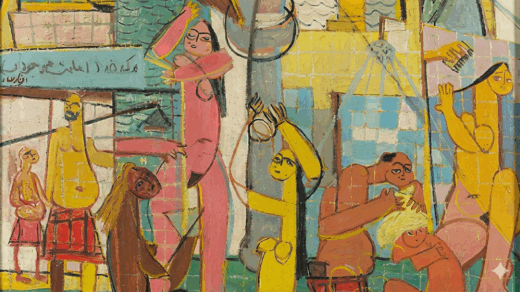
Answer: Many works from different periods of Iran, especially from our Islamic period, bear witness to this claim, and of course, a comparison of the works proves this claim. But so far, no one has engaged in this comparison as they should, except rarely, when some curious individuals and enthusiasts of artistic research have noticed this point. For example, Herzfeld and Christy Wilson refer to some images of the pre-Islamic period of Iran where chivalry and heroism were shown in these motifs a thousand years before reaching the same degree of chivalry in Europe. Also, in the case of recent European painters, some have given the opinion that they were inspired by the colorings of the artists of our Islamic period. I would like to speak very briefly about some of the artistic secrets and allusions of Iran and the West, so that with prior familiarity, the understanding of the subject becomes clearer. The patternings of our Islamic period are often multi-faceted. In some cases, they appear rough (just as Westerners call it Fauvism in their work). In some cases, they are geometric (which Westerners call Cubism in their work). In other cases, the motifs are abstract (which Westerners call Surrealism). Many others have a joyful and eye-catching symbol (which Westerners consider Impressionism in their work), and so on.
The pictorial works of our Islamic period are very strong in these few cases, especially in terms of interpretations and allusions. In this talk, we must suffice with a brief comparison and definition. Because the social analysis of artistic schools and dealing with the emotional effects of each has a long explanation and requires another seminar of several days. In my opinion, only dealing with the comparison of some Iranian and Western works and discovering the historical priority of each is sufficient for our purpose. But, as an introduction, I must submit that every style of work comes into being according to the situation and social position of each people. The social positions of the people, due to emotional fluctuations and the transformation of thoughts, do not always remain on one course, and their works are not always cast in one mold and in a uniform shape, and do not turn into repetitive traditional arts; rather, a foundational school sometimes manifests in several secondary forms, and it may also deal with individual and abstract contents (outside the dominant thought in society). This is a general rule (just as the Islamic thought in the Islamic period was the dominant thought in society, but the Islamic schools were diversified). In any case, at that time when the Fauvism style came into serious use in the West (around the 19th century AD), the rough Iranian Fauvism, whose cause was the massive and stormy movement of the Muslim people, subsided during the first few centuries of Islam as it took on refinement, order, and arrangement. For Western Fauvism to reach this stage, there was an eight-century gap between Iranian and Western Fauvism.
With the permission of my esteemed professors, I submit that “Fauve” refers to wild beasts, and Fauvists are those artists whose work, in terms of coloring and design, suggests bad temper, moral violence, and combativeness, and we know that this violence is born of dissatisfaction and brings forward frankness without consideration, bitterly and sullenly. Whereas the Fauvism of the Islamic period is a gradual and, in proportion to success, suppressed roar, which the veil of politeness, sanity, and Islamic morality has enveloped, and it is in the form of a burning fire that is both consuming and warming and pleasant.
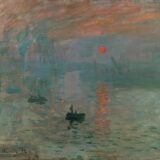
Since in the pictures under consideration, for comparison, a name must be mentioned of their working style, I ask permission to present an interpretation of two or three other schools in the utmost compression. Impressionism, which means impression-making or impression-receiving, and Pointillism, which is a style in the form of dotting (and is itself born of the school of Impressionism), are both agents of emotional suggestions (of the optimistic kind, and openness and expansion of the spirit) and are considered among the strong manifestations of our pictorial designs, and it is this very Iranian style of the Islamic period that has attracted the attention of modernizing Western artists, becoming the source of their inspiration. Since Impressionism presents kindnesses and changes distances into proximity, it is the presentation of warm and sincere emotion.
Cubism, or the volume and geometric design, in the West tells of the machine age and the bitterness of life in this era. But Islamic Cubism has reached moderation and balance, and suggests a regulated economy, and its suggestions speak of inner peace. Perceiving these states is possible through awareness of the social temperament, the ruling custom in society, and the moral and religious power of each society. Surrealism, which means “superior truth,” is in the West in the form of nightmares, screams, and bewilderments. In some cases they have done justice to the subject, and the representation of the turbulent interior in them has been presented with power. But Iranian Surrealism, which is prior to Western Surrealism, is a style that has not been used to display nightmares and distress, but is only freed from the bounds of ordinary image-making. It has not raised dreadful screams, nor shown impatience in the face of the difficulties of the times. Because a restraining and soothing power with the slogan “Patience is the key to relief” has compelled the Iranian Muslim artist to make use of the Surrealist style to the extent of self-restraint and self-possession.
The last matter that I must submit is the understanding of the paintings of our Islamic period and the opinion of Westerners in this regard: “Western connoisseurs (especially some of the most enlightened among them) object to the type of judgment of Westerners regarding their way of looking at our painting and have said: that the way Westerners analyze the art of the Iranians is not correct. Because the Iranian takes art together with a craft in the service of life and as a necessary matter (not as a separate taste apart from other affairs of life).” (The Golden Age of Persian Culture, Richard N. Frye, p. 192)
Jean Buhot (the French researcher) has written: “The Islamic art of painting of Iran did not remain limited in its center, but penetrated to the surroundings. But the inhabitants of the West can never, as they should, realize the true value of Iranian painting, because the West sacrifices everything for light and shade and the form of subjects. The Impressionists, too, are far from the brilliant and uniform environment of Iranian painting, which resembles a large and beautiful piece of a burning diamond. However, recently, for about thirty or forty years, French painters have found the way to realize the true value of Iranian painting. ‘Matisse,’ ‘Bonnard,’ and other painters have taken the joyful aspect of colors and strive to abstract it from the external object. ‘Braque’ noticed the special grace and beauty of broad surfaces in Iranian Islamic paintings and has drawn inspiration.” (History of Iranian Civilization, in collaboration with a group of European Iranologist scholars, pp. 328 and 331)
Even in this period, Henri Matisse is one of the supporters of Iranian techniques. He possesses a very exquisite collection of precious works of Iran and confesses that Iranian-Islamic methods have influenced his art. (This subject has been brought by Herbert Read in his book “Art Now.” He writes: “There is no doubt that Matisse has dealt with distant sources (such as Iranian and Chinese paintings) and sought the qualities of color harmony, and entered them into his new art.” (The aforementioned book, p. 49) “Likewise is the interest of ‘Frank Brangwyn’ (the famous contemporary English painter and etcher) who confesses that very excellent examples of Iranian-Islamic techniques have had an influence on the general styles of the world’s techniques, and in this regard the world is indebted to the artistic services of the Iranians. Likewise is the opinion of ‘William Rothenstein’ the Englishman, who has deep studies in art and in his works has made adaptations from Iranian art.” (Iranian Industries After Islam, p. 310)
In addition to these matters, we must know that the imitation of Iranian art from the 17th century AD onward (contemporaneous with the Safavid period) became more common among European artists. Rembrandt, the famous Dutch painter, executed many works in the style of the drawings of Master Reza Abbasi. The drawing style of Reza Abbasi has left a great influence on artistic and Dutch paintings. The old masters believed that if a student imitated and worked after the master’s work, he would gain capability. For this reason, artists and masters considered even copying the work of the old masters accepted by them to be worthy. Rembrandt also did such a thing.