by
by This article was machine-translated from the original Persian and may contain inaccuracies.
The text of the speech by Parviz Kalantari on the occasion of the tenth anniversary of Jalil Ziapour, organized through the efforts of Hassan Hamedi (managing director of the biweekly Tandis), Barg Gallery, 10 November 2009

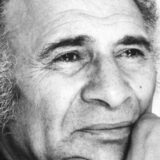
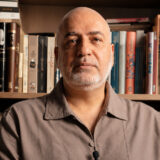
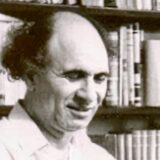
Master Parviz Kalantari, painter and writer
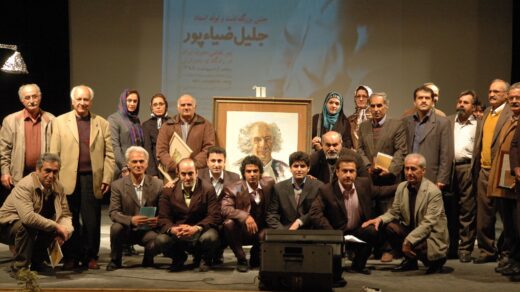
Parviz Kalantari (painter) spoke on 9 November – at the specialized art symposium in “Barg Gallery” – about Jalil Ziapour, the father of modern Iranian painting. You can read the text of this speech below:
Jalil Ziapour was, in the true sense of the word, an intellectual and a revolutionary artist, and he is considered the standard-bearer of modern painting in Iran. Contemporary Iranian painting in a way begins with the Kamal-ol-Molk period, which, influenced by Renaissance art, came from Europe to Iran, which had no familiarity with such painting, and in this respect, it was considered a kind of transformation in the modern arena.
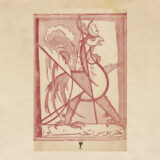
Kalantari stated: Modern art, as the art of the twentieth century, was launched after World War II through Jalil Ziapour, who had come to Iran from Paris. By forming the “Fighting Cock” (Khorus Jangi) Association, he had influenced the art students of that time to such an extent that all of us thought we had to fight against anything that took the form of vulgarity.
This painter, describing the atmosphere of the Fighting Cock Association at that time as intertwined with conflict, stated: When this group held exhibitions, it would lead to fights and arguments, and in a way, the traditionalists could not tolerate Ziapour’s words in the field of modern art. This was while Ziapour had become known and caused a stir in Iran by introducing the name of Picasso and the school of Cubism.
He noted: Opposition to modernity in Iran has a thousand-year history, but the strange thing was that an individual like Ziapour, who is considered the father of modern art in Iran, underwent changes after a while.
In those years, Iran was shedding its skin and, in a way, was transitioning from the period of feudalism to national capitalism, and representative offices for various goods had been set up in Iran. In parallel, with the arrival of Western cultural goods and modernity, representatives such as Cubism and the like had been created in the country by artists.
Referring to Jalil Ziapour’s activities at this juncture, he recalled: Ziapour acted to open the way for subsequent generations through this anti-traditionalism. But he soon underwent a strange change and transformation and, like all great artists of history, was confronted with serious questions.
Interpreting these questions, Kalantari stated: Faced with the question “Who am I and what am I doing?”, Ziapour began numerous journeys to all parts of the country, and in these wilderness wanderings he became aware of many issues. For he had gone to see who he was and where he stood. During these travels, he depicted the life of tent-dwellers in his paintings, and later I saw examples of these works in the Anthropological Museum, which had been established through the efforts of Hannibal on Arameneh Street.
In another part of this session, this painter, referring to Ziapour’s trip to the city of Kerman, recalled: At that time, Ziapour goes to the Ebrahim Khan Bathhouse and meticulously depicts the Qajar-era frescoes featuring the image of the battle of Rostam and the White Demon. While he is someone who has fought the traditionalists for years, faced with a question that has preoccupied his mind he undertakes research, and it is this very question whose result becomes the brickwork patterns and structures of his paintings.
He pointed out: In another part of his travels, Ziapour takes notice of the history and mythology of the land of Iran, and in line with these very travels, in cooperation with the Department of Culture and Art of the time, he organizes provincial exhibitions without any shortcomings, and after that, he begins his collaboration at the “Shahnameh Foundation” alongside Behrouz Golzari.
He said: Attention to Iranian mythology draws Ziapour’s attention to the Shahnameh, but unfortunately, the work of this foundation did not last, and perhaps if his activity had continued, today we would see peerless works from the Shahnameh.
Kalantari stated: In the continuation of his research, Ziapour arrives at the history of Iran and research activities, and at this very time, he publishes the decisive book “Iranian Dress”. He examines the tailoring of these garments with precision and scrutiny, and compiles all the details of this field into a book; hence, in my view, Jalil Ziapour is considered, in the true sense of the word, an intellectual and a revolutionary artist.
At the end of his remarks, this painter said: An intellectual is someone who lives by posing questions, just as Ziapour, throughout his life, was seeking to find answers to numerous questions, and in this respect, he is considered a revolutionary painter because he was able to discard the old methods and create a new method.