by
by Parviz Kalantari’s note on Jalil Ziapour, titled “Ziapour Like a Fighting Cock”, taken from the book “Nietzsche, No, Just Say: Mashd Esmail”, Abi Publishing, Tehran, first edition, 2004.

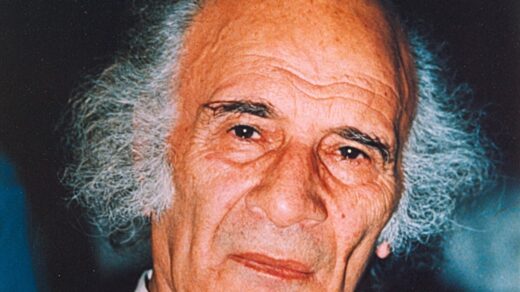
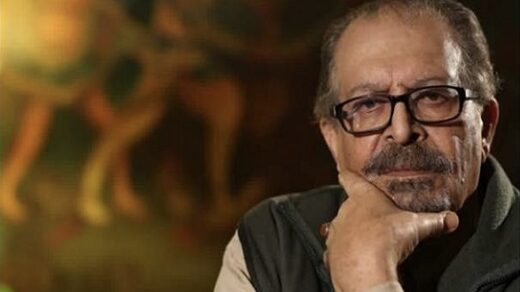
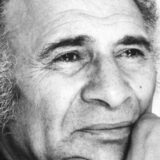
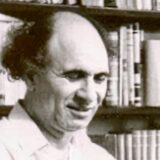
The late Master Parviz Kalantari; contemporary Iranian painter, designer, writer, illustrator, and journalist, and one of the prominent modernist painters of Iran
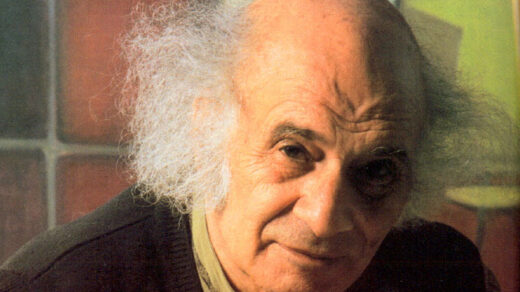
This note, written by Parviz Kalantari (painter and writer) about Master Jalil Ziapour, was read at a ceremony held in his honor. Recalling Master Ziapour’s paintings of tent-dwelling, Kurdish, Lur, Turkmen, and Baluch women, Kalantari raises the question of why such a heritage is not accessible in any museum. The text is taken from the book “Nietzsche, No, Just Say: Mashd Esmail”.
Cock-a-doodle-doo! The rooster crows
From within the hidden seclusion of the village,
From the descent of a path which, like a dry vein,
Runs blood through the bodies of the dead,
Weaving upon the cold wall of dawn,
Permeating every corner of the plain.
Cock-a-doodle-doo! On this dark path
Who is it that is left behind? Who is it that is weary?
Ring… ring…
– Hello?
– Hello, I am Mashhadizadeh. Has the invitation card for Ziapour’s commemoration reached you?
– Hello. Yes, it arrived. How are you?
– Tonight you must give a speech.
– Why me?
– Because most of those who were in your age group have joined the divine mercy.
We are stuck in a traffic jam on a one-way street. At the end of the street, a massive crane is at work raising the iron beams of a tall building.
– I will probably arrive late to the memorial gathering, and I still have not chosen the topic of my speech. It is obvious that others will speak in detail about Ziapour’s biography and works. The desire to see his paintings flames in my heart.
– The tent-dwellers: rich colors from the orange fire of the oven and the dark clothing of the women; the one who weaves a kilim, the two who bake bread, and the other who shakes the waterskin against the background of the soft colors of the tiles.
– The Kurdish woman of Sanandaj with red clothing against a tile background.
– The Lur girl.
– The Turkmen girl – with long braided hair against the background of carpet and felt.
– The Baluch woman with the patterns and designs of needlework on her dress.
Where and how can one see those vast, colorful works?
The sound of the horns of the cars trapped in the traffic jam deafens the heavens.
– There is hardly any time left before the speech, and I still have not found the topic of my talk; along with the stranded cars in the traffic jam, little by little and backing up, we escape the predicament of the gridlock, and suddenly I, too, am freed from the gridlock of choosing a speech topic.
The book on the life and art of Hushang Irani, which has recently been published, is being presented simultaneously with the commemoration of Jalil Ziapour.
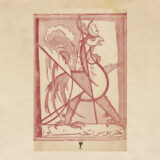
The book had been written through the efforts of Sirus Tahbaz under the title: The Peerless Fighting Cock (Khorus Jangi), a copy of which Siavash Tahbaz gifts to me.
The tumultuous years of the Fighting Cock and its controversial sessions pass through my mind like a fast-forward movie. I open the book; Hushang Irani’s “Lozenge” poem is before me.
Unio Mystica
A
A, ya
“A” bun na
“A,” “ya” bun na
Aaom, oman, tin taha, dizhdaha
Mig ta odan: ha
Homahon: ha
Yendo: ha
Ha
The hall is full, and there is a lot of coming and going and greeting. Someone from among the crowd approaches me. He has thick curly hair, with pince-nez glasses and a high collar; while he is smoking a pipe, we stare at each other for a moment. He looks familiar. He bears a close resemblance to the image of Jean Cocteau. My God, where have I seen him? Memory does not help. He whispers in my ear:
– Say this very thing.
– What?
– Raise this very question: How and where can Ziapour’s works be seen?
He disappears into the crowd.
In the name of God, and greetings,
At this moment, the desire to see the late Jalil Ziapour again burns so intensely in my chest that I ask myself: Truly, where and how can these works be seen? Therefore, in this talk, I will raise this very serious question.
According to what others in this gathering have said about his biography and works, Ziapour is rightfully the standard-bearer of sixty years of modern Iranian painting, and the stature of his personality and works is such that it would be fitting for his works to be displayed in a dedicated museum in his own name.
In general, the neglect regarding these sixty years of modern Iranian painting and this precious heritage has been a blasphemous error, and even now no worthy action has been taken in this regard so that we might see these works on the wall of a museum. And this is while the entirety of this metropolis, Tehran, is a forest of construction.
Consider its area from Khak-e Sefid to beyond Karaj, and from the heights of Alborz to beyond Eslamshahr; this is the massive empire of speculative builders. Brick, cement, iron beams… and all this construction.
But alas, not even a four-walled space to display its heritage of painting.
One night while we were asleep, they cut down the trees of our city and planted iron beams in their place. I do not think that anywhere in this vast world there is a city like Tehran, with all this construction.
Truly, then: do iron beams – brick and cement and concrete define the city? Or does the city have another definition?
Forty-five years ago, when I was a student at the Faculty of Fine Arts in Tehran, most modern architecture publications had dealt with the city of Brasília. Brasília, as the emblem of the most modern city in the world, had been designed by the vanguards of modern architecture of that time: Oscar Niemeyer – Walter Gropius and Le Corbusier and others. Among the features of this city was unobstructed “circulation” (Circulation), which for the first time made movement easy through the design of cloverleaf interchanges. In short, this modern city had been praised by all the analysts of that time.
Until one of the Italian experts, by raising this very question: Are cities defined only by building materials? as the saying goes, tore it to shreds?
Opposite Brasília stands the city of Rome. The city of Brasília, with no need for red lights in its traffic, is a city lying asleep in silence. But the city of Rome is alive and full of tumult through people’s encounters with one another.
In fact, Brasília, with all its technological achievements, is like a modern cemetery of steel and concrete.
The author, in defining the city, concludes thus: a city means people’s encounters with one another, which creates the unique culture of its inhabitants, along with the memories and history of that city.
But truly, what can we say about Tehran, a city that has lost the memories of its past at the hands of speculative builders?
Once, in a speech in the past, I had said: we all had memories of this famous poem by Fereydun Moshiri:
Without you, one moonlit night, I passed again through that alley…
I had said, why, while the poet is alive, do we not go and ask him: where in the city is this alley located, so that we may go find that alley and name it after Fereydun Moshiri?
A few years ago, on the occasion of the publication of Ja’far Shahri’s multi-volume book titled The History of Tehran from…, a gathering had been held to honor the scholarly work of that great man, and I too, on that occasion, had said in my speech: if the mayor of the city has paid attention only to the physical body of the city in the new construction of Tehran, Ja’far Shahri, by publishing his scholarly book, revives its forgotten memories. But for such a great work, what reward can today’s Tehran give him?
So it is fitting that at least one of the city’s parks, or one of its countless cultural centers, or one of the libraries of these cultural centers, be named after him.
The late Ja’far Shahri was alive at that time, and from hearing the various speeches honoring and praising his work, and at the end from receiving an award on this occasion, tears of joy appeared in his eyes. But what a great pity that he passed away and the city of Tehran did not discharge the debt it owed him. It seems that this city is only the city of speculative builders, and remains ungrateful in return to the servants of culture and art.
And therefore, unfortunately, the founding of a museum for the works of Jalil Ziapour seems far beyond expectation.
At the end of the speech, a group of students had surrounded me with their questions.
I was only able to answer one or two of their repeated questions.
– Since when have you known Master Ziapour?
– What were the activities of the Fighting Cock Association?
The radio and television reporter also wanted a short interview to prepare his program. I was in a hurry to get home sooner, and getting rid of them was not easy. Upon leaving the faculty, in the alley I noticed the tall semi-constructed building, where the long neck of a crane, like an iron heron, had taken a massive iron beam in its beak to install at the top of the sky-scraping building. With my head in the air, I was busy watching when suddenly I was bumped by a passerby so hard that I was sprawled on the ground. A familiar sound of laughter reached my ears, saying: Still the same absent-minded schoolboy!
The voice came from the very person who, like Jean Cocteau, had curly hair and pince-nez glasses. He handed me my glasses, which had fallen two meters away, and helped me get up from the ground. Laughing, he went off with Mashhadizadeh.
Now I remembered that he resembled Ziapour. When he was our painting teacher at Sharaf High School. (Kalantari, Nietzsche, No…, p. 268)