by
by This article was machine-translated from the original Persian and may contain inaccuracies.
Article by Jalil Ziapour, titled “Commemoration of Master Ali Mohammad Heydarian, the Renowned Painter, at the University of Tehran”, Ettela’at newspaper, 26 December 1977

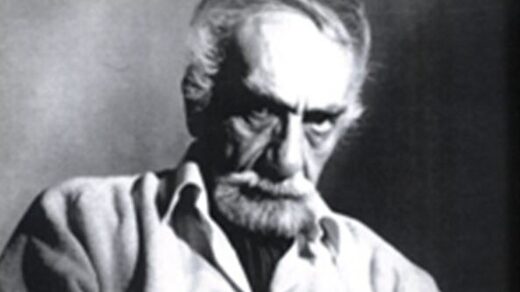
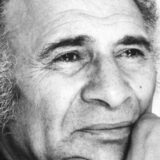
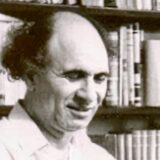
Master Ali Mohammad Heydarian, painter and student of Kamal-ol-Molk
Ettela’at newspaper wrote:
Jalil Ziapour said: “With Heydarian, we once again came to know nature (in another way).” The commemoration of Master Heydarian is the honoring of a cultured university master, and an expression of gratitude to an artistic man who has spent his life in the path of Iran’s art and culture. Ziapour, who is himself a student of Master Heydarian, spoke with precision in his remarks about the moral qualities and the characteristics of his master’s works:
Master Ali Mohammad Heydarian, may his life be long, is now in the eighty-first year of his life. I attained the master’s presence from the time when the University’s Faculty of Fine Arts was established under the name of College of Fine Arts at the Marvi School. I saw a being of commanding stature, with neat attire, and a dignified and serious face.
We were thirsty for any word that would add to our awareness and help us in advancing our work. During the few years that I was in his presence (whether at the Marvi School or at the University), I realized that he strove to make our vision familiar with nature, with which he himself was captivated. From the content of his words, it became evident that from the very time of his adolescence, he had been among the youngest of the few pupils of Kamal-ol-Molk and had engaged in painting; and from that same time as well, he possessed a perception and vision beyond the vision of the people of the era toward the world of life and nature, and was traversing a realm other than these realms with which we are familiar. It was as though he belonged and still belongs to another world, far from this desperate world. While speaking, with the utmost spiritual strength and self-control, he showed that he suffered from this turmoil of the lives of pitiable human beings.
Until before the establishment of the College of Fine Arts and the relocation there, he had been among the valued masters of the Kamal-ol-Molk School. Later as well, when he undertook the guidance of art students at the College of Fine Arts and then at the Faculty, with “complete love, on each appointed day early in the morning, like a man of God and one tasked with guidance (in every season and heedless of wind and rain, age and its demands), he would make his way on foot from Farhang Street (in Amiriyeh) to the University; and when he entered the studio, he would be met by the expectant gaze of the art students who, knowingly or unknowingly, prayed in their hearts to their pure-hearted guide, and with a smile that told of his inner purity, he would graciously show affection to each one, and with ardor, would sincerely offer as guidance what he had accumulated over long years and with great hardship.
It was understandable that he himself possessed an unparalleled vision in his attention to nature, recognized the slightest shade of difference in color, and knew their chromatic composition. Without any effort, he would decompose the compound color of nature and recompose it identically, and believed that “if the artist’s vision is trained, all the proportions of his work will also be correct. But this work requires love, and the artist must be in love with his work and, on the path of art, make inner purity and love the source of progress,” and he himself looked upon nature with an eager gaze and saw and sought a thousand and one secrets and mysteries in it, and the external manifestations of nature, although they were a door to another world, appeared superficial in his view. For this reason, his findings made his works appear more delightful, more colorful, and more captivating. In his view, bad did not exist. It was man who saw badly.
The master prepared each of his works with the utmost precision, sincerity, patience, and delicacy, and out of fidelity and sanctity. When he altered nature in accordance with personal taste and relocated something in the painting according to his own desire, placing a tree, a branch, or a bush from one place to another, he would set them in such a suitable place and harmonize them so well with their surroundings that no suspicion of foreignness, misplacement, or detachment arose in them.
In the master’s works, features and effects are more alive, and taste, touch, sight, hearing, and smell are intensely perceptible. The bitter and sweet taste, the murmur of flowing water, and the smell of grass are felt. Mud walls and every other phenomenon determine their own age, and the landscapes specify the hours of the day. And the clarity of water appears clearer than what it is, and the greens show their ultimate benefit from dampness and moisture. The heaviness of heavy air and the lightness of thin air (with which one could eagerly fill one’s chest) are felt in his works. The degree of vitality of any being that has come to life by the master’s hand does not appear less than what it is; rather, he has observed and presented gratitude and appreciation toward the Creator more vividly than what it is.
The master has such intimacy and familiarity with all elements of nature that he has no sense of self and other with them, and considers life to be entirely continuous in them, and with an inquisitive gaze, he has a mysterious companionship with all those elements and lives with them. It is for this reason that his creations possess a distinction further and more expressive than those of renowned and conventional painters of nature. The master did not like fussiness, but he had and has faith in the correctness of the work. He accepted simplification to the extent that it would not kill the purpose and would not cause inadequacy. In his works, laborious effort to achieve the purpose is never visible. His coloring appeared immaterial, and like a compressed space, his works are colorful but intangible.
Following through with the master’s work is extremely difficult, even for the veterans of this era who are grappling with a thousand and one disorders. For centuries must pass before one who has sacrificed life and wealth, one seasoned in the crucible of trial like Master Ali Mohammad Heydarian, succeeds in shining at the summit of artistic honor, and not everyone can bring this path to an end.