by
by Mohammad-Reza Rashidi-Far’s conversation with Iraj Eskandari (painter), titled “The Course of Developments in Modern Iranian Art and the Activities of Some Innovative Iranian Artists”, Iran Seda website, 25 June 2010.
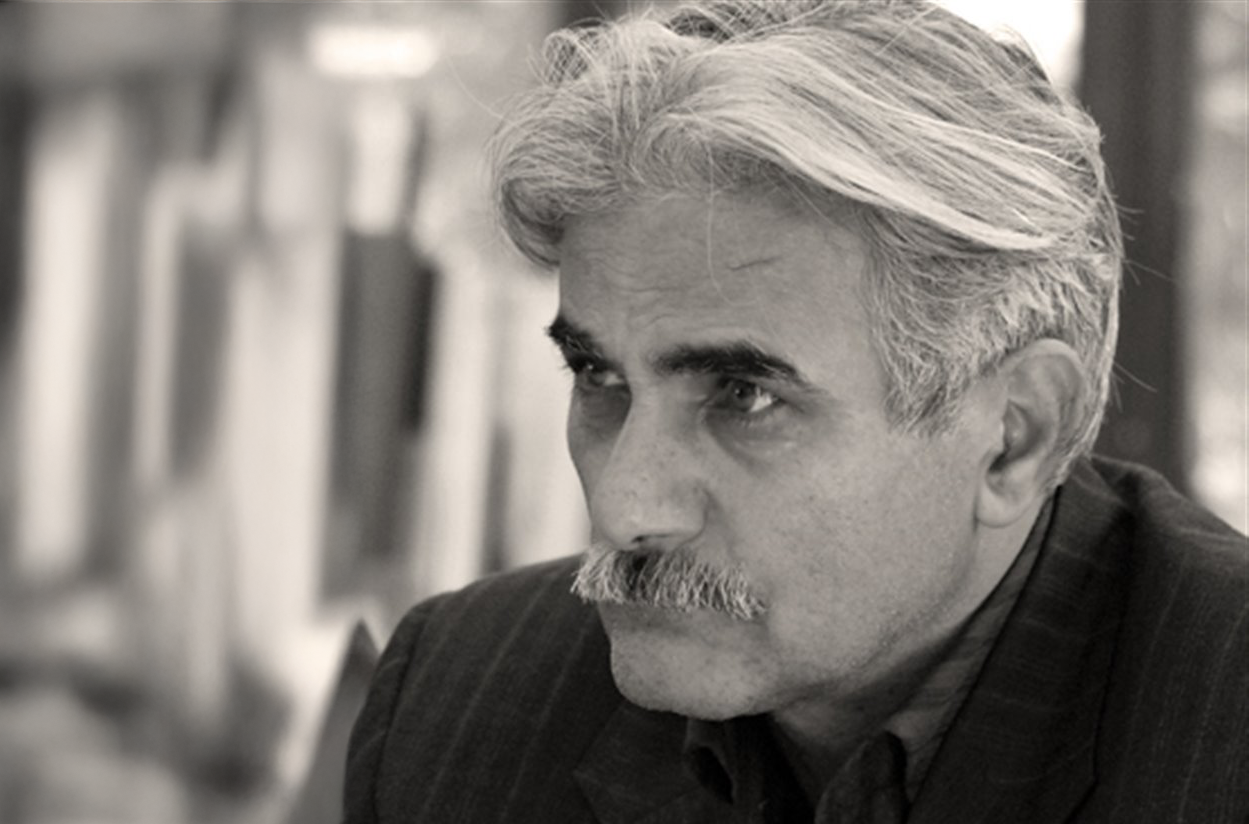
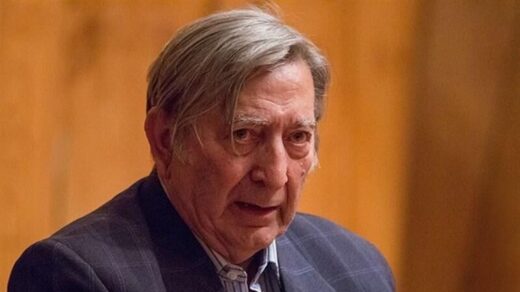
Dr. Iraj Eskandari, painter and sculptor
The starting point of the modern Iranian art movement must be considered the year 1941, which coincided with the fall of Reza Shah’s government and the occupation of Iran by foreign forces. The events that occurred in the world at the beginning of the twentieth century, including the First World War and independence-seeking and anti-colonial movements, also revealed the necessity of creating change and transformation in the social, economic, and cultural structures in traditional societies. Traditional societies, including Iran, took the new manifestations of Western industrial countries as their model. In Iran, this emulation took place without regard to the real conditions and needs of the society.
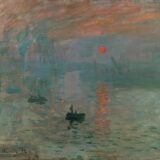
Before the entry of the cultural and artistic manifestations of modernism into Iran, the school of Kamal-ol-Molk was considered the representative of the country’s official art. By training numerous students, Kamal-ol-Molk established a school that for a long time cast its shadow over the sphere of Iranian painting. However, the establishment of the Faculty of Fine Arts at the University of Tehran to some extent undermined the absolute dominance of the Kamal-ol-Molk school. André Godard, the French Iranologist, and several other foreign teachers, along with some of Kamal-ol-Molk’s followers including Ali Mohammad Heydarian, began their activities at the Faculty of Fine Arts. With the presence of individuals who believed in naturalism in art, the dominant atmosphere of this faculty was opposed to modernist movements. Nonetheless, a tendency toward modernism began among some of the students. The first painting exhibition with an approach to Impressionist art was held at the Iran-Soviet Cultural Association in the year 1945. Impressionist tendencies at the Faculty of Fine Arts took on a Post-Impressionist form through the activities of painters such as Ahmad Esfandiari, Abdollah Ameri, Mehdi Vishkaei, Manouchehr Yektai, and Hossein Kazemi.
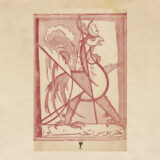
During these years, painters such as Javad Hamidi, Hossein Kazemi, Jalil Ziapour, and Mahmoud Javadipour went to Europe to continue their education. Jalil Ziapour, in Paris, in the studio of André Lhote, became acquainted with modern Western art, particularly the style of Cubism. Upon returning to Iran, he launched an association and a journal under the title of “Fighting Cock” (Khorus Jangi), in which he passionately promoted modern painting and condemned reactionary tendencies. In this way, the battle between modernism and traditionalism in the fields of art and literature began. Among the literary figures who collaborated with Ziapour’s journal was Nima Yooshij, the father of Iran’s new poetry.
Coinciding with this movement, the first gallery in Tehran, named Apadana, opened in the year 1949. In this place, modernists such as Javadipour, Kazemi, Hamidi, and Hushang Pezeshknia exhibited their works. The artistic movements that emerged in the 1940s continued during the period of the oil nationalization movement and the years after the coup d’état of 1953. At this time, a group painting exhibition was held at the Mehregan Club, which made the confrontation between the new and old art more apparent. In the year 1958, with the holding of the first Tehran Biennial, which was the most important official government measure in endorsing the modernist movement, a conflict broke out between the followers of Kamal-ol-Molk and the followers of modern art.
Jalil Ziapour was known as the leader and a staunch defender of modernism, and its representative. However, after some time, by setting aside the dogmatic imitation of the style of Cubism, he achieved a personal style. He attained this style through the simplification of forms and the application of subjects and motifs inspired by Qajar art as well as folk and rural art. Thus, Ziapour was among the first modernists who, by using elements of old traditional art, sought to find an Iranian identity for his works. Such a tendency also appeared in the works of other artists, such as Nasser Ovissi and Jazeh Tabatabai.
Another painter influential in the developments of contemporary Iranian painting is Marcos Grigorian. Having studied at the Art School of Rome, upon his return to Iran he tried to promote the achievements of Italian Expressionist art in some way in Iran. Marcos established the Esthétique Gallery in the year 1953 and played a role in holding the first Tehran Biennial. At the beginning of his artistic activity, he dealt with the visualization of human psychological states and catastrophic subjects. His last work in this period of artistic activity was a piece titled “Auschwitz”. Following these experiences, he turned to working with local Iranian materials and combining them with new materials such as polyester.
At the same time, Hannibal Alkhas sought to present a kind of narrative Expressionism with mythological and religious themes in his works, and subsequently created a kind of conscious primitivism in his art. He had completed his studies in the United States, and after returning to Iran in the year 1960, he engaged in training art students at the University of Tehran. By establishing the Gilgamesh Gallery, Hannibal Alkhas drew a number of young painters after him.
Among others who had gone to Europe for art education was Mohsen Vaziri-Moghaddam. Having become active in Italy, he sent a work to the second Tehran Biennial in the year 1960, which attracted the attention of the judges. Vaziri returned to Iran in the year 1964 and became a promoter of abstract art in the arena of Iranian art. In his sculptures and wooden and metal structures, concepts such as the movement of form in space can be observed.
During this period, Hossein Kazemi, after going through diverse artistic experiences, achieved a concise and personal style. In his late works, we encounter the theme of the confrontation and reconciliation of opposites. Kazemi became a great teacher for subsequent generations. In fact, the Iranian modernist movement grew under the guidance of teachers like Kazemi, Shokouh Riazi, and others, giving rise to various tendencies.
In the year 1961, the modern art movement took on a more official form. The General Directorate of Fine Arts, which was later renamed the Ministry of Culture and Art, employed many modernist artists. At this time, an art foundation affiliated with the court was established and mandated government offices to support modernist artists. Holding biennials, granting awards and art scholarships, and providing opportunities for communication with international art circles were placed on the government’s agenda.
One of the influential events in the course of developments of modern Iranian art was the establishment of the Faculty of Decorative Arts in the year 1960. At this faculty, which was affiliated with the Department of Culture and Art, foreign teachers were hired. In fact, this faculty was complementary to the activities of the Faculty of Fine Arts. At the Faculty of Fine Arts, an academic method following the teaching styles of the École des Beaux-Arts in Paris was implemented, whereas at the Faculty of Decorative Arts, students were trained based on the styles of Paris Art Deco. Among the foreign instructors of this faculty were Monsieur Girard and Alain Bayache.
The facilities that the government provided for Iranian artists for the dissemination of modern art placed the modern art movement to a large extent at the disposal of the government’s policies. However, artists and intellectuals who sought a deep and fundamental transformation in contemporary Iranian art reacted in various ways against the official art current dictated by the government. Among the most prominent of these activities was the work of Talar-e Iran, which, after the passing of Mansour Qandriz, was renamed Talar-e Qandriz to commemorate his name. In this gallery, artists such as Mohammad-Reza Jodat, Rouin Pakbaz, Mir-Hossein Mousavi, and Farshid Maleki were active, and alongside their artistic work, they also engaged in theoretical discussions. These individuals mostly continued their intellectual and theoretical activities separately later on.
During this era, modernist painters were each searching for their own personal styles. Mansour Qandriz, after a period of experience in the field of miniature painting, turned to semi-abstract painting, and in this course, tried to find a way to the depths of the ethnic memories of his environment. Sohrab Sepehri, having a background in “Zen aesthetics,” achieved a kind of conciseness in the representation of nature, and while presenting his visual works, engaged in a poetic contemplation of the world and objects. These experiences of Sepehri were reflected in his completely abstract paintings. Abolghasem Saeidi also tried to depict the spirit of an ancient culture in this period by emphasizing traditional elements. This effort of his manifested in the form of displaying leafy, branched trees along with decorative elements.
At the opposite pole from the works of Sepehri and Saeidi are the artistic activities of Bahman Mohassess. Mohassess, with an approach toward a kind of harsh Expressionism, tries to depict the condition of contemporary man. With a bitter and biting language, he presents a rough embodiment of destitute and metamorphosed human beings. His works lacked the delicacies and refinements of decorative art.
The activity of Iran’s official modernist art in this period can be classified into two major branches: the branch of abstractionism and the branch of neo-traditionalism. In continuation of the art of the modern pioneers, painters were active (including Behjat Sadr, Sadegh Barirani, Gholamhossein Nami, Mehdi Hosseini, Sirak Melkonian, and Sonia Balassanian) who were more inclined toward aspects of Western modern art and followed artists such as Marcos Grigorian, Hossein Kazemi, and Mohsen Vaziri-Moghaddam. In the branch of artists who tended toward combining traditional elements with the styles of modern art, one may mention Massoud Arabshahi, Jafar Rouhbakhsh, Parviz Tanavoli, Nasser Ovissi, and Jazeh Tabatabai, some of whom later came to be counted among the painters of the Saqqakhaneh school.
The origin of the painters active in this school was the Faculty of Decorative Arts. The activity of this group of painters attracted the government’s attention. They sought, in some way, to reconstruct the heritage of the past in contemporary forms. This style, because it won points in international artistic circles by virtue of possessing an Iranian identity, attracted the attention of the cultural functionaries of the time, including Firouz Shirvanloo. In the fourth biennial, held in 1964, this group of painters won prizes. Although in the preceding years some modernist artists had turned to the subjects and materials of traditional art, this current, in the fourth biennial, with the support of the functionaries, took on an official and governmental aspect.
Among the painters who expressed traditional subjects in modern styles was Jazeh Tabatabai. In his sculptures, while turning toward folk art and the figures of Qajar art, he paid attention to the methods of European modern art, such as the method of assemblage, whose standard-bearer in Western art was Picasso. By opening the New Art Gallery, Jazeh Tabatabai had a considerable effect on the promotion of modernism in Iranian art. In Parviz Tanavoli’s sculptures, too, one can observe a return to ancient symbols and legends, such as Shirin and Farhad. And in this connection, one can also refer to the works of Mansoureh Hosseini, who in her paintings, with an inclination toward calligraphy, presents compositions with an approach to traditional art.
In later years, the painters of the Saqqakhaneh school distanced themselves from their previous activities and turned to other styles. Hossein Zenderoudi, after departing for Paris, set aside folk and talismanic motifs and, in pursuit of presenting visual qualities, created his works in entirely different manners. This matter indicates that the approach of some of the artists who initially paid attention to categories such as tradition and identity was not accompanied by theoretical and doctrinal dimensions.