by
by This article was machine-translated from the original Persian and may contain inaccuracies.
An article by Touka Maleki entitled “The Glad Tidings of Dawn with the Cock-a-Doodle-Doo of the Fighting Cocks (Khorus Jangi)” on the occasion of the tenth anniversary of Jalil Ziapour, through the efforts of Hassan Hamedi (managing director of the biweekly Tandis), Barg Gallery, Tuesday, 10 November 2009

Touka Maleki, writer and researcher
Touka Maleki, researcher and writer, read the long article she had written about Ziapour on the occasion of his tenth anniversary on the day of the ceremony held for him. In this article, she referred to Ziapour as one of Iran’s modernist artists alongside Nima Yooshij, each of whom brought about a new movement in his own branch of activity. Below you can read the full text of the article.
Allameh Dehkhoda regards khorus jangi (fighting cock) grammatically as a “descriptive compound, a compound noun,” and its meaning as “a cock that has been prepared for fighting,” and there is a note in Dehkhoda’s hand that takes fighting cock metaphorically to mean someone who, without cause, wants to fight with everyone; in other words, he is “quarrelsome.” Dehkhoda says: “This expression is used mostly of children.”
It seems that other dictionaries come to terms with this compound more fairly than Dehkhoda. Other dictionaries take “fighting cock” metaphorically to mean “adventurous people fond of quarrels.”
Later, after the late Jalil Ziapour’s return from France and his proposition of a struggle against the worshippers of the old in art, and especially in painting, and down to our own time, this compound has been equivalent to Jalil Ziapour himself. Each compound calls the other to mind. But I understand it, with a positive meaning and charge, to include all those who have something fresh to say; there is no quarrel or conflict, and if there is, it comes from the opponents of the modernists.
Simply by the fact that in every age, those who have a quarrel with traditional culture and art, or in Ziapour’s words with “retrogression and reaction,” and who themselves bring about a fresh and modernist current, the number of “fighting cocks” increases. Seyyed Mohammad Ali Jamalzadeh and Sadegh Hedayat on a more general level, Gholamhossein Gharib Gorgani in the circle of Ziapour’s companions, the fighting cocks of fiction writing; Nima Yooshij on the level of Iran’s modernist poetry and Hushang Irani in the circle of Ziapour’s companions, the fighting cock of poetry; and Jalil Ziapour the fighting cock of painting, and other fighting cocks in other fields of art, from playwriting to music; and let us come nearer, to other fields, for example Ebrahim Golestan and Farrokh Ghaffari in cinema, or Abbas Nalbandian in the field of theater, or Alireza Mashayekhi in the field of music; and what is interesting is that from this male bird, children are continually produced. In our own time, see how many fighting cocks we have in all fields of art, and all of them, without cause and with cause, and rightly and wrongly, have a quarrel and fight with others.
It is customary at ceremonies such as this to speak of the greatness of the person whose commemoration is being held and of the merits of his works; and I too believe that the late Jalil Ziapour, as one of the pioneers of modernist painting, holds a lofty place in the art of Iran today. It was through his daring, courage, and steadfastness, and his spirited struggle against the worship of the old that he was able, like Nima Yooshij, to pour water into the ants’ sleeping place. The late Jalil Ziapour, regarding the how, what, and why of the “Fighting Cock” movement, utilizing a verse of poetry by a traditional poet as “the basis of his slogan” (in truth, his own and that of his companions and like-minded colleagues, with the use of the first-person plural pronoun), said: “We left no retrogression or reaction unanswered, and insofar as our awareness allowed, we decisively pushed aside and exposed the factors of deterrence and profiteering. In reality, Fighting Cock had a struggle against the worship of the old and traditionalism divorced from the realities of the time.”
Although that verse of poetry by the traditional poet, Farrukhi Sistani:
The tale of Alexander became legend and grew old / Bring forth new speech, for the new has a different sweetness
reports the passing into fable and into history of the tale of Alexander (and we do not know what was meant by the tale), yet it asks its audience to bring new, original, and fresh speech, because this innovation, in contrast to the bitterness of oldness, has another sweetness.
In 1949, Jalil Ziapour introduced himself as the initiator of Iran’s modernist painting and as an informed theorist in the field of modernism in painting, and proceeded to establish the Fighting Cock Association, which was a progressive gathering in the field of setting forth the spheres of modernist art, especially painting, literature, theater, and music.
Here, to the extent of our means and time, an effort is made to see whether the controversial initiators of new poetry and new painting (Nima and Ziapour), to whose account all the quarrels and conflicts of the new and old were written, were real and genuine fighting cocks?
The answer is clear: No.
Both Nima Yooshij and Jalil Ziapour were too conservative to be real fighting cocks, though of course this conservatism is not a negative matter but a very positive and logical one.
They threw into disarray minds habituated by an addiction of a thousand and some years, but both Nima and Ziapour were the true continuation and evolved form of ancient works of art. They were the overturners of the apparatus of antiquity and the worship of the old. They broke the barrier and obstacle and showed their companions the new path. For example, if Nima Yooshij realized the necessity of breaking the hemistichs and, while preserving the basis of prosodic meters, shortened and lengthened the equal length of the hemistichs, later on, Ahmad Shamlou, in the poem “Roxana” (in the book Fresh Air), brought each hemistich of his poem to several lines. You can see this same instance in Ziapour’s paintings, with what caution he transforms the visual form; and if not simultaneously, then during his own lifetime he witnessed that the painters following his school were more Picasso than Picasso. They and the other fighting cocks in other fields of art became shields against calamity in conditions where splitting the roof of the heavens and casting a new design required going step by step, or in other words, proceeding gravely and with composure. For the very essence of their “movement” was confronting a society that, in the bed of its own tradition and habit, could not endure battle and dispute.
Ziapour himself says of this conservatism in his works: “The importance of my impression of the colors of nomads, tribes, and clans, and also my simple and composed innovation, is comprehensible to anyone familiar with the work and possessed of insight who applies a gentle gaze and thought.”
Let us recall the banning of the magazine and the hauling of Ziapour before the administrative offenses court and his interrogation, which seems more like a joke: he was asked who had assigned him to propagate Cubism? And why he spoke about Cubism? After Ziapour’s explanations regarding Cubism, an apology was made to him for the banning of Fighting Cock magazine, and he was told: “We thought Cubism meant Communism!” Or let us recall that quotation from Jalal Al-e-Ahmad about Nima Yooshij: after the coup of 19 August 1953, the old man was anxious lest they come after him, asking, “Why have you ruined poetry?”
In pursuit of the fighting cocks, a review of the formation of the Fighting Cock Association and the publication of a magazine of the same name is necessary.
The members of the association can be examined in two periods:
The first group, from the year 1949: Messrs. Gholamhossein Gharib Gorgani in the field of literature, Hassan Shirvani in the field of theater, Morteza Hannaneh in the field of music, and Jalil Ziapour in the field of painting, who also had charge of the association’s management. With the aim of enlightening minds regarding modernist art, the association began publishing a magazine of the same name. At the very beginning, Hannaneh withdrew because of differences of taste, but later published scholarly articles on Western music.
In the year 1951, Hushang Irani (poet) found his way into the association, while Ziapour chose to distance himself from the association. Ziapour says: “With Hushang Irani’s entry into the association, his insulting radicalisms caused me to withdraw myself from the gathering of friends.” Thus the association was formed with the presence of Messrs. Gholamhossein Gharib, Hassan Shirvani, and Hushang Irani, and the second group came into being.
Fighting Cock magazine was also published in two periods:
Publication of the first period (1949 to 1950): in this period 5 issues of the magazine were published under the supervision of Ziapour, Shirvani, and Gharib, and on the back cover of its issues, this writing appeared: “Under the supervision of the Fighting Cock Art Association. Our aim is to raise the level of public knowledge.”
Publication of the second period on 5 May or June 1951. As was mentioned, Ziapour had stepped aside of his own accord, and Hushang Irani had taken his place, and in this period, without Ziapour’s presence or, as he himself said, “without my involvement,” the magazine was published in a large format. On its back-cover page there was a manifesto signed by Gholamhossein Gharib, Hassan Shirvani, and Hushang Irani, most of whose lines apparently reflected Hushang Irani’s beliefs and were his writing. This manifesto, under the title “The Slaughterer of the Nightingale,” comprised 13 clauses. The first clause began as follows: “The art of Fighting Cock is the art of the living. This roar will silence all the voices that are chanting elegies over ancient art.”
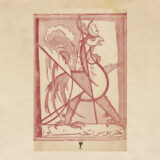
The association’s emblem, which is the design on the cover of Fighting Cock magazine, was by Jalil Ziapour, and its name was chosen at the suggestion of Gholamhossein Gharib. The emblem of the association and magazine, with a modernist design, expressed the desire of all the fighting cocks more eloquently than Ziapour’s paintings.
In the year 1949, the association, by accepting individuals such as Nima Yooshij, Manouchehr Sheibani, Mostafa Kamal Pourtorab, Bahman Mohassess, Sohrab Sepehri, and many other artists in the fields of modernist art, began a new wave. Nima Yooshij, as a sign of cooperation with Fighting Cock magazine, began his collaboration with the group and the magazine by publishing the poem “City of Morning,” which was printed in the first issue of this period:
Cock-a-doodle-doo! The rooster crows
From within the hidden seclusion of the village,
From the descent of a path which, like a dry vein,
Runs blood through the bodies of the dead,
Weaving upon the cold wall of dawn,
Permeating every corner of the plain.
After Ziapour’s administrative trial and the authorities’ realization that he was not propagating Communist ideas or publishing a political magazine, it was decided that Fighting Cock magazine, which had been banned, should be published under another name. Therefore, in late 1949, the magazine “Kavir” [Desert] was published by Ziapour, Gharib, and Shirvani with the same past aims. In this low-circulation magazine, Ziapour printed the first painting in his own manner named “Public Bath,” and also an article called “Painting,” which was in truth an explanation of the obvious about his “Public Bath.”
Ziapour says: “They banned Kavir too, this time ‘The Cock’s Claw (Panjeh-ye Khorus)’ was published, then ‘The Cock’s Claw’ was banned as well.”
After this, Ziapour sought help from the cultural and artistic pages of other publications to express his views and reflect his thoughts.
Looking at the surviving copies of “Fighting Cock” and “Kavir” in the National Library of Iran and an issue of “The Cock’s Claw” in a private archive, we become acquainted with the members of the editorial boards of these publications; they entrusted their written works to these publications not as journalists, but each in the position of researcher and scholar, painter, poet, fiction writer, playwright, musician, and translator. Jalil Ziapour wrote the greatest number of articles, Gholamhossein Gharib the greatest number of stories, and Hassan Shirvani the greatest number of plays. In almost all the issues there are poems by Nima Yooshij, especially from the collection “Makh Ola,” as well as writings by him under the title “The Neighbor’s Words.” The next place belongs to Hushang Irani; an article by Morteza Hannaneh, and poems by the Nimaic poets Manouchehr Sheibani, Esmail Shahroudi, and Sohrab Sepehri, were also printed in these publications. It seems that Bahman Mohassess joined the editorial board with a critical writing entitled “And as for Our Radio and Its Displays of Artistry” in “The Cock’s Claw”; and also in this same publication, a translation by Sohrab Sepehri quoting from the Paris Fine Arts weekly dated April 1952, from a writer named Helen Turner, was printed. News from the world of music concerning the performance of a concert by a Belgian artist in Tehran and the readiness of the Fighting Cock Association to cooperate in this type of artistic activity, as well as the introduction of Juliet Gregorian (pianist), a talk about Rachmaninoff, and also the introduction of a painter named Manouchehr Foroutan who, according to the magazine’s managers, had made use of the Cubist style, are among the other contents of Fighting Cock, Kavir, and The Cock’s Claw.
The articles and critical contents of these publications were written in a journalistic, harsh, and impudent prose. For example, in an article by Gholamhossein Gharib we encounter these sentences and phrases:
“For me, who after careful examinations have realized that this group who have been called art lovers, artists, and connoisseurs of art are fundamentally devoid of human understanding and that, except for a few handful of people, the others are moving machines who play the roles of very tasteless and senseless clowns, there is fundamentally no expectation. The world of art deals with humanity, not with machines whose only share of humanity is making filth.”
We go back. To the time of Ziapour’s withdrawal and distancing from the Fighting Cock Association. What were Hushang Irani’s “insulting radicalisms” that led to Ziapour’s withdrawal? Did Hushang Irani have “insulting radicalisms” in writing articles like Gholamhossein Gharib, or in his work as a poet? Undoubtedly, what he later presented in poetry, of which not even a speck of his audacity existed in Nima, worried Ziapour that this flood would carry everything away with it. But according to the belief of the late Mohammad Hoghoughi, Hushang Irani with a novelty-seeking mind and a radical temperament showed from the very beginning that he was the most genuine “fighting cock” of that era.
Hushang Irani was a poet with abundant talents and a rich culture, who in the last year of the 1940s and the years of the 1950s, by publishing four collections that in total had no more than thirty poem titles, presented two types of poetry. First: rhythmic poems like the famous poem “Blue” [Kaboud]. And this is the same poem whose two famous “descriptive compounds,” “Purple Scream” and “Blue Cave,” caused much uproar and controversy, whereas it is only the attribution of an adjective to an unusual noun and in fact belongs to the category of “synesthesia,” which itself can be one of the ways of distancing from prose and transgressing the commonness of language; otherwise, in this very poem, lines are seen that are much more extreme than the two heterogeneous words “scream” and “purple,” and “cave” and “blue.” So much so that sometimes words sitting next to each other do not attract each other as they should. Neither from the perspective of linguistic and grammatical concept, nor from the viewpoint of a kind of poetic meaning; and it is completely clear that the poet was intentional in expressing this extremity and wrote the poem with the intention of presenting a completely new and fresh poem, and with a new approach to language.
“Hima-houra!
Gil vigouli
Niboun… Niboun!
The blue cave runs
Hand to ear and eyelid squeezed and bent
It constantly draws
A purple scream
Houm boum
Houm boum
Vi you hou hi
Hiyya yahi
Although his poetry caused much uproar and was subjected to much taunt and mockery, it attracted the attention of the aware poets of subsequent generations.
According to the words of Ziapour (in the figure of a real fighting cock), three groups were specifically among the main enemies and opponents of him and the other fighting cocks: the first group were members and supporters of the Tudeh Party, who said art must be comprehensible to everyone so that even the orange seller and the mousetrap seller would be satisfied with it; the second group were the miniaturists, who generally opposed modernist art; and the third category, the followers of Kamal-ol-Molk’s school, which was considered the official art of that time.
Ziapour, during the years of his activity, or in other words his struggle and battle and dispute with the worshippers of the old and his effort to prove his intellectual righteousness, engaged less in creating works.
Ziapour’s works from the year 1944 to 1958, according to writings, are about 30 works (a little more or less), and it is not clear to us how close this number is to the truth.
Among the works left behind by him, perhaps it can be claimed that the works of the 1990s are more modernist than the rest of the works. A decade in which tens and tens and tens of fighting cocks in the arena of visual arts of Iran have let out their cock-a-doodle-doos, have sung their song from within their hidden seclusion, have given the glad tidings of a fresh dawn and a new day, and with the sweetness and pleasantness of their art have sweetened palates.