by
by This article was machine-translated from the original Persian and may contain inaccuracies.
A note by Mehdi Hosseini, titled “The One Whose Name is Never Forgotten”, on the occasion of the ninth anniversary of Jalil Ziapour, Farhang-e Ashti Newspaper, No. 1634, Page 5, Thursday, 1 January 2009

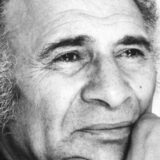
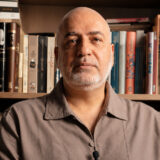
Professor Mehdi Hosseini, painter and university lecturer
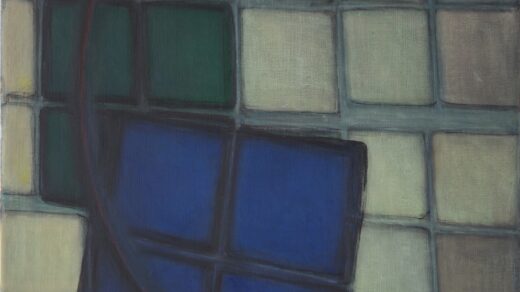
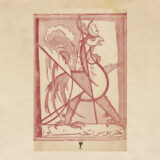
The late Jalil Ziapour was born in the year 1920 in Bandar Anzali. After completing his primary and secondary education, Master Ziapour came to Tehran in the year 1938 and continued his studies in traditional arts. He is from the first generation of artists who, in the year 1941, continued their studies in painting at the Faculty of Fine Arts of the University of Tehran, and graduated from this faculty in the academic year 1945–1946 as the top student. Other peers of the late Ziapour, who were later named “the pioneers of contemporary Iranian painting”, were: the late Javad Hamidi, the late Mehdi Vishkaei, the late Hossein Kazemi, Master Mahmoud Javadipour, Ahmad Esfandiari, Manouchehr Yektai, the late Shokouh Riazi, and Abdollah Ameri. In the same year, the late Ziapour succeeded in receiving a scholarship from the government and set off for the École des Beaux-Arts in Paris (ecole national superieure des beaux-arts) to continue his studies. Although in the years following the Second World War (1945 AD onwards) many of the veterans, or rather, the first-generation artists of the Cubist school, such as Pablo Picasso, Georges Braque, and Fernand Léger, were still present and active in Paris, it was the second generation of painters of the Cubist school, such as Amédée Ozenfant, Albert Gleizes, and André Lhote, who preserved the memory of the Cubist school of the early twentieth century and insisted upon its continuation. The late Ziapour, who fundamentally possessed a combative and innovative spirit, found himself in this highly transformative post-World War II atmosphere and found what he was seeking in the cultural environment of the city of Paris, with its museums, galleries, and especially through studying under André Lhote. After completing his course of study in the year 1949, the late Ziapour returned to Tehran and endeavored to continue his experience with modernism in the atmosphere of Tehran of that day, and to share his findings with others as well. While organizing painting exhibitions in his personal studio, the Apadana Gallery, or the Mehregan Club, Ziapour realized that the continuation of this path would not be possible without the availability of its theoretical foundations. Therefore, he endeavored, by establishing publications such as Fighting Cock (Khorus Jangi), Kavir, and The Cock’s Claw (Panjeh-ye Khorus), and by writing articles in connection with modernism and evolution, as well as introducing his own viewpoints, to explain the position of the modern and modernism in a transforming world, and to prepare the necessary mental conditions for understanding new artistic creation, in the form of poetry, image, and music. Now that, after the passage of about sixty years since those first efforts, the body of Master Ziapour’s work is being reviewed, we are confronted with this very important point: that what the late Ziapour and his other contemporaries created in that highly sensitive and influential period was not merely Parisian (something that was often attempted to be imposed upon those honest efforts), but rather purely Iranian and rooted in traditional culture. One of the beautiful and innovative paintings of the late Ziapour, which is in the collection of the Tehran Museum of Contemporary Art, is the oil on canvas painting “Zeynab Khatun”, with dimensions of 950×1200, which was inspired by a folk poem: My mother Zeynab Khatun / Has hair as long as a bow / A bit longer than a bow / A bit blacker than jet / She wants a thirty-day bath / She wants a turquoise comb. For the arrangement of this – and also his other paintings – the late Ziapour made use of the square brick shape and tile format, which has constantly been used in traditional culture and especially in architectural decorations, and which is four-sided. The number four has generally been referred to as that which is solid, tangible, objective, and earthly. It also represents the four cardinal directions (North, South, East, West), the four seasons of the year (Spring, Summer, Autumn, Winter), the four stages of growth (childhood, youth, middle age, old age), the four flowing rivers in Paradise (water, milk, honey, wine), the four elements (water, fire, wind, earth), the four humors (yellow bile, black bile, phlegm, blood), and the four letters of the name of God (A-L-L-H). The late Ziapour, in light of his comprehensive mind, while drawing upon tradition, made the square symbol the background of his work, and by using the lines of Zeynab Khatun’s figure – which complement the movement of the vertical and horizontal lines of the square shape – as well as cool colors (blue, green, and turquoise) in contrast to warm colors (brown, orange, and yellow), created an intimate two-dimensional space that, before being European (read: Parisian), is Iranian. The bright diagonal bands that the late Ziapour introduced into the painting, and upon which he wrote the poem of “Zeynab Khatun” with his brush, at times suggest the rays of light that shone into the bathhouse from the ceiling skylights (crystal cups). In the later works of the late Ziapour, in addition to the element of the square, which is the symbol of the earth, the element of the circle and the arc (which represent the sky, the galaxy, the realm of meaning, the world beyond the world of the senses, and in truth the cosmic form) has been depicted. In the painting “Flight into the Unknown”, dating from July 1988, with dimensions of 1050×1350, the circular form is not placed on a background of blue, gray, navy blue, and a little red – which indicates the vitality and passion of life – and the arranged squares connect the image at the most sensitive intervals. In the final paintings of the late Ziapour, it is not this visible world that responds to the needs of the creative and powerful mind of this artist, but rather it is the world of lines, colors, and symbols that has satisfied his lofty mind. This same geometric abstraction can also be witnessed in his painting “The World Within”, which belongs to the last decade of activity of this national modernist artist. Artistic creation was only one of the multifaceted dimensions of the late Jalil Ziapour. He is considered a capable researcher and an outstanding author in the field of Iranian culture and art. The research books of the late Ziapour amount to over twelve volumes, six of which are related to the clothing and ornaments of Iranian women from ancient times to the present. One of Master Ziapour’s authoritative research works, in connection with Iranian art, is the book: An Introduction to the Artistic Coloring of Iranians from the Earliest Times to the Safavid Period, which was published in the year 1974 by the publications of the General Directorate of Writing of the Ministry of Culture and Art in Tehran. Another noteworthy work of the master is the book: The Medes and the Founding of the First Empire in the West of the Iranian Plateau in 558 pages, which was also published by the publications of the Society for National Heritage in the year 1974 in Tehran. The authored works of the master exceed sixteen cases, one of the most important of which was the book: Fifty Years of Contemporary Iranian Visual Art (From Kamal-ol-Molk to the Present), which the master spent many years preparing and arranging, and which was submitted to the Ministry of Culture and Art for printing in the year 1977, but from that time until now there is no information available regarding its fate. The published articles of the master in publications such as: Fighting Cock, Kavir, The Cock’s Claw, Anahita, Azarpad, Elm va Zendegi, Andisheh va Honar, Nabard-e Zendegi, and so on, amount to over 60 articles, the individual mention of which is beyond the scope of this writing. This discourse would not be free of shortcoming without reference to his educational activities and the establishment of the Boys’ and Girls’ Fine Arts Schools in the year 1955. The correct planning of the late Ziapour and his mastery in providing an educational space and inviting prominent artists to teach youth are among the exceptional aspects of Master Ziapour’s cultural-educational activities and planning. The wisdom and knowledge of the late Ziapour in the matter of art education resulted in the most prominent contemporary pioneer artists of Iran (such as Parviz Tanavoli, Hossein Zenderoudi, Faramarz Pilaram, Massoud Arabshahi, Mohammad-Ali Shivai (Kako), Mohammad-Hassan Sheydal, Behzad Golpayegani, and many others from younger generations) being introduced to the art society of Iran and the world through the educational programs of these schools, so that they might continually keep the standing of Iranian art elevated in the world. The memory of this great man will never fade from minds; just as the memory of Nima Yooshij in modern poetry, the memory of Sadegh Hedayat in modern prose, and the memory of Morteza Hannaneh in contemporary music have constantly occupied the minds of the elites and pioneers of contemporary Iranian art.