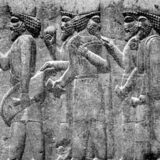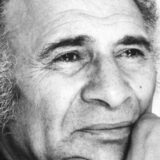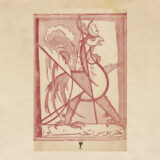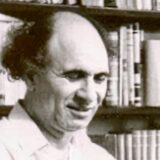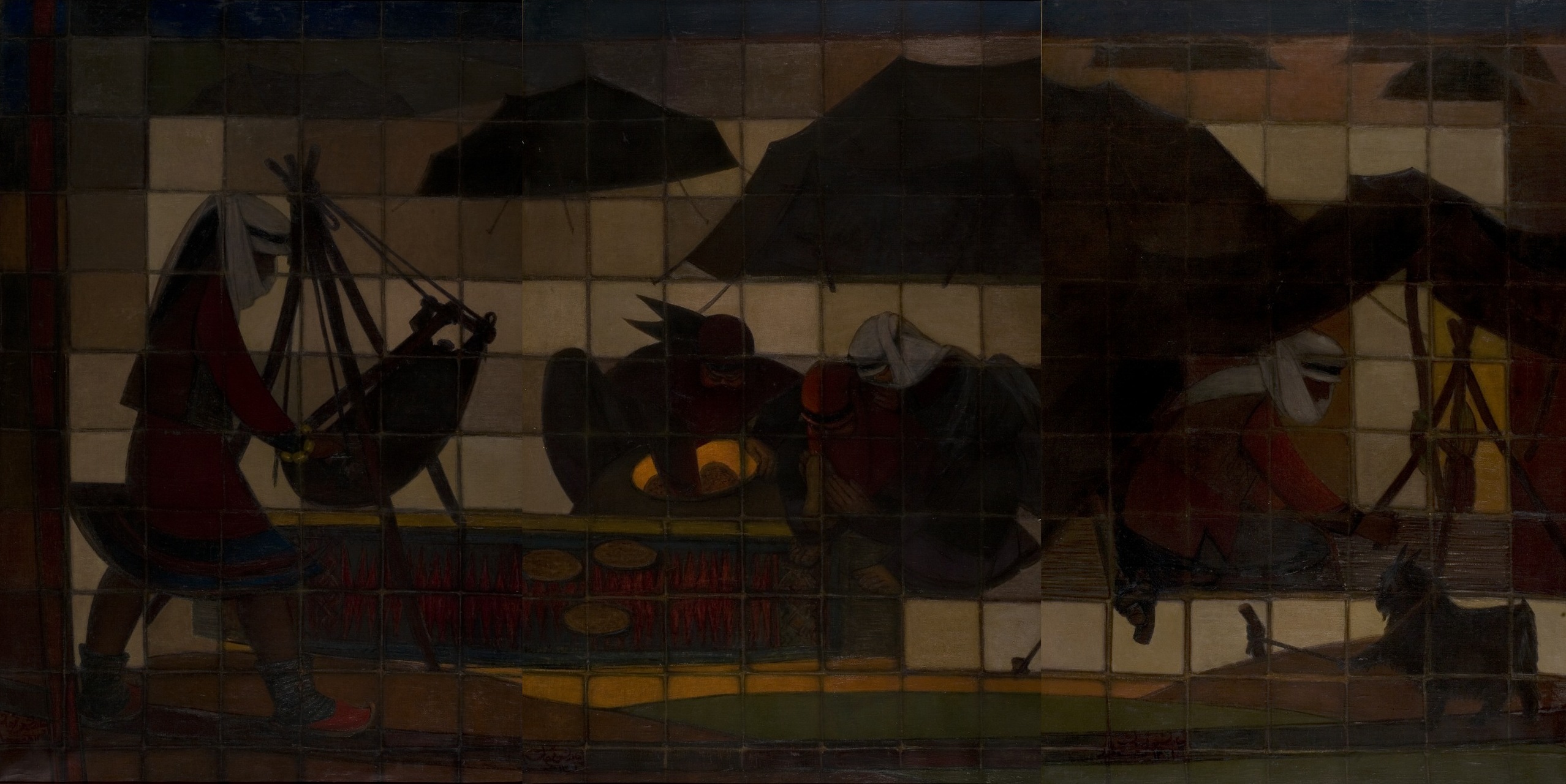
Master Jalil Ziapour, “Life of Tent-Dwellers” (triptych), 1983
Jalil Ziapour, apart from being a pioneering painter, also conducted extensive research activities in the field of anthropology, and their results, which are the outcome of years of research and experience, are used as reference books for this scientific discipline in universities. Hence, it can be said that Ziapour’s life was intertwined with painting and anthropology. Separating these two from one another would damage each of them, and because of his belief in indigenous and Iranian cultural values, he never stepped outside the space, theme, environment, manifestations, and phenomena of his own society in his works, and on this basis, he believed: “An artist is someone who recognizes the identity and personality of their society and introduces it, and we do not know our own culture! The level of culture of any artist depends on the extent of their benefit from society, which is of course accompanied by variables, and amid these changes, the entire effort of the thinkers, purposeful individuals, and artists of the society is to attain a rich culture. We have carried the best traditions with us to this day and cannot find ourselves devoid of traditions. The artist, in their cultural domain, draws inspiration from traditions and creates content.”
In fact, Ziapour is considered one of the pioneers of anthropology in Iran and had a research background of more than half a century. Among his research fields of interest, one can mention the study of the subjects of “folklore”, “linguistics”, “clothing”, and “decorative motifs” of different regions of Iran.
Ziapour was an anthropologist who possessed a creative, novelty-seeking, and searching spirit, and engaged in research with perseverance and boldness. In order to complete his research, he traveled for years, riding and on foot, to all regions of Iran from north, south, west, and east, including desert, mountainous, and nomadic areas, as well as very remote and inaccessible locations, and what fascinated him was the coloring of the environment, behavior, dialects, customs, and clothing of different regions. His research travels, as well as his attachment to Iran and tribal life, are reflected in a portion of his thoughts and paintings, and constitute one of the most prominent characteristics of his works. The paintings “The Tent-Dwellers”, “Quchani Kurdish Woman”, “Kurdish Woman of Sanandaj”, “Zeynab Khatun”, “Lur Girl”, “Kal Amir and Gol Bahar”, and many other of his works are the result of such a reflection, and are in fact the practical implementation of the views that he had presented in artistic circles since 1948 in the field of the evolution of painting based on national heritage. Therefore, without doubt, anthropology holds a powerful foothold in his art.
Among the activities of Jalil Ziapour – solely in the field of anthropology – one can point to some of his positions and missions, publications, articles, and lectures as follows:
Positions and Missions
1955- Head of Cultural Relations and member of the Permanent Council of the Abyaz Palace Museum.
1956- Study of folklore in Gilan Province and organization of an exhibition on the general condition of the people of that region at the Abyaz Palace, at the request of the General Administration of Fine Arts of the country.
1956- Researcher of decorative motifs in the eastern and southern regions of Iran, and traveling for this purpose to Sistan, Baluchestan, Kerman, Fars, the islands, and in general, a three-year journey to all regions of Iran to research popular culture and art.
1958- Investigating and studying the living conditions and art of the people of the Khorasan regions and traveling to that region over the course of four years to organize an exhibition on the people of that land, at the request of the General Administration of Fine Arts of the country.
1964- Cooperation with the Tourist Attraction Administration.
1966- Head of the Anthropology Museum.
1967- Travel to France to supervise the Exhibition of Iranian Anthropology in Paris.
1973- Commissioned for research at the Ferdowsi Shahnameh Foundation regarding clothing and war gear and the manner of their use based on Ferdowsi’s Shahnameh.
1977- Head of the Exhibitions Administration in the Museums Administration.
1977- Researcher of decorative motifs in the regions from south-western to north-western and central Iran, including the northern provinces, Khuzestan, Lorestan, Kurdistan, Kermanshahan, Hamadan, Azerbaijan, and the desert regions.
1977-1998- Teaching the history and design of costume at the College of “Art Dramatique” in Tehran.
Publications
Ziapour also endured grueling hardships regarding the study of the clothing of different historical periods of Iran. His publications in this field are documentary in form, in which he has explained in detail each element of the clothing related to each period, along with patterns (if necessary) and presented black-and-white and color images, and for many years they have been introduced to students of related fields as authoritative sources. His publications in this field are as follows:
– The Clothing of Asho Zoroaster and the Mobeds, 255 pages, 1971
– The Clothing of Iranians from Fourteen Centuries Ago (from the Early Islamic Period to the Late Qajar Period), Publications of the Ministry of Culture and Art, Tehran, 431 pages, 1970
– The Clothing of the Tribes, Tent-Dwellers, and Villagers of Iran, Publications of the Ministry of Culture and Art, Tehran, 307 pages, 1967
– The Ancient Clothing of Iranians Until the End of the Sasanian Period, Publications of the General Administration of Museums and Popular Culture of the Ministry of Culture and Art, Tehran, 356 pages, 1964
– The Clothing of the Women of Iran from the Most Ancient Times, Publications of the Ministry of Culture and Art, Tehran, 222 pages, 1968
– The Clothing of the Ancient People of the Iranian Plateau (before the Arrival of the Aryans) until the Median Period, 361 pages, 1968
– The Clothing of the Achaemenids and Medes Based on the Motifs of Persepolis, Publications of the Ministry of Culture and Art, Tehran, 234 pages, 1971
– A Research Study on “Alborz Kuh” and “Tirg-e Alborz” in the Shahnameh, 195 pages, 1973
– A Research Study on the Importance of Iranian Textile Weaving in the Sasanian Era and Its Continuous Influence Since the Rise of Islam Among Muslims and Others, 210 pages, 1966
– A Research Study on the Aryans and the Manner of Their Migration to the Iranian Plateau, 215 pages, 1956
– A Research Study on the Ancient Aryans Inhabiting Central Asia and “Their First Human Thought”, 180 pages, 1973
– A Research Study on the Garments “Aba”, “Arkhalig”, “Yal”, and “Kolcheh”, commissioned by the Encyclopaedia and Cyclopaedia of Iran and Islam, University of Tehran, 23 pages, 1958
– A Research Study on Maritime Transport in the Anzali Lagoon and the Economic Condition of the Inhabitants of the Lagoon Basin (Gilan), commissioned by the “High Council of Culture and Art”, 200 pages, 1976
– A Research Study on Rostam the Hero (Iranian-Scythian) and the War Gear of the People of the Sistan Regions (the Rostam Region), 180 pages, 1974
– A Research Study on the General Condition, Settlement, and Customs of the People of Qasemabad, Gilan, 280 pages, 1954
– A Research Study on the Clothing and War Gear of the Ancient Aryan People from the Time of Kayumars (the Iranian Adam, Father of Mankind) to Jamshid Jam, 290 pages, 1973
– English-to-Persian translation of the book The History of Costume of the Middle East and Medieval Europe, by Antosander, 140 pages, 1976
– The Ornaments of the Women of Iran from Ancient Times to the Present, Publications of the Ministry of Culture and Art, Tehran, 538 pages, 1969
– Dictionary of the Gilaki Language, sixty thousand words, compared with the Kurdish and Lori languages, 1978-1997, unfinished
– The Medes and the Founding of the First Empire in the West of the Iranian Plateau, Publications of the Society for National Heritage, Tehran, 558 pages, 1974
– Decorative Motifs in the Land of Iran from the Most Ancient Times to the Age of the “Medes”, Publications of the Ministry of Culture and Art, Tehran, 432 pages, 1974
– The play The First Human Being, “Kayumars”, for the preparation of an animated film based on sources including the books Bundahishn, Tarikh-e Bal’ami, and Ferdowsi’s Shahnameh, 1977
Articles
– “Iran, the Model of Islamic Culture”, Rastakhiz newspaper, no. 819, year 1977
– “Is the Grooved Hat Known as Persian the Possession of the Persians or the Elamites?”, Honar va Mardom magazine, nos. 86-87, year 1970
– “The Clothing and War Gear of Gilan”, The Book of Gilan, vol. 1, year 1986
– “The Composition and Coloring of Iranian Women’s Dress”, Cheragh book, vol. 4, Now Bahar Printing House, 1982
– “The Nature of the Ornamentation and Clothing of the Medes and Elamites”, Honar va Mardom magazine, nos. 67-68, year 1968
– “Kayumars and His Birthplace”, Honar va Mardom magazine, no. 149, year 1974
Lectures
– “The Importance of the Social Cooperation of the People of Gilan in the Recent Past”, First Festival of the People’s Culture and Art, Isfahan, 1977
– “Acquaintance with the Customs and Traditions of the People Leads Us to the Depth of the Nature of Life”, First International Assembly of Iranian Popular Culture, Tehran, 1977
– “Information in the Field of the Ancient History of the Pishdadians and the Difficulties of Investigating Them”, Ninth Congress of “Iranian History and Culture”, Tehran, 1976
– “The Clothing of Iranians in the Parthian Period”, Third Congress of “Iranian History and Culture”, Tehran, 1972
– “The Clothing of the Pishdadians”, Eighth Congress of “Iranian Studies”, Faculty of Humanities, National University of Tehran, 1976
– “The History and Culture of the Ancient Inhabitants of the Iranian Plateau Before the Achaemenids”, First Congress of “Iranian History and Culture”, Tehran, 1970
– “The Influence of the Civilization of Iranians of the Sasanian Period on the Arabs of the Jahiliyyah and Islamic Civilization”, Sixth Congress of “Iranian History and Culture”, Tehran, 1974
– “Attention to Environmental Conditions and the State of Art and Artists in the Last Fifty Years”, Tenth Congress of “Iranian History and Culture”, Tehran, 1976
– “The Manner in Which the Visual Arts of Iranians of the Sasanian Period Influenced Early Islam and the Later Uses Made of Them by Muslims”, Seventh Congress of “Iranian History and Culture”, Tehran, 1975
– “Kerman and Its Prehistoric Pictorial Petroglyphs”, Ninth Congress of “Iranian Studies”, Kerman, published in Honar va Mardom magazine, no. 183
– “The Attainment of Perfection by Visual Art in the Sasanian Age”, Fourth Congress of “Iranian History and Culture”, Tehran, 1973
– “Garshasp and Sistan”, Eighth Congress of “Iranian History and Culture”, Municipal Hall of the City of Zahedan, 1975
– “Where Is Ferdowsi’s Mazandaran?”, First Shahnameh Week, Hormozgan Province, published in the book “Shahnameh Studies”, vol. 1, Publications of the Ferdowsi Shahnameh Foundation, 1977
– “The Mannaeans -Manon- and Their Relentless Effort toward Freedom and Independence in the Azerbaijan Region”, Tenth Congress of “Iranian Studies”, Urmia, 1978
– “Ferdowsi’s Criteria in Presenting Clothing and War Gear in the Shahnameh”, Seventh Congress of “Iranian Studies”, Faculty of Literature and Humanities, University of Tabriz, 1975
– “Characteristics of the Visual Art of Iranians of the Sasanian Period”, Fifth Congress of “Iranian History and Culture”, Tehran, 1974
– “The Visual Art of Iranians of the Parthian Period”, Second Congress of “Iranian History and Culture”, Tehran, 1971