This article was machine-translated from the original Persian and may contain inaccuracies.
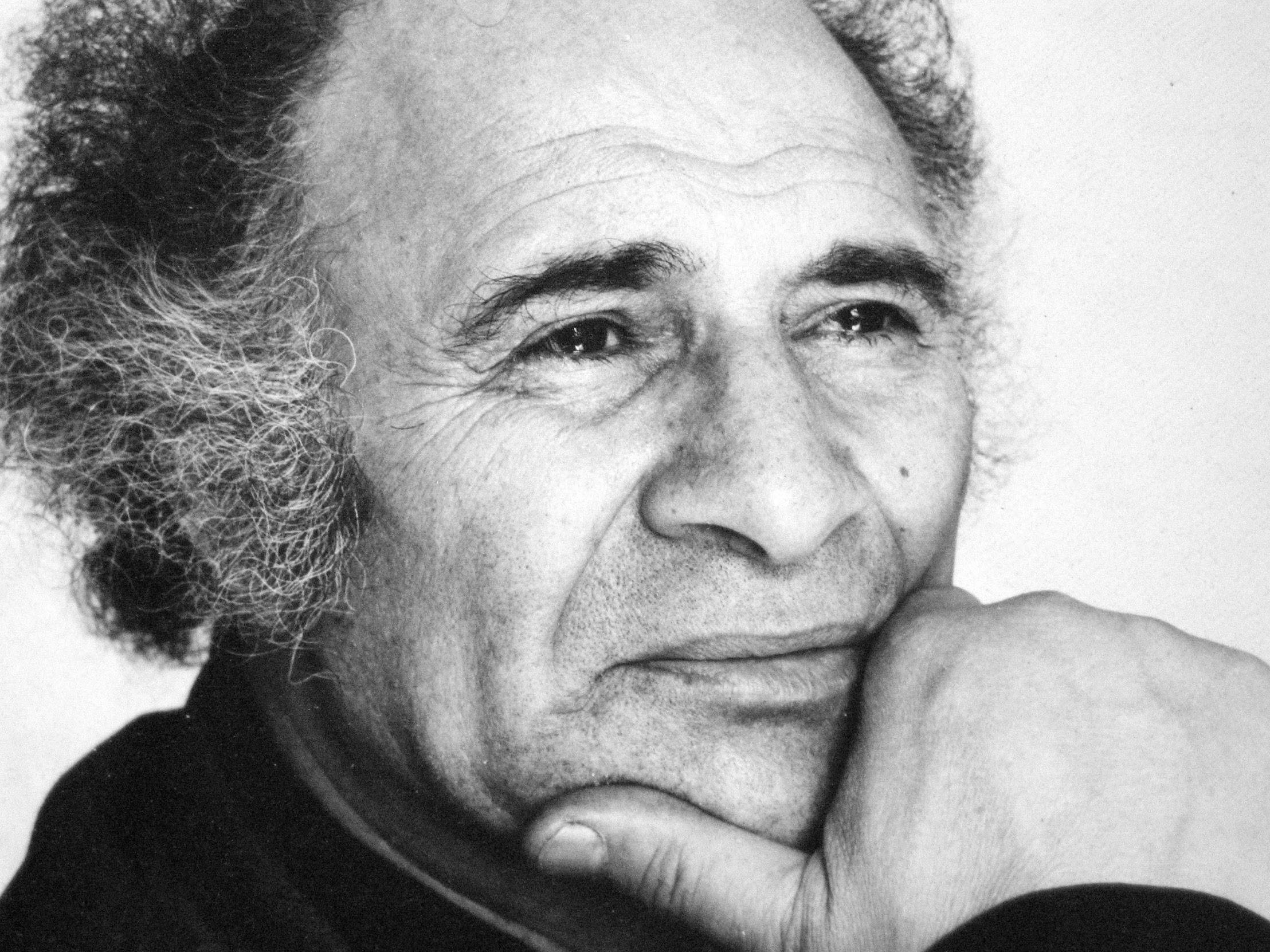
Master Jalil Ziapour, the Father of Modern Iranian Painting
This section contains some of the views of Jalil Ziapour in the field of art, which are presented in the form of short and concise sentences. In fact, each of these views can familiarize us with his thoughts.
– Artistic talent means readiness in the work of learning. But bringing it to richness requires action. So it is with taste and passion, which are necessary but not sufficient to become an artist.
– It is social thoughts that bring about the style of any subject for the artist.
– Creating a work of art should not be to show off artistic skill, but rather for artistic expression.
– It is the precise gaze and thought of the artist that perceives the sources of inspiration.
– Cliché works always remind me of the strivings of the alchemists: “For how great is the difference between one path and another!”
– Artistic works present the superior conventional content, which shows signs of society’s effort on the path of elevation.
– Works of art, like a mirror, reflect the way of life of the people and the offerings of the times at every level.
– The artist’s creation, which is a secondary creation, is a synthesis of the result of inferences, with the help of objective and subjective manifestations.
– To become familiar with the painter’s color, one must have a conscious engagement with this world of his.
– To understand the identity of any ethnic group or nation, it is always through cultural-artistic achievements that people discover it. For these achievements contain all things civilized within themselves.
– It is social perceptions that bring about the style of presenting any subject in the artist.
– Let us give scope to and value artistic innovations so that the mind becomes dynamic and creative. Every innovation has its losses. Just like all perceptions, which do not attain success without losses.
– Let us encourage appropriately. Let us criticize correctly. Based on cultural standards, with a correct worldview, in comparison with the world of life and with advanced principles.
– Borrowing the artistic forms of past eras (more than the minimum of inspiration) is ignoring the presence of the present era and preoccupying oneself with lost eras. In this way, the present era is also lost.
– Let us not be indifferent to the artistic forms of any era. For they represent the contents.
– Let us not be indifferent to geometric painting. Most of our painters are strangers to the characteristic of the shape of the universe, which is a geometric world.
– Along with every economic, political, educational, and other transformation, there is always a more advanced way of thinking, which is the higher outlook of the time in any environment and society.
– Disregard for artistic modernism and innovation (artistic creativity) is, in fact, an active effort toward their gradual paralysis through indifference.
– The response to the protest of pretenders to art connoisseurship is silence. For there is a difference between asking in order to know and understand, and protesting without having substance.
– The guardians of tradition cry “alas!” in the face of new art and creativity, and the pioneers of art cry “what a calamity!” at their hands!
– Appropriate encouragement is more effective for artists who need encouragement than for self-reliant artists.
– Pretending to art connoisseurship is the way of those lacking substance.
– Imitation in art causes a decline in individual personality and national identity.
– The repetition of traditional art is the rumination of the thoughts and visions of predecessors.
– The eloquent justification of any theme at the level of the simple yet inimitable, cast in a suitable mold, is art.
– Siding with works empty of merits is giving undue audacity to those lacking substance.
– Bringing rawness onto the canvas of painting indicates unawareness.
– In nature, colors are never jumbled and complex. But there are color relationships that link them together. In art, these connections must be recognized.
– In the work of art, one must always be dynamic like an alchemist.
– In the art of painting, seeing color is different from knowing color.
– In art, let us always look for the mold of our speech. For every saying demands its own specific mold.
– Attaining the design of objectivities is far easier than the design of subjectivities. For before reaching this design, many kinds of knowledge must be attained.
– The world is full of steadfast people who have never waited for the encouragement of this or that person, and have not backed down because of any problem.
– Taste and passion are necessary, but they are not sufficient to become an artist.
– God-given taste and art are like capital; one must learn the method of using this capital, and it needs cultivation.
– The mission of art is to present the movements of society, both bad and good, but the better aspects of society take precedence. For the society’s striving is toward living better.
– Color, for the painter-artist, is a language; the more simplicity of speech there is in it, the easier it is to establish a relationship with it.
– Color is everyone’s world, especially the painter’s world. He makes use of them like musical notes or words – but simple and cohesive.
– Moving color, which is like words, around on the canvas of painting, without it being cohesive and disciplined in terms of meaning, concept, and suggestiveness, is scattered speech.
– It is the enlightened who must bring the common people forward step by step with the artists of the time, and leave the artists to their work so that they are not held back from progress and creativity under various pretexts. This action is companionship on the path of transformation and the artist’s responsibility.
– The root of all kinds of thoughts is latently mingled with human life, and the intensity of need becomes the motive for their reaction.
– Life in every era has its own particular path, and art too must follow the particular path of its era, and the artists of every era must follow the thought of their own advanced era.
– Life is always accompanied by a series of actions and reactions. Art too is subject to these actions.
– Life is in motion and has no stasis. Art too, following life and together with it, is in striving and in motion.
– Life brings with it a series of actions and reactions. Art too is sometimes subject to these operations.
– Beauty in art is relative pleasingness. Ugliness too is relative displeasingness. The recognition of beauty and ugliness, among the common people and the elite, has a basis in normalized taste, and the criteria presented have no justification except interpretive and perceptive explanation. The essence of beauty and ugliness, like the essence of goodness and badness, is a changing and chain-like perception. Except for their names, which can remain eternal forever.
– The slogan “art for art’s sake” is a compressed concept meaning “artistic virtuosity in artistic expression.”
– The making of nature is not exact duplication. For art is inspired by subjectivity (which is another nature taken from objectivity and governing the whole of our life).
– The making of objectivity is not art. Unless the mental charge of the subject is added to it. For the mental charge is the artist’s speech.
– There is a difference between asking in order to know and understand, and protesting without having substance.
– Those who, as a matter of convention, consider the ordinary form of everything on the canvas of painting to be painting do not know the identity of painting.
– Effort at the making of objectivity is never art. Unless the charge of subjectivity is added to it. For the mental charge is the artist’s speech.
– Unfamiliarity with the elements that create obscurity in art brings about obscurity. One must become familiar with the unfamiliar.
– Painters who deal with the schools of the past are not the painters of their own era.
– Painting itself has its own special music and poetry, and has no need of poetry and music to accompany the painting. For their presence weakens the painting.
– The precise gaze is the very thing that perceives the sources of inspiration.
– Innovation and modernism are subject to the severe pressure of need, and every modernism is itself a kind of realism.
– Intense emotional reactions give impetus to artistic reactions.
– The aim in art is artistic expression through the use of the factors of suitable forms. The simpler this expression is, the more artistic it is.
– Any apparently good and acceptable work that is executed without high-level creativity is nothing more than an exercise.
– Every social perception makes culture for society to its own degree, and art is the indicator of these perceptions. Depending on what becomes presentable or finds the possibility of presentation. Otherwise, it takes refuge in symbolism.
– Every life has to do with fresh experience. Art too is subject to this reality and freshness.
– Everyone seeks his own desires in art and does not want to know what the artist is saying. It is just as Rumi said: Everyone became my friend from his own supposition / None sought my secrets from within me
– Let one never think of stasis. For in a world full of striving, stasis is not possible. Therefore one must always be dynamic.
– Every subject or theme of painting attains objectivity on the canvas through second nature (subjectivity), but not in the form of ordinary objectivities.
– Every kind of perception is a way of being presented. But being presented in art is different from self-display.
– Every kind of experience in the realm of art is a movement in the direction of advancing art’s dynamism.
– Art is a substantial part of the culture of life, and the mission of art is to show society’s good efforts. For society’s striving is always toward living better.
– High-level art is for all people, but art that appeals to the common people is only liked by the common people.
– Pioneering artists are, for a time, among society’s outcasts, but after death that same society again, for a time, presents them as among the greatest artists! And this is the quality of those who worship the dead.
– The imitative artist is unfamiliar with the principle of artistry.
– The qualified artist, in creating works of art, does not consider himself free of the need to be acquainted with the course of his society’s life.
– The artist and the art student must always be questioners. For questioning is seeking, and in art, seeking is life.
– The artist is always ahead with his works, and critics, interpreters, and connoisseurs of artistic principles and fundamentals follow behind.
– Artistic display requires knowledge and a cultivated subjectivity.
– The arts have a rooted and close connection with one another. Only their working tools differ from one another.
– The art of every era needs a new form.
– No artist can be without the burden of tradition. For he himself is mingled with it and has a rooted connection with it.
– None of the works of form and content in which there is no eloquent expression can, by way of muteness and ambiguity, be art.